

Hearing mysterious scratching noises in your walls late at night? You’re definitely not alone. According to Orkin, rats invade about 1 in 10 U.S. homes every year. These unwelcome guests don’t just disturb your peace—they bring serious health risks and costly damage.
Rats carry diseases like leptospirosis and salmonella, which can affect your family’s health. Plus, their constant gnawing causes over $1 billion in property damage each year nationwide. Waiting too long to act only makes the problem worse, as rats multiply quickly and become harder to control.
Understanding Your Rat Problem: Why Quick Action Matters

Before jumping into solutions, it’s important to understand what you’re dealing with. Two common types of rats invade homes:
Norway Rat vs. Roof Rat
- Norway Rat
- These are bigger, about 7-9 inches long, heavy-bodied rodents. They prefer basements, sewers, and ground-level entry points. They’re mostly active at night.
- Roof Rat
- Slightly smaller, 6-8 inches, and more agile climbers. They like attics, roofs, and upper areas of buildings. Active during dusk and night.
Both types cause trouble, but their habits and hiding spots differ. Knowing which type you have helps target your control efforts.
Signs of Rat Infestation
Spotting rats early makes quick removal easier. Look for:
- Droppings shaped like small pellets
- Gnaw marks on wood, wires, or food packaging
- Greasy trails along the walls from their fur oils
- Scratching or scampering sounds, especially at night
Why Rats Multiply Fast
Rats reproduce rapidly. A single female can have 5-6 litters per year, each litter containing 6-12 pups (Terminix). That means a small problem can escalate into a major issue in a matter of weeks if ignored.
Dangers Rats Bring
- Disease transmission: Rats carry harmful bacteria and viruses.
- Fire hazards: Their chewing on electrical wires can cause shorts and fires.
Quick Reference Table: Norway vs. Roof Rats
Rat Type Size Common Entry Points Peak Activity
Norway Rat 7-9″ Sewers, basements Night
Roof Rat 6-8″ Attics, roofs Night/Dusk
Choose the Right Traps – Snap, Glue, or Live?
One of the fastest ways to reduce rat populations is with effective traps. But not all traps work the same, and placement matters.
Best Traps for Quick Kills (Snap Traps)
Snap traps are the gold standard for fast rat removal. They kill instantly, are reusable, and don’t rely on poison.
Top Snap Trap Picks:
Trap Model Pros Cons
Victor M1 Strong spring, easy to set. Can be visible, needs bait
T-Rex Snap Trap Large kill bar, durable , slightly pricier
Setting Snap Traps Correctly:
- Bait with peanut butter: Rats love this sticky treat.
- Place traps along walls: Rats run close to edges.
- Space traps 10-20 feet apart: Covers more ground efficiently.
Humane Options and When to Use Them
If you prefer to catch rats alive for release, live traps like Havahart are great. Place bait inside, check traps often, and release captured rats at least a mile away to prevent them from returning.
Avoid Common Mistakes
- Don’t use cheese: It’s a myth; rats prefer peanut butter or nuts.
- Check traps daily: Avoid attracting other pests or odours.
Seal Entry Points – Stop Rats from Coming Back

Trapping rats won’t solve the problem if new ones keep sneaking in. Sealing their entry points is key.
Inspect and Identify Holes
Use a flashlight and inspect common rat access points:
- Around pipes and vents
- Cracks in the foundation
- Gaps under doors and windows
Sealing Materials That Work
- Steel wool + caulk: Rats can’t chew through steel wool.
- Expanding foam: Fills smaller gaps, but not for the main holes.
DIY Sealing Steps:
- Insert steel wool into the hole.
- Apply caulk over the steel wool.
- For larger gaps, use a combination of steel mesh and foam insulation.
Pro Inspection Checklist
Hotspot Common Signs
Basement cracks , gnaw marks, droppings
Vents and chimneys Holes, holes, and grease trails
Door thresholds Gaps, gaps, and scratch marks
Roof eaves , holes, nesting debris
Pipe penetrations , holes, droppings
Window frames , gaps, gnaw marks
Attic vents , holes, nesting
Garage doors : Cracks, holes
Crawl spaces , droppings, nests
Foundation walls : Cracks, holes
Sanitation and Baiting – Starve Them Out Fast
Rats come for food. Cutting off their supply speeds up removal.
Remove Food Sources
- Secure trash in sealed bins.
- Store pet food in airtight containers.
- Clean grease and crumbs from kitchen surfaces daily.
Effective Bait Stations
- Use tamper-resistant bait stations for safety.
- Avoid placing bait where kids or pets can reach it.
- Place bait stations along rat runways, near walls and corners.
Legal note: Rodenticides should be used carefully and in accordance with local laws.
Natural Repellents for Quick Wins
Peppermint oil and ammonia sprays can temporarily deter rats. While not a full solution, they help push rats out when used in combination with other methods.
7 Daily Sanitation Habits to Adopt
- Take out trash daily.
- Wipe kitchen counters after cooking.
- Store food in sealed containers.
- Clean pet food bowls regularly.
- Sweep floors to remove crumbs.
- Fix leaky faucets to remove water sources.
- Remove clutter where rats hide.
Remember, baits alone fail in 50% of cases if sanitation is ignored (PestWorld).
Use Tech and Natural Methods for Speed
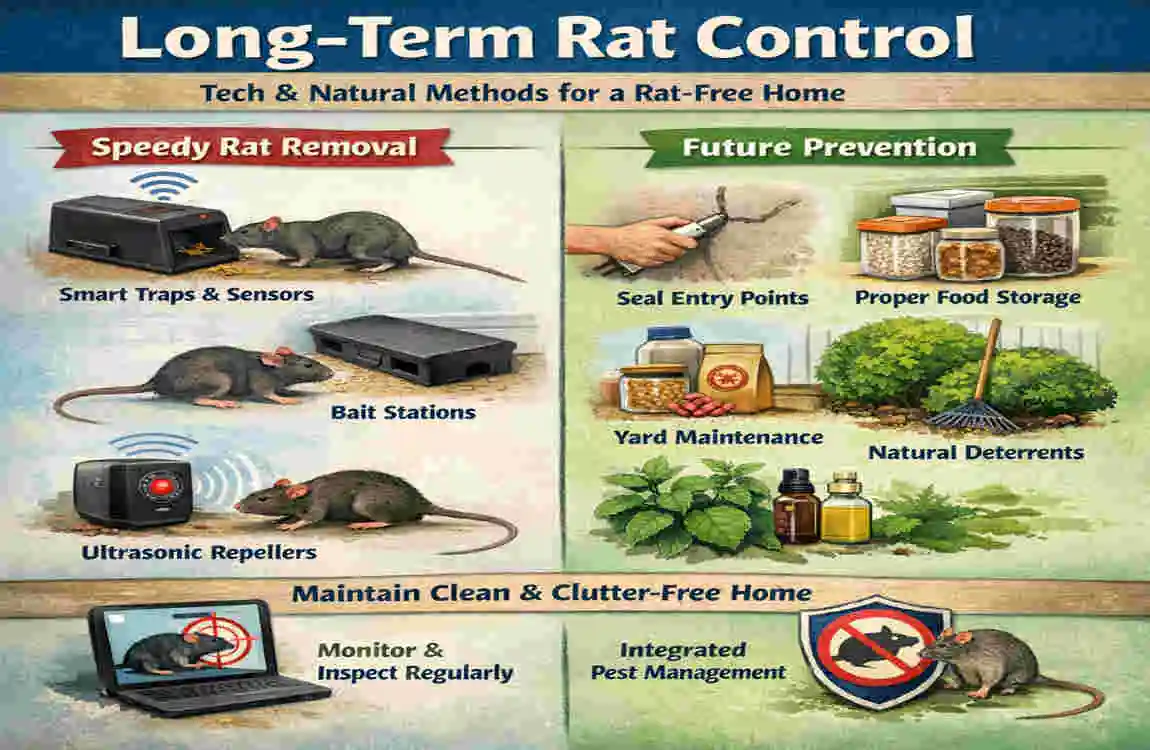
Besides traps and sealing, modern tech and natural methods can boost your success.
Electronic Traps and Ultrasonic Devices
Electronic traps kill rats humanely with a quick shock. Ultrasonic devices emit high-frequency sounds to repel rats.
- Pros: Humane, chemical-free.
- Cons: Mixed results; some rats get used to sounds.
University of Florida studies show ultrasonics can boost trap success by 30%.
Essential Oils and Predators
Cats are natural rat hunters, and owls help control outdoor populations. Peppermint oil spray is a popular DIY repellent.
Peppermint Spray Recipe:
- Mix 10 drops of peppermint oil with 1 cup of water.
- Spray around entry points and suspected nests.
Monitoring with Cameras
Trail cameras, or motion-activated cameras, let you track rat activity, helping you place traps effectively.
Device Type Pros Cons
Electronic traps : Quick kill, reusable, Higher initial cost
Ultrasonic devices : Non-toxic, easy , variable effectiveness
Trail cameras , Activity monitoring , requires setup
When to Call Pros – For Guaranteed Permanent Results
Sometimes, DIY methods aren’t enough.
When to Call Professionals
- More than 10 rats are present
- Persistent re-infestations
- Children or pets in the home (safety concerns)
What Pros Do
Pest control experts use Integrated Pest Management (IPM), combining inspection, trapping, sealing, and treatment tailored to your home.
Our Services
We provide:
- Fast response and assessment
- Customised treatment plans
- Guarantees on removal and prevention
Prevent Future Infestations: Long-Term Rat Control

Getting rid of rats is just the start. Keeping them out requires ongoing effort.
Yard and Home Maintenance
- Trim tree branches away from the roof.
- Store firewood at least 20 feet from the house.
- Clear brush and debris regularly.
Monthly Checklist:
Task Frequency
Inspect and seal holes Monthly
Clean gutters Monthly
Remove clutter Monthly
Check trash bins Weekly
Trim vegetation Monthly
Ongoing Monitoring
Place glue boards in low-traffic areas to detect early. Use smartphone apps to track sightings and treatments.
Seasonal Tips
In winter, rats seek warmth indoors. Double your inspection efforts and seal any new gaps.
Check out our Rat-Proof Home Checklist infographic for detailed steps.
FAQs: How to Get Rid of Rats in the House Quickly
Q1: How long does it take to get rid of rats quickly?
With proper traps and sealing, expect results in 3-7 days.
Q2: Are rat poisons safe to use?
They pose risks to children and pets. Traps are safer and more effective.
Q3: Do rats leave on their own?
Rarely. They stay as long as food and shelter are available.
Q4: What is the cost of professional rat removal?
Costs vary, but expect $200-$600, depending on the infestation size.
Q5: What is the best bait for house rats?
Peanut butter is most effective.
Q6: How do I know if rats are gone?
No droppings, gnaw marks, or noises for at least two weeks.
Q7: Are there natural ways to get rid of rats fast?
Yes, peppermint oil and cats help, but best combined with traps.
Q8: How to get rid of rats in the walls?
Use traps placed near entry holes, and seal them promptly.