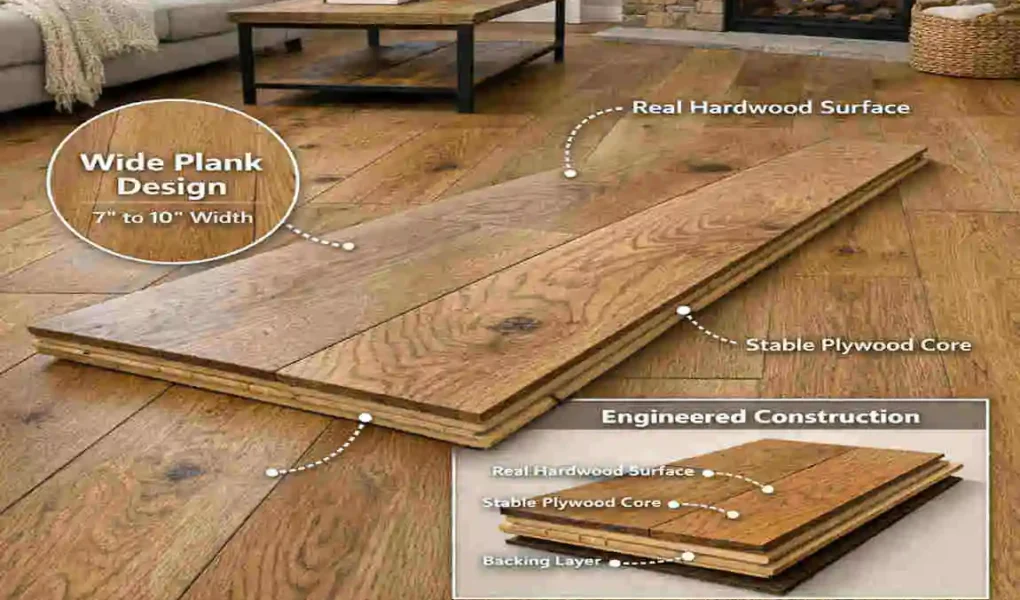
Wide-plank engineered flooring is quickly becoming a favouritefavourite choice for homeowners and interior designers alike. Its unique combination of style, durability, and versatility makes it an appealing flooring option for a variety of home designs. But what exactly is it, and why is it so popular?
What Is Wide Plank Engineered Flooring?
Understanding Engineered Flooring
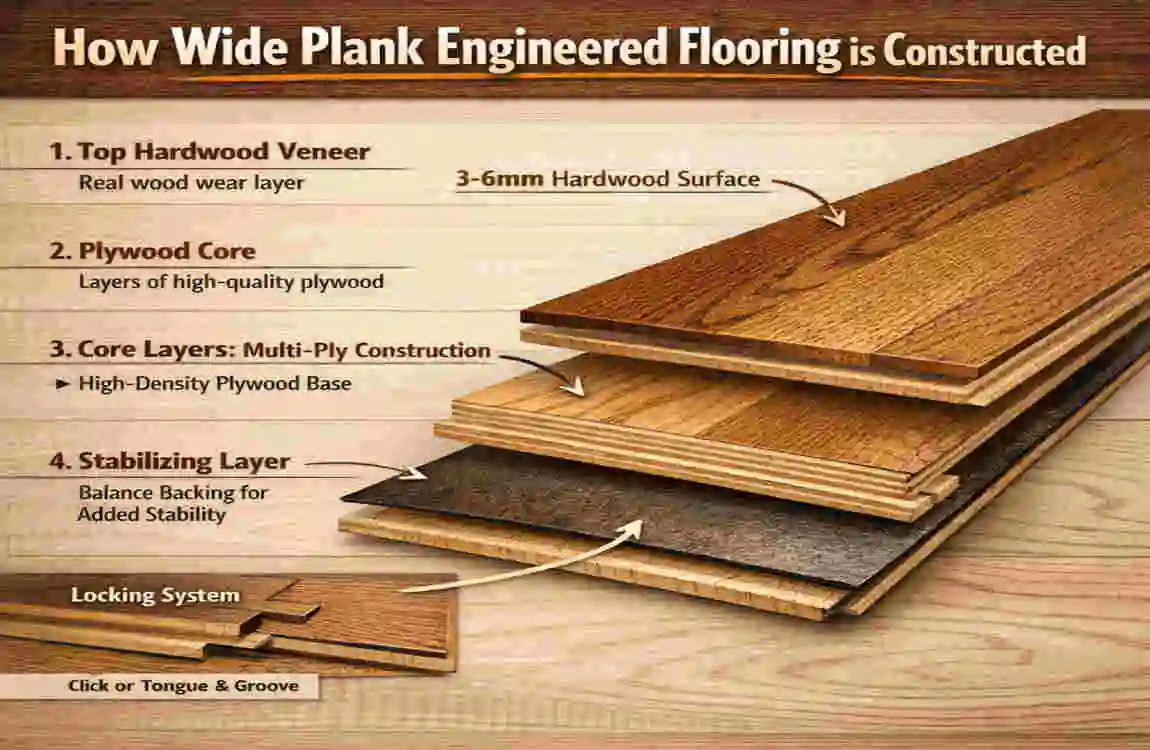
At its core, engineered flooring is a type of wood flooring made up of multiple layers. The top layer, often called the veneer, is a thin slice of real hardwood. Underneath, there are several layers of durable materials, such as plywood or high-density fiberboard (HDF), all bonded together in a crisscross pattern. This construction makes engineered flooring more stable and less prone to temperature or humidity changes than solid hardwood.
What Does “Wide Plank” Mean?
When we say “wide plank,” we’re talking about the width of the flooring boards. Traditional flooring planks are usually 2-4 inches wide, but wide plank flooring typically ranges from 5 inches to 12 inches or more. This wider dimension creates a spacious, open look and highlights the natural beauty of wood grain patterns.
Why Choose Wide Plank Engineered Flooring?
Wide plank engineered flooring combines the visual appeal of wide hardwood boards with the functional benefits of engineered construction. It’s an excellent choice for homeowners who want the best of both worlds: a natural wood appearance and enhanced durability.
How Wide Plank Engineered Flooring Is Made
Layered Construction
Wide plank engineered flooring is constructed using several layers:
- Top Veneer Layer: A thin slice of real hardwood that determines the look and feel of the flooring.
- Core Layers: These are made from plywood, HDF, or softwood layers arranged in a cross-grain structure. This design prevents warping and increases stability.
Why Layering Matters
The cross-grain construction of engineered flooring allows it to withstand seasonal changes in temperature and humidity. While solid hardwood can expand or contract, engineered flooring maintains its shape, making it ideal for areas like basements or regions with fluctuating climates.
Wide Plank vs Standard Plank Flooring
When choosing between wide-plank and standard-plank flooring, it’s essential to consider the aesthetic and functional differences.
Visual Appeal
- Wide Plank Flooring: Creates a more open and cohesive look with fewer seams. It showcases the wood’s natural grain and texture, making it perfect for large, airy spaces.
- Standard Plank Flooring: Features more seams and a traditional look. It’s often used in smaller spaces where wide planks might feel overwhelming.
Installation Differences
Wide planks cover more surface area, which means fewer boards are needed during installation. However, they can be trickier to install in uneven spaces due to their larger size.
When to Choose Wide Plank
If you’re aiming for a modern, high-end aesthetic or want to make a room feel more expansive, wide plank engineered flooring is an excellent choice.
Wide Plank Engineered Flooring vs Solid Hardwood
Structural Differences
- Solid Hardwood: Made entirely from a single piece of wood, solid hardwood is classic but prone to expansion and contraction with humidity changes.
- Engineered Flooring: With its layered structure, engineered flooring is more dimensionally stable and less likely to warp.
Durability and Refinishing
While solid hardwood can be sanded and refinished multiple times, the refinishing potential of engineered flooring depends on the thickness of the veneer layer. High-quality engineered flooring often allows for refinishing at least once or twice.
Suitability
Wide plank engineered flooring is ideal for areas where solid hardwood is less practical, such as basements, kitchens, or homes with radiant heating systems.
FeatureWide Plank Engineered FlooringSolid Hardwood
Construction: Layered core with a hardwood top. Solid piece of hardwood
Durability in Humidity High Moderate
Refinishing Potential Limited (depends on veneer) Multiple times
Cost : Generally more affordable , often more expensive
Benefits of Wide Plank Engineered Flooring
Visual Appeal
Wide planks create a clean, luxurious aesthetic. Their larger surface area highlights the wood’s natural grain, knots, and colour variations, offering a striking look.
Stability
Thanks to its engineered construction, this flooring is highly resistant to warping, cupping, and shrinking, even in high-humidity areas.
Versatility
Wide plank engineered flooring suits a range of design styles, from rustic farmhouse to modern minimalist. It’s also compatible with radiant heating systems, making it a practical choice.
Easier Installation
In many cases, engineered flooring is easier to install due to its tongue-and-groove or click-lock systems. It’s also available in pre-finished options, eliminating the need for sanding or staining.
Design Appeal and Interior Style
Wide plank engineered flooring is celebrated for its ability to elevate the look of any room.
Enhancing Room Aesthetics
- Wide planks can make small rooms feel larger and more open.
- The visible grain patterns and natural textures add depth and character.
Complementary Styles
This flooring complements a variety of interior design themes, including:
- Contemporary: Clean lines and minimalism.
- Farmhouse: Warm, rustic charm.
- Scandinavian: Light tones and simplicity.
- Transitional: A blend of modern and traditional elements.
Best Rooms for Wide Plank Engineered Flooring
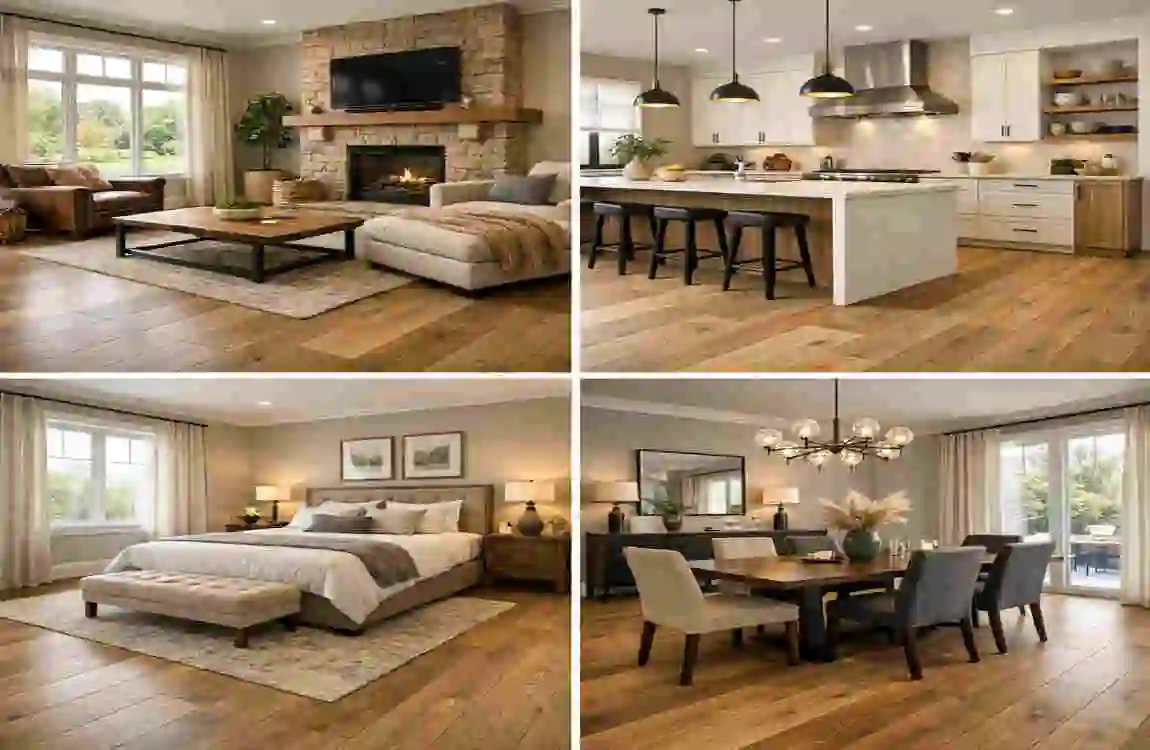
Wide plank engineered flooring works beautifully in many areas of the home, such as:
- Living Rooms: Adds warmth and sophistication.
- Bedrooms: Creates a cosy, inviting atmosphere.
- Dining Rooms: Makes a statement with its bold, wide boards.
- Open-Plan Spaces: Enhance the flow and cohesion of larger areas.
In high-moisture spaces like bathrooms, extra caution is needed to prevent water damage.
Durability and Performance
The durability of wide plank engineered flooring depends on several factors:
Resistance to Wear
High-quality options with a thick veneer layer can handle heavy foot traffic and last for decades.
Moisture Resistance
The layered construction prevents issues like warping or cupping, making it suitable for areas with changing humidity levels.
Wear Layer Thickness
The thicker the veneer, the more durable and refinishable the flooring will be. A wear layer of 2-4 millimetres is ideal for most homes.
Installation Considerations
Proper installation is key to ensuring the longevity of your flooring. Here’s what to keep in mind:
Common Methods
- Floating Installation: Boards are attached, but not to the subfloor.
- Glue-Down Installation: Adhesive secures the boards to the subfloor.
- Nail-Down Installation: Nails or staples are used to fasten the boards.
Preparation Tips
- Test for moisture levels in the subfloor.
- Ensure the subfloor is flat and clean.
- Consider hiring a professional for large or complex installations.
Cost of Wide Plank Engineered Flooring
Price Factors
The cost of wide plank engineered flooring depends on:
- Wood Species: Exotic woods are more expensive.
- Plank Width: Wider boards often come at a Premium.
- Veneer Thickness: Thicker wear layers increase durability but also increase cost.
Installation Costs
Installation expenses vary depending on the method used and labour rates in your area. While it may cost more upfront, professional installation ensures better results.
Maintenance and Care
Cleaning Tips
- Use a soft broom or vacuum to remove dirt and debris.
- Clean with a damp, well-wrung mop and a wood-safe cleaner.
- Avoid harsh chemicals or excessive water.
Protecting Your Floors
- Place rugs or mats in high-traffic areas.
- Use felt pads under furniture legs to prevent scratches.
- Regularly check for spills and wipe them up promptly.
Common Mistakes to Avoid
- Focusing Only on Appearance: Ensure the flooring suits your lifestyle and needs.
- Ignoring Subfloor Preparation: A poor subfloor can lead to uneven floors.
- Choosing Low-Quality Products: Invest in reputable brands with thick veneer layers.
- Skipping Professional Installation: DIY mistakes can be costly in the long run.
How to Choose the Right Wide Plank Engineered Flooring
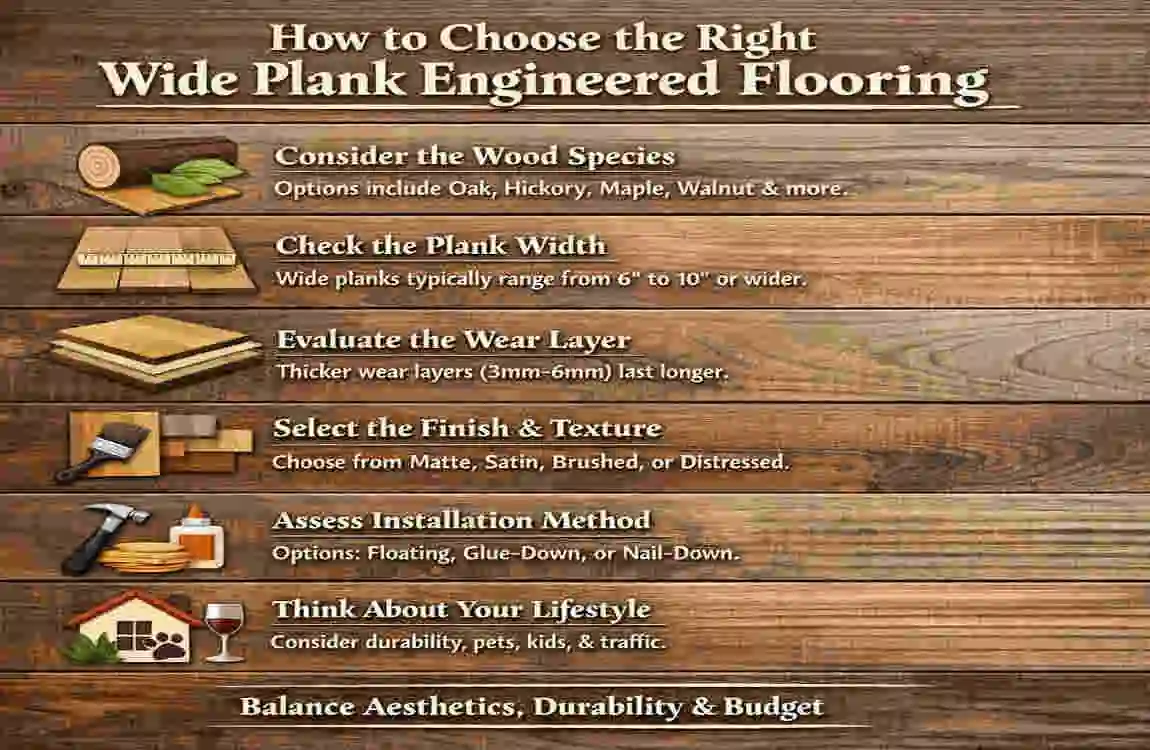
Factors to Consider
- Wood Species: Oak, maple, and walnut are popular choices.
- Finish: Matte, glossy, or textured finishes can impact the overall look.
- Plank Width: Choose a width that matches your room’s size and style.
- Lifestyle Needs: High-traffic homes may need more durable flooring.
Is Wide Plank Engineered Flooring Worth It?
Wide plank engineered flooring offers a perfect balance of beauty, practicality, and durability. Whether you’re redesigning a living room or upgrading an entire home, it’s a smart investment that adds value and elegance.
So, is it worth it? Absolutely—if you’re looking for a flooring option that combines style, stability, and versatility, wide plank engineered flooring is hard to beat.
FAQs
- What is wide plank engineered flooring? It’s a layered wood flooring with wide boards and a real hardwood veneer.
- Can it handle high traffic? Yes, especially if you choose a product with a thick wear layer.
- Is it suitable for kitchens? Yes, but ensure spills are cleaned promptly to avoid damage.
- How long does it last? High-quality engineered flooring can last 20-30 years or more with proper care.
| Topic | Short Information |
|---|---|
| What it is | Wide plank engineered flooring is a wood floor made in wide boards with a real hardwood top layer and layered core underneath. |
| Main feature | It combines the look of wide natural wood planks with the added stability of engineered construction. |
| Typical width | Wide planks are generally wider than standard flooring, often starting around 5 inches and above, depending on the brand. |
| Why people choose it | It gives rooms a spacious, elegant look with fewer seams and more visible wood grain. |
| Best benefit | It is often more stable than solid wide plank wood in changing humidity and temperature. |
| Best use | It works well in living rooms, bedrooms, hallways, and open-plan spaces. |