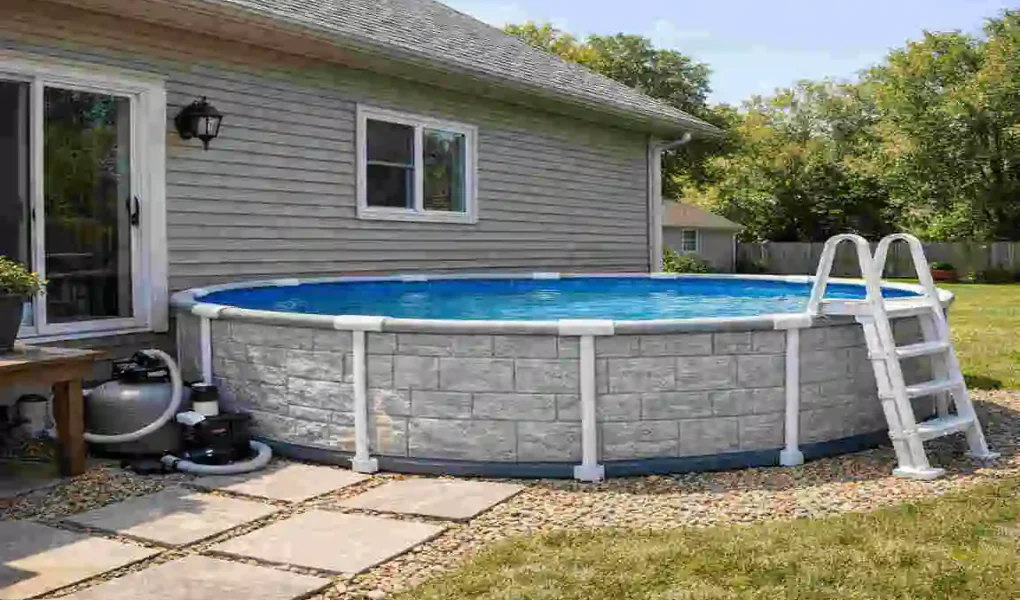
Are you dreaming of installing an above-ground pool in your backyard? The thought of cooling off on hot summer days is exciting, but ensuring compliance with regulations can feel overwhelming. One of the most common questions homeowners ask is, “How close can an above-ground pool be to a house?”
According to national standards, above-ground pools must typically be placed at least 10 feet away from the house. However, local regulations may vary, requiring setbacks of 8 to 10 feet or more from buildings, property lines, and utility installations. Failing to adhere to these rules can lead to fines, safety risks, and even damage to your home.
National Standards for Pool Placement
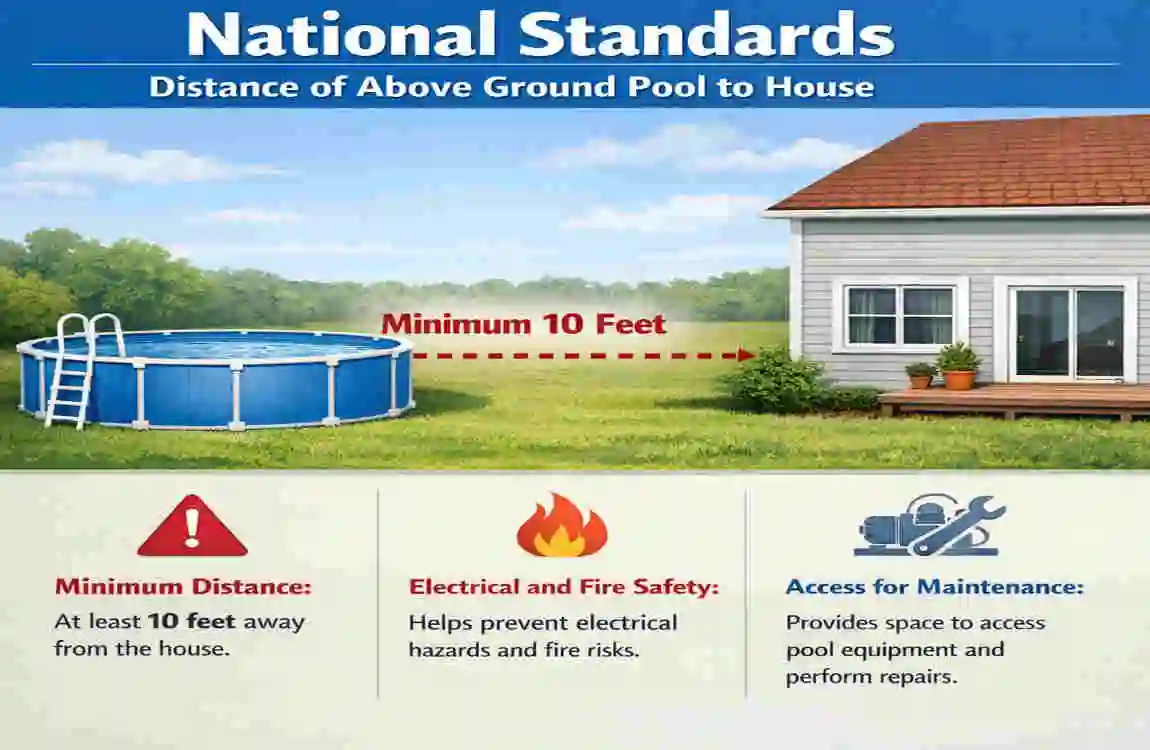
When it comes to above-ground pools, there are specific national guidelines designed to ensure safety and structural integrity. These standards help homeowners avoid issues like electrical hazards, foundation damage, and water leakage.
Minimum Distance Rule
National guidelines require that above-ground pools be installed at least 10 feet from the walls of your house. This distance is crucial to protecting your home’s electrical wiring and foundation from potential water damage from splashes, leaks, or flooding.
- Why 10 Feet?
- Water is a natural conductor of electricity, which means placing a pool too close to your home can increase the risk of electrical shorts or fires. Additionally, closer pool placement can void your homeowner’s insurance or result in hefty fines.
- Comparison to In-Ground Pools
- Interestingly, in-ground pools often follow similar distance rules. However, they require additional excavation and fencing, which can make the installation process more complex.
Ensuring your pool adheres to the 10-foot rule isn’t just about compliance; it’s about creating a safe and enjoyable outdoor space for your family.
Local Regulations: What You Need to Know
While national standards provide a baseline, local regulations often vary significantly. These rules are influenced by factors such as climate, geography, and municipal policies. It’s important to check with your city or county before installing your above-ground pool.
Common Setback Variations
Here are some common pool setback requirements observed in various locations:
- Many municipalities enforce setbacks of 8 to 10 feet from buildings, property lines, and utility installations.
- Some areas, like Elk River, Minnesota, require 8 feet from the side or rear of the property but prohibit pools in the front yard.
- Homeowner associations (HOAs) may impose even stricter guidelines, such as greater distances from fences or neighbouring properties.
To better understand typical setback requirements, refer to the table below:
Location Minimum Setback from House Additional Notes
National Standard 10 feet Prioritises electrical safety
Elk River, MN 8 feet (side/rear) No pools allowed in front yards
General U.S. Areas 10 feet from buildings, similar to the national standard
How to Check Local Rules
To ensure compliance with local regulations:
- Research Your city’s Rules: Search for above-ground pool setbacks” or visit your local building department’s website.
- Consult Your HOA: If you live in a community governed by an HOA, check their specific guidelines.
- Contact Local Authorities: When in doubt, call or visit your local zoning office for clarification.
Risks of Placing an Above-Ground Pool Too Close to Your House
Ignoring setback regulations can lead to serious problems that affect your home, your safety, and your wallet. Let’s explore the potential risks of improper pool placement.
Electrical and Flood Hazards
- Electrical Risks: Water splashes from the pool can reach electrical outlets or wires, increasing the risk of electrical shorts or even fires.
- Flooding Issues: Leaks or overflows from the pool can cause water to seep into your home’s foundation, leading to long-term structural damage.
Real-Life Example: Several homeowners have reported issues when placing pools too close to their homes. For example, Reddit users have shared stories of pools placed within 5 to 6 feet of their house, causing water damage to walls and electrical systems.
Foundation and Insurance Problems
- Foundation Damage: The constant vibration and moisture from a nearby pool can weaken your home’s foundation, leading to cracks and costly repairs.
- Insurance Denials: Many insurance companies will not cover water damage or accidents if the pool placement does not comply with local codes.
Ideal Placement Factors for Above-Ground Pools
Choosing the right spot for your pool involves more than just meeting the minimum distance requirement. You’ll also want to consider factors like sunlight, drainage, and accessibility.
Site Assessment Steps
- Measure from the House Edge: Ensure the pool is at least 10 feet away from the house. Measure from the waterline, not the pool supports.
- Avoid Utilities: Check for underground utilities, such as gas or water lines, before selecting a location.
- Evaluate Sunlight and Drainage: Place the pool in an area that receives adequate sunlight and has proper drainage to avoid water pooling around the base.
Pro Tips for Compliance
- Hire a Surveyor: A professional surveyor can help you identify property lines and ensure your pool placement complies with local regulations.
- Obtain Permits: Always get the necessary zoning and electrical permits before beginning installation.
Installation Best Practices
Proper installation is key to ensuring the safety and longevity of your above-ground pool. Here are some best practices to follow:
Permits and Preparation
- Secure Permits: Display all required permits at the installation site.
- Level the Ground: Ensure the ground is level within a 10+ foot radius of the pool to prevent tilting or instability.
Adding Decks and Fences
- Deck Placement: If you plan to add a deck, ensure it is at least 5 feet away from property lines.
- Fence Requirements: Many areas do not require fences for above-ground pools, but it’s always a good idea to check local codes.
Cost and Maintenance Insights
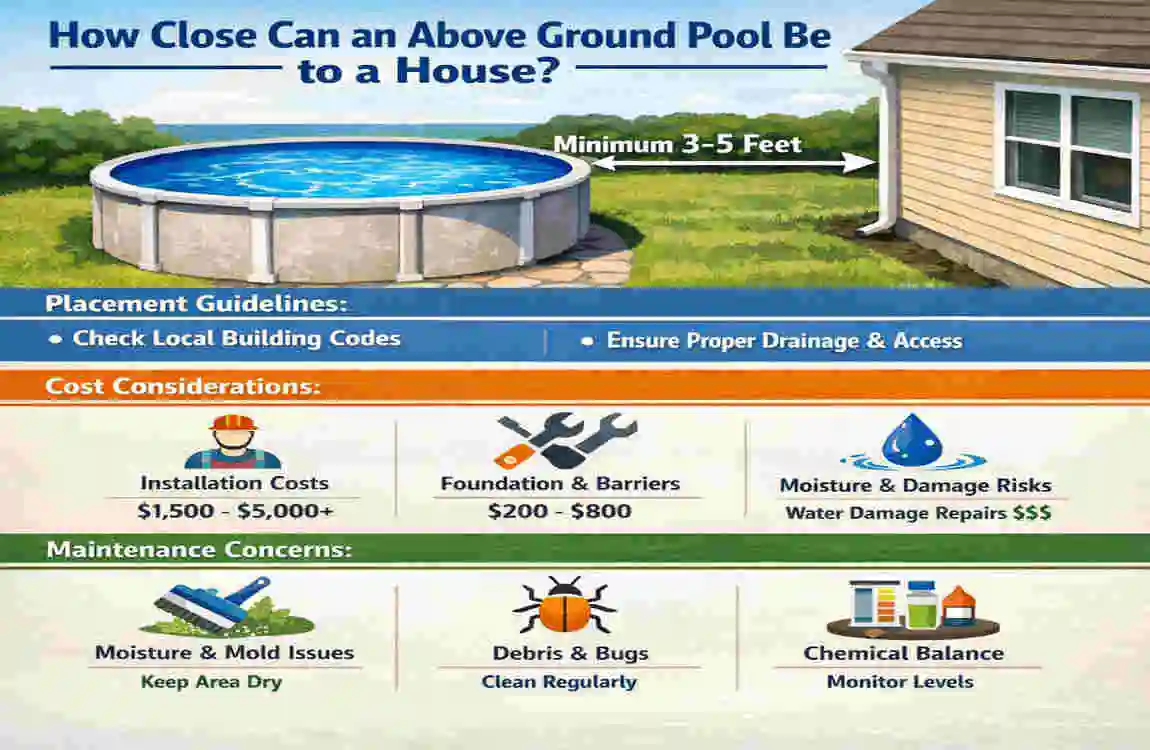
Installing a pool incorrectly can lead to costly fines and repairs. Here’s how proper placement can save you money in the long run:
- Fines for Non-Compliance: Violating setback rules can result in fines of $500 or more.
- Easier Maintenance: A pool placed at the correct distance reduces splash-back onto your house, making cleaning and maintenance easier.
FAQs About Pool Placement
How close can an above-ground pool be to a house?
Typically, 10 feet nationally, but local codes may allow as close as 8 feet with proper permits.
Can it be under 10 feet?
Rarely. Some areas may allow 8 feet, but anything closer increases risks and may result in fines.
Do HOA rules override local codes?
Yes, HOAs can impose stricter rules than local regulations.
Are setbacks the same for in-ground pools?
The rules are similar, but in-ground pools often require additional fencing and excavation considerations.
| Location/Rule | Minimum Distance from House | Notes |
|---|---|---|
| National Standard (NFPA) | 10 feet | Protects wiring; measure to water edge |
| Common Local Codes | 8-10 feet | Varies by city; e.g., Elk River: 8 ft sides |
| Some Municipalities | 5 feet | Rare, often for rear yards only |
| Property Lines/Setbacks | 10 feet | Includes decks/equipment |
| HOA Rules | 10-15+ feet | May be stricter than codes |