
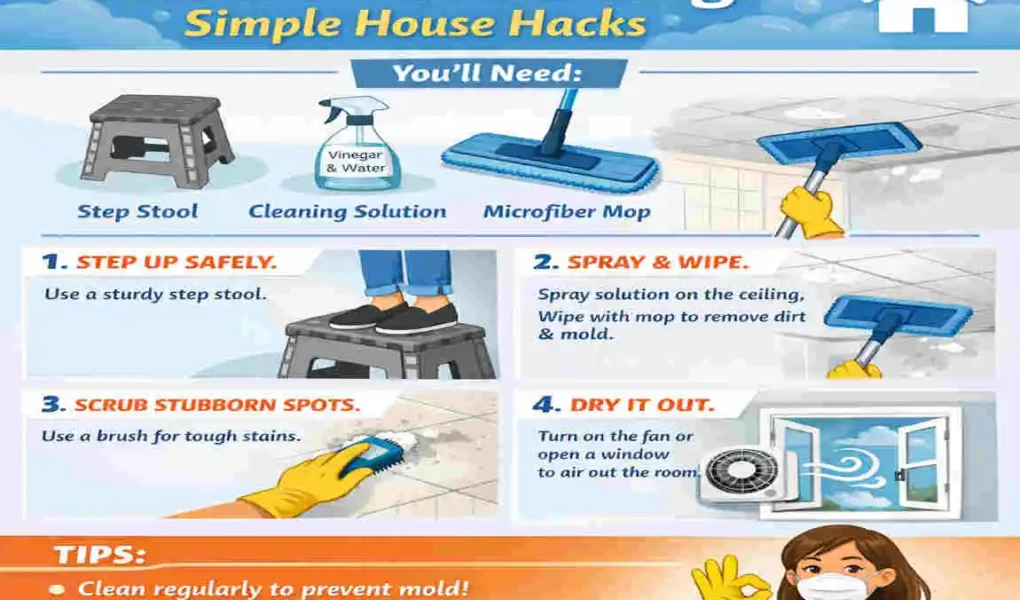
Keeping your bathroom ceiling clean isn’t just about appearances. Mold, mildew, and grime thrive in damp spaces, making ceilings a frequent hotspot for these unwelcome guests. If you’ve ever found yourself staring up at a dingy ceiling, wondering how to restore its sparkle, you’re in the right place. In this comprehensive guide, we’ll walk you through how to clean the bathroom ceiling effectively using easy, affordable household hacks — no harsh chemicals or fancy equipment needed!
Why Bathroom Ceilings Get Dirty
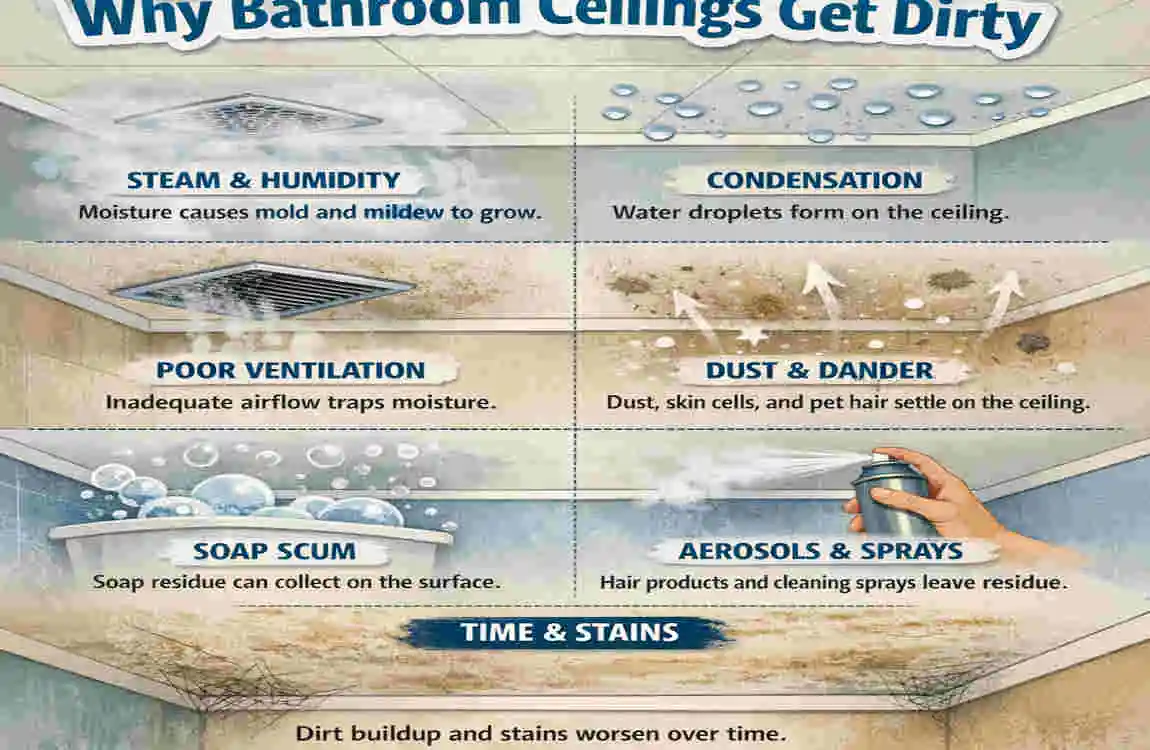
Bathrooms are naturally humid places. Every steamy shower or bath releases moisture that clings to surfaces — especially the ceiling, which often gets overlooked during cleaning.
Causes of Bathroom Ceiling Dirtiness
- Moisture buildup: Bathrooms usually have poor ventilation. When moisture hangs around, it creates the perfect environment for mold and mildew to grow.
- Soap scum splash-up: Water mixed with soap or shampoo can splash up onto the ceiling, leaving behind residue that attracts dirt.
- Infrequent cleaning: Ceilings aren’t cleaned as often, allowing grime and spores to accumulate and multiply.
Health Risks of Bathroom Ceiling Mold
Mold isn’t just ugly; it can harm your health. Many people suffer allergic reactions, asthma attacks, or respiratory issues triggered by mold spores floating in the air. According to studies, over 10 million households in the U.S. experience mold problems each year, often originating from damp bathroom surfaces.
Visual Signs to Spot Mold and Mildew
- Black or green spots on the ceiling
- Yellowish stains or watermarks
- Paint peeling or bubbling due to trapped moisture.
Pro tip: To check if those spots are mold or just dirt, spray a small area with white vinegar. If the stain lightens or disappears, it’s likely mold.
Tools and Supplies Needed
Before diving into your cleaning project, gather the right tools. This will make the job smoother and safer.
Must-Have Supplies:
- Extendable microfiber mop or broom with detachable head (to reach the ceiling easily)
- Spray bottle (for DIY cleaners)
- Protective gloves and goggles (especially when handling bleach)
- Common household cleaners: white vinegar, baking soda, dish soap, Hydrogen‘s peroxide
Budget Breakdown Table
Item Cost Estimate Purpose
Vinegar (1L) $1-2 Natural mold killer
Microfiber cloths $5 Lint-free wiping
Spray bottle $2 DIY cleaning solutions
Bleach (optional) $3 Heavy-duty mold and mildew removal
Preparation Steps Before Cleaning
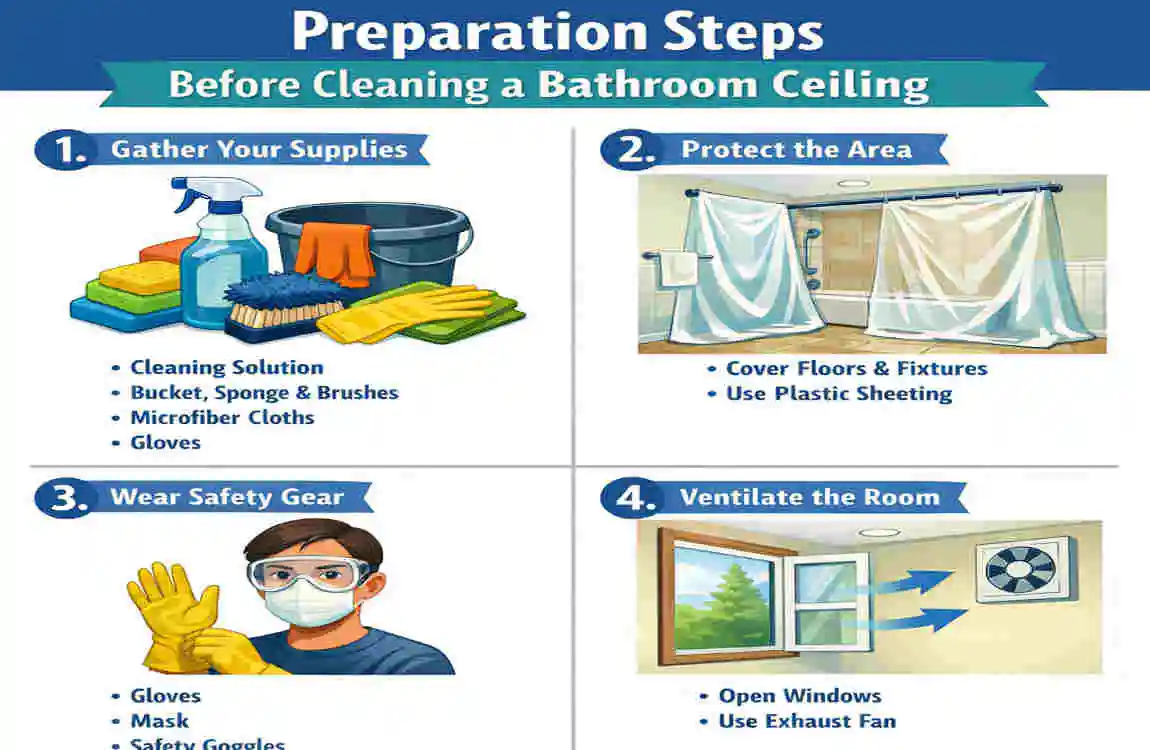
Preparation is key to an effective and mess-free ceiling cleaning.
Safety First
- Turn off any fans or heaters.
- Open windows to ensure good airflow.
- Protect floors and fixtures by laying down drop cloths or old towels.
Declutter the Space
Remove shower curtains, towels, or any hanging items that can get in the way or catch drips.
Vacuum Cobwebs and Dust
Use a vacuum cleaner with a duster attachment to loosen and remove cobwebs and dust from the ceiling. This step prevents dirt from smearing during wet cleaning.
Test Spot for Cleaner Safety
Always spray a small, hidden patch with your chosen cleaner to check for any discoloration or paint damage.
Time estimate: Spending 10-15 minutes prepping saves you from bigger headaches later!
Step-by-Step Cleaning Hacks
Here’s where the magic happens! These 10 simple hacks will help you tackle grime, mold, and mildew on your bathroom ceiling with ease.
Vinegar-Water Spray
What You’ll Need: Equal parts white vinegar and water in a spray bottle.
How to Use:
- Spray the ceiling generously, but don’t soak it.
- Let it sit for about 15 minutes — vinegar’s acidity kills about 82% of mold species.
- Wipe down with a damp microfiber mop or cloth attached to a pole.
- Rinse with clean water, then dry thoroughly with a towel or a fan.
Why It Works: Vinegar is a natural, non-toxic cleaner that breaks down mold and mildew without harsh chemicals.
Baking Soda Paste for Stubborn Spots
Ingredients: Baking soda + a small amount of water to form a thick paste.
Instructions:
- Apply the paste directly on tough stains or textured ceilings.
- Gently scrub with a soft brush or sponge.
- Rinse with water and wipe dry.
Perfect for textured ceilings where spray cleaners may not reach deeply into the texture.
Bleach Solution for Black Mold
Safety Note: Use gloves, goggles, and ventilate well.
Recipe: 1 cup bleach mixed with 1 gallon of water.
Steps:
- Lightly spray or dab the moldy areas; never soak the ceiling.
- Let it sit for 5-10 minutes.
- Wipe clean with a damp cloth.
- Dry immediately to avoid water damage.
Bleach is powerful, but it should be your last resort for heavy mold buildup.
Broom and Dish Soap Swish
Eco-Friendly Trick:
- Fill a tub or bucket with warm water and a few drops of dish soap.
- Dip the broom head in the soapy water.
- Flick and swish the broom gently against the ceiling to dislodge dirt.
- Rinse the broom often and repeat if needed.
Hydrogen Peroxide Magic
Use: 3% Hydrogen peroxide in a spray bottle.
How to apply:
- Spray the ceiling lightly.
- Let it bubble and work for 10 minutes.
- Wipe off with a clean cloth.
Hacks 6-10 Quick Tips
- Microfiber Mop Wipe-Down: Use a microfiber mop for a gentle but thorough wipe.
- Steam Cleaner Rental: For deep sanitizing without chemicals, rent a steam cleaner.
- Dryer Sheet Dust Magnet: Rub a dryer sheet on the ceiling to attract dust and repel static.
- Lemon Juice for Freshness: Lemon juice mixed with water helps eliminate odors and brightens paint.
- Magic Eraser for Edges: Use for stubborn marks near ceiling corners or along moldings.
Common Mistakes to Avoid
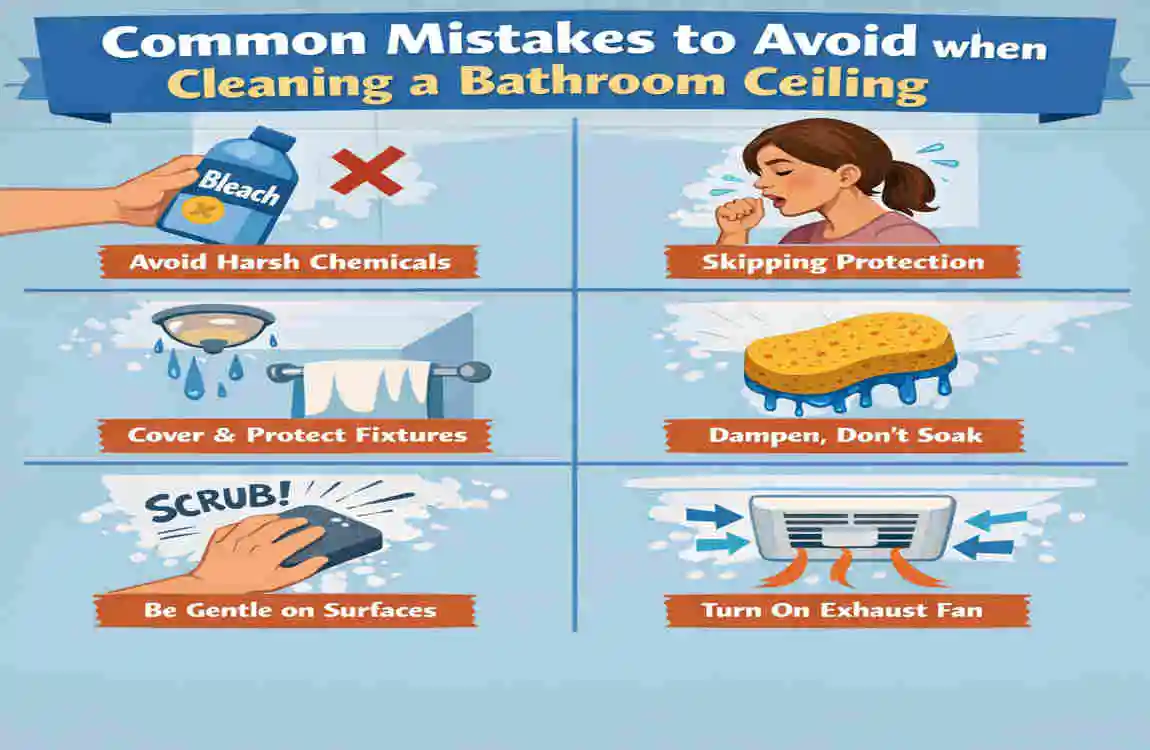
Cleaning your bathroom ceiling can backfire if you’re not careful. Here’s a quick table of pitfalls and fixes:
Mistake Why It Fails Fix
Over-wetting the ceiling causes drips and peeling paint. Wring the mop or cloth thoroughly.
Ignoring ventilation, mold grows back quickly. Run the exhaust fan for 30+ mins after
Harsh scrubbing on paint, scratches, or removes paint layers. Use soft cloths or microfiber only.
Reader poll: Have you ever ruined a ceiling while cleaning? Share your story below!
Prevention Tips for Lasting Clean
Cleaning is just one part of the battle. Keep your bathroom ceiling fresh with these daily and seasonal habits.
Daily Habits
- Wipe the ceiling lightly after showers with a microfiber cloth.
- Always run the exhaust fan or open a window to reduce moisture.
Weekly Routine
- Spritz a vinegar-water solution on the ceiling to prevent mold buildup.
Long-Term Solutions
- Paint your ceiling with mold-resistant, semi-gloss paint for easier cleaning and durability.
- Use a dehumidifier in very damp climates.
- Keep windows open when possible.
Seasonal Deep Clean Checklist
- Inspect for new mold spots or peeling paint.
- Clean exhaust fans and vents.
- Deep clean the ceiling using one of the hacks above.
FAQs
How often should I clean my bathroom ceiling?
In humid bathrooms, monthly cleaning is ideal to prevent mold.
Is it safe to use vinegar on painted ceilings?
Yes, vinegar is gentle and effective when diluted on most painted surfaces.
Which is better: vinegar or bleach?
Use vinegar for regular cleaning and prevention; reserve bleach for tough black mold spots.
Can I use these hacks on tiled bathroom ceilings?
Absolutely! These methods work on most ceiling types, including tile and drywall.
Are these methods safe for kids’ bathrooms?
Yes, especially vinegar and Hydrogen‘s’s peroxide are non-toxic options.