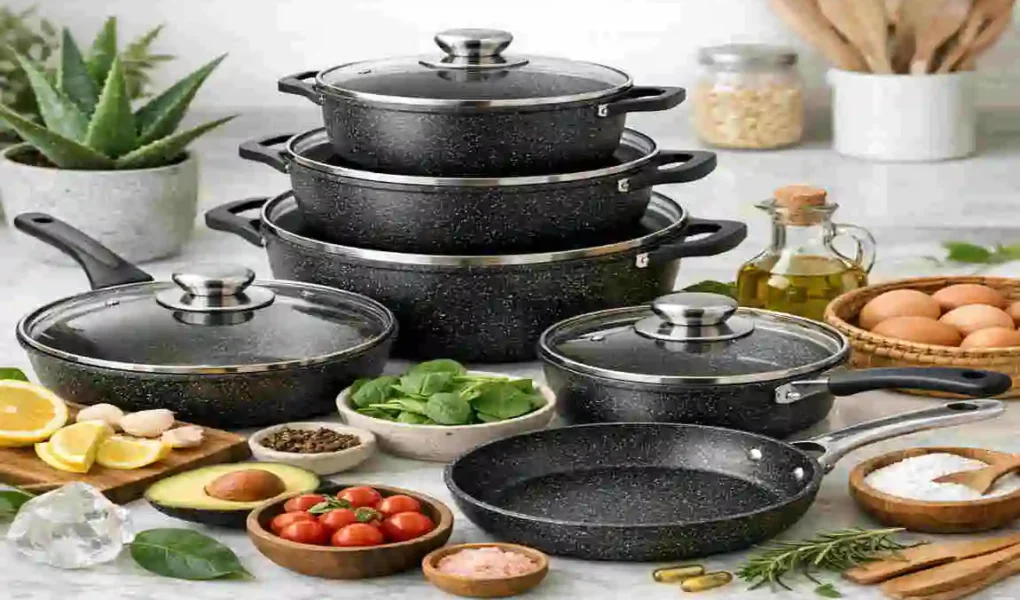
If you are asking whether Kitchen Academy cookware is non-toxic, the short answer is: it is generally considered a safe, budget-friendly nonstick option, but it is not the same as fully non-toxic cookware.
Kitchen Academy cookware is popular because it is affordable, easy to use, and simple to clean. Most of its pans and sets feature nonstick coatings, which help food release easily and make cooking more convenient. For many home cooks, that is a big plus.
Still, when people talk about non-toxic cookware, they usually mean cookware made from materials that avoid chemical coatings or common concerns like PFOA, PFAS, and similar compounds. Kitchen Academy cookware may be PFOA-free, but it often still uses a coated surface, so it does not fit into the same category as stainless steel or cast iron.
What Is Kitchen Academy Cookware?
Brand Background
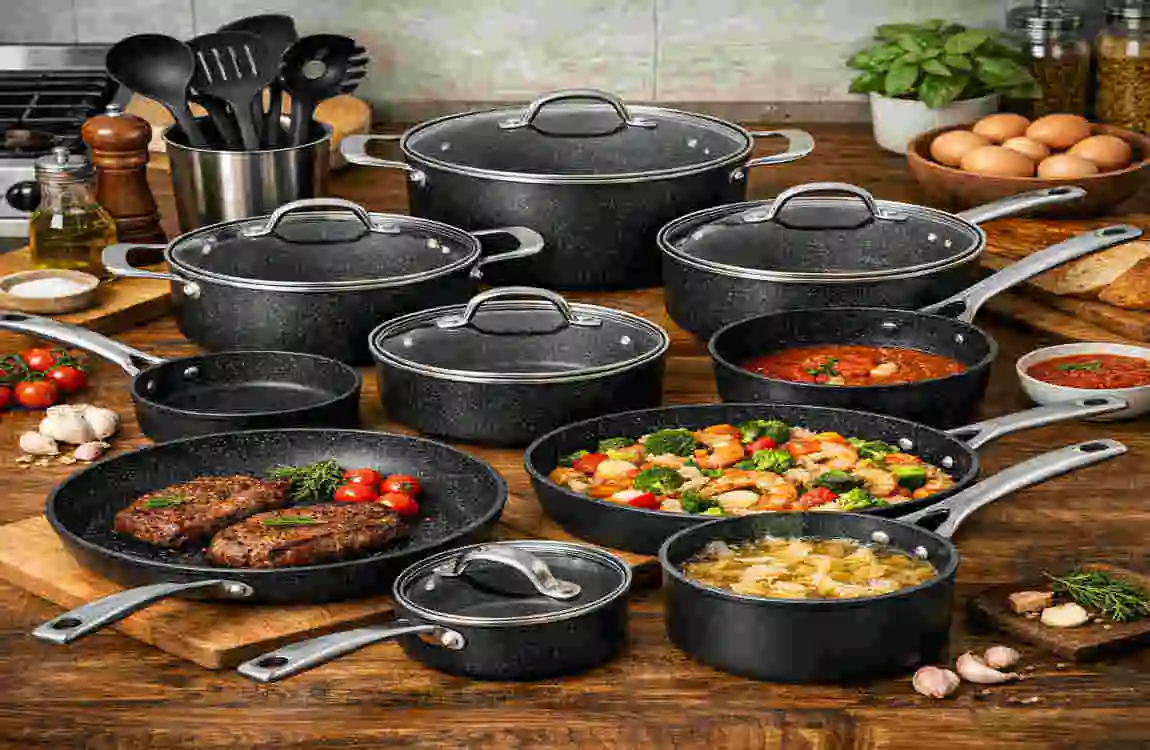
Kitchen Academy makes cookware sets for everyday use at home. The brand usually focuses on lightweight, easy-to-handle nonstick pans, pots, and cookware sets.
This makes it a common choice for beginners, families, and people who want a practical kitchen setup without spending too much.
Popular Product Types
Most Kitchen Academy products include:
- Nonstick cookware sets
- Frying pans
- Sauce pans
- Stock pots
- Granite-style coated cookware
These products are often made with an aluminium base and then coated for non-stick performance.
What Does “Non-Toxic Cookware” Really Mean?
Chemicals People Usually Want to Avoid
When shoppers ask about non-toxic cookware, they are often trying to avoid:
- PFOA
- PFAS / PFOS
- Lead and cadmium
- BPA in handles or parts
These substances are often associated with older cookware concerns or low-quality materials.
Safer Cookware Materials
People who want the safest long-term options often choose:
- Stainless steel
- Cast iron
- Ceramic-coated cookware
- Hard-anodised aluminium
These materials are often preferred because they can reduce the need for questionable coatings.
Is Kitchen Academy Cookware Non-Toxic?
Nonstick Coating Safety
Kitchen Academy cookware is usually marketed as PFOA-free, which is a good sign. PFOA is one of the chemicals many buyers want to avoid.
However, many nonstick pans still use a coating that can break down if overheated. That means the cookware may be safe for normal use, but it is not ideal for very high heat cooking.
Material Safety
Most Kitchen Academy pans use an aluminium core with a nonstick outer layer. Aluminium itself is commonly used in cookware, but the coating is what matters most for safety.
If the coating stays in good condition and the pan is used correctly, it is generally fine for everyday cooking. But once the surface gets scratched, worn, or overheated, safety and performance can go down.
Pros and Cons of Kitchen Academy Cookware
ProsCons
Affordable price. The coating may wear over time
Lightweight and easy to use Not fully chemical-free
Easy to clean Not ideal for high heat
Good for everyday cooking. Needs gentle care
How Safe Is It for Daily Cooking?
For low- to medium-heat cooking, Kitchen Academy cookware is usually okay when used properly. It works well for eggs, pancakes, vegetables, and simple meals.
But for high heat, there are some risks. Overheating nonstick pans can damage the coating more quickly and may reduce the cookware’s safety over time.
Expert Tips to Use It Safely
To make your Kitchen Academy cookware last longer and stay safer:
- Do not heat empty pans
- Use wooden or silicone utensils
- Avoid very high heat
- Hand wash when possible
- Replace pans with scratch-resistant coatings
These simple habits can help protect both the pan and your food.
Who Should Buy It?

Kitchen Academy cookware may be a good fit for:
- Beginner cooks
- Budget-conscious families
- People who want easy cleanup
- Occasional home cooks
Who Should Avoid It?
You may want to look for another option if you are:
- A professional chef
- Someone who cooks on very high heat
- A person who wants strictly non-toxic, coating-free cookware
Frequently Asked Questions
Is Kitchen Academy cookware non-toxic?
It is generally considered PFOA-free, but it still uses a nonstick coating, so it is not the same as fully coating-free cookware.
Is it safe for everyday use?
Yes, it is usually safe for low- to medium-heat cooking if used correctly.
Can Kitchen Academy pans go in the oven?
Some may be oven-safe, but it depends on the specific product. Always check the product details first.
How long does the nonstick coating last?
It depends on how you use and care for it. With gentle use, it can last for years, but scratches and high heat can shorten its life.
What is the safest cookware overall?
Many people consider stainless steel and cast iron to be the safest long-term cookware choices.
| Question | Answer |
|---|---|
| Is Kitchen Academy cookware safe? | Yes — The brand states it’s safe for everyday cooking |
| Is it non-toxic? | Yes — Marketed as non-toxic, toxin-free cookware |
| Free from harmful chemicals? | Yes — Free of lead, PFOS, and PFOA |
| Coating type | Granite-coated/non-stick (eco-friendly, eco-safe) |
| Heat resistance | Handles heat-resistant up to 350°F; Bakelite handles |
| Induction compatible? | Yes — Works on all major cooktops including induction |
| Additional safety features | Enamel-coated cast iron options are naturally non-toxic with chemical-free coatings |