

Choosing the right house fit-out supplies is essential for turning an empty or unfinished property into a comfortable, functional, and attractive living space. From flooring, lighting, and wall finishes to plumbing fixtures, electrical fittings, and kitchen essentials, every item plays an important role in the final result. However, knowing what you actually need can help you avoid unnecessary purchases, control costs, and keep your project on schedule.
Who supplies what? Settle this before you buy anything
One of the most expensive misunderstandings in any fit-out is assuming a trade is supplying something that they are not. The industry shorthand is loose: Designing Buildings notes that first, second and third fix have no accurate standard definitions home design, so contracts should spell out exactly what work is carried out and by whom.
Before you order, ask every trade for a written answer to three questions:
- Do you supply and fit, or fit only?
- Which fittings (sockets, switches, taps, light fittings) are included in your price?
- When do you need my chosen products on site?
First fix supplies (before plastering)
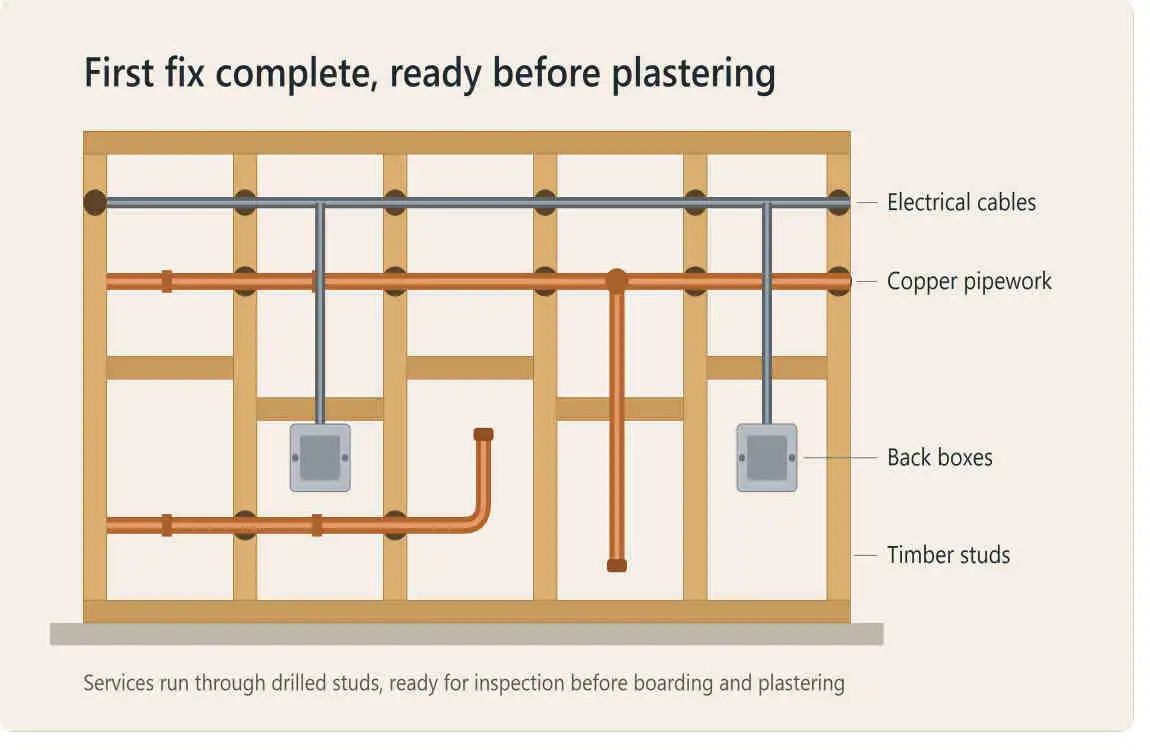
These items disappear behind walls, floors and ceilings, so they need to be right the first time. Typical first fix supplies include:
- Electrical: cabling, back boxes, consumer unit (fuse board) and conduit.
- Plumbing: supply and waste pipework, cylinders or boiler connections, and rough-in positions for baths, showers and basins.
- Heating and ventilation: radiator pipework or underfloor heating, plus ductwork for extractor fans or ventilation systems.
- Carpentry: studwork, door linings and any structural timber for fixing kitchens or shelves later.
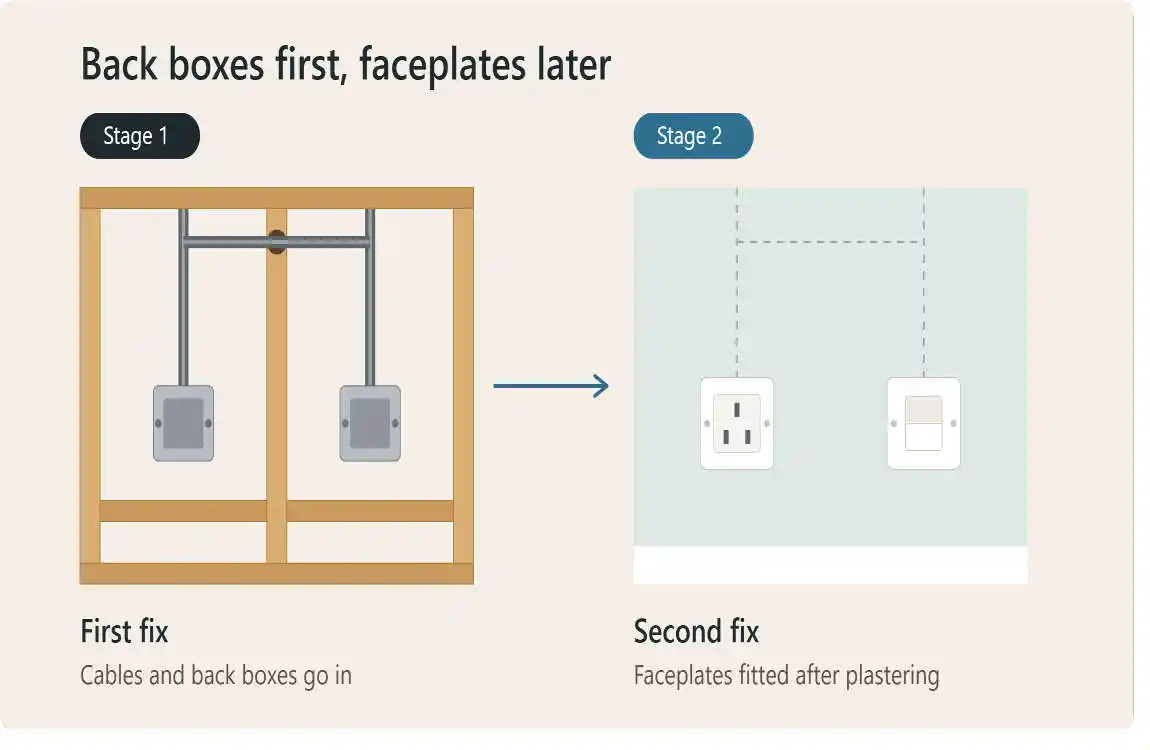
As Homebuilding & Renovating explains, electrical first fix is when cables and back boxes go in; the front faces of sockets, switches and lights are fitted later at second fix.
A safety note on electrics
Electrical work in homes in England is covered by Part P of the Building Regulations. The Planning Portal explains that Approved Document P sets out which procedures apply and when a professional electrician must be hired. Some work is notifiable and must be certified, so use a registered electrician for new circuits, consumer units and anything in a kitchen or bathroom.
Insulation and plastering supplies
Once first fix is tested and signed off, the walls and ceilings are closed. This is the cheapest moment to get insulation right.
- Loft or roof insulation (such as mineral wool)
- Wall insulation (cavity fill, internal boards or external systems, depending on your wall type)
- Floor insulation
- Plasterboard, plaster, beads and primer
Why it matters: the Energy Saving Trust states that a typical uninsulated home loses about 25% of its heat through the roof, 33% through the walls and 10–20% through the floor. If you are already opening up walls and modern ceilings, insulating at the same time avoids paying for access twice.
Second fix supplies (after plastering and a first coat of paint)
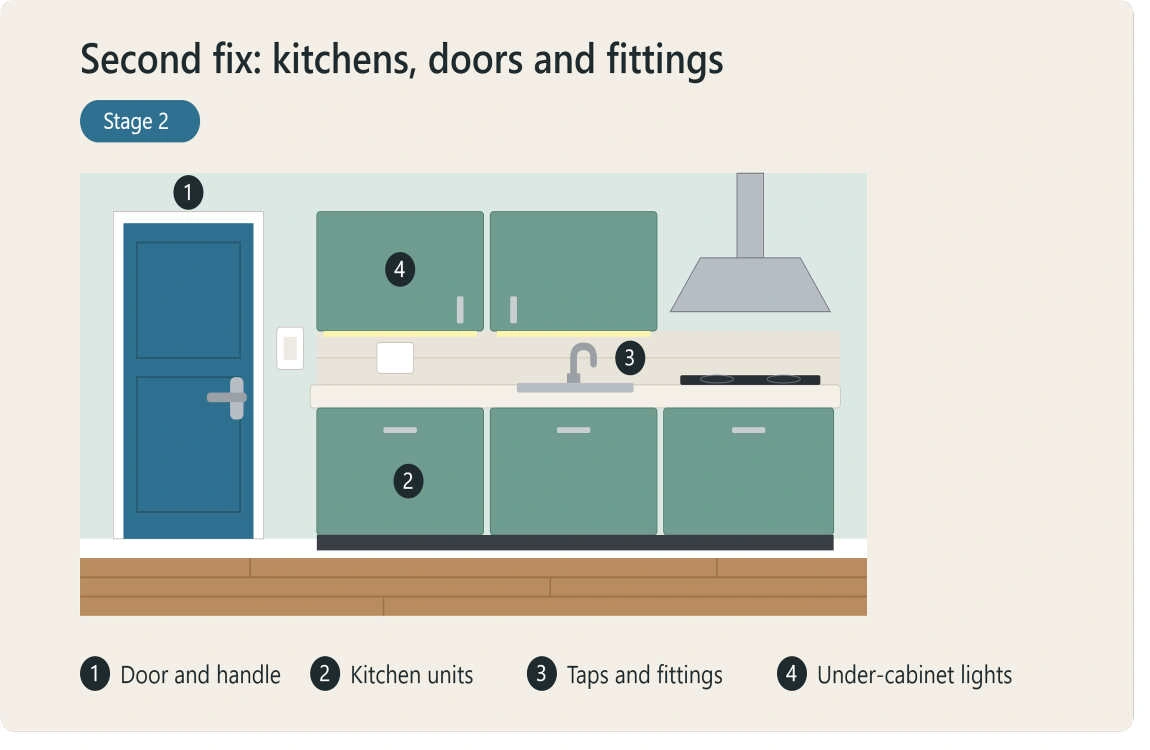
This is where the house starts to look finished. Second fix is when the visible items are installed: electrical accessories, taps and sanitaryware, and doors and trims. A typical list:
- Electrical: socket and switch plates, light fittings, extractor fans, smoke and heat alarms.
- Plumbing: taps, shower valves and heads, toilets, basins, baths, radiators and radiator valves.
- Carpentry: internal doors, handles and hinges (ironmongery), skirting boards, architraves, window boards and handrails.
- Kitchen: units, worktops, sink, hob, oven and extractor.
According to Homebuilding & Renovating, a three-bed semi might take around two days for electrical first fix and a similar time for second fix, and larger properties take longer. Order your accessories and fittings early so the trades are not left waiting.
Finishing supplies
The last layer is what you see and touch every day:
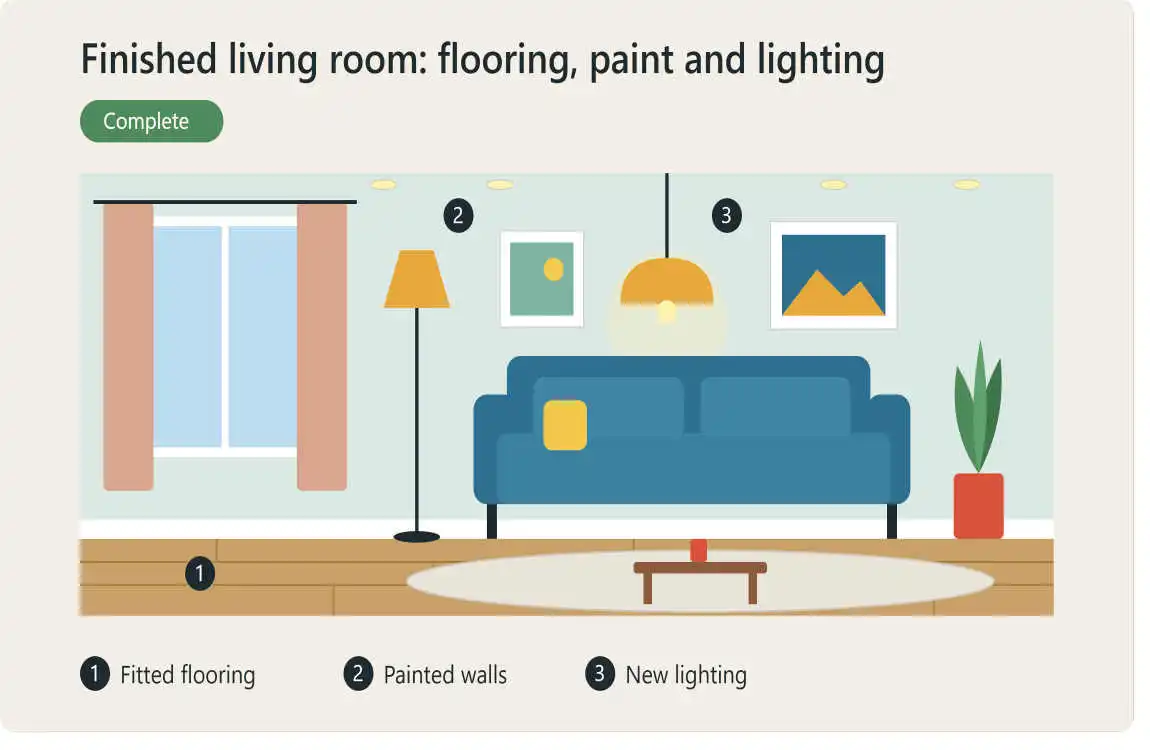
- Flooring (carpet, laminate, engineered wood, tiles or vinyl)
- Paint, caulk, tile adhesive and grout
- Curtain poles or blinds, mirrors and shelving
- Bathroom accessories such as towel rails and toilet roll holders
- Cleaning supplies for the final builder’s clean
Do a snagging inspection before you make final payments. Note every scratch, gap or unfinished item and agree a date for fixing it.
House fit-out supplies checklist (at a glance)
| Stage | Main supplies | When to order |
|---|---|---|
| First fix | Cables, back boxes, consumer unit, pipework, ductwork, door linings | Before plastering |
| Insulation and plastering | Insulation, plasterboard, plaster, beads | After first fix is tested |
| Second fix | Sockets, switches, lights, taps, sanitaryware, doors, skirting, kitchen | Order early; fit after plastering and first coat of paint |
| Finishes | Flooring, paint, tiles, accessories, blinds | Final weeks before handover |
Common fit-out mistakes to avoid
- Choosing fittings too late. Back boxes, radiator positions and waste outlets depend on the products you pick, so choose key items before first fix.
- Assuming “supply and fit” covers everything. Always check whether fittings are included in the quote.
- Skipping insulation while walls are open. Retrofitting costs more and is more disruptive.
- Not testing first fix before plastering. Leaks and faults behind luxury finished walls are expensive to chase.
- Ignoring lead times. Kitchens, windows and bespoke joinery can take weeks to arrive.
Frequently asked questions
What supplies do I need to fit out a house?
You need four groups of supplies, bought in build order: first fix (cables, pipes, back boxes, ductwork), insulation and plastering materials, second fix (sockets, switches, taps, doors, skirting boards, light fittings) and finishes (flooring, paint, kitchen and bathroom fittings).
What is the difference between first fix and second fix?
First fix is the hidden work done before walls are plastered, such as cables, pipework and back boxes. Second fix is the visible work done after plastering, such as fitting sockets, switches, taps, doors and light fittings.
Who supplies the materials in a house fit-out, the builder or the homeowner?
It depends on your contract. Because first and second fix have no standard legal definition, your agreement should state exactly which materials and fittings each trade supplies and which you buy yourself.
Where does an uninsulated house lose the most heat?
According to the Energy Saving Trust, a typical uninsulated home loses about 25% of its heat through the roof, 33% through the walls and 10–20% through the floor.
Do I need a qualified electrician?
In England, domestic electrical work falls under Part P of the Building Regulations, and some work is notifiable and must be certified. For wiring, circuits and consumer units, hire a registered electrician.
Final thoughts
A good fit-out is mostly about sequence. Decide who supplies what, buy first fix items before the walls close, insulate while you have access, order second fix products early and leave the decorative finishes to the end. Do that and you will avoid the delays and rework that catch out most first-time home fitters.