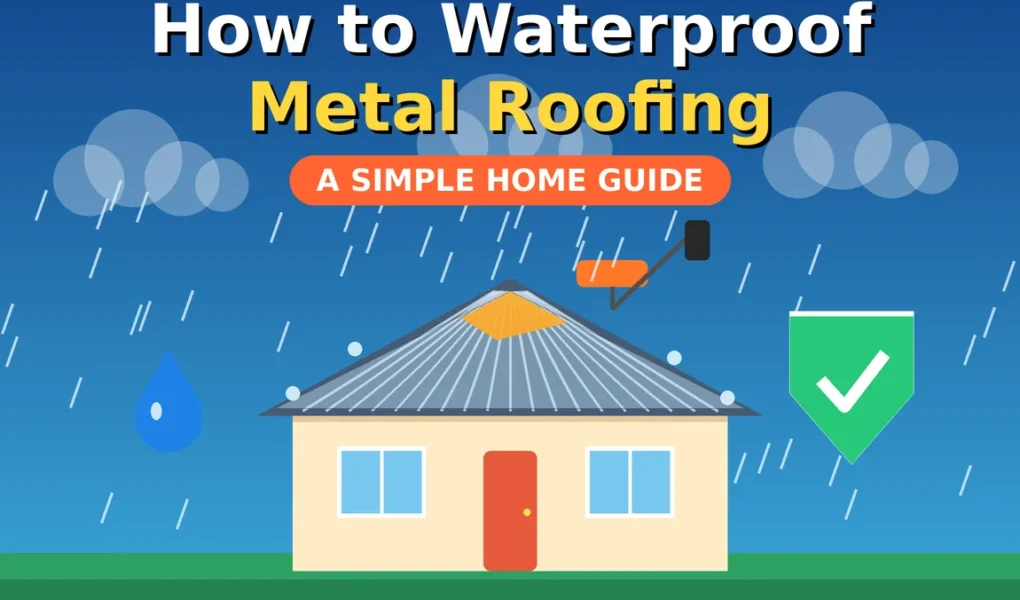
To waterproof a metal roof, inspect it for weak spots, replace loose or worn fasteners, seal panel seams and laps with butyl tape or a UV-resistant sealant, repair flashing around vents and chimneys, treat any rust, and finish with an elastomeric roof coating if the surface is aging. Most of the work is at the screws, seams and flashing, because the metal panels themselves rarely leak.
Why Metal Roofs Leak (Even Though Metal Is Waterproof)
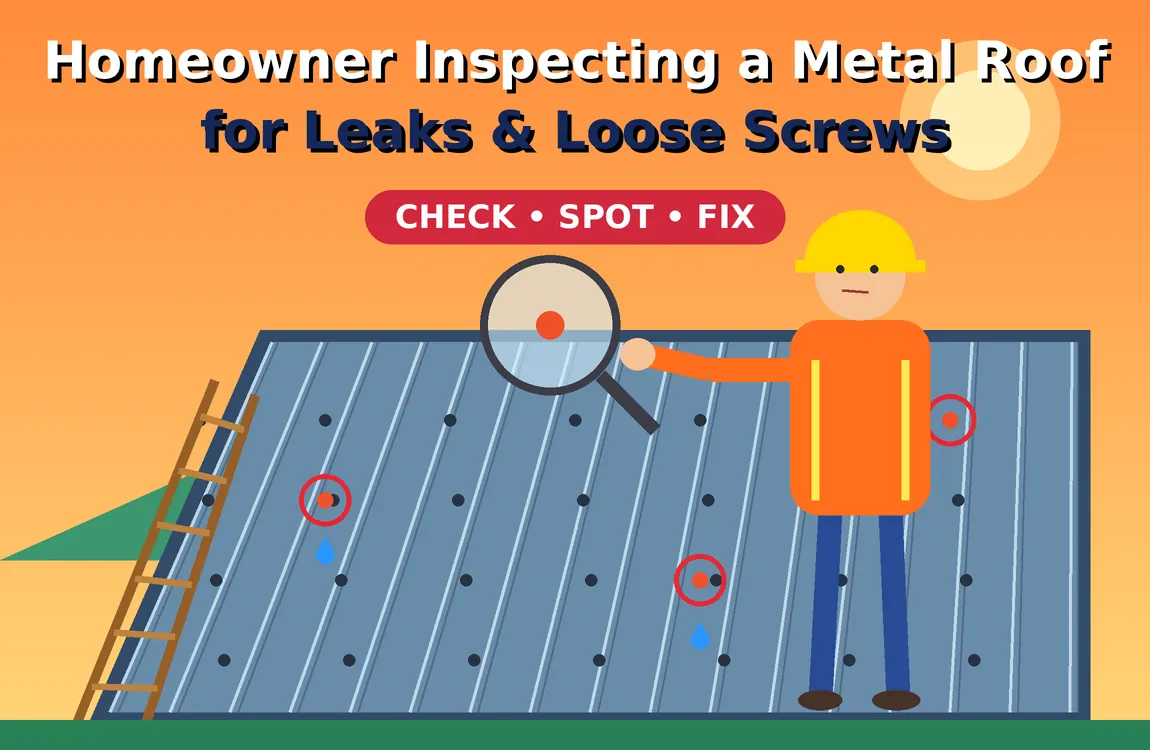
Metal itself does not let water through. The trouble starts where the roof has been pierced or joined. Industry publication Metal Construction News puts it plainly: metal doesn’t roof leak, the penetrations in it do, and poorly installed fasteners and faulty sealing washers are among the biggest causes. Journal of Light Construction adds that poor flashing details at penetrations, edges and roof-plane changes are more likely to cause leaks than the roofing material.
Common trouble spots at home:
- Exposed screws with cracked or shrunken rubber washers
- Side laps and end laps between panels
- Flashing around chimneys, skylights, dormers and plumbing vents
- Valleys, ridge caps and roof transitions
- Scratched or rusting areas
Metal also expands and contracts with temperature, which gradually loosens fasteners and stresses seams, according to HomeTips.
What You Need Before You Start
- Roof-rated safety harness, non-slip shoes and a stable ladder
- Replacement gasketed (neoprene-washer) roofing screws
- Butyl seam tape and a UV-resistant polyurethane or polyether sealant
- Wire brush, rust-inhibiting primer and matching metal paint
- Elastomeric roof coating, roller or sprayer
How to Waterproof Metal Roofing: Step by Step
Inspect and Clean the Roof
Choose a dry, mild day. Sweep off leaves and debris, then wash the roof with a soft brush and mild detergent. Mark every loose screw, gap in sealant, rust patch and damaged flashing. Inspecting twice a year, as Loctite recommends, catches small problems early.
Fix Loose and Failing Fasteners
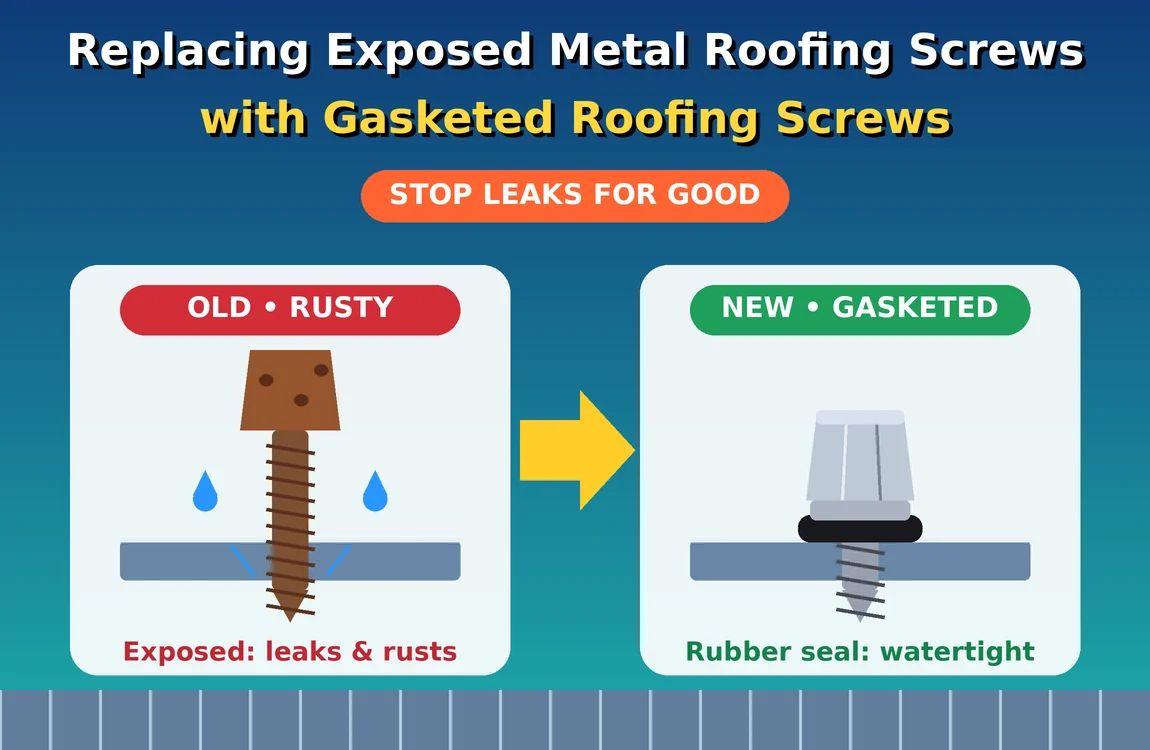
Back out loose or rusted screws and replace them with gasketed hex-head screws. Journal of Light Construction notes that gasketed screws work because the washer compresses against the panel to form a seal. Avoid roofing nails or screws without weather-tight washers. Do not over-tighten or under-tighten, since both can ruin the seal.
Seal Seams and Laps
Apply butyl tape at panel laps, keeping the sealant on the weather side of the fasteners. Journal of Light Construction also advises making sure the upslope panel overlaps the downslope panel. For small gaps, use a flexible, UV-resistant sealant; Metal Construction News points to high-solids polyether or silicone products for metal roofs. Avoid smearing “black goo” over problem areas; it is a short-lived fix that keeps needing repeat work.
Repair Flashing
Flashing is the watertight transition around chimneys, vents, walls and valleys. If it is bent, loose or sealed with caulk alone, replace or re-secure it. Caulk is not a substitute for proper flashing.
Treat Rust and Patch Holes
Remove rust with a wire brush and sandpaper, apply a rust-inhibiting primer, then repaint with matching metal roof paint. For holes or tears, Lowe’s suggests screwing a matching metal patch over the area and sealing its edges.
Apply a Waterproof Roof Coating
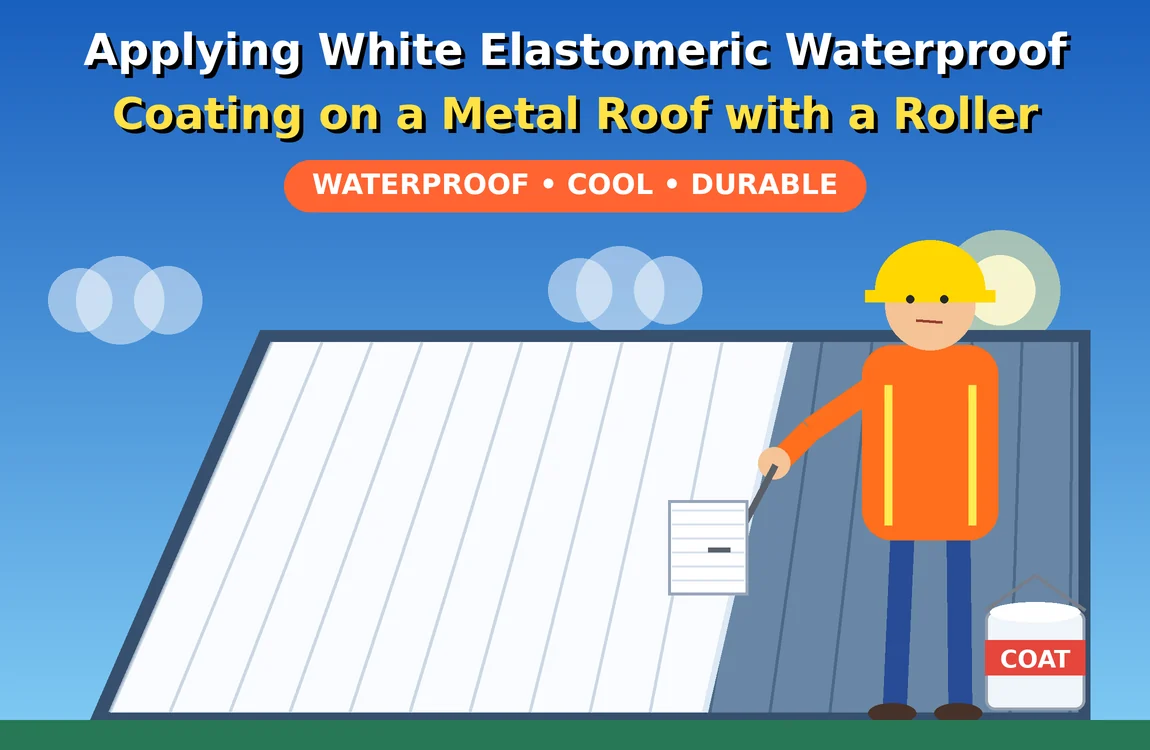
On older roofs, a coating adds a continuous waterproof layer. Roofing Contractor reports that coating is the most common repair and maintenance application on metal roof systems. Choose an elastomeric coating made for metal, apply it to a clean, dry, primed roof, and follow the manufacturer’s coverage and cure times. A light-colored reflective coating can also help keep the home cooler: the U.S. EPA’s ENERGY STAR program describes cool roofs as materials or coatings that lower roof surface temperature and reduce heat moving into the building.
Which Waterproofing Method Is Best?
| Method | Best for | Skill level |
|---|---|---|
| Gasketed screw replacement | Leaks around fasteners | Beginner |
| Butyl tape or sealant | Seams, laps, small gaps | Beginner |
| New flashing | Chimneys, vents, valleys | Intermediate |
| Elastomeric coating | Aging roofs with many small leaks | Intermediate |
| Concealed-fastener or standing seam panels | New roofs and full replacement | Professional |
For new installations, Western States Metal Roofing notes that concealed-fastener systems are more weathertight because the fasteners are not exposed to the elements.
Common Mistakes to Avoid
- Sealing over dirt, rust or wet metal, which stops the sealant bonding
- Using general-purpose caulk that cracks in the sun
- Skipping flashing repairs and relying on sealant alone
- Reusing worn screws and washers
- Working on a wet, icy or windy day
How Often Should You Re-Seal a Metal Roof?
Inspect twice a year and after major storms. Exposed fasteners and external sealants typically need periodic attention, and Journal of Light Construction notes that any exposed sealant requires roof maintenance even in the best conditions. Re-seal or replace sealant as soon as you see cracking, gaps or peeling.
Frequently Asked Questions
What is the best way to waterproof a metal roof?
Replace failing fasteners with gasketed screws, seal seams with butyl tape or a UV-resistant sealant, repair flashing, and add an elastomeric coating if the roof is aging.
Can I waterproof a metal roof myself?
Yes, for fasteners, sealant and coating on a low or moderate slope with proper fall protection. Hire a roofer for steep roofs, major rust or complex flashing.
What sealant is best for metal roofing?
A flexible, UV-resistant polyurethane, polyether or silicone sealant made for metal roofs is the usual choice. Always check compatibility with your panel finish.
Why is my new metal roof leaking?
The usual causes are over- or under-driven screws, damaged washers, poor lap sealing or incorrect flashing, all installation issues rather than metal failure.
How long does a waterproof coating last on a metal roof?
It depends on the product and climate, so check the manufacturer’s warranty. Inspect the coating every year and recoat when it wears thin.
Final Thoughts
Waterproofing a metal roof comes down to the details: tight fasteners, sealed seams, solid flashing and a protective coating. Do a seasonal check, fix small issues quickly, and your roof will keep the home dry for decades.
Sources
- Metal Construction News: Fasteners, flashing, seams and sealants
- Journal of Light Construction: Sealing and Flashing Metal Roofs
- Journal of Light Construction: Troubleshooting Roof Leaks
- Journal of Light Construction: Fastening Metal Roofing
- Roofing Contractor: Metal Roof Repairs
- U.S. EPA ENERGY STAR: Cool Roofs
- HomeTips: Metal Roof Repair
- Loctite: How to Seal a Metal Roof
- Lowe’s: How to Repair a Metal Roof
- Western States Metal Roofing: Weathertightness for Metal Panels