Rats are more than just a nuisance. They can damage wires, chew through materials, contaminate food, and spread germs around your home. The worst part is how fast a small rat problem can turn into a serious infestation. That is why quick action matters.
The goal is simple: get rid of rats fast and keep them from coming back. Let’s walk through it in a clear, simple way.
Signs You Have Rats in Your House
Common Signs of a Rat Infestation
The first step in rat removal is knowing what to look for. Rats are usually active at night, so you may not see them right away. But they leave behind clear warning signs.
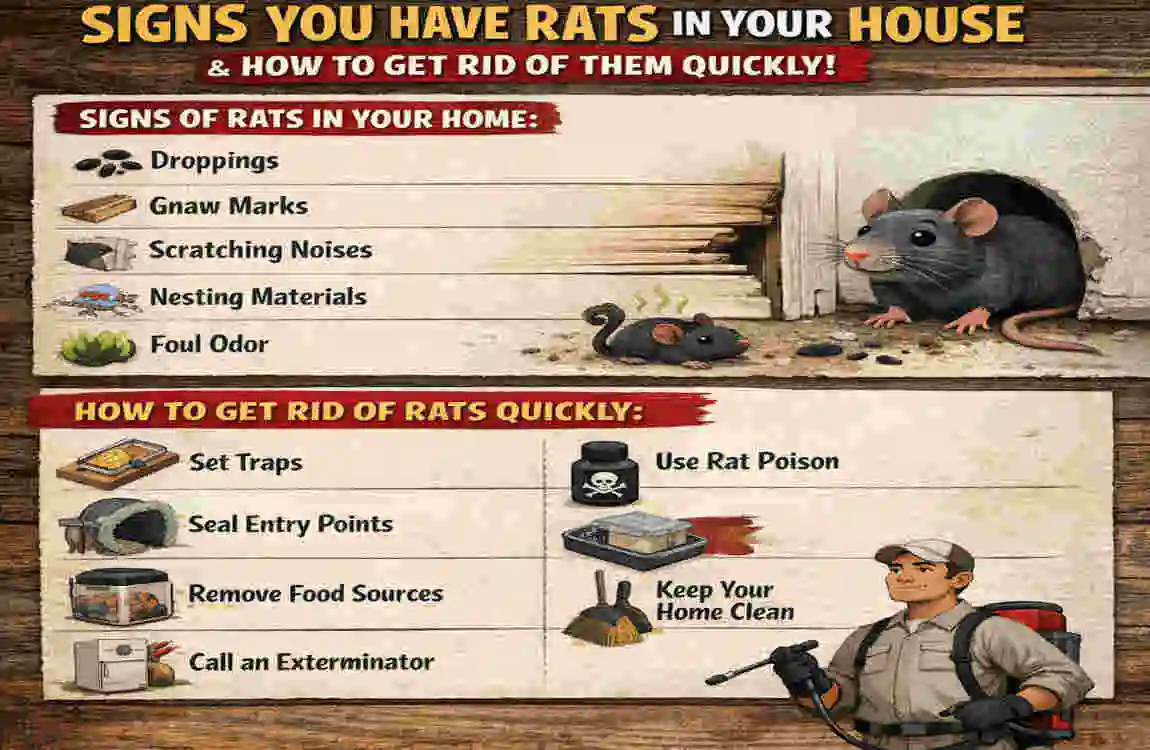
Some of the most common signs of rats in the house include:
- Scratching or scurrying sounds in walls or ceilings
- Small droppings near food, cabinets, or corners
- Gnaw marks on wood, wires, or furniture
- Grease marks along walls or baseboards
- Strange pet behaviour, like barking or staring at walls
If you notice more than one of these, you may already have rat infestation symptoms in your home.
Where Rats Usually Hide
Rats like dark, quiet, hidden spaces. They often stay close to food and water sources. Common hiding spots include:
- Attics
- Basements
- Kitchens
- Garages
- Storage rooms
- Behind appliances
If you hear movement in the walls, do not ignore it. Rats in walls can cause damage long before you actually see them.
Why You Should Act Fast
Rats reproduce quickly. A few rats can become a much bigger problem in a short time. They can also spread disease and cause costly damage to your home. The longer you wait, the harder the problem becomes.
Why Rats Enter Homes in the First Place
Food Sources That Attract Rats
Rats come inside because your home offers food. Even tiny crumbs can attract them. Common food sources include:
- Open garbage bins
- Pet food left out overnight
- Unsealed pantry items
- Leftover food on counters or floors
A clean kitchen is one of the best ways to reduce rat activity.
Shelter and Warmth
Rats are always looking for warmth and protection. They love cluttered areas where they can hide safely. Seasonal changes, especially colder weather, can push them indoors.
Entry Points Rats Use
Rats can squeeze through surprisingly small spaces. They often enter through:
- Cracks in walls or foundations
- Roof gaps
- Open vents
- Pipes and drains
Even a small opening can become a major access point. That’s why sealing gaps is one of the most important rat control methods.
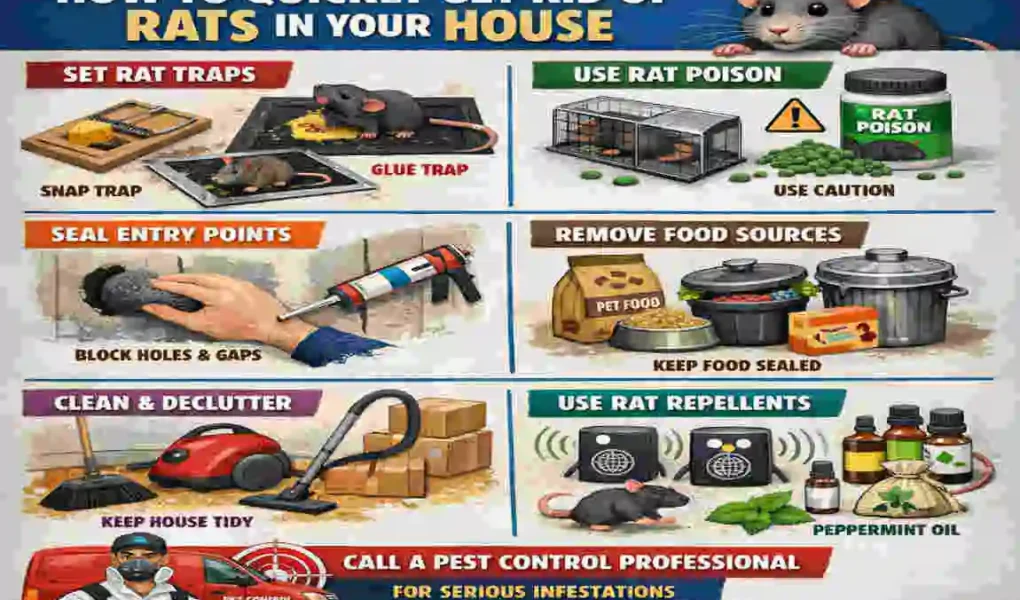
How to Get Rid of Rats in the House Quickly?
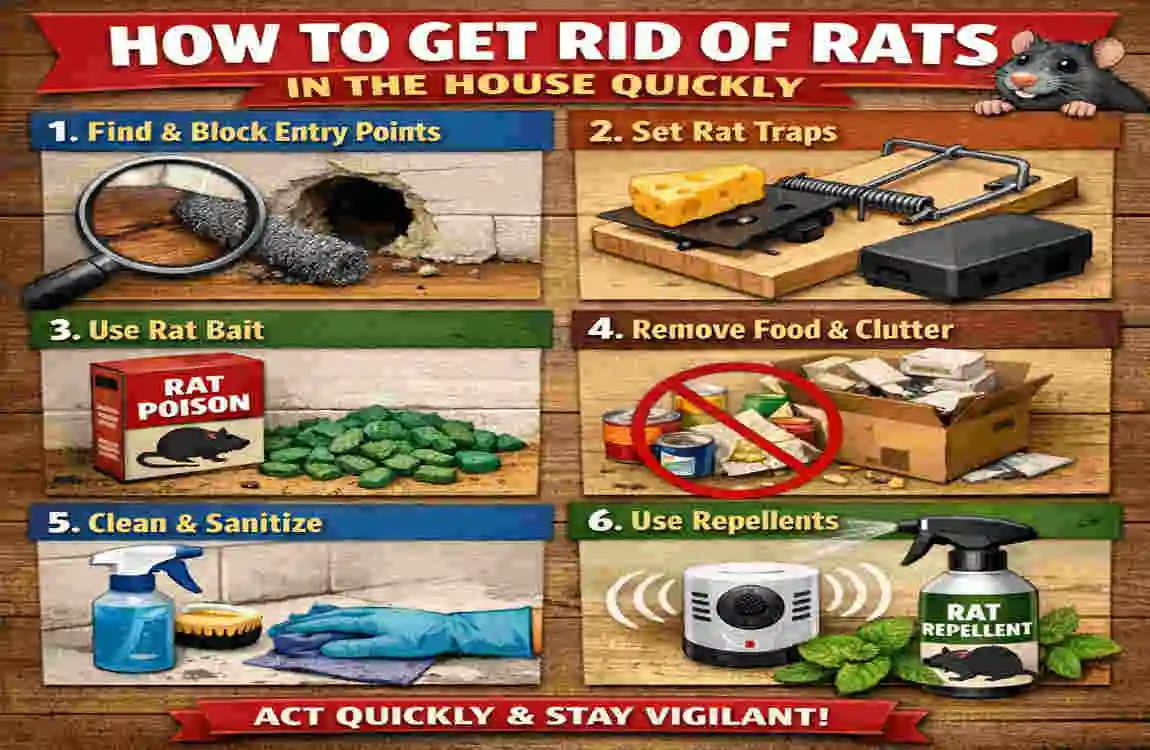
Find and Seal Entry Points
If you want fast rat removal, start by blocking access. Inspect your luxury home carefully, especially around:
- Pipes
- Doors
- Vents
- Rooflines
- Basement corners
Use steel wool and caulk to seal holes. Rats can chew through soft materials, so make sure the repair is sturdy. This step is simple, but it is one of the most important parts of DIY rat removal.
Remove Food and Water Sources
Rats will stay as long as food and water are readily available. You need to make your home less inviting.
Do this right away:
- Store food in airtight containers
- Clean spills and crumbs immediately
- Take out the trash regularly
- Fix leaking pipes or dripping taps
- Do not leave pet food out overnight
This step alone can greatly reduce rat activity.
Use Rat Traps Effectively
Traps are one of the fastest ways to remove rats. But placement matters.
Snap Traps
Snap traps are a common choice because they act quickly. Place them along walls, near droppings, and in places where you saw movement. Rats usually travel near edges, not into open spaces.
Best bait options include:
- Peanut butter
- Nut butter
- Small pieces of dried fruit
- Seeds
Electronic Traps
Electronic traps are fast and more controlled. They can be a good option if you want a cleaner result. They are also useful in areas where you want less mess.
Live Traps
Live traps catch rats without killing them. Some people prefer this option, but it requires frequent checking and proper release. If you use live traps, make sure you follow local rules.
Use Rodenticides Carefully
Some people search for the best rat poison, but this option should be handled with care. Poison can be dangerous for children, pets, and even wildlife if used incorrectly.
Use rodenticides only when needed, and place them where others cannot reach them. If you are not sure how to use them safely, it is better to call a professional.
Deep Clean the Affected Areas
After trapping or removing rats, clean thoroughly. Rat droppings and urine can harbour germs and odours.
Follow these basic cleanup steps:
- Wear gloves and a mask
- Spray droppings with disinfectant before touching them
- Wipe surfaces carefully
- Dispose of waste in sealed bags
- Sanitise the area again after cleaning
Do not sweep dry droppings, as this can spread particles into the air.
Best Home Remedies to Remove Rats Naturally
Peppermint Oil
Peppermint oil is one of the most popular natural rat repellents. Rats dislike strong smells, and peppermint has a sharp scent that may help keep them away.
You can place cotton balls with peppermint oil near entry points, corners, and under sinks. Reapply often because the smell fades.
Vinegar Spray
Vinegar can help with cleaning and scent masking. It won’t solve a serious infestation on its own. Still, it may support your cleanup routine and make areas less attractive to rats.
Onion Method
Some people use onions because of their strong smell. However, this method has limits and should be used with caution, especially if you have pets. Keep onions away from animals.
Ammonia Solution
Ammonia creates a scent that may remind rats of predators. Because it can be strong and irritating, use it carefully and keep it out of reach of children and pets.
Ultrasonic Repellents
These devices claim to drive rats away with sound. In real life, results can vary. Some homeowners see short-term improvement, while others notice little change. Think of them as support tools, not a full solution.
What Is the Fastest Way to Kill or Remove Rats?
Here is a simple comparison of common rat extermination methods:
MethodSpeedCostEffectiveness
Snap Traps Fast Low High
Electronic traps Fast Medium High
Poison bait Moderate Medium Medium
Professional exterminator, Very fast, High , Very high
Which Method Works Best for Severe Infestations?
If you only have one or two rats, traps may solve the problem. But if you see many droppings, hear constant noise, or notice rats in several areas, you may need more than one method at once.
For heavy infestations, the best answer is usually:
- Multiple traps
- Full inspection of entry points
- Deep cleaning
- Professional help if needed
Common Mistakes Homeowners Make
Many people struggle because they:
- Set too few traps
- Place traps in the wrong spot
- Ignore holes and cracks
- Leave food exposed
- Stop too soon after catching one rat
If you want to get rid of rats fast, you must attack the whole problem, not just the rats you see.
How to Prevent Rats from Coming Back
Maintain a Clean Environment
A clean home is much less attractive to rats. Focus on:
- Wiping counters daily
- Vacuuming crumbs
- Closing food containers tightly
- Taking out trash regularly
This is one of the easiest long-term rat removal tips.
Rat-Proof Your Home
To prevent rats from entering your house long-term, make it harder for them to get in.
- Seal cracks and gaps
- Install door sweeps
- Repair damaged vents
- Check around pipes and drains
Think of this as building a barrier around your home.
Outdoor Prevention Tips
Outside areas matter too. Rats often live near homes before entering them.
Helpful outdoor steps:
- Trim bushes and tall grass
- Keep trash bins closed
- Remove standing water
- Store wood and clutter away from the house
Seasonal Rat Prevention Checklist
Before colder or wetter weather, check your home carefully. Rats often move indoors when outdoor conditions become less comfortable. A quick seasonal check can save you a major headache later.
Health Risks Associated with Rats
Diseases Spread by Rats
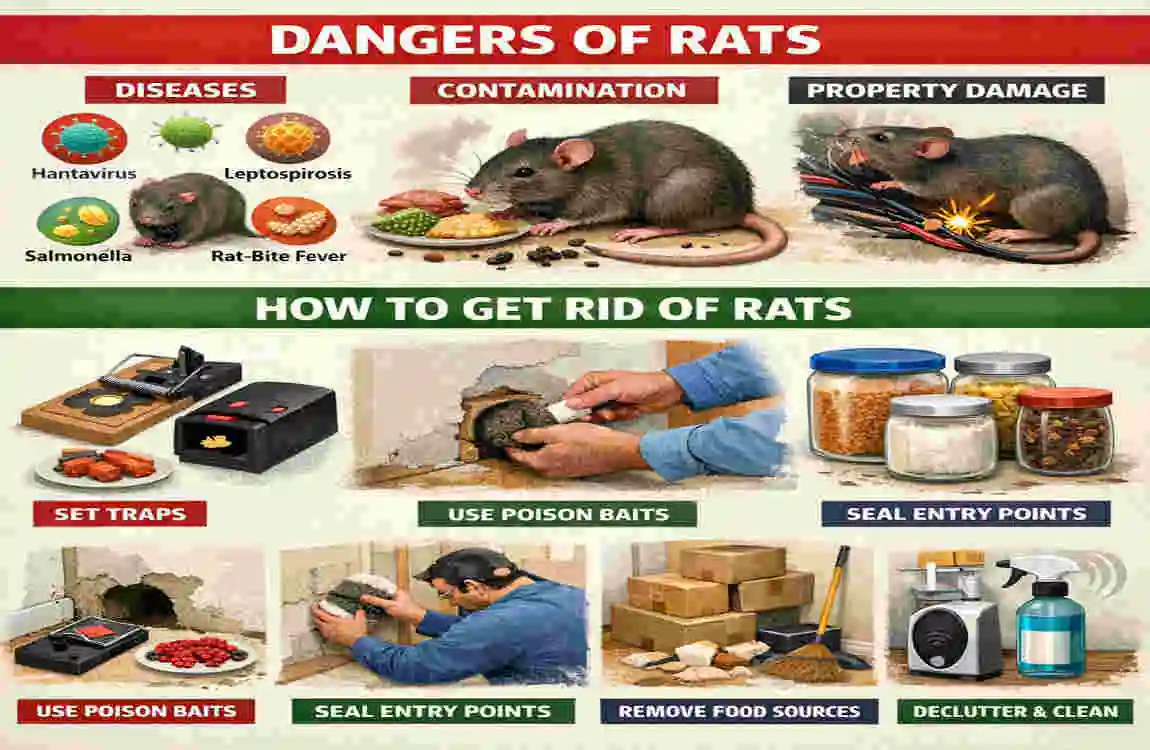
Rats can spread harmful illnesses such as:
- Leptospirosis
- Salmonella
- Hantavirus
Allergies and Respiratory Issues
Rat urine and droppings can trigger allergies and breathing problems, especially in children, older adults, and people with asthma.
Electrical and Fire Hazards
Rats chew wires and cables. This can lead to short circuits and even fire risks. That’s why rat problems should never be ignored.
Health groups like the CDC, WHO, and EPA all emphasize the importance of safe cleanup, prompt action, and effective pest control.
Frequently Asked Questions
How long does it take to get rid of rats?
It depends on how many rats you have and how quickly you act. Small problems may improve in a few days, while larger infestations can take weeks.
What smell keeps rats away instantly?
Strong smells like peppermint, ammonia, and vinegar may help, but none of them works instantly for every situation.
Can rats leave on their own?
Usually, no. If they have food, water, and shelter, they will likely stay.
Are rats dangerous to sleep around?
Yes. Rats can spread germs, make noise, and contaminate nearby areas.
Do ultrasonic repellents work on rats?
Sometimes, but not always. They are usually better as a support tool than a main solution.
What attracts rats the most?
Food, water, clutter, warmth, and easy entry points are the biggest attractants.
Is professional rat removal worth it?
Yes, especially for serious infestations. It can save time, reduce stress, and help prevent the problem from returning.
| Action step | What to do quickly | Why it helps |
|---|---|---|
| Block entry points | Seal cracks, gaps, and holes around doors, windows, and pipes with steel wool or metal mesh. | Stops more rats from getting inside and reduces hiding spots. |
| Remove food and water sources | Store food in sealed containers, clean spills, and empty trash regularly. | Makes your home less attractive so rats leave or die off. |
| Set traps along active routes | Place snap or electric traps near walls, corners, and signs of droppings using peanut butter or similar bait. | Kills or captures rats fast and reduces numbers quickly. |
| Use safe repellents (optional) | Try peppermint oil, vinegar, or strong‑smelling deterrents near entry points. | May discourage rats from entering certain areas. |
| Call a pest‑control professional | Book an inspection if you see many rats, droppings, or nesting signs. | Ensures long‑term removal and safe use of baits or advanced methods. |