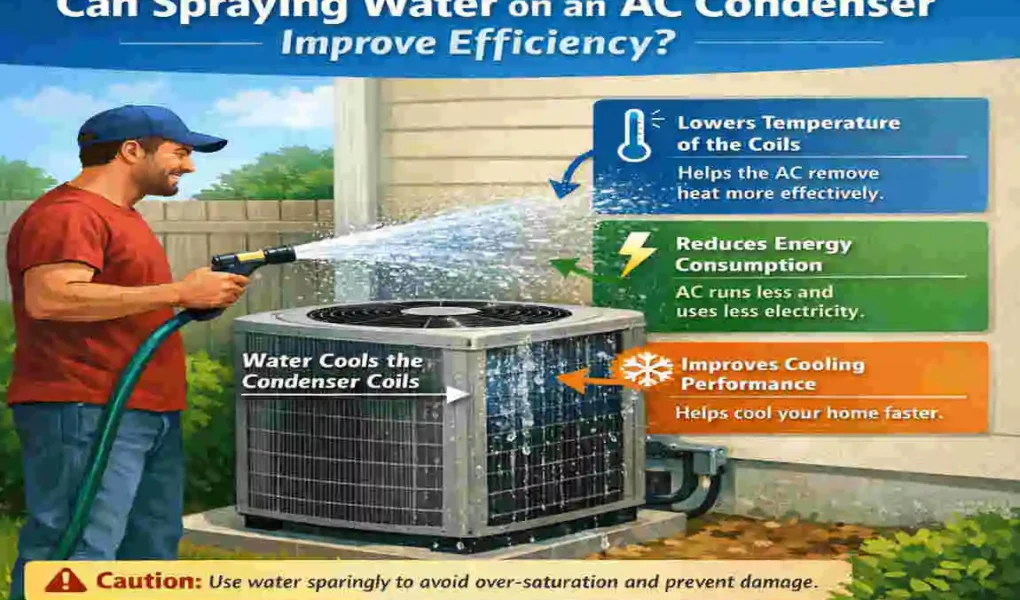
If your home feels warm on a hot afternoon, you may wonder: Does spraying the AC condenser with water help cool the house? It is a common question, especially when the summer heat puts your air conditioner under pressure.
The short answer is yes, sometimes. A gentle spray of water can help an outdoor condenser release heat a little faster for a short time. That can slightly improve cooling in certain conditions. But it is not a long-term fix, and it can cause problems if done incorrectly.
That is why this topic matters. Many homeowners want a quick way to improve their AC’s performance without spending a lot of money. Spraying water seems simple, cheap, and easy. But like most home fixes, the details matter.
How Central Air Conditioning Actually Cools Your Home
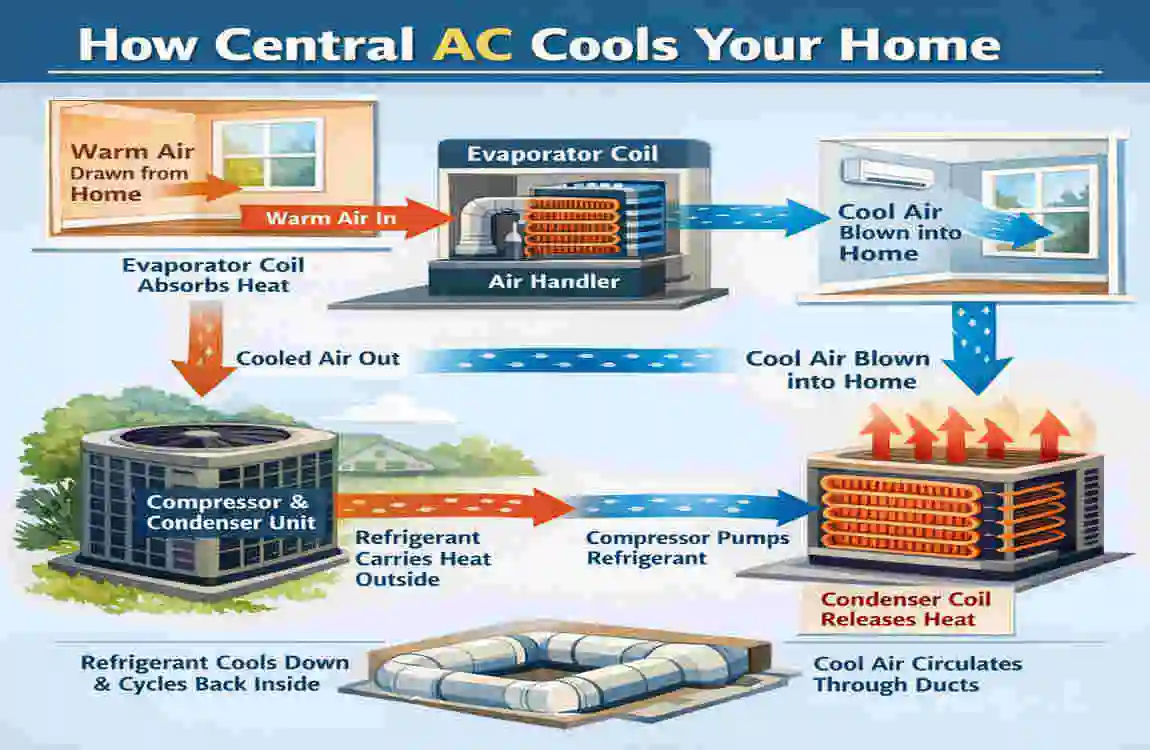
The AC does not use water to cool the house.
Your central air conditioner cools your home by removing heat from indoor air and sending it outside. It does this with refrigerant, which is a special fluid that absorbs and releases heat as it moves through the system.
The indoor unit pulls warm air from your luxury house and passes it over a cold coil. The refrigerant inside that coil absorbs the heat. Then the refrigerant travels outside to the condenser unit, where the heat is released into the outdoor air.
So, the water is not what cools your house directly. The system is built to use refrigerant and airflow, not water, as its main cooling method.
Why the outdoor condenser matters
The outdoor condenser is the part that dumps heat outside. It contains condenser coils, a compressor, and a fan. When the condenser has to work harder, the whole system becomes less efficient.
If the condenser coils are very hot, dusty, or blocked, the unit has a harder time removing heat. That means the compressor works more, power use rises, and cooling can drop.
This is why people look for ways to cool the condenser itself. A cooler condenser can help the system run a little more easily.
Heat transfer in simple words
Your AC works by moving heat, not making cold air from scratch. Think of it like a sponge soaking up warmth inside your modern house and then squeezing that warmth out at the outdoor unit.
When the condenser can release heat better, the system can keep up more easily during hot weather. That is where spraying water may help temporarily.
The Science Behind Spraying Water on the Condenser
Evaporation can pull heat away.
When water hits hot condenser coils or metal fins, some of that water turns into vapor. This process, called evaporation, uses heat from the surface.
That heat transfer can cool the coil a little. It is the same basic reason sweat helps cool your body. As sweat evaporates, it pulls heat away from your skin.
This is why spraying water may help in dry, hot weather. The water evaporates faster, which can improve the cooling effect.
Direct contact also helps.
Water does not need to evaporate right away to have an effect. When cool water touches a hot surface, it can lower the surface temperature through conductive cooling.
That means the water takes heat from the metal coils and fins before it even evaporates. For a short period, this can lower the condenser temperature.
Humidity changes the result.
The effect is usually stronger in dry climates and weaker in humid ones. In humid air, water evaporates more slowly, so the cooling boost is smaller.
That is why spraying water may seem useful in some places and less noticeable in others. The weather plays a big role.
The effect is temporary.
This is important: the benefit does not last long. Once the water dries and the unit heats back up, the cooling gain fades.
So while spraying can help in the moment, it is not a replacement for proper AC care.
Potential Benefits and Realistic Performance Gains
What you may notice
If done correctly, spraying the condenser can sometimes lead to:
- Slightly lower coil temperature
- A small drop in compressor strain
- A modest boost in short-term cooling
- Better performance during extreme heat
These gains are usually not dramatic, but they can still matter on a very hot day when your system is struggling.
When the benefit is more likely
The cooling effect is more noticeable when:
- The weather is very hot and dry
- The condenser is in direct sunlight
- The coils have light dirt or dust
- Airflow around the unit is good
- The system is already close to its limit
In these cases, even a small improvement can help the AC keep up a little better.
A realistic expectation
It is best to think of spraying water as a short-term assist, not a fix. You should not expect it to turn an old or neglected AC into a high-performance system.
The gain is often modest and may only last while the surface remains cool and wet. Still, if you use it carefully, it can provide a small boost when needed.
Quick comparison table
Situation: Spraying Water Helps? Why
Hot, dry day. Yes, often a little Water evaporates faster
Humid weather sometimes has less effect on slower evaporation
Dirty condenser coils. A little, but cleaning is better. Dirt blocks heat transfer
Well-maintained unit , Slightly System already runs efficiently
High-pressure spray can damage fins and parts
Risks and Downsides of Spraying Water
Electrical safety is the biggest concern.
The outdoor condenser has electrical parts that should not get soaked. If water reaches sensitive controls, wiring, or the fan motor in the wrong way, it can create a hazard.
That is why safety matters more than convenience. A simple hose spray is not dangerous by itself, but careless spraying can be.
Corrosion can build up over time.
Repeated wetting may speed up corrosion on metal parts, especially if the water is hard or contains minerals. Over time, this can shorten the unit’s lifespan.
This does not mean a light rinse will destroy your AC. It means that constant soaking is not a smart habit.
Dirt can turn into muddy buildup.
If the coil has dust, leaves, or pollen stuck to it, water can turn that debris into a sticky layer. That layer may trap moisture and reduce airflow.
Instead of helping, this can make the condenser work harder.
Warranty and service concerns
Some manufacturers may not like improper cleaning methods. High-pressure washing, aggressive spraying, or soaking the wrong parts can cause damage that may affect warranty claims.
If you are unsure, check the owner’s manual or ask an HVAC technician before you try anything.
The main risks at a glance
- Do not use a pressure washer
- Do not spray directly into electrical boxes
- Do not keep the unit wet for long periods
- Do not ignore the manufacturer’s instructions
When Spraying Is Reasonable and How to Do It Safely
The best timing
If you want to spray the condenser, do it during a cooler part of the day, such as early morning or late evening. That helps reduce thermal shock and makes the job easier.
It also gives the unit time to dry without sitting in peak heat.
Safe technique
Use a gentle garden hose spray with normal water pressure. Aim from the top or side and let the water move across the coils naturally.
Keep these tips in mind:
- Turn the unit off if the manual recommends it
- Avoid the electrical panel and controls
- Do not blast the fins with strong pressure
- Spray only enough to rinse dust and help cool
- Stop if you see damage or loose parts
Good tools to have
A simple setup is usually enough:
- Garden hose with adjustable nozzle
- Soft brush
- Coil cleaner is recommended
- Gloves for protection
A light rinse is better than heavy soaking. The goal is to help the unit breathe and release heat, not flood it.
Safer, Higher-Impact Alternatives to Spraying Water

Regular maintenance works better.
If you want better cooling and lower energy use, routine maintenance is the best place to start. A technician can check refrigerant levels, clean coils, inspect electrical components, and ensure the system is running properly.
That kind of service usually gives you more benefit than a quick hose spray.
Keep the condenser area clear.
Airflow matters a lot. Make sure the area around your outdoor unit is free from:
- Leaves
- Grass clippings
- Dirt
- Branches
- Trash
Also, keep plants and fences from crowding the unit. Good airflow helps the condenser dump heat more easily.
Clean the coils the right way.
A dirty coil is one of the most common reasons an AC loses efficiency. Gentle cleaning with proper products works better than random water spraying.
If the buildup is heavy, a pro can clean the coils more deeply without bending the fins or damaging the unit.
Improve the whole system.
If your luxury home still feels warm, the issue may not be the condenser alone. Other helpful upgrades include:
- Better insulation
- A smart thermostat
- Sealing air leaks
- Closing gaps around doors and windows
- Replacing an old or undersized AC unit
These changes often have a bigger effect on comfort and bills than spraying water ever will.
A Small Experiment You Can Try
Test the difference carefully.
If you want to see whether spraying water helps your system, you can do a simple test.
- Let the AC run normally and note the indoor temperature.
- Check the air coming from the supply vents.
- Turn off the unit if your manual suggests it.
- Gently spray the condenser coils.
- Wait a few minutes.
- Turn it back on and compare the readings.
What to look for
You may notice a slightly cooler output or a small performance improvement. But do not expect a huge change.
If the difference is tiny, that is normal. A small result still proves the effect is temporary and limited.
Stay safe
Do not spray electrical parts. Do not use a hard jet. And if you feel unsure, stop and call a technician.
Cost-Benefit Summary and Final Recommendation
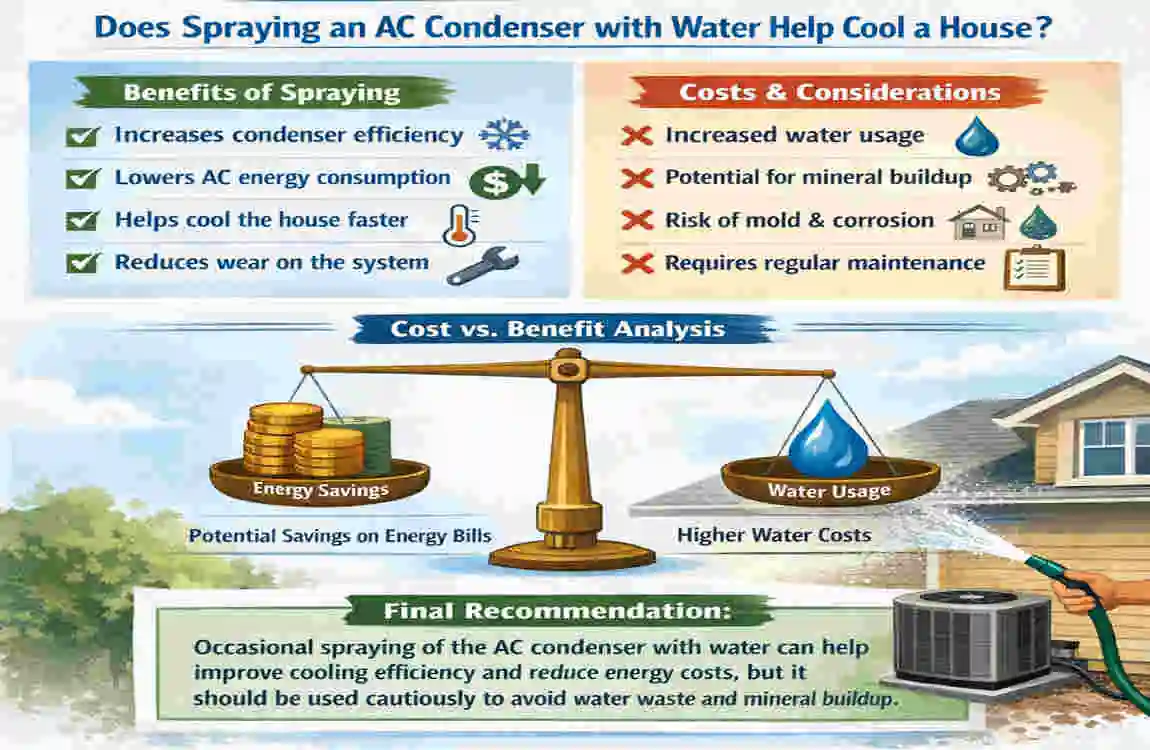
So, does spraying the AC condenser with water help cool the house? Yes, but only in a limited way.
It can offer a short-term cooling boost, especially on dry, hot days. It may help the condenser release heat a little faster and reduce strain on the system for a while.
FAQ
Does spraying the AC condenser with water help cool the house?
Yes, a little. It can temporarily lower the condenser temperature through evaporation and direct cooling. The effect is temporary and works best in hot, dry weather.
Is it safe to spray my AC while it’s running?
Sometimes, but be careful. A gentle spray may be okay, but many homeowners should turn the unit off first and avoid all electrical parts. Follow the manual if you have it.
How often can I spray my condenser?
Only occasionally. It is fine for light cleaning or during extreme heat, but it should not become a daily habit. Regular professional service is more useful.
Will spraying water void my warranty?
It might, if done the wrong way. High-pressure spraying or soaking sensitive parts can cause damage. Always check the manufacturer’s rules first.
What is the proper way to clean condenser coils?
Use a gentle rinse and soft brush. For deeper cleaning, use a coil cleaner or hire an HVAC technician. That is safer than strong spraying.
Are there better ways to improve AC efficiency?
Yes. Professional maintenance, debris removal, air-leak sealing, insulation improvements, and shading the unit usually yield better results.
| SEO Element | Suggested Text |
|---|---|
| Primary Keyword | does spraying ac condenser with water help cool house |
| Suggested Title | Does Spraying Water on AC Condenser Really Help? |
| Meta Description | Learn if spraying water on your AC condenser helps cool your house, when it works, risks, and better ways to improve AC efficiency. |
| Search Intent | Informational |
| Article Type | Short helpful blog post |
| Target Audience | Homeowners, renters, and DIY maintenance readers |
| Main Benefit | Explains whether water spray offers short-term cooling and when it is safe to use |
| Key Points | Temporary cooling effect, possible efficiency boost, safety risks, better alternatives |
| FAQ Focus | Safety, effectiveness, frequency, and better cooling methods |
| URL Slug | does-spraying-ac-condenser-water-help-cool-house |
| CTA Idea | Schedule AC maintenance or read more cooling tips |