
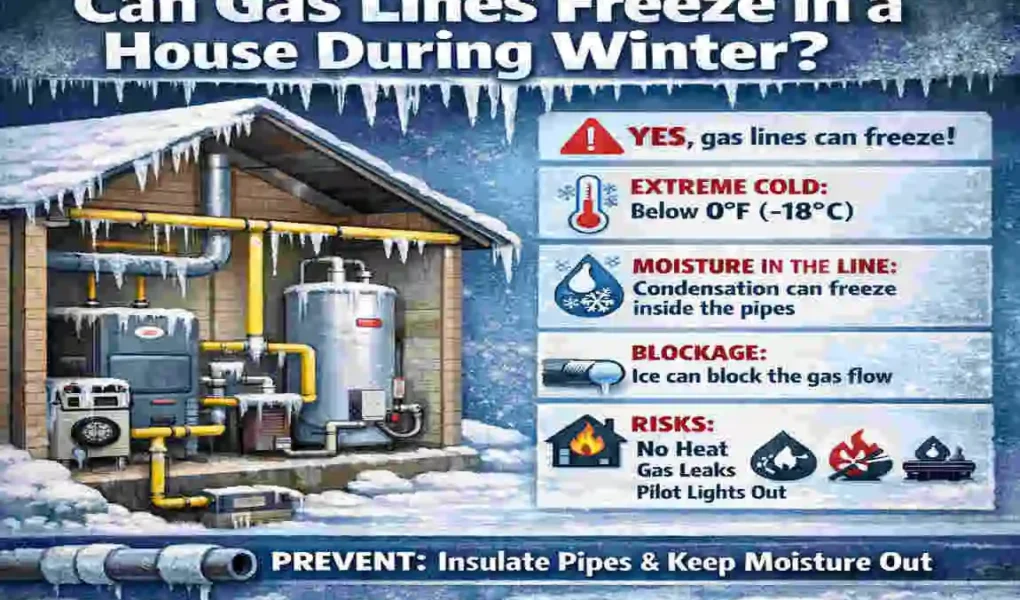
Can gas lines freeze in a house? In most homes, the gas itself does not freeze the way water does. But winter can still cause gas flow problems due to moisture, pressure issues, exposed outdoor components, or propane-related issues.
This is why many homeowners notice weak flames, appliances that will not start, or outdoor gas equipment that acts up in cold weather. The good news is that these issues are usually preventable when you know what to look for.
How Gas Delivery Works
Natural Gas vs. Propane
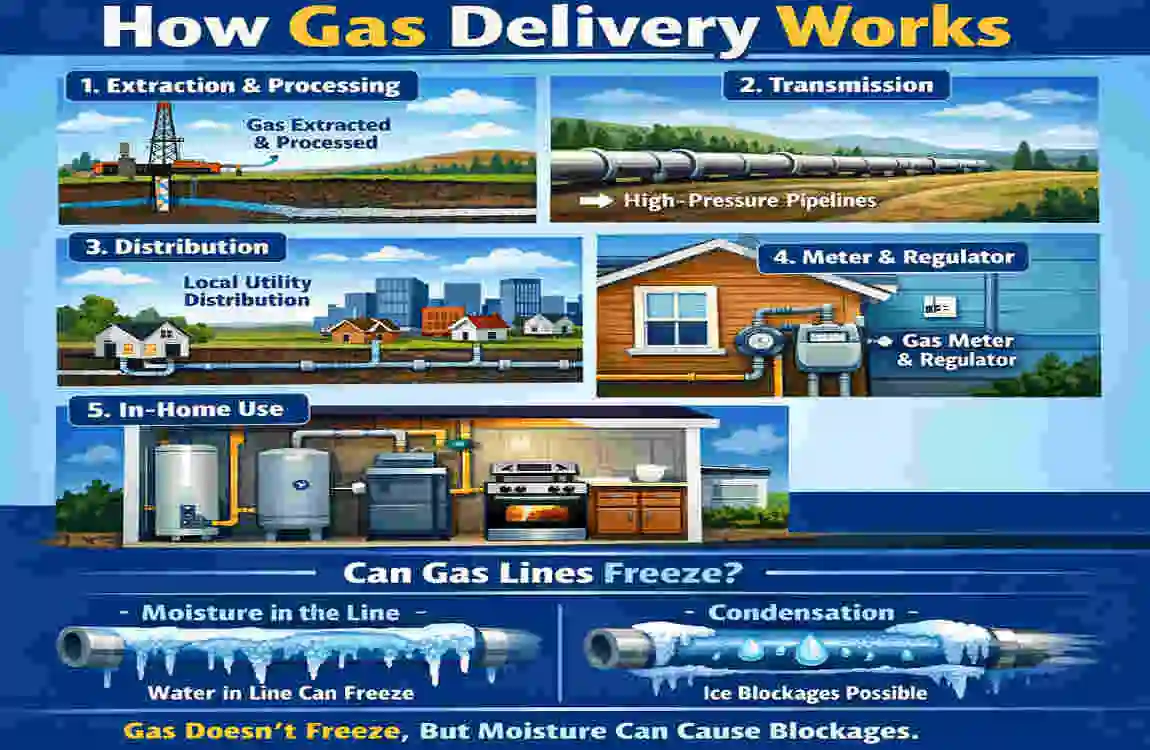
Natural gas and propane are not the same. Natural gas is delivered to homes through pipes. It does not usually freeze in a luxury house because it is already in gaseous form.
Propane works a little differently. It is stored under pressure as a liquid in a tank, then turns into a gas when it is used. In very cold weather, propane can struggle to vaporize well, especially if the tank is low.
So when people ask, ” Can gas lines freeze in a house, the better answer is that the gas itself rarely freezes, but winter can still affect how the system works.
Main Parts of a Home Gas System
A typical residential gas system includes the meter, regulator, service line, shutoff valve, and appliance connections.
The parts most likely to be affected in winter are usually the outdoor or exposed pieces. Moisture can build up in low spots, around fittings, or near the meter and regulator. If that moisture freezes, it can slow or block gas flow.
Can Gas Lines Actually Freeze? The Science
Why the Gas Itself Usually Does Not Freeze
Gas inside a home line is already in a vapor state. That means it would take extremely unusual conditions for the gas itself to freeze during normal winter weather.
So if your heater, stove, or water heater is acting strangely, the issue is usually not a frozen gas line. It is more often a pressure, a moisture, or an equipment issue.
How Moisture Causes Blockages
This is where the real trouble begins. If water gets into a line, fitting, or regulator, it can freeze and form an ice plug. That plug blocks gas flow and can reduce or stop flow.
Moisture can enter through damaged parts, poor installation, leaks, or condensation. It may gather in low points in the system and freeze when temperatures drop.
Propane-Specific Problems
Propane users often deal with winter pressure issues. If the tank is low, cold weather can make vaporization harder. That means less gas reaches the appliances, even though the system is not frozen in the usual sense.
Common Causes and Risk Factors
Here are the most common reasons winter gas problems happen:
Cause What It Can Look Like
Poor installation or damaged piping, weak flow, repeated issues, or cold spots
Exposed outdoor lines or meters, Frost, ice, or trouble starting appliances
Moisture in fittings or regulators, blocked flow after a cold night
Very low temperatures, slow ignition, or low flame
Low propane tank level, pressure drop, and weak appliance performance
If you live in a cold area or if your gas equipment is in a crawlspace, basement, or an outside wall, the risk is higher. Exposure is often the real problem.
Signs of a Blocked or Cold-Related Gas Issue
What Homeowners Usually Notice
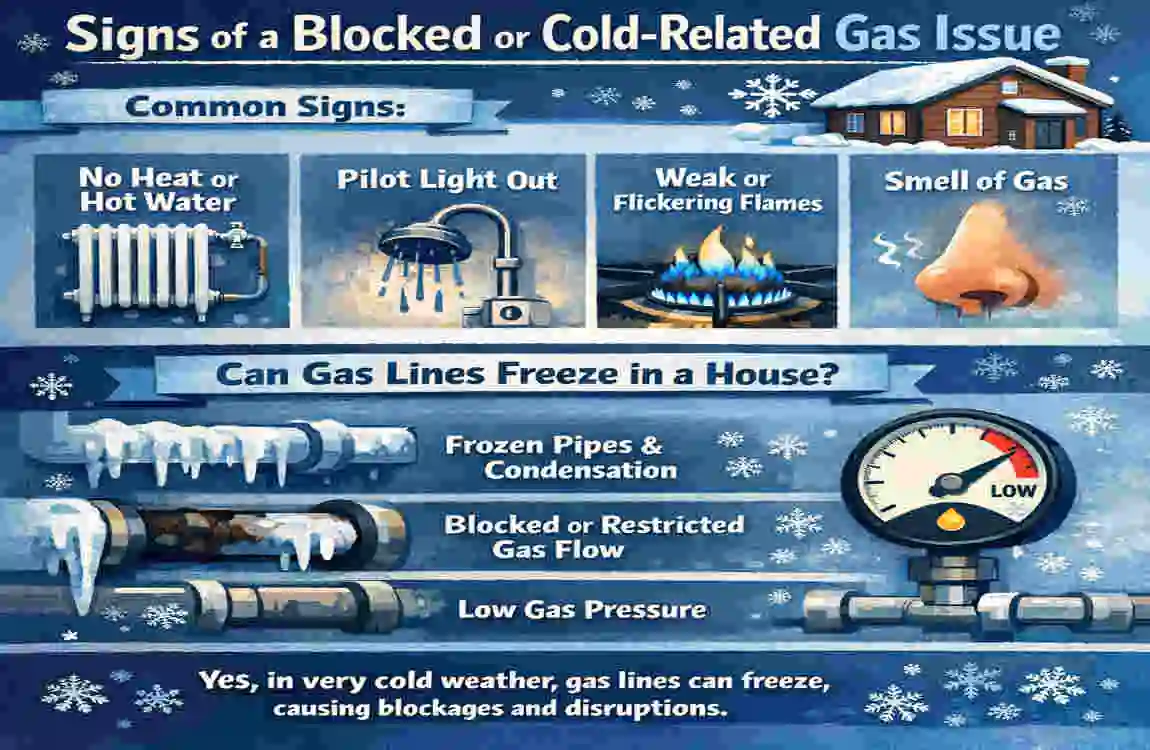
Watch for these warning signs:
- Low flame or no flame: Your stove burner or heater may light weakly or not at all.
- Ice or frost on exterior parts: This can appear on a meter, regulator, or fitting.
- Repeated pilot light problems: If the pilot keeps going out, gas flow may be weak.
- Long delays when appliances start: This can mean pressure is dropping somewhere.
If you smell rotten eggs, treat it as a danger. Leave the home right away and call your gas company or emergency services.
Risks and Safety Concerns
A gas line problem is not just an inconvenience. It can create real safety risks.
Low gas flow can cause appliances to burn fuel poorly, which may lead to carbon monoxide concerns. If a frozen or blocked part thaws suddenly, a damaged fitting could begin to leak. That can create service disruption, odor, and possible property damage.
If you think there is a gas leak, do not flip switches, light matches, or use open flames. Leave the area and get help fast.
How to Prevent Winter Gas Problems
Simple Things Homeowners Can Do
You can lower the risk with a few basic steps:
- Insulate exposed gas lines where allowed and appropriate.
- Keep propane tanks topped up during the cold season.
- Seal openings around exterior walls and keep damp areas dry.
- Avoid big indoor temperature swings, especially in colder rooms.
These small steps can make a big difference before problems start.
When to Call a Professional
A licensed technician should always do some jobs. A pro can inspect pressure, check the regulator, test for leaks, and replace damaged parts if needed.
For homes with exposed outdoor lines, a technician may suggest stronger insulation, pressure checks, or a safe heating solution for critical areas. Do not try to thaw a gas line with a torch, space heater, or any open flame.
What to Do If You Suspect a Frozen or Blocked Gas Line
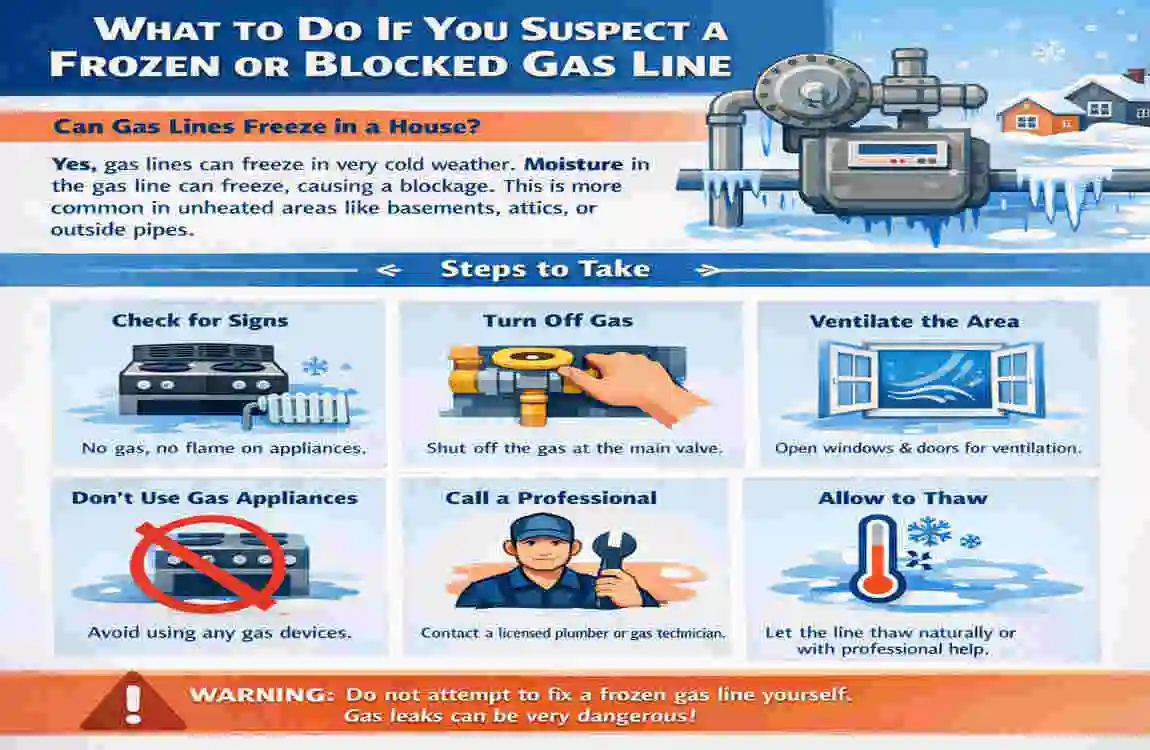
If you think a gas line is blocked, stay calm and follow these steps:
- Stop using gas appliances.
- Leave the home immediately if you smell gas.
- Call your gas utility or a licensed gas technician.
- Do not try to force the line open yourself.
- Take note of the symptoms so you can explain them clearly.
A trained professional will check the meter, regulator, line pressure, and fittings to find the real cause.
Quick FAQ
Can gas lines freeze in a house?
Usually, no, not in the way water pipes freeze. But moisture, pressure issues, and outdoor exposure can still cause gas flow problems in winter.
Is it dangerous if my gas line is frozen?
It can be. A blocked line may affect appliances, and a thawed or damaged part could leak. If you smell gas, leave immediately and call for help.
Does propane freeze?
Propane does not usually freeze the way water does, but cold weather can reduce its vaporization rate. That can cause low pressure and weak appliance performance.
How do I know if the problem is the line or the appliance?
If multiple appliances are acting up, the problem is more likely in the gas supply. If only one appliance is failing, the issue may be with that unit.
Should I try to thaw it myself?
No. Use a licensed professional. Safe testing and repair are much better than guessing.