
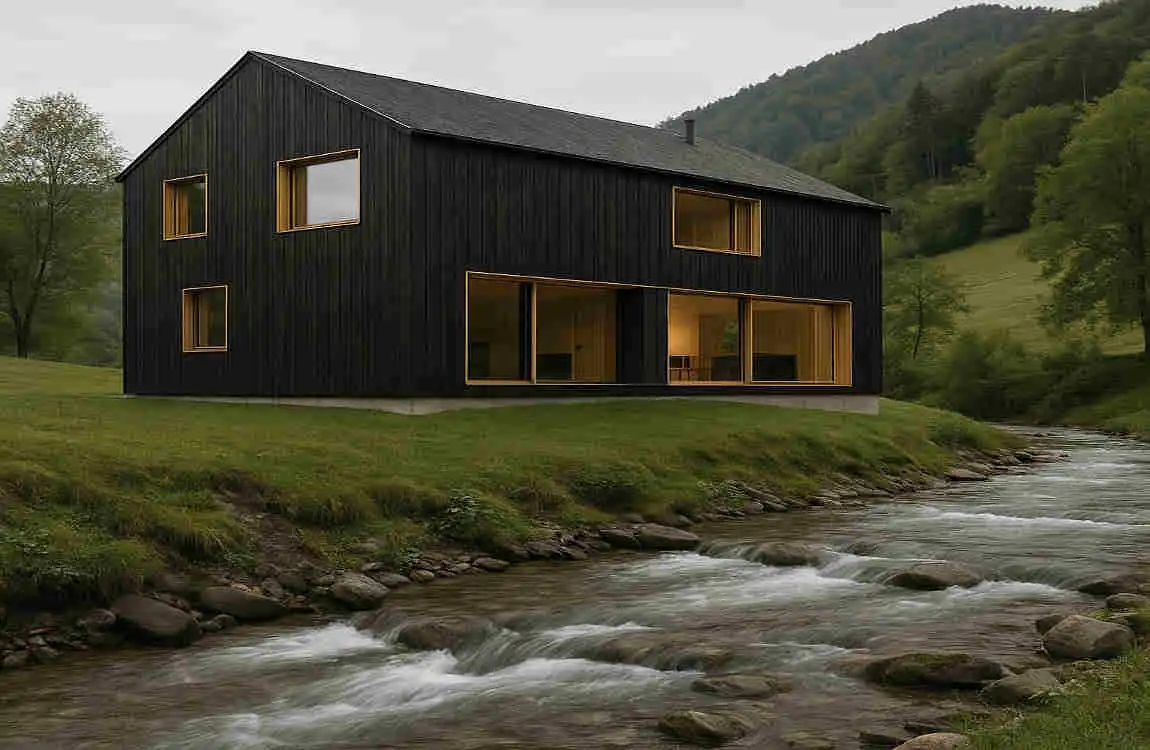
The Bader House is more than just a home; it’s an architectural symphony that harmonizes tradition with contemporary design. Perched on a steep plot in Lochau, Austria, the residence commands breathtaking views of nearby lakes, streams, and villages. Designed by Bernardo Bader Architekten, the house reflects the architect’s commitment to reactivating traditional Vorarlberg building forms with a modern twist, all while embracing sustainability.
The house rises dramatically with its three-story vertical gabled form, resembling the timeworn agricultural huts that dot the Austrian countryside. Yet, it pushes boundaries with precision design and contemporary materials. This striking silhouette is not just a visual statement — it’s a tribute to the region’s rural heritage.
The architectural vision for Bader House is deeply rooted in Bernardo Bader’s philosophy of merging local traditions with sustainable materials. By incorporating blackened timber cladding, deep-framed windows, and a compact footprint, the house integrates seamlessly into its surroundings while reducing ecological impact. It’s a perfect example of how modern architecture can honor the past while embracing the future.
Architectural Design of Bader House
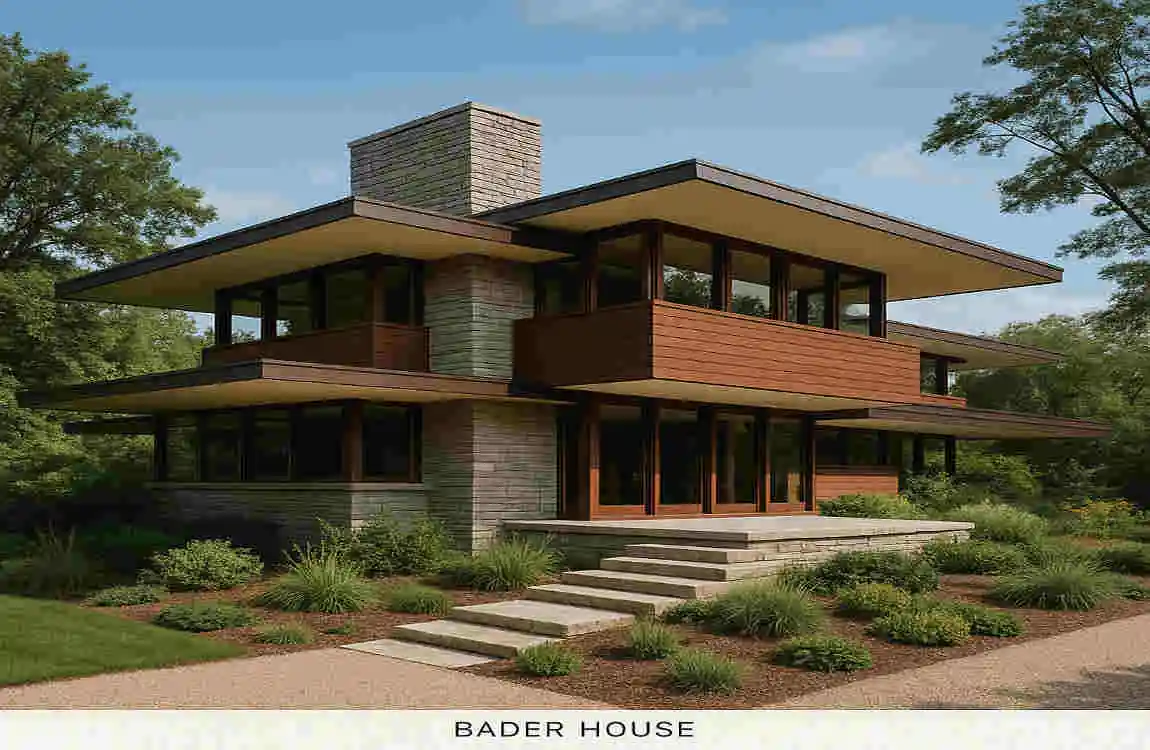
At its core, Bader House is a 200-square-meter elongated rectangular block that rises vertically to maximize the narrow and steep site it occupies. The design is a masterclass in balancing rural aesthetics with modern functionality, making it an architectural delight.
Exterior Features: A Tall and Slender Profile
The tall, slender profile of Bader House is a defining feature, with carefully positioned openings that frame views of streams, lakes, and villages. The design creates a sense of both privacy and openness, with every detail thoughtfully planned. A gravelled patio at one end of the gable provides a serene outdoor space, enhancing the connection between the house and its natural surroundings.
Material Palette: Blackened Timber Meets Pale Interiors
The house’s blackened timber exterior cladding is a nod to the weathered agricultural huts of Austria. This material not only enhances durability but also allows the house to age gracefully, blending further into the landscape over time. Inside, the transition to pale timber interiors creates a sense of warmth and openness, while exposed concrete adds a modern industrial touch.
Fenestration Strategy: Light, Shadow, and Framed Views
One of the most captivating aspects of Bader House is its fenestration strategy. Deeply recessed windows are designed to frame picturesque views while creating a dramatic interplay of light and shadow. The windows are strategically placed to allow natural light to flood the interiors without compromising privacy.
Interior Layout and Spaces
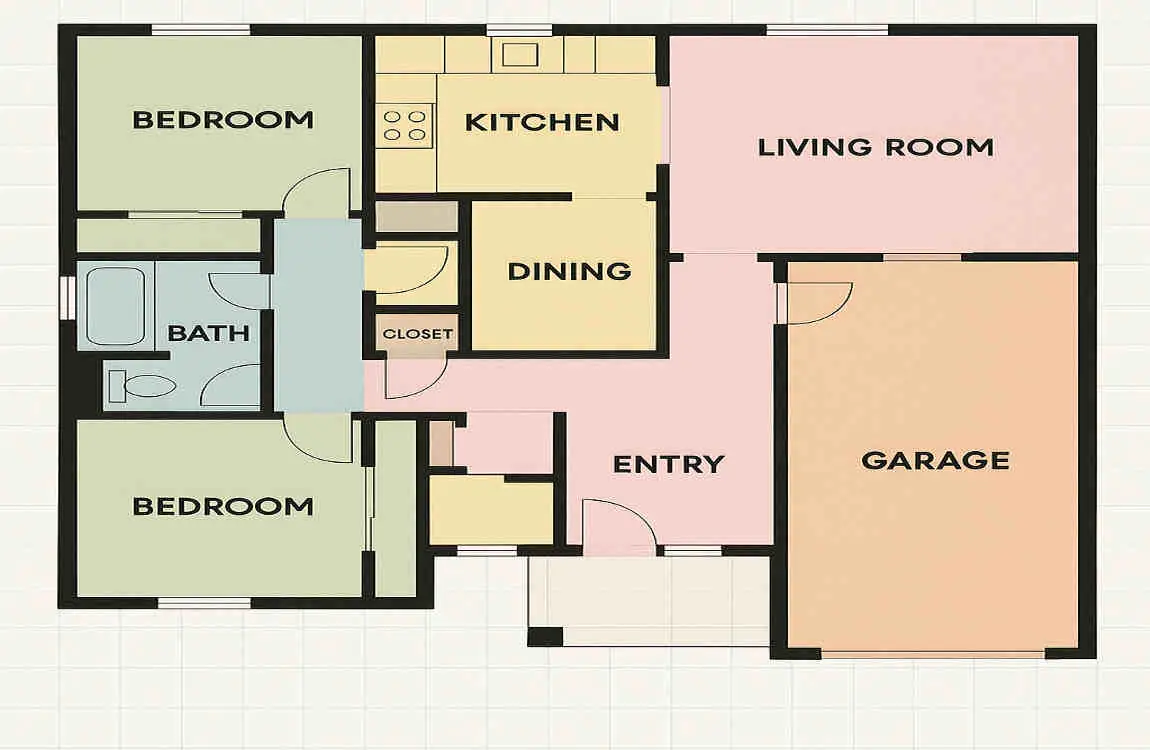
The interior of Bader House is as thoughtfully designed as its exterior, with spaces organized across four levels. Each level serves a specific purpose, creating a harmonious flow that balances functionality and aesthetic appeal.
A Look at the Layout
Here’s a breakdown of the levels and their key spaces:
LevelKey Spaces Design Highlights
Ground Studio, Garage , Practical entry alongside the stream edge
First Kitchen, Dining, Bedroom, Terrace Pale timber dominance; direct outdoor access
Second Lounge Pitched roof; wood stove as a cozy centerpiece
Basement Utility Supports the vertical efficiency of the house
Functional Zoning and Seamless Flow
The ground floor houses a studio and garage, providing practical spaces that connect directly to the surrounding terrain. Moving up, the first floor features a kitchen, dining area, and bedroom, with a terrace that extends the living space outdoors. The second floor is a cozy lounge space, complete with a wood-burning stove that adds warmth and charm. Finally, the basement utility areas ensure the house maintains its vertical efficiency.
Material Transitions for Comfort and Light
The interiors showcase subtle material transitions from rugged concrete cores to softer wooden edges near windows. This clever use of materials enhances spatial flow and diffuses natural light beautifully throughout the house.
Bernardo Bader Architekten’s Vision
Bernardo Bader Architekten is celebrated for its ability to blend traditional building forms with modern design principles. Bader House is a prime example of their work, but it’s far from their only masterpiece.
Recurring Motifs in Bader’s Work
The firm’s designs often feature timber shutters, ridged roofs, and compact plans, all evident in Bader House. These recurring motifs reflect a deep respect for local traditions and a commitment to sustainable architecture.
Other Notable Projects
Some of the firm’s other notable projects include:
- Gapfohl House: A high-altitude residence that balances rustic charm with modern efficiency.
- Kaltschmieden House: A barn-inspired home built using salvaged timber.
Construction and Sustainability Features
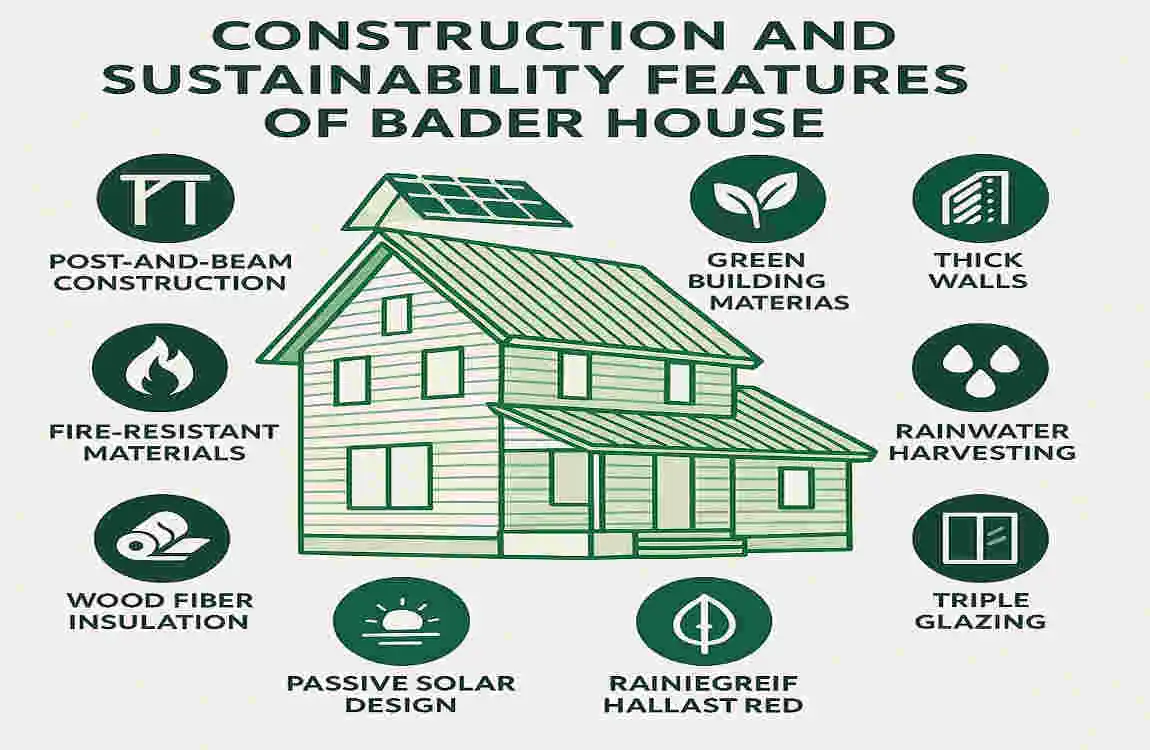
Built with a focus on traditional techniques and modern sustainability, Bader House exemplifies eco-conscious design.
Durable and Low-Maintenance Materials
The use of blackened timber ensures durability while embracing the aesthetic aging process. Inside, exposed board-marked concrete and wood finishes create a low-maintenance, energy-efficient living environment.
Energy Efficiency in Design
The house’s compact design, combined with features such as underfloor heating and thermal mass from concrete, ensures efficient year-round energy use.
Visiting and Modern Relevance of Bader House
While Bader House is a private residence, it has become a source of inspiration for architects, homeowners, and tourists alike. Its design influences everything from DIY adaptations to high-end renovations.
Inspiring Architectural Tours
Architecture enthusiasts visiting Vorarlberg can explore homes like Bader House, which showcase the region’s unique approach to blackened timber design.
Bader House FAQ
What makes Bader House unique?
It’s vertical blackened timber form overlooks Austrian streams.
Who designed Bader House?
Bernardo Bader Architekten.
Where is Bader House located?
Lochau, Austria, by a stream.