how fast do fleas spread in the house
CLEANING HOME IMPROVEMENT

Understanding Flea Spread: A Homeowner’s Guide

Imagine coming home after a long day, only to notice your dog scratching like crazy or feeling itchy bites on your ankles. If you’ve ever dealt with fleas, you know they’re not just a minor annoyance—they can turn your cozy home into a battleground overnight. Fleas are sneaky pests that multiply quickly, and understanding how quickly fleas spread in the house is crucial for any homeowner.

What Are Fleas? A Quick Identification and Biology Primer

how fast do fleas spread in the house

Fleas may seem like tiny specks, but they’re powerful pests that can cause significant problems. Let’s start by getting to know these critters better, so you can spot them before they spread.

Appearance and Size of Fleas

Picture a flea: it’s a small, wingless insect, usually about 1/8 inch long, with a reddish-brown body that’s flat from side to side. This shape helps them slip easily through fur or fabric. They have strong hind legs that let them jump impressively far—up to 7 inches vertically and 13 inches horizontally. That’s like a human leaping over a building!

Fleas aren’t just jumpers; they’re survivors. Their hard exoskeleton protects them from being squished, and they can go without food for weeks if needed. But when they do feed, they pierce the skin with their mouthparts to suck blood, which is their main meal.

Common Flea Species in Homes

In most homes, the star of the show is the cat flea, known scientifically as Ctenocephalides felis. Don’t let the name fool you—it infests dogs, cats, and even wildlife like raccoons or squirrels. Other types, such as dog fleas or human fleas, occasionally appear, but cat fleas are the most common household invaders .

These fleas aren’t picky about hosts. They jump from pets to people and back, making them a shared problem in any home. If you live in a warm, humid area, you’re more likely to encounter them, as they thrive in those conditions.

Fleas as Parasites: Feeding and Hosts

Fleas are bloodsuckers, plain and simple. Adult fleas require blood to survive and reproduce, feeding on warm-blooded animals, such as your pets or even humans. A single bite can last up to five minutes, and they might feed multiple times a day .

Pets are their favorite targets because of the constant warmth and fur for hiding. However, wildlife, such as rodents or birds, can also bring fleas indoors. Humans aren’t ideal hosts—fleas can’t live on us long-term—but we still get bitten, leading to itchy red welts.

Why Fleas Are More Than a Nuisance

Sure, fleas itch, but they’re sneaky health threats. They can transmit diseases such as murine typhus or, in rare cases, the plague [3][4]. For pets, constant biting leads to allergies or infections. And for you? The stress of an infestation can disrupt your daily life, not to mention the vet bills.

Think about it: one flea can quickly become hundreds, turning a minor issue into a full-blown crisis. That’s why recognizing them early matters so much.

Flea Life Cycle and Reproduction: The Key to Their Rapid Spread

You may also read (say goodbye to rats quick home solutions).

To understand how fast fleas spread in the house, you need to grasp their life cycle. It’s like a well-oiled machine designed for quick multiplication. Let’s break it down into stages, so you can see why they explode in numbers.

The Four Stages of Flea Development

Fleas go through four main phases: egg, larva, pupa, and adult. Each stage is adapted to survive in your home, hiding in carpets or cracks.

It all starts with the egg. Adult females lay tiny, white eggs that roll off the host into the environment. These aren’t sticky, so they scatter easily.

Next comes the larva stage. These worm-like creatures hatch and feed on organic debris, such as flea dirt (which is actually digested blood).

Then, the pupa forms a cocoon, where the flea transforms into an adult. This stage is tough—pupae can wait out harsh conditions.

Finally, adults emerge ready to jump, feed, and mate.

Timeline of Each Life Cycle Stage

Under ideal home conditions—warm temperatures around 70-85°F and high humidity—eggs hatch in just 2-14 days . Larvae develop for 5-11 days, munching away in dark spots.

Pupae can take a week or linger for months if the conditions are too cold or dry. Adults often pop out quickly, usually triggered by vibrations such as footsteps .

The whole cycle? From egg to reproducing adult in as little as two weeks. That’s lightning fast!

From Eggs to Reproducing Adults in Weeks

One female flea starts laying eggs within 24-48 hours of her first blood meal. She can produce 40-50 eggs daily for up to 100 days . Do the math: that’s thousands from one flea!

This rapid reproduction means that a small problem can escalate quickly. If you ignore it, you’re looking at a population boom.

Why Pupae Make Control So Challenging

Pupae are the wildcard. They encase themselves in a sticky cocoon that resists vacuums and sprays. They can stay dormant for months, waiting for the right moment to hatch.

This is why fleas seem to “come back” after treatment. You might kill adults, but pupae lurk, ready to restart the cycle. Patience is key here—keep treating until they’re all gone.

Flea Life Cycle StageTypical Duration Key Characteristics, Survival Tips in Homes

Egg 2-14 days Tiny, white, non-sticky; fall off hosts Hide in carpets, bedding

Larva 5-11 days Worm-like, avoid light; eat debris Thrive in dark, humid spots like under furniture.

Pupa 1 week to months. Cocoon protects from chemicals. Dormant in cracks, they emerge with vibrations.

Adults: Weeks to months. Jump far, feed on blood, and reproduce quickly. Jump between hosts, lay eggs everywhere.

This table shows how each stage contributes to their sneaky spread. See how pupae can prolong the battle?

How Fast Do Fleas Spread in the House?

how fast do fleas spread in the house

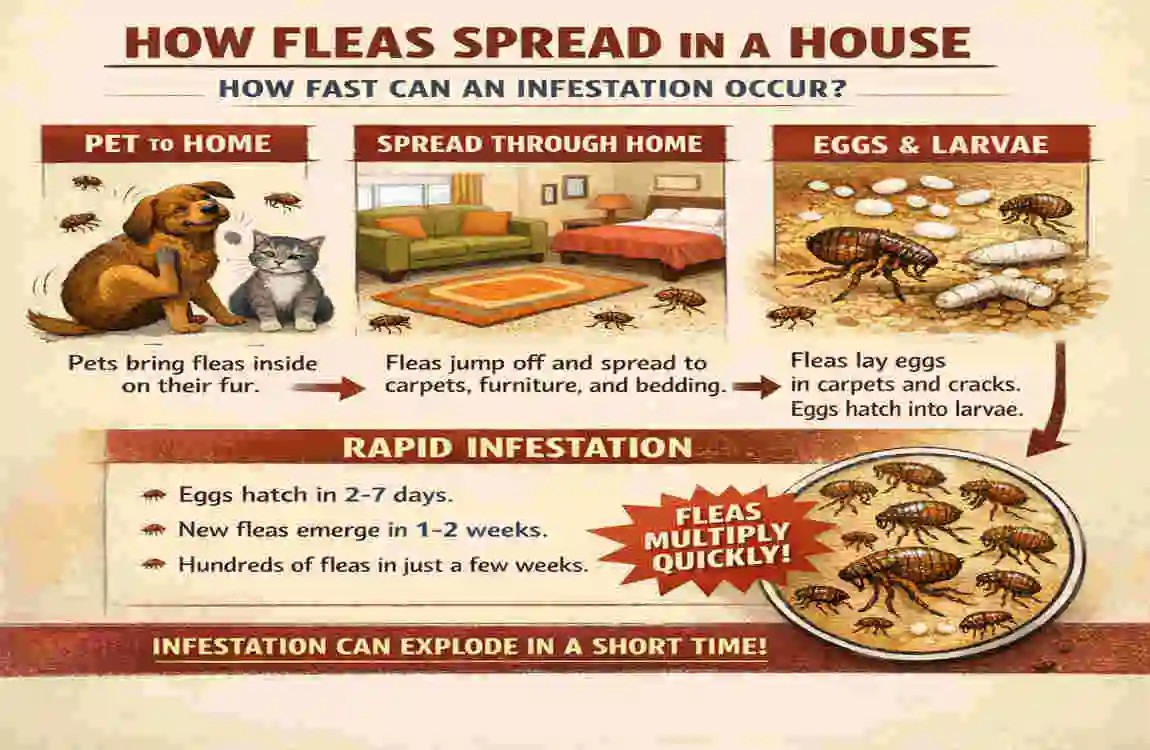
Now, let’s tackle the big question: how fast do fleas spread in the house? It’s scarier than you think. Fleas don’t just arrive—they conquer.

The Reproductive Powerhouse of Fleas

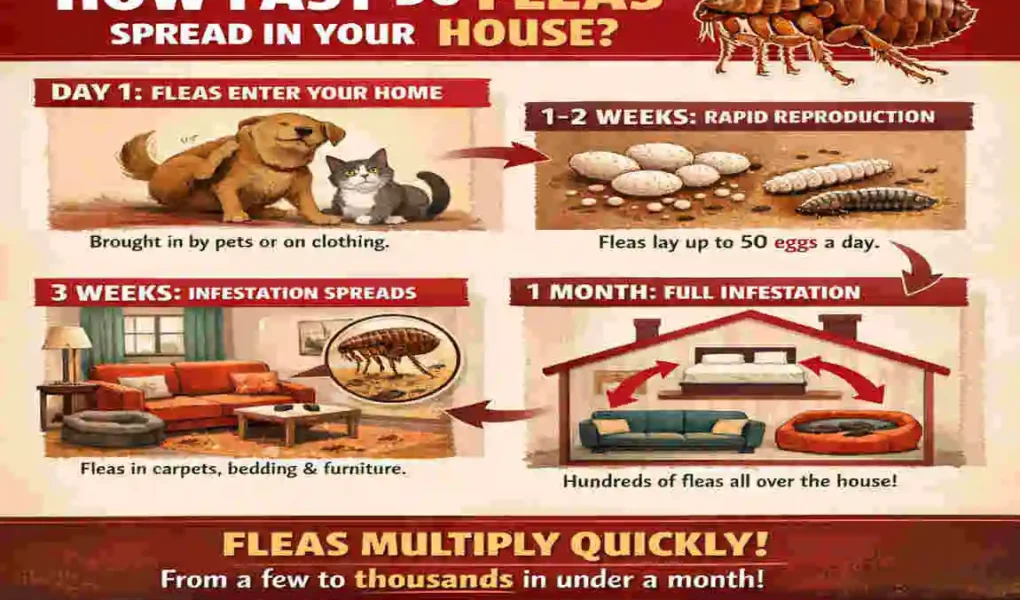
A single female flea lays up to 50 eggs per day after feeding. Over her lifetime, that’s hundreds [1]. If conditions are right, those eggs hatch fast, leading to more egg-layers.

Imagine 10 females in your home. In 30 days, they could produce over 250,000 fleas through generations . That’s exponential growth!

Jumping Ability and Movement Through the Home

Fleas are Olympic jumpers, leaping 150 times their body length . This lets them hop from pet to carpet, then to your couch or bed.

They don’t fly, but jumping spreads them from room to room. Pets carry them around, dropping eggs like confetti.

Typical Timeline from Introduction to Infestation

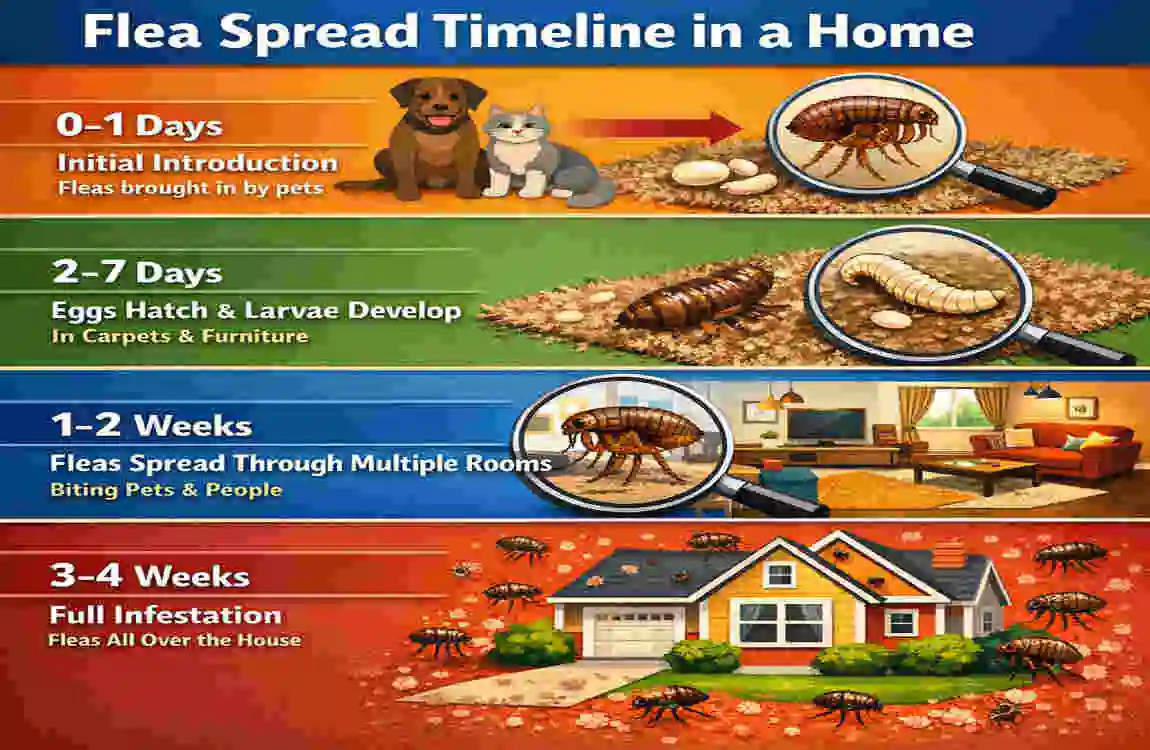
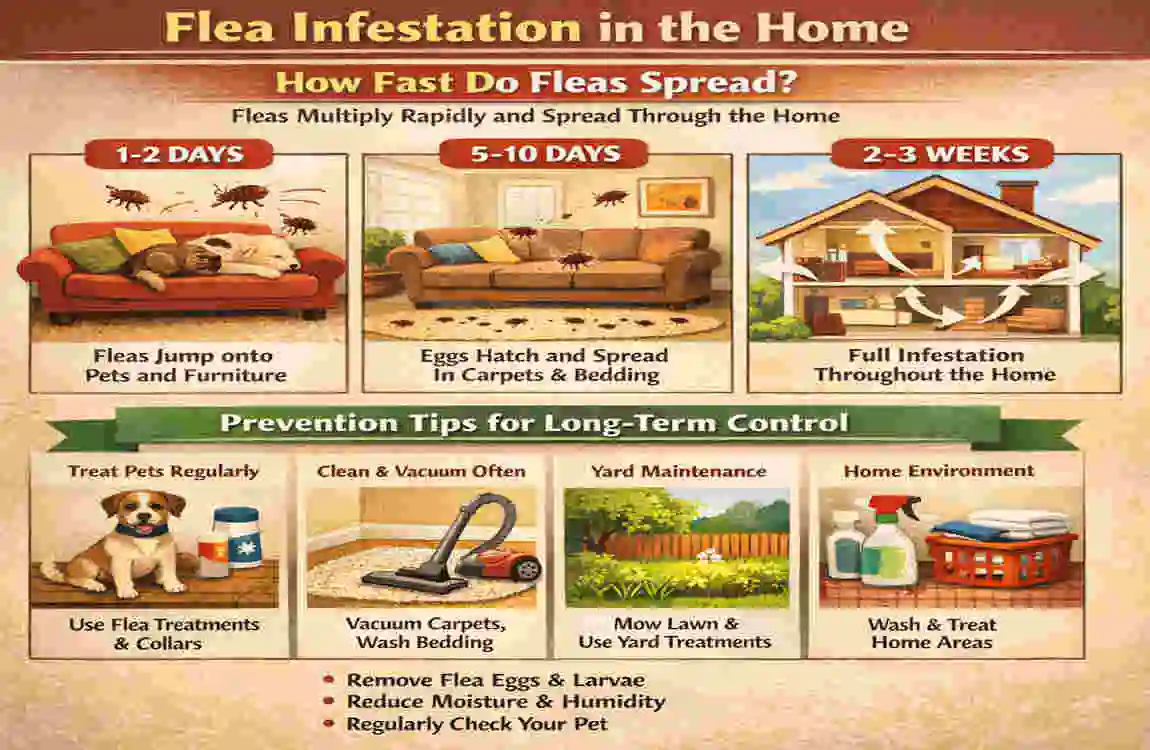
Fleas often enter via a pet or visitor. Within days, eggs drop. Within 2-3 weeks, a full infestation will occur if left unchecked .

It starts small: a few bites. Then, suddenly, everywhere. Warm homes speed this up—fleas thrive in temperatures ranging from 70-90°F.

Factors That Speed Up Flea Spread

Pets are flea highways, ferrying them indoors. High humidity and temperatures accelerate hatching .

Carpeted floors and clutter provide hiding spots. Infrequent cleaning lets larvae thrive. Even without pets, wildlife can introduce them .

Reader, if your home has these factors, act fast. Check your space now—what could be inviting fleas?

How Fleas Enter and Infest Your Home

Fleas don’t knock—they sneak in. Knowing their entry points helps you block them.

Primary Ways Fleas Get Inside

Pets are the top culprits, picking up fleas from yards or parks [9][4]. Wildlife, such as rats or raccoons, often drop them near doors.

Visitors’ clothes or shoes can carry eggs. Even neighboring properties spread them if left untreated.

Where Fleas Hide and Multiply Indoors

Eggs and larvae love pet bedding, carpets, and furniture. They burrow into cracks and crevices .

Hidden areas, such as baseboards or under rugs, become breeding grounds for pests. Larvae avoid light, so dark spots are prime.

Fleas in Pet-Free Homes: A Surprise Invader

No pets? You can still get fleas. Vacant homes attract wildlife, leaving eggs behind . When you move in, vibrations wake pupae.

Old infestations linger. Always inspect before settling in.

Signs and Symptoms of a Flea Infestation in Your Home

Spotting fleas early saves hassle. Let’s examine clues about pets and around the house.

Telltale Signs on Your Pets

You may also read (how to safely remove house centipedes from your home).

Excessive scratching or biting at fur? That’s a red flag. Hair loss, especially around the tail, points to fleas.

Flea dirt—black specks like pepper—shows up in fur. Rub it on a wet paper towel; it turns red from blood [4].

Visible fleas jumping? Time to act.

Home Indicators: Bites and Dirt

Humans get bitten, too—itchy red bumps on ankles or legs. Flea dirt scatters on floors or bedding.

Check white socks: walk around; black specks mean fleas.

How to Inspect for Hidden Stages

Vacuum and check the bag for larvae or eggs. Use a flea comb on pets over white paper.

Look in cracks, under furniture. A thorough inspection reveals the extent.

The Impact of a Flea Infestation

Fleas aren’t just itchy—they harm health and wallet.

Health Risks to Pets

Pets often suffer from flea allergy dermatitis (FAD), which causes severe itching and skin infections . Heavy infestations can lead to anemia due to blood loss.

They can transmit tapeworms if pets swallow fleas.

Risks to Humans

Bites cause allergies or secondary infections from scratching. Rarely, diseases like the plague spread, although they are uncommon in homes.

Kids and older people are more vulnerable.

Emotional and Financial Toll

Stress from constant itching disrupts sleep. Treatment costs add up—vet visits, sprays, cleaning.

Don’t let it escalate; prevention is cheaper.

Preventing Flea Spread: The Role of Pets and Home Environment

Stop fleas before they start. Focus on pets and your space.

Flea Prevention for Pets

Use collars, topical drops, or oral meds regularly . Consult your vet for safe options.

Bathe pets with flea shampoo monthly.

Home Habits to Limit Spread

Keep pets off carpets and furniture. Designate easy-clean rest areas .

Vacuum daily, wash bedding weekly in hot water.

Cleaning Practices That Work

Target cracks with a crevice tool. Empty vacuum bags outside .

Declutter to reduce hiding spots. Simple steps make a big difference.

  • Daily vacuuming removes eggs and stimulates pupae to hatch for effective treatment.
  • Hot Washing Kills larvae in fabrics.
  • Pet Grooming: Regular brushing catches fleas early.

Effective Control Methods to Stop Flea Spread in the Home

Got fleas? Fight back with these strategies.

Vacuuming and Safe Disposal

Vacuum thoroughly, focusing on high-traffic areas. Seal and toss the bag immediately.

Repeat often to catch emerging adults.

Natural and Chemical Treatments

Try boric acid or diatomaceous earth powders—they dehydrate fleas safely .

For tough cases, use insect growth regulators (IGRs) to stop reproduction.

When to Call Professionals

Severe infestations need pros. They use targeted sprays and foggers.

Treat yards too—fleas hide in grass.

How Long Until Fleas Are Gone and What to Expect

Eradication takes time due to the organism’s life cycle.

Timeline for Flea Elimination

Expect several weeks to months. Dormant pupae mean repeated treatments [9][2].

Consistency is key—treat every 7-14 days.

Breaking the Cycle with Repeated Efforts

Combine pet treatments, cleaning, and home sprays. Monitor for rebounds.

Incomplete control leads to comebacks—don’t stop early.

Risks of Delaying Treatment

Delayed action means bigger populations and more bites. Costs rise, health risks grow.

Act now, reader—what’s your first step?

You may also read (how to safely remove house centipedes from your home).

You may also like...

Leave a Reply

Your email address will not be published. Required fields are marked *