Choosing trending window styles for modern homes is not just about picking something that looks nice from the street. It is about finding the right balance between style, comfort, energy savings, and everyday function. In 2026, more homeowners want windows that do more than let in light. They want windows that help keep rooms cooler in summer, warmer in winter, and brighter all year long.
That shift makes sense. Homes today are expected to feel open, clean, and connected to the outdoors. At the same time, people want better insulation, lower energy bills, and a more modern look that lasts. This is why modern window designs are changing fast. Big glass panels, slim frames, black finishes, and smart glazing choices are now part of the conversation in many new homes and remodels.
If you are planning a renovation or building from scratch, this guide will help you make your choice with confidence. We will walk through the most popular trending window styles for modern homes, explain why these styles matter in 2026, and show you how to compare materials, sizes, costs, and installation needs.
You may be asking yourself: What are the best trending window styles for modern homes? The answer depends on your space, your climate, your budget, and the feeling you want inside the house. A kitchen may need a different solution than a bedroom. A small city home may need a different design than a wide open villa.
Why Window Trends Matter
Energy costs are shaping design choices.
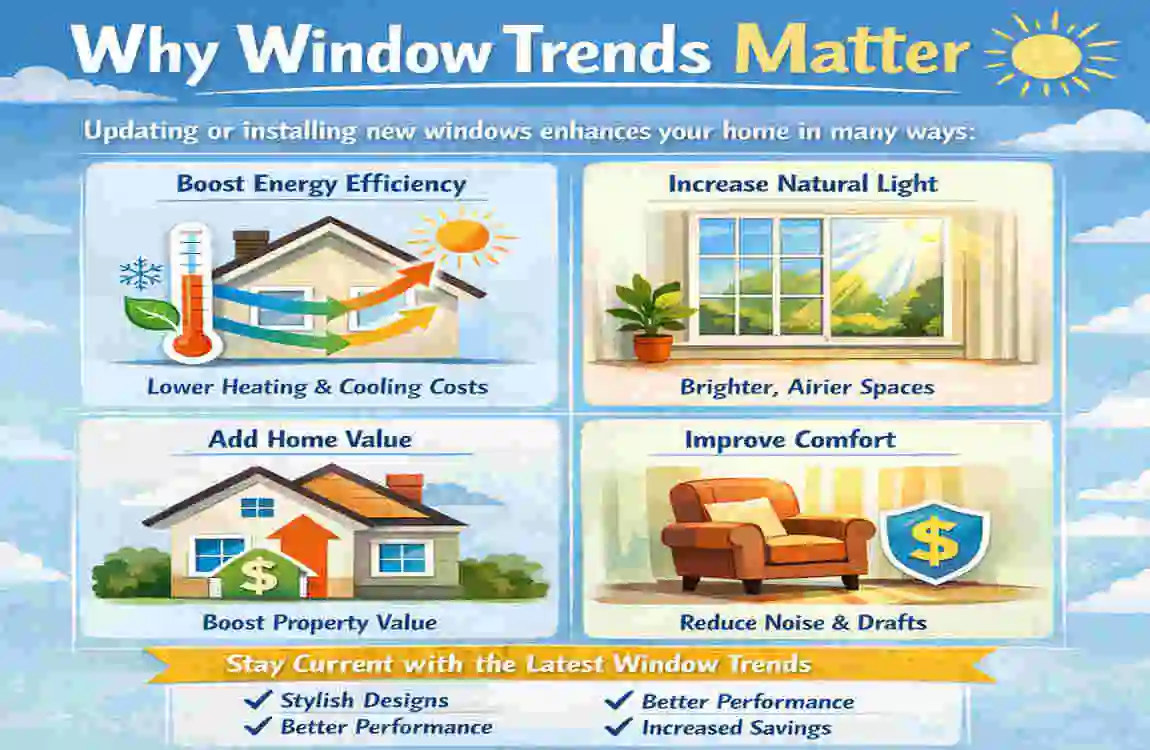
One of the biggest reasons contemporary home window trends matter now is simple: energy costs keep rising, and people are paying more attention to what their homes consume. Windows play a major role in that. Old or poorly sealed windows can waste heating and cooling power every single day.
That is why more homeowners are choosing better glazing, tighter frames, and designs that support insulation. In many modern homes, the window is no longer just a decorative feature. It is part of the home’s overall performance.
This is where energy-efficient windows 2026 become so important. Triple glazing, improved seals, and advanced glass coatings help keep indoor temperatures steady. That means your heating and cooling system does not have to work as hard. Over time, that can lead to real savings and a much more comfortable home.
A modern home should feel open, but not wasteful.
Today’s homeowners want open space, but they do not want a house that leaks air or feels cold near the glass. The best window trends solve both problems. They offer wide views, more daylight, and a clean architectural look without sacrificing energy performance.
This is why large picture windows, slim casements, and fixed glass panels are becoming so common. They create a sleek look, but they also support a more efficient envelope when built well.
In other words, the right window style can help your home feel larger, brighter, and more refined. That is one of the biggest reasons trending window styles for modern homes are such a hot topic in 2026.
Sustainability is now part of the conversation.
Another major shift is the focus on sustainability. More people want building materials that are smarter and more responsible. That includes Low-E glass, recycled frame materials, and window systems that last longer with less maintenance.
A window that reduces heat gain in summer and keeps warmth inside in winter does more than save money. It supports a greener lifestyle. It also fits well with the clean, minimal look that many homeowners now prefer.
The main drivers behind today’s window trends
Here are the biggest reasons homeowners and designers are choosing new window styles:
- Energy efficiency
- Smart home compatibility
- Climate resilience
- Minimalist looks
- Better indoor-outdoor connection
- Long-term value
These priorities are shaping the way people shop for modern window designs. If you want your home to feel current in 2026, window choice is a major part of the picture.
Top Trending Window Styles for Modern Homes
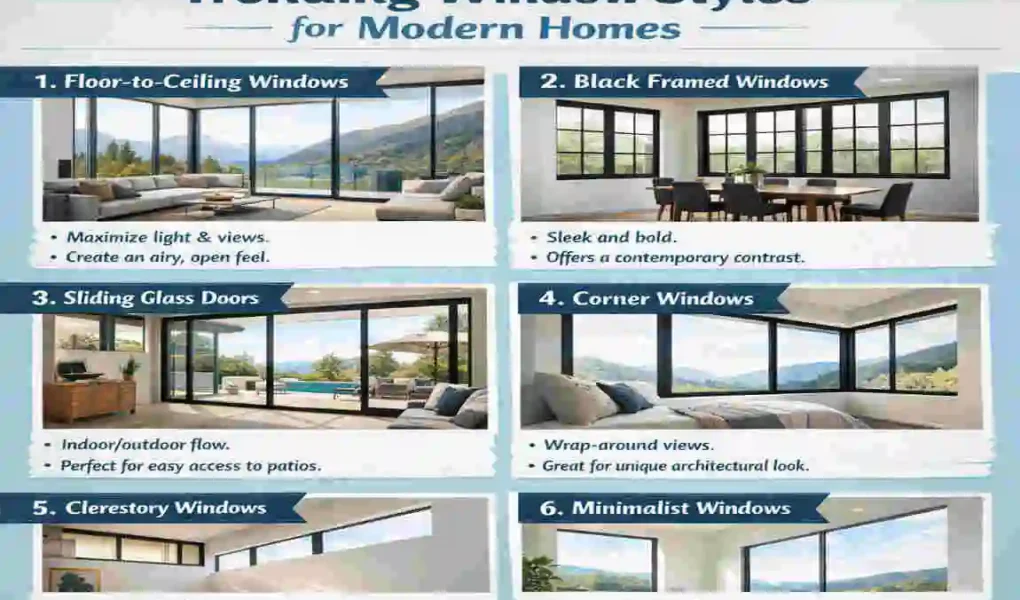
The heart of this guide is the window style itself. Below, you will find the most useful and stylish options for modern living. Each one brings something different to the table, so the best choice depends on your room, your climate, and your goals.
Quick comparison table
Style Description Pros Cons Best For
Casement Windows Side-hinged windows that open outward like a door. Great ventilation, clean look. Often costs more. Kitchens, urban homes.
Picture / Fixed Windows Large stationary panes of glass Maximum light, strong views, efficient No airflow Living rooms, feature walls
Bay / Bow Windows Project outward with multiple panels. Extra space, wide view, elegant look. More complex installation. Dining areas, lounges
Sliding Windows: Panels move horizontally on a track: space-saving, simple operation. Tracks need upkeep. Patios, compact homes.
Awning Windows are hinged at the top and open outward. Good for fresh air during rain. Smaller size limits apply in bathrooms and laundry rooms.
Clerestory Windows High-set windows near the ceiling Privacy with natural light Needs custom planning Bedrooms, stairwells.
Corner Windows Wrap around the corner of a room. Dramatic views, modern feel. Structural work required. Open-plan homes
Tilt-and-Turn Windows open: Open inward in two ways. Flexible, modern European style. Takes time to learn—multi-use rooms.
Casement windows
Casement windows are among the most popular window styles for modern homes because they combine a neat look with practical performance. These windows are hinged on the side and open outward, much like a door. That makes them excellent for ventilation, especially when you want to catch a breeze and push stale air outside.
They also look very clean from the outside. Slim frames, especially in aluminum or dark finishes, fit beautifully with a modern house. If you want a simple design that still feels high-end, casement windows are a smart choice.
They work especially well in kitchens because they are easy to open while cooking. They also suit city homes where every bit of airflow matters. The only downside is that they can cost more than basic window types, especially if you choose Premium glass or custom sizing.
Picture or fixed windows
Picture windows are all about the view. These windows do not open, so they offer a large, uninterrupted sheet of glass. That creates a calm, open feeling and lets in a lot of daylight.
For many homeowners, this is exactly what makes them one of the most attractive modern window designs. They make the room feel bigger, brighter, and more connected to the outdoors. They also tend to be very energy-efficient because they have fewer moving parts and fewer points where air can leak.
The tradeoff is simple: they do not provide ventilation. That means they work best when paired with another window that opens, such as a casement or awning window nearby. In living rooms, stairwells, and feature walls, though, they can be stunning.
Bay and bow windows
Bay and bow windows bring shape and depth to a room. They extend outward from the wall, which adds both visual interest and a little extra interior space. A bay window usually has three panels, while a bow window uses more panels and creates a softer, curved look.
These are great choices if you want your home to feel more elegant without looking overly traditional. In fact, bay windows revive classic style with a modern twist, which is why they remain popular in contemporary homes.
They work well in dining rooms, lounges, and front-facing spaces where you want natural light and a better view. A bay seat or reading nook can also turn them into a cozy feature.
The main drawback is installation complexity. These windows require careful planning because they affect the wall structure and the home’s exterior shape. If done well, however, they can add real charm and value.
Sliding windows
Sliding windows are popular in modern homes because they feel simple, smooth, and practical. Instead of opening outward, the panes slide horizontally on a track. That makes them a smart choice for places where you do not want a window swinging into a walkway or patio.
Their thin, clean profile matches the look of many modern houses. They also let in plenty of light and offer easy access when you want fresh air. For compact homes, they are especially useful because they save space.
The downside is that the tracks need regular cleaning. Dust, grit, and moisture can cause the movement to feel rough if you ignore maintenance. Still, for patios, smaller bedrooms, and spaces with limited clearance, sliding windows remain one of the most useful options.
Awning windows
Awning windows are hinged at the top and open outward from the bottom. This design lets fresh air enter while helping block rain. That makes them ideal for places with rapidly changing weather.
They are often used in bathrooms, kitchens, and utility spaces, but they can also work beautifully in mixed window groupings. When paired with fixed panes, they help create a modern wall of glass that still provides ventilation.
Awning windows are not usually chosen as the main feature in a large room because of their smaller size. But as a supporting window type, they are extremely useful. They help improve comfort without disturbing the clean lines of a modern home.
Clerestory windows
Clerestory windows sit high on the wall near the ceiling. Their purpose is simple: bring in natural light without giving up privacy. That makes them a smart option for rooms where you want brightness but do not want people looking inside.
They are especially useful in bedrooms, bathrooms, staircases, and hallways. They can also create a beautiful architectural effect in open-plan homes where light needs to travel deeper into the interior.
One reason clerestory windows fit contemporary home window trends so well is that they support clean, uncluttered walls. They feel modern and intentional. Because they are often custom-placed, they require more planning during design or renovation.
Corner windows
Corner windows are one of the boldest trending window styles for modern homes. Instead of stopping at one wall, the glass wraps around the corner. The result is a wide, dramatic view and a very open feeling inside the home.
This style is ideal if you want your living room or open-plan space to feel more connected to the outside. It also creates a strong architectural statement. Many modern homes use corner windows to make the building feel lighter and more expansive.
The challenge is structural. Since corners are important load-bearing points in a house, this type of window needs expert planning. It is not the easiest option, but when it works, the visual result is exceptional.
Tilt-and-turn windows
Tilt-and-turn windows offer two different opening modes. You can tilt the top inward for ventilation, or swing the entire sash inward for full opening and easy cleaning. This makes them extremely practical.
They are especially popular in European-style homes and are becoming more common in modern homes around the world. Their clean lines and flexible use make them a good fit for homeowners who want something that feels smart and efficient.
They also help with security and weather control. You can ventilate the room without fully opening the window, which is useful in city homes or during light rain. The only downside is that they may feel unfamiliar to people used to standard window types. Once you get used to them, though, they are very convenient.
Key Factors for Choosing Windows
Choosing from the many trending window styles for modern homes can feel exciting, but it should never be based on looks alone. A beautiful window that performs poorly will not serve you well. The best choice should suit your climate, layout, budget, and how you live every day.
Energy efficiency should come first.
If you want real comfort and lower bills, energy performance needs to be at the top of your list. In 2026, many homeowners are seeking triple-glazed windows, improved seals, and glass coatings that reduce heat transfer.
A good window should help your home stay warmer in winter and cooler in summer. It should also reduce drafts and keep indoor temperatures more stable. That is why many people are comparing energy-efficient windows 2026 carefully before making a choice.
If you live in a place with harsh summers or cold winters, this matters even more. Good insulation is not just a bonus. It is a long-term investment in comfort and savings.
Materials change the whole look.
The frame material changes both the style and the performance of the window. Aluminum, vinyl, and engineered composites are popular because they offer clean lines and can support slim modern frames. That is one reason they are so common in modern window designs.
Black and grey finishes remain especially popular because they create a sharp contrast with light walls and suit both minimal and industrial-style homes. White still works well, too, but darker frames often give a more contemporary look.
If you want the window to blend in, choose a softer finish. If you want it to stand out as a design feature, go darker and slimmer.
Size and placement matter more than people think.
A window can look beautiful on a brochure and still feel wrong in the home if it is not placed well. The right size depends on the room, the wall space, and the amount of natural light you want.
Floor-to-ceiling windows create a dramatic effect and can completely change a room’s mood. Smaller strategic windows may work better where privacy or furniture layout matters. In some spaces, a combination of fixed glass and smaller opening sections is the best solution.
Think about how you use the room during the day. Do you need morning sunlight? Do you want a view while sitting at the table? Do you need airflow more than wide glass? These questions help you choose smarter.
Budget breakdown
Window pricing can vary a lot based on style, size, glass type, frame material, and installation difficulty. On average, a modern window can range from $500 to $2,000 or more per unit, depending on what you choose and where you live.
That is why it helps to think beyond the first purchase price. A slightly more expensive window might save you money over time through lower energy costs, less maintenance, and better durability.
Many homeowners also find that attractive, efficient windows improve resale appeal. That means your money may come back in more than one way.
Simple checklist before you buy
Use this quick checklist before choosing any window style:
- Does it suit your climate?
- Does it match your home’s design?
- Is it easy to clean and maintain?
- Will it improve energy performance?
- Does it fit your budget now and long term?
- Does it come with a strong warranty?
- Can it work with smart home features if needed?
When you answer these questions honestly, the best choice becomes much clearer.
Installation and Maintenance Tips
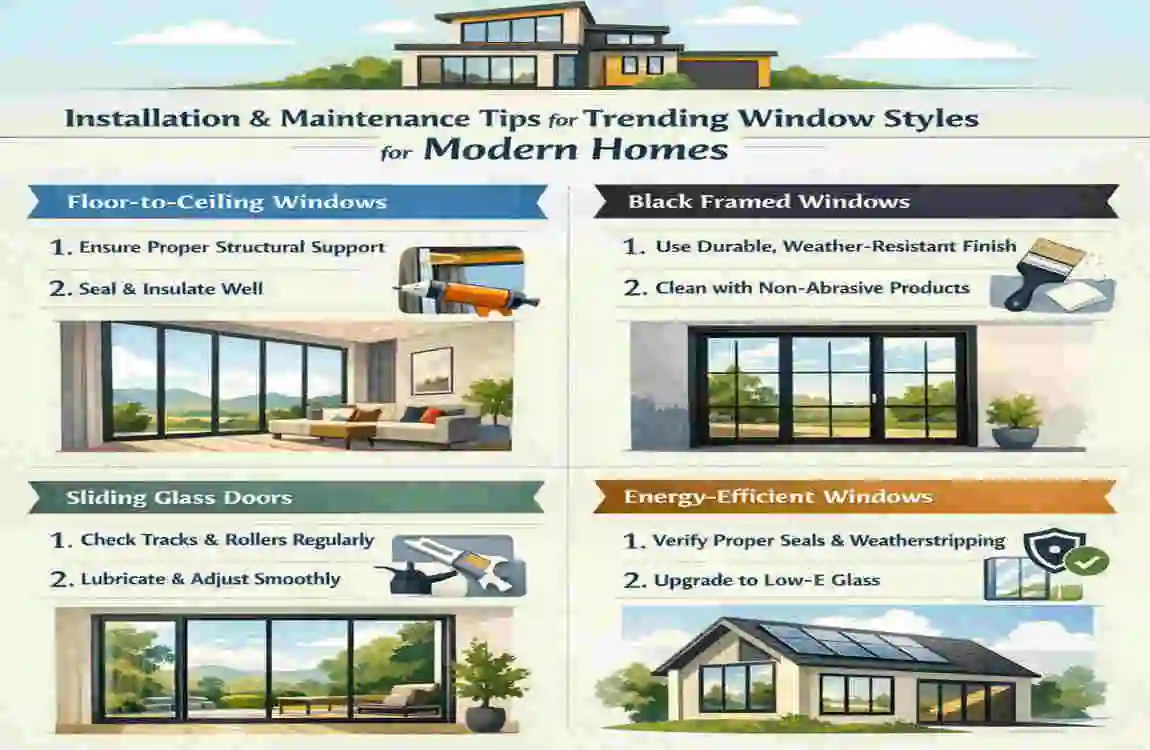
Even the best trending window styles for modern homes can underperform if they are installed poorly. A great window needs the right fit, proper sealing, and thoughtful finishing. If those parts are rushed, you can end up with leaks, drafts, or long-term damage.
Start with accurate measuring.
Window installation begins long before the first frame goes in. The opening must be measured with care. Even a small error can create problems later. If the fit is too loose, air and water can get in. If it is too tight, the window may not open smoothly or seal properly.
This is why professional measuring matters so much. It is also one of the easiest ways to protect your investment.
Hire certified installers when possible.
If your home needs a high-performance setup, such as passive house standards or advanced airtight construction, work with certified professionals. These installers understand modern sealing methods, glazing requirements, and structural details.
That is especially important for large panes, corner windows, and bay windows. These styles can look amazing, but they also need expert care during installation.
Do not ignore sealing and finishing.
A beautiful frame is not enough. Good sealing around the edges protects the home from water damage, drafts, and long-term wear. The finish around the interior and exterior should be checked carefully once the window is installed.
Poor sealing is one of the most common mistakes homeowners make. It often leads to hidden problems that are expensive to fix later.
Maintenance is simple if you stay consistent.
You do not need to spend every weekend working on your windows. But you should stay consistent with a few basic tasks.
A simple maintenance routine
- Clean the glass regularly
- Check the tracks and hinges once or twice a year
- Inspect the sealant for cracks or gaps
- Remove dust and dirt from sliding tracks
- Watch for condensation or moisture buildup
- Test opening and closing movement
These small habits help your windows last longer and perform better. They also keep your home looking fresh and well cared for.
Smart home integration is becoming more common.
Many homeowners want windows that work with other smart features in the home. That may include auto-tint glass, sensor-based ventilation, or shading systems that respond to sunlight.
This is one reason contemporary home window trends are moving toward more intelligent design. The goal is not just to look modern. The goal is to make the home feel easier to live in.
Cost vs. Value Analysis
When people compare trending window styles for modern homes, cost often becomes the deciding factor. That is understandable. Windows can be a major investment, especially if you are replacing several at once.
But it helps to think in terms of value, not just price. A cheaper window may save money today, but cost more over time due to energy loss or repairs. A better window may cost more upfront but pay you back through comfort, lower bills, and stronger resale appeal.
Average cost by style
Style Average Cost Per Window Value Notes
Casement $700–$1,400 Strong balance of style and function
Picture / Fixed $600–$1,500 Great for views and efficiency
Bay / Bow $1,500–$4,000+ Higher cost, but adds character
Sliding $500–$1,200 Good for budget-conscious projects
Awning $400–$900 Great secondary window option
Clerestory $800–$2,000+ Often custom and design-led
Corner Window $2,000–$6,000+ Premium architectural statement
Tilt-and-Turn $900–$2,500 Flexible and efficient
How the savings add up
Energy-efficient windows can reduce wasted heating and cooling over time. In many homes, that means lower monthly bills and less strain on the HVAC system. Over a few years, those savings can become meaningful.
That is why many homeowners see better windows as a long-term asset rather than a short-term cost. If the window helps control indoor temperature, reduces maintenance, and improves the home’s appearance, the value becomes much easier to justify.
A local example: modern home upgrade
Imagine a modern home with large sun-facing windows, older frames, and weak insulation. In a hot climate like that, the wrong windows can make indoor spaces uncomfortable very quickly.
Now imagine the same home upgraded with sleek casement windows, fixed glass panels, and improved heating controls. The rooms feel brighter, the house looks more current, and the cooling system does less work. That is the kind of improvement that homeowners often notice right away.
The final result is not just a better-looking home. It is a more comfortable, more practical one.
Best Ways to Match Window Style with Your Home
For minimalist homes
If your home has a clean, simple design, consider casement windows, fixed panes, or slim black-framed sliding models. These styles support a modern look without visual clutter.
For open-plan homes
Open-plan layouts benefit from picture windows, corner windows, and floor-to-ceiling designs. These styles make the space feel bigger and help the rooms flow together more naturally.
For private spaces
Bedrooms, bathrooms, and side-facing rooms often need light without too much visibility. Clerestory windows and awning windows are strong choices here.
For homes with outdoor views
If your property has a garden, skyline, or scenic backdrop, picture windows and bay windows can frame the view beautifully. This is where trending window styles for modern homes really shine.
FAQ: Trending Window Styles for Modern Homes
What are the best trending window styles for modern homes?
The best options usually include casement, picture, sliding, and tilt-and-turn windows. The right choice depends on your room, climate, and design goals.
Are black frames still trending?
Yes, black frames are still very popular. They give windows a sharp, modern edge and work well with both light and dark exterior finishes.
Which window style is most energy-efficient?
Fixed windows are often very efficient because they do not open. Still, well-made casement and tilt-and-turn windows can also perform extremely well when paired with high-quality glazing.
Are bay windows outdated?
No, bay windows are not outdated. In fact, they are being refreshed with cleaner lines and modern materials, which keeps them relevant in contemporary homes.
What window style is best for small homes?
Sliding, casement, and awning windows are often great for small homes because they save space while still bringing in light and air.
Do modern window styles improve resale value?
Yes, they can. Good windows improve curb appeal, comfort, and efficiency, which often makes a home more attractive to buyers.
| Factor | Key Considerations | Trending Examples (2026) | Pro Tip |
|---|---|---|---|
| Style | Sleek, minimalist profiles for contemporary aesthetics | Casement, bay/bow, floor-to-ceiling picture, tilt-and-turn | Match to room function—e.g., sliding for patios, clerestory for privacy. |
| Energy Efficiency | U-value <0.8; triple-pane glazing, Low-E coatings | Triple-glazed aluminum frames in black/grey | Prioritize for 30% energy savings and sustainability. |
| Materials | Slim aluminum, vinyl, or fiberglass; matte finishes | Black-framed slimline casements | Choose weather-resistant for Lahore’s climate (humidity, heat). |
| Size & Placement | Large for light flow; strategic vents | Corner windows, awning for high placements | Balance views, ventilation, and natural light intake. |
| Budget | $500–$2,000 per window; ROI in 3–7 years | Mid-range bay windows (~$1,200 avg) | Factor installation (~20% extra); opt for warranties. |
| Maintenance | Easy-clean tracks, smart integrations | Auto-tint sliders | Annual checks; hire certified pros for passive house standards. |