Are you looking to upgrade your home with the latest in window technology? Home electric windows are becoming increasingly popular among homeowners who want to add convenience and modern style to their living spaces. But the thought of installation can be daunting, right? Well, don’t worry! In this comprehensive guide, we’ll walk you through how to Install a home electric window fast with a straightforward DIY approach.
What Is a Home Electric Window?

Before we dive into the installation process, let’s take a moment to understand what a home electric window actually is. Simply put, an electric window is a window that can be opened and closed with an electric motor rather than manually. This means you can control your windows with the touch of a button or even through a smart home system.
Benefits of Home Electric Windows
So, why choose electric windows over traditional manual ones? Here are just a few of the many benefits:
- Convenience: No more struggling with stiff or hard-to-reach windows. With electric windows, you can open and close them effortlessly.
- Energy efficiency: Electric windows can be programmed to open and close based on temperature or time of day, helping you save on heating and cooling costs.
- Increased home value: Modern, convenient features like electric windows can boost your home’s resale value.
- Accessibility: For those with mobility issues, electric windows make it easy to control ventilation and light without straining.
Types of Home Electric Windows
There are several types of electric windows available on the market, each designed for different applications:
- Casement windows: These open outward on hinges and are often used in kitchens and bathrooms for ventilation.
- Awning windows: Similar to casement windows, but they open outward from the bottom, creating an awning effect.
- Sliding windows: These move horizontally along a track and are a popular choice for bedrooms and living rooms.
- Tilt-and-turn windows: These versatile windows can be tilted inward for ventilation or swung open like a door for easy cleaning and access.
Tools and Materials Needed for a Fast DIY Installation
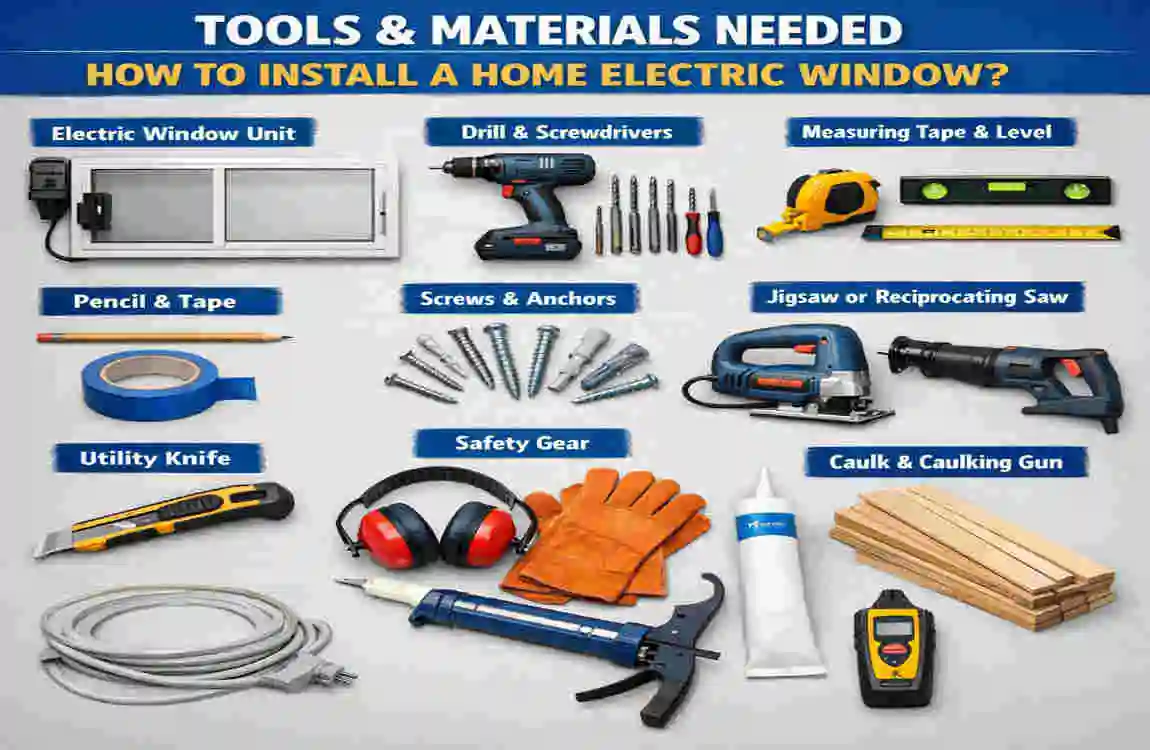
Now that you understand the basics of home electric windows, let’s talk about what you’ll need to Install one quickly and efficiently. Here’s a list of the essential tools and materials:
Essential Tools
- Drill: For drilling holes in the window frame and wall.
- Screwdriver: To secure screws and brackets.
- Wire stripper: For preparing electrical wires.
- Level: To ensure the window is installed straight.
- Tape measure: For accurate measurements of the window frame.
Required Materials
- Electric window kit: This includes the window frame, motor, and control switch.
- Screws: To secure the window frame to the wall.
- Electrical wiring: To connect the window motor to a power source.
- Caulk and weatherstripping: To seal gaps and improve energy efficiency.
Safety Gear
- Gloves: To protect your hands while working.
- Goggles: To shield your eyes from debris and dust.
Tips for Choosing the Right Electric Window Kit
When selecting an electric window kit, consider the following factors:
- Window size and type: Make sure the kit is compatible with your existing window frame and the kind of window you want to Install.
- Motor power: Choose a motor that can handle the weight and size of your window.
- Control options: Decide whether you want a simple switch or a more advanced smart home integration.
- Brand reputation: Look for reputable brands with good customer reviews and warranty coverage.
Step-by-Step Easy DIY Guide to Install a Home Electric Window Fast
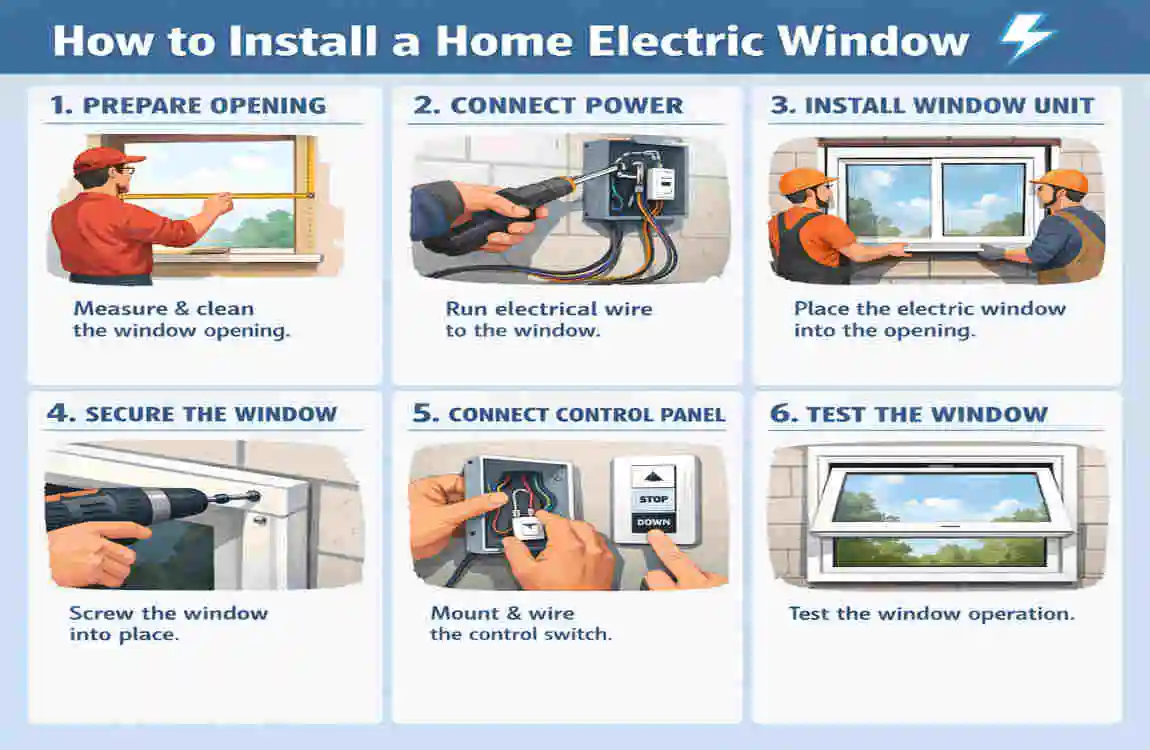
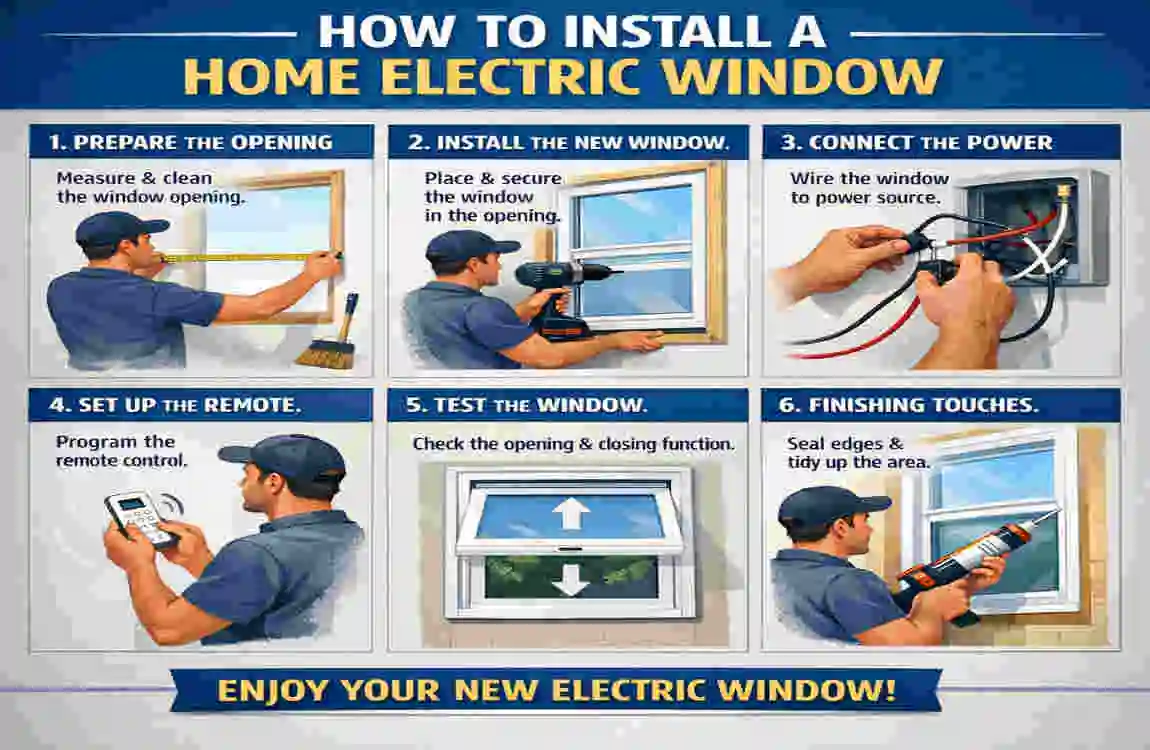
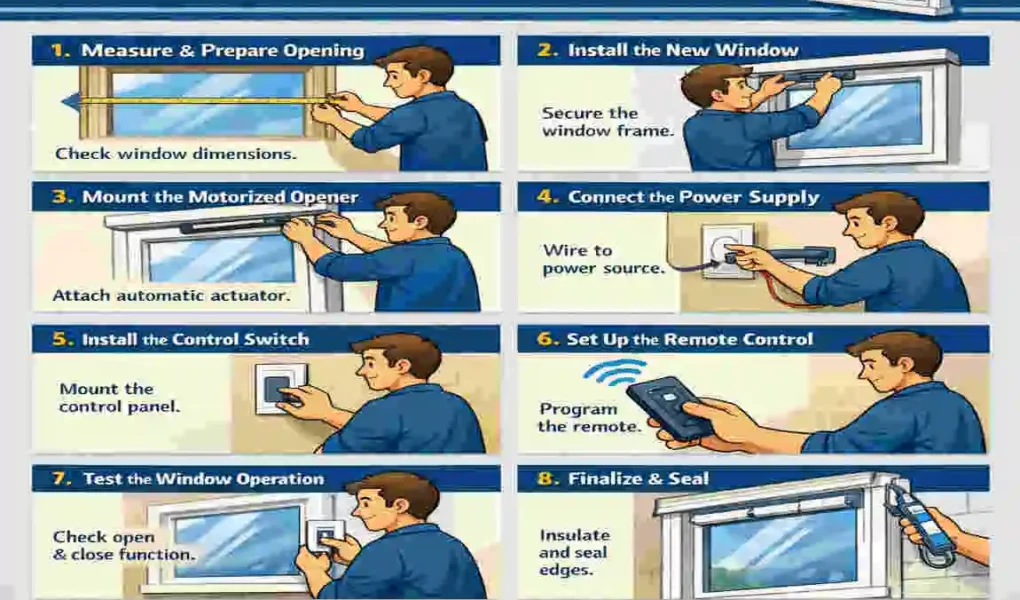
Now, let’s get to the heart of the matter: how to Install a home electric window fast using a DIY approach. We’ll break down the process into six easy steps, guiding you through each stage of the installation.
Preparation
Before you start the actual installation, it’s crucial to prepare your workspace and gather all the necessary tools and materials. Here’s what you need to do:
Measuring and Assessing the Window Frame
Use your tape measure to take accurate measurements of the existing window frame. Make sure to note the frame’s width, height, and depth. This will help you choose the correct size electric window kit and ensure a proper fit.
Disconnecting Power Sources Safely
Safety should always be your top priority when working with electrical components. Before you begin, locate the circuit breaker that powers the window area and switch it off. Double-check that the power is off using a voltage tester.
Clearing the Workspace
Clear the area around the window of any furniture, decorations, or other obstacles. This will give you plenty of room to work and help prevent accidents.
Removing the Old Window (if applicable)
If you’re replacing an existing manual window with an electric one, you’ll need to remove the old window first. Here’s how to do it safely:
How to Safely Remove a Manual Window
Start by removing any trim or molding around the window frame. Then, carefully pry the window out of the frame using a flathead screwdriver or a pry bar. Be gentle to avoid damaging the surrounding wall or frame.
Tips to Avoid Damaging the Frame
To prevent damage to the window frame during removal, consider the following tips:
- Use protective coverings: Place a cloth or cardboard between the pry bar and the frame to prevent scratching.
- Work slowly and carefully: Don’t rush the process. Take your time to avoid applying too much force.
- Have a helper: If possible, have someone assist you in holding the window while you remove it from the frame.
Installing the Electric Window Frame
Now that you’ve prepared the workspace and removed the old window (if necessary), it’s time to Install the new electric window frame. Here’s how:
Aligning and Securing the Window Frame Correctly
Carefully place the new electric window frame into the opening, making sure it’s properly aligned with the surrounding wall. Use your level to ensure the frame is straight.
Once the frame is in position, secure it to the wall using the provided screws and mounting brackets. Start by loosely attaching the screws, then tighten them once you’ve confirmed the frame is level and properly aligned.
Using Screws and Mounting Brackets Effectively
When securing the window frame, keep these tips in mind:
- Use the right size screws: Make sure the screws are long enough to securely fasten the frame to the wall, but not so long that they protrude through the other side.
- Tighten screws evenly: Tighten the screws in a star pattern, gradually increasing the pressure to ensure even pressure on the frame.
- Check for gaps: After tightening the screws, check for any gaps between the frame and the wall. If you find any, use shims to fill them and ensure a snug fit.
Connecting the Electric Components
With the window frame securely in place, it’s time to connect the electric components. This is where things can get a bit tricky, but don’t worry—we’ll guide you through it step by step.
Wiring Basics Explained for Beginners
Before we dive into the specifics of connecting the electric window, let’s cover some basic wiring principles:
- Power source: The electric window motor must be connected to a power source, typically a wall outlet or a dedicated circuit.
- Switches and controls: The window motor is controlled by a switch or a smart home system. The switch needs to be connected to the motor and the power source.
- Polarity: Make sure to connect the positive and negative wires correctly to avoid damaging the motor or causing a short circuit.
Connecting Power Supply and Switches
Now, let’s walk through the process of connecting the electric window components:
- Locate the power source: Identify the nearest power outlet or dedicated circuit that you’ll be using to power the window motor.
- Run the power cable: Use your wire stripper to prepare the power cable, then run it from the power source to the window motor.
- Connect the power cable to the motor: Match the positive and negative wires from the power cable to the corresponding terminals on the motor. Secure the connections with wire nuts or terminal screws.
- Connect the switch: Run another cable from the motor to the location where you’ll be installing the switch. Connect the switch to the motor and power source, ensuring the polarity is correct.
Tips to Ensure Secure Electrical Connections
To ensure your electrical connections are secure and safe, follow these tips:
- Use wire nuts or terminal screws: These provide a secure connection and help prevent loose wires.
- Tape or heat-shrink the connections: After securing the cables, use electrical tape or heat-shrink tubing to insulate the connections and prevent short circuits.
- Double-check polarity: Always double-check that you’ve connected the positive and negative wires correctly to avoid damaging the motor or causing a short circuit.
Testing the Electric Window
Congratulations! You’ve successfully installed the electric window frame and connected the electrical components. Now it’s time to test your handiwork and make sure everything is working correctly.
How to Test the Window’s Motor and Controls
To test the electric window, follow these steps:
- Turn on the power: Switch on the circuit breaker or plug in the power cord to provide power to the window motor.
- Operate the window: Use the switch or smart home control to open and close the window. Listen for any unusual noises and watch for smooth, consistent movement.
- Check the limits: Make sure the window opens and closes fully, without getting stuck or stopping prematurely.
Troubleshooting Common Issues
If you encounter any issues during testing, here are some common problems and their solutions:
- Window doesn’t move: Check the power source, wiring connections, and switch. Make sure everything is properly connected and powered.
- Window moves slowly or erratically: The motor may be overloaded, or the wiring may be too thin. Consider upgrading the motor or using thicker wire.
- Window stops mid-motion: The motor may be overheating, or the limit switches may be malfunctioning. Allow the motor to cool down and check the limit switches for proper operation.
Final Adjustments and Securing
Once you’ve confirmed that the electric window is working correctly, it’s time to make any final adjustments and secure everything in place.
Sealing Gaps to Improve Insulation
To improve energy efficiency and prevent drafts, seal any gaps between the window frame and the surrounding wall. Use caulk or weather stripping to fill these gaps, making sure to apply it evenly and smoothly.
Ensuring Smooth Window Movement
If the window feels stiff or resistant when opening and closing, you may need to make some adjustments:
- Check the tracks: Make sure the window is correctly aligned in its tracks and that there are no obstructions.
- Lubricate the moving parts: Apply a small amount of silicone-based lubricant to the tracks and any other moving parts to reduce friction.
- Adjust the motor settings: Some electric window motors allow you to adjust the speed and force settings. Consult your owner’s manual for instructions on how to do this.
Safety Checks Before Finishing
Before you consider the installation complete, perform these final safety checks:
- Double-check the wiring: Make sure all electrical connections are secure and properly insulated.
- Verify the power source: Confirm that the window is connected to a properly rated power source and that the circuit breaker is labeled correctly.
- Test the emergency release: If your electric window has an emergency release feature, test it to ensure it works properly in case of a power failure.
Time-Saving Tips to Install Your Home Electric Window Fast

Now that you’ve learned the step-by-step process for installing a home electric window, let’s explore some time-saving tips to help you complete the project even faster:
Pre-Assembling Parts Before Installation
One of the best ways to save time during installation is to pre-assemble as many parts as possible before you start. This includes:
- Connecting the motor to the window frame: Attach the motor to the window frame and secure the wiring connections before installing the frame in the wall.
- Preparing the power cable: Strip the ends of the power cable and attach wire nuts or terminal screws to make the final connections quicker.
- Assembling the switch: If your switch requires assembly, put it together before you start the installation process.
Working with a Partner for Efficiency
Having a partner to help you with the installation can significantly speed up the process. Here are some ways a partner can assist:
- Holding the window frame: While you secure the house frame to the wall, your partner can hold it in place to ensure proper alignment.
- Running the wiring: Your partner can help run the power cable and switch wiring, making the process quicker and easier.
- Testing and adjusting: With two sets of eyes and hands, you can test and adjust the window more efficiently.
Using Power Tools Instead of Manual Tools
Whenever possible, use power tools to speed up the installation process. Some examples include:
- Drill: Use a power drill to quickly and easily drill holes for screws and mounting brackets.
- Screwdriver: A power screwdriver can save you time when securing screws and making adjustments.
- Caulk gun: A power caulk gun can help you apply caulk more quickly and evenly when sealing gaps.
Common Mistakes to Avoid During Installation
Even with the best instructions, it’s easy to make mistakes during installation. Here are some common pitfalls to watch out for:
Incorrect Wiring Risks
One of the most dangerous mistakes you can make is incorrect wiring. This can lead to short circuits, motor damage, or even electrical fires. To avoid this:
- Double-check polarity: Always make sure you’ve connected the positive and negative wires correctly.
- Use the correct wire gauge: Choose a wire gauge that’s appropriate for the motor’s power requirements.
- Secure all connections: Use wire nuts, terminal screws, and insulation to ensure all connections are secure and protected.
Improper Measurements Leading to Poor Fit
If you don’t take accurate measurements, you may end up with a window that doesn’t fit properly in the frame. To avoid this:
- Measure multiple times: Take measurements at different points along the frame to account for any irregularities.
- Use a level: Make sure the frame is level and plumb before securing it in place.
- Check for squareness: Use a carpenter’s square to ensure the frame is square and will fit the window properly.
Ignoring Safety Precautions
Safety should always be your top priority when working with power tools and electrical components. Some common safety mistakes to avoid include:
- Not wearing protective gear: Always wear gloves, goggles, and other appropriate safety gear to protect yourself from injury.
- Working on a live circuit: Never work on electrical components without first turning off the power at the circuit breaker.
- Ignoring manufacturer’s instructions: Always read and follow the manufacturer’s instructions for the electric window kit and any tools you’re using.
Maintenance Tips for Home Electric Windows

Once you’ve successfully installed your home electric window, it’s essential to keep it well-maintained to ensure long-lasting performance. Here are some tips to help you do just that:
Regular Cleaning and Lubrication Advice
To keep your electric window operating smoothly, clean and lubricate it regularly:
- Clean the tracks: Use a soft brush or cloth to remove any dirt, dust, or debris from the window tracks.
- Lubricate moving parts: Apply a small amount of silicone-based lubricant to the tracks and any other moving parts to reduce friction and wear.
- Clean the glass: Use a glass cleaner and a soft cloth to keep the window glass clean and clear.
Electrical Component Checks
To ensure the electrical components of your window are functioning correctly, perform these checks regularly:
- Inspect the wiring: Look for any signs of damage, fraying, or loose connections. Repair or replace any damaged wiring immediately.
- Test the switch: Make sure the switch is working correctly and that the window opens and closes smoothly.
- Check the motor: Listen for any unusual noises or signs of strain. If you notice any issues, consult the manufacturer’s instructions for troubleshooting and repair.
When to Call a Professional
While many maintenance tasks can be performed by a homeowner, there are times when it’s best to call a professional:
- Complex repairs: If the motor or other electrical components need to be repaired or replaced, it’s best to call a qualified electrician.
- Safety concerns: If you’re unsure about the safety of any aspect of the window or its electrical components, don’t hesitate to call a professional for assistance.
- Warranty issues: If your electric window is still under warranty, you may need to have a professional perform any necessary repairs to maintain the warranty coverage.
Why Choose DIY Over Professional Installation?
Now that you’ve learned how to Install a home electric window fast using a DIY approach, you may be wondering why you should choose this method over hiring a professional. Here are some compelling reasons:
Cost Savings
One of the biggest advantages of DIY installation is the potential for significant cost savings. By doing the work yourself, you can avoid the labor costs associated with hiring a professional. This can save you hundreds or even thousands of dollars, depending on the project’s complexity.
Personal Satisfaction and Skill Building
There’s a certain sense of accomplishment and pride that comes with completing a DIY project successfully. By installing your own electric window, you’ll not only save money but also gain valuable skills and experience that you can apply to future home improvement projects.
When to Consider Calling a Professional Instead
While DIY installation can be an excellent option for many homeowners, there are times when it’s best to call a professional:
- Complex installations: If your electric window requires complex wiring or structural modifications, it may be best to hire a professional to ensure the job is done safely and correctly.
- Safety concerns: If you’re not comfortable working with power tools or electrical components, it’s better to leave the job to a qualified professional.
- Time constraints: If you don’t have the time or patience to complete the installation yourself, hiring a professional can save you the stress and hassle of a DIY project.