Have you ever looked at a pile of leaves, twigs, and branches in your yard and thought, “Can I just burn this and be done with it?” You are not alone. Many homeowners ask this because garden waste can build up quickly, especially after pruning, mowing, or seasonal cleanups.
People often burn garden waste because it seems fast and easy. It can feel like the simplest way to clear space and keep the backyard tidy. But the real question is not just whether you can do it. The bigger question is whether you should do it, and whether it is even legal where you live.
Understanding Garden Waste
What counts as garden waste?
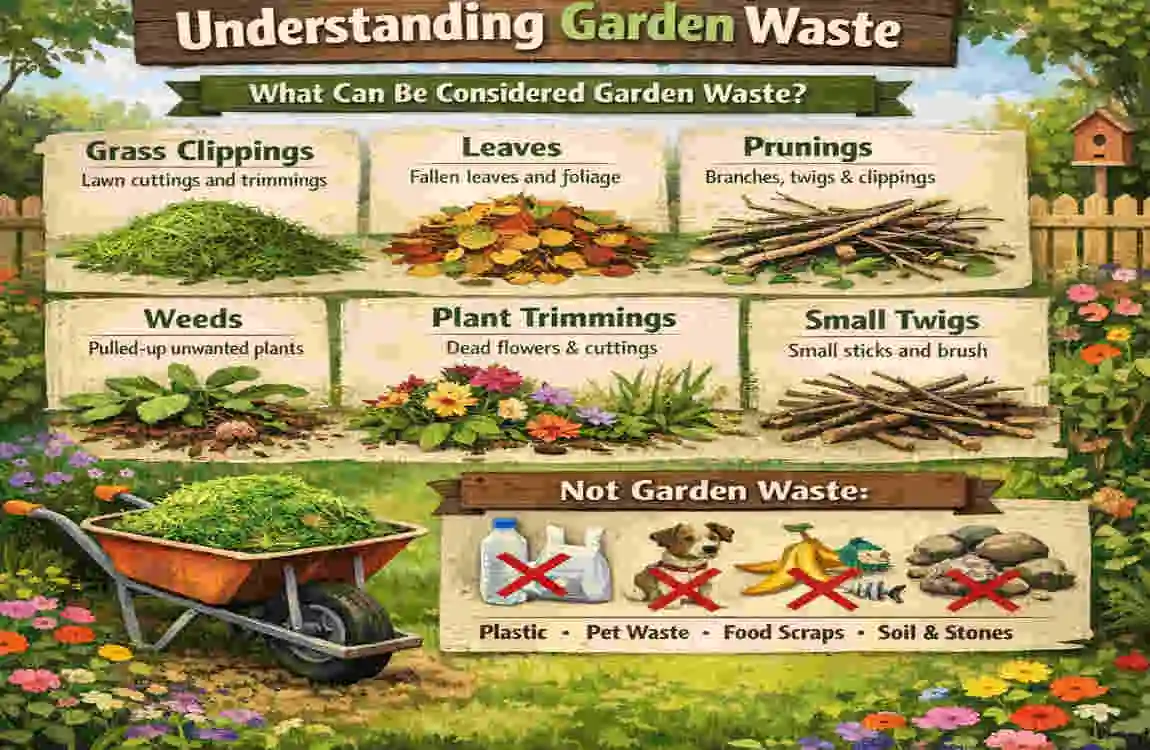
Garden waste is any natural material that comes from yard work or outdoor cleanup. This usually includes leaves, grass clippings, small branches, hedge trimmings, weeds, flowers, and twigs. In some places, people also count soil, roots, and plant cuttings as garden waste.
This type of waste adds up fast. A single weekend of mowing, trimming, or raking can leave you with a large pile. After storms, the amount can increase further. Broken branches, fallen leaves, and dry plants can take over a yard before you know it.
Most people want a quick way to get rid of it. That is why disposal becomes important. If the waste is left in a corner for too long, it can start to smell, attract insects, or make the yard look untidy.
Common ways people dispose of it
There are several ways to handle garden waste. Some people burn it, while others compost it, mulch it, or place it out for municipal pickup. Each method has its own pros and cons.
Burning is popular because it feels fast. You do not have to store the waste for long, and the pile disappears quickly. But it is also the most controversial method due to smoke, fire risk, and local laws.
Composting is slower, but it turns waste into a useful soil amendment. Mulching helps protect plants and save water. Pickup services are convenient if your local area offers them.
So yes, garden waste is normal. The real issue is choosing the right way to deal with it.
Is It Legal to Burn Garden Waste in Your House Garden?
Laws depend on where you live.
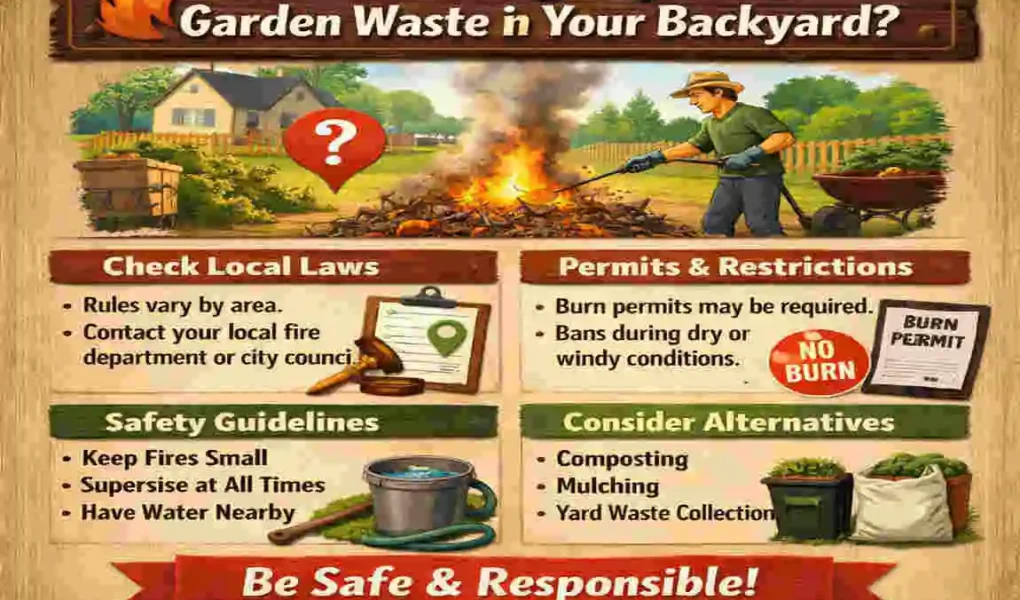
The short answer is this: it depends on local rules. There is no single rule that applies everywhere. In some areas, burning yard waste is allowed only on certain days or during certain hours. In other places, it is completely banned.
This is why the question, ‘Can you burn garden waste in your house garden?’ does not have a simple yes-or-no answer. Your city may allow small backyard burns, while your state may restrict them during dry seasons. Some countries and regions are much stricter because of air quality and fire safety concerns.
For example, some rural areas allow controlled burning because waste collection may be limited. On the other hand, busy towns and cities often ban it to reduce smoke and protect public health.
Why environmental laws matter
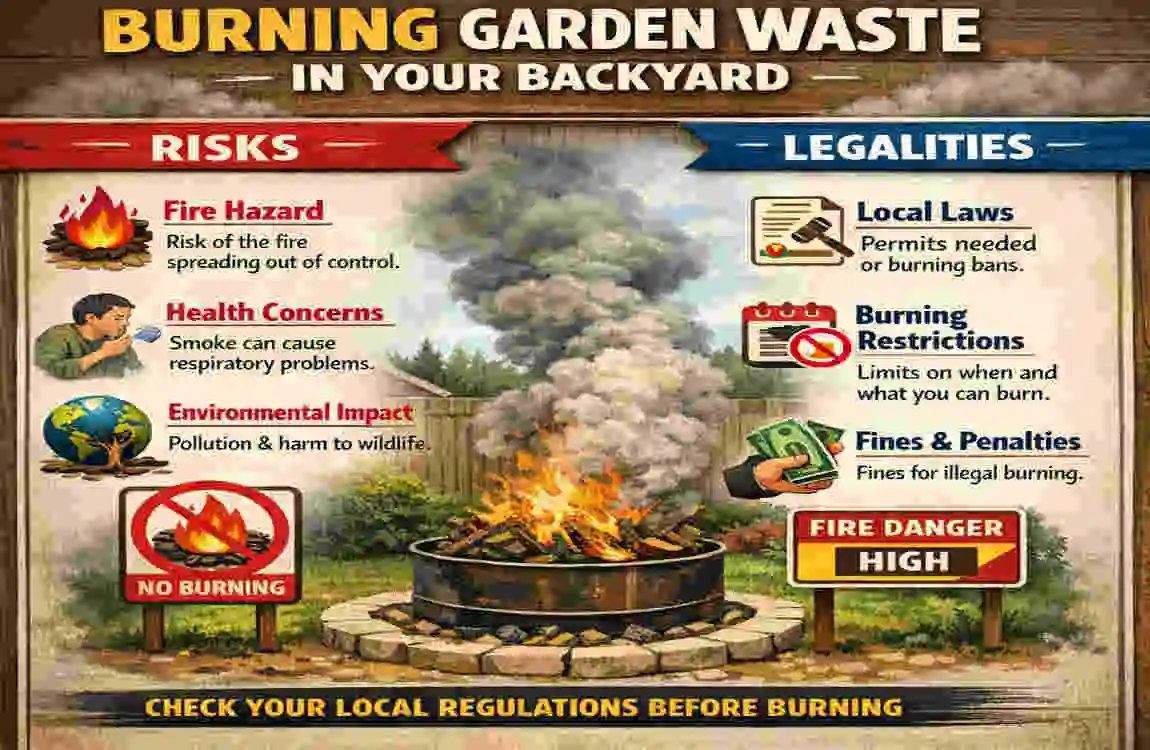
Many burning rules are tied to air pollution laws. Smoke from garden waste can affect nearby homes, schools, and roads. It can also worsen breathing problems for people with asthma or other lung issues.
Local governments often make these rules to keep the air clean and reduce fire risk. In dry or windy conditions, even a small fire can spread quickly. That is why many places treat backyard burning very seriously.
Sometimes the law also cares about what you are burning. Dry leaves may be treated differently from treated wood, painted wood, plastic, or household trash. Some materials release toxic fumes and are not allowed at all.
When permits may be needed
In some areas, you may need a permit before burning garden waste. A permit is a form of permission from local authorities. It may come with rules such as:
- burning only on certain days
- burning only during certain hours
- keeping a water source nearby
- using a controlled burn container
- staying a safe distance from buildings and fences
A permit helps officials track burns and reduce the chance of accidents. If your area requires one and you burn without it, you may face fines or other penalties.
A simple way to think about it
If you are unsure, assume burning is not allowed until you check. This saves you from trouble. The safest move is to contact your local council, fire department, or environmental office before lighting anything.
Risks of Burning Garden Waste in Your Backyard
Health risks from smoke
Burning garden waste creates smoke, and smoke is not harmless. It can release carbon monoxide, fine particles, and other pollutants. These can irritate the eyes, throat, and lungs.
If you or someone in your home has asthma, allergies, or a breathing condition, the smoke can make symptoms worse. Children and older adults may also be more sensitive.
Even if the fire looks small, the smoke can drift into neighboring yards and homes. That means the effect is not just local to your property. It can become a problem for everyone nearby.
Fire hazards you should not ignore.
Backyard burning can get out of control fast. Dry grass, leaves, fences, wooden sheds, and even low tree branches can catch fire if sparks travel.
Wind is one of the biggest dangers. A mild breeze can still carry embers far enough to start a new fire. A small burn pile can also flare up if it contains dry twigs or trapped air pockets.
Many accidental yard fires start when someone thinks they can “watch it for a minute” and then turns away. That is why constant supervision matters so much.
Environmental impact
Burning garden waste also affects the environment. It adds smoke to the air and releases carbon that could have been avoided. It can also harm wildlife that lives in or near your yard.
Small animals, insects, and birds may shelter in leaf piles or brush piles. If those piles are burned without checking first, animals can be injured or killed.
Smoke also leaves a mark on the broader environment. The more people burn waste in their yards, the more the air quality suffers.
Common problems linked to backyard burning
Here are a few problems that often happen when people burn garden waste carelessly:
- smoke complaints from neighbors
- accidental spread to fences or dry grass
- breathing irritation
- damage to nearby plants
- Ash and soot are spreading across the yard
The risks are real, even when the fire looks controlled at first.
Proper Safety Measures for Burning Garden Waste
Prepare the area first.
If burning is allowed where you live, preparation is the first step. Never burn in a crowded, windy, or dry area. Pick a safe spot that is far from buildings, trees, vehicles, sheds, and fences.
Clear the area around the burn site. Remove dry grass, paper, plastic, and anything else that could catch fire. Keep the pile small so it is easier to control.
Use the right equipment.
A controlled burn needs proper tools. Many people use a fire pit, burn barrel, or another approved container. These help keep the fire contained and reduce the chance of sparks spreading.
You should also have a bucket of water, a hose, or sand nearby before you begin. That way, you can act fast if the fire grows too much.
Wear simple protective gear too. Closed shoes, long sleeves, and gloves can help protect you from sparks and heat.
Supervise the fire at all times.
Never leave a burn pile alone, even for a short time. Fires can change quickly. A quiet pile can suddenly burst into flames if air moves through it or dry material shifts.
Burn during daytime hours so you can see clearly. Avoid late-evening burning, when visibility is lower and response time is slower.
Keep children and pets away from the area. This is not the time for distractions. Your full attention matters.
Dispose of ashes safely.
When the fire is finished, the ashes may still be hot for a long time. Do not dump them immediately into a bin or onto the ground.
Wait until the ashes are fully cold. Then place them in a metal container or another safe holder. If your local rules allow it, you may be able to spread small amounts in the garden later, but only when they are completely cool.
Never assume ashes are safe just because the flames are gone. Hidden heat can stay active for hours.
Safety checklist
- Check local rules first
- Choose a calm, dry day
- Keep water nearby
- Stay with the fire at all times
- Burn only a small amount
- Let ashes cool fully before disposal
Alternatives to Burning Garden Waste
Composting
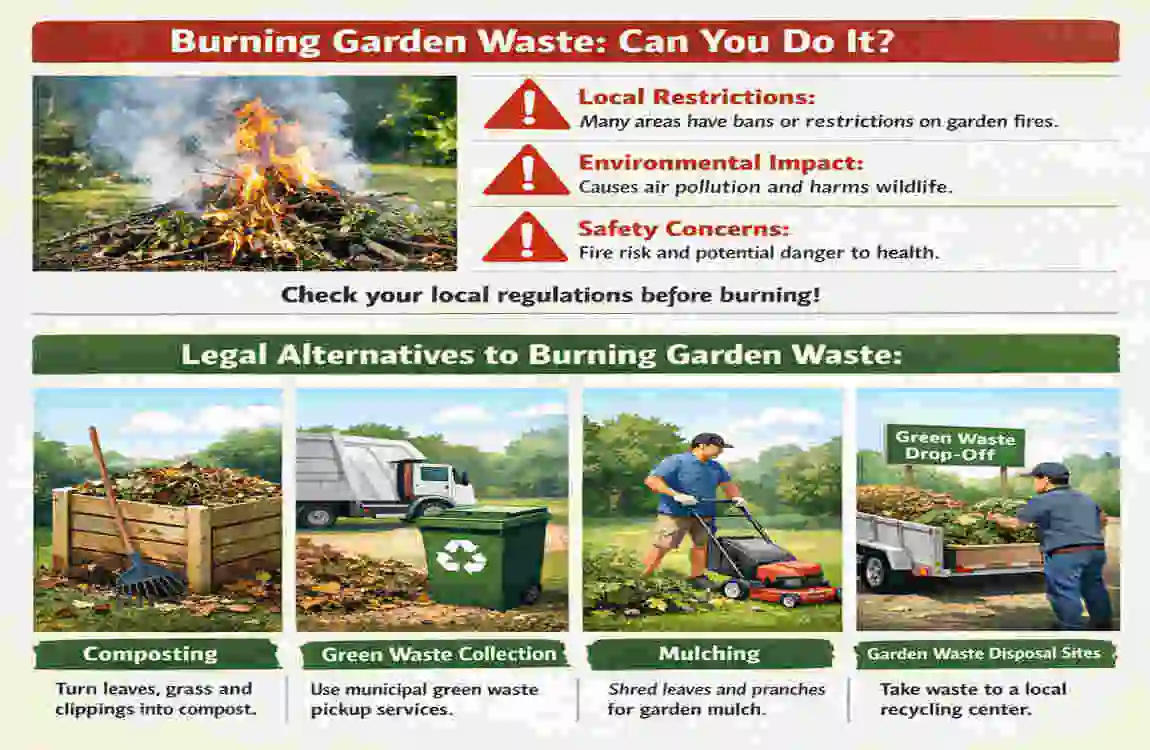
Composting is one of the best alternatives. It turns leaves, grass, and plant scraps into rich material that improves your soil. Instead of throwing waste away, you recycle it right in your yard.
Compost helps plants grow better and can reduce the amount of fertilizer you need. It also keeps waste out of the fire pile and out of the landfill.
If you want a simple method, start with a basic compost bin or pile. Add a mix of green material, such as grass, and brown material, such as dry leaves.
Mulching
Mulching is another smart choice. You can shred leaves and small twigs and spread them around plants or garden beds. This helps retain soil moisture and can reduce weed growth.
Mulch also protects roots and makes the garden look neat. It is a great way to turn waste into something useful.
Municipal pickup services
Many local authorities offer garden waste pickup. In some places, this is part of regular curbside collection. In others, you may need special bags or bins.
This can be one of the easiest choices if you do not want to compost or burn. It also keeps disposal simple and legal.
Creative options for extra waste
Sometimes you do not need to throw everything away. Branches and leaf piles can be used to create small wildlife habitats. These piles may give shelter to insects, birds, and small animals.
This can be a good choice if you want to support nature in your garden. Just make sure the pile is placed safely and does not become a fire risk.
FAQs About Burning Garden Waste
Can you burn garden waste in your garden legally?
Sometimes yes, sometimes no. The answer depends on your local laws, fire rules, and air quality regulations. This is why the question, ‘Can you burn garden waste in your house garden?’ must always be checked against local guidance before you start.
What types of garden waste are safe to burn?
Usually, dry natural materials such as leaves, twigs, and untreated branches are allowed in some places. But you should not burn plastic, painted wood, treated wood, rubber, or household trash. These can release harmful smoke and may be illegal.
What penalties could you face for burning garden waste illegally?
Penalties can include warnings, fines, cleanup orders, or other legal trouble. In serious cases, especially if a fire spreads, the consequences can be much more severe. Local authorities may also hold you responsible for damage.
Are there eco-friendly alternatives to burning garden waste?
Yes. Composting, mulching, and municipal pickup are all better choices for many homeowners. These methods reduce pollution and can even help your garden grow healthier.
| Topic | Short Answer | SEO-Friendly Note |
|---|---|---|
| Legality | It depends on your local laws. | Search rules by city, state, or country. |
| Permits | Some areas require a burn permit. | Check before you burn any garden waste. |
| Safety | Backyard burning can be risky. | Smoke, fire spread, and injury are common concerns. |
| Allowed Waste | Usually only natural yard waste is allowed. | Leaves, twigs, and dry branches may be permitted. |
| Not Allowed | Plastic, treated wood, and trash should not be burned. | These can release harmful fumes and may be illegal. |
| Better Alternatives | Composting and mulching are safer. | Great for eco-friendly garden waste disposal. |