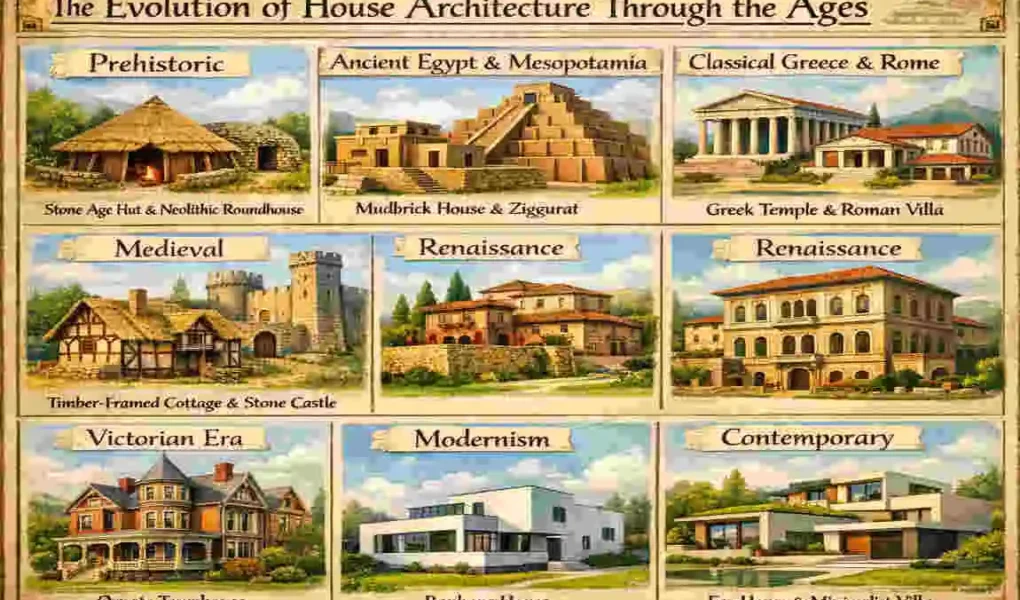
House architecture has changed a lot over time. What began as simple shelters for safety and warmth slowly became smart, stylish, and efficient homes. Today, houses do far more than provide cover. They support comfort, family life, work, and even energy savings.
Early Human Shelters: The Beginning of House Architecture
Caves and Natural Shelters
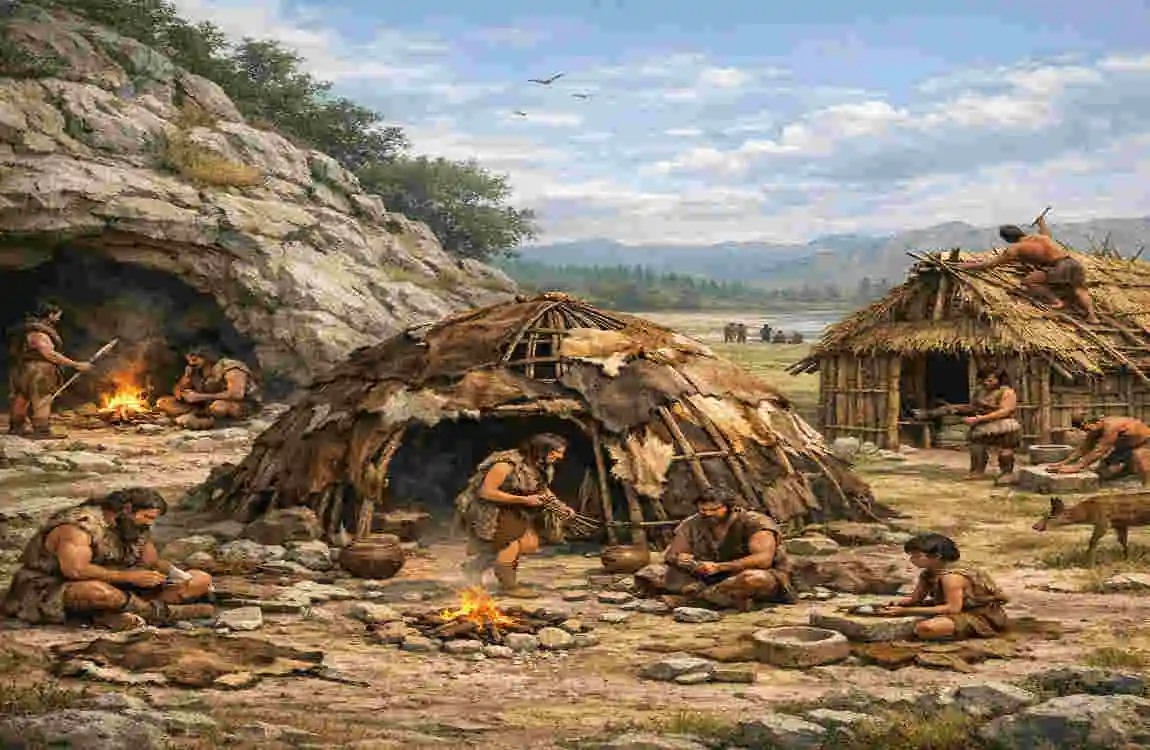
The first homes were not really homes at all. Early humans used caves, rock overhangs, and other natural shelters to stay safe from rain, wind, cold, and wild animals. These spaces provided protection without requiring much construction.
This early stage of housing was all about survival. People needed a dry place to sleep, store food, and gather with others. They chose whatever shelter nature gave them. In many ways, this was the start of house architecture, even though it was very basic.
Mud Huts and Wooden Structures
As people learned to build, they began making their own shelters. They used mud, straw, branches, and wood because these materials were readily available. Mud huts were simple but effective. Wooden frames also became common in many places.
These early homes were small and practical. People built them based on what was available around them. If there was forest, they used wood. If the land had clay, they used mud. This is one of the clearest examples of how climate and geography shaped early housing.
Ancient Civilizations and Organized Housing
Egyptian Homes
In ancient Egypt, people built homes mainly of mud brick. These houses stood near the Nile River, where clay and water were readily accessible. The warm climate also made flat roofs useful. People could sleep, dry food, or rest on top of them.
Egyptian homes were simple but well planned. Wealthier families had larger houses with more rooms, while ordinary people lived in smaller spaces. This showed an early connection between home design and social class.
Greek and Roman Houses
The Greeks and Romans brought more structure and style into house design. They used courtyards, stone, columns, and decorative layouts to create homes that were both useful and attractive.
Roman houses, especially, were advanced for their time. They included better drainage, plumbing, and separate rooms for different activities. Instead of one shared space, people began living in homes with clear layouts. This shift marked a major step in the evolution of house architecture.
Medieval House Architecture
Castles and Fortified Homes
During the medieval period, safety became a major concern. As a result, many homes, especially for the wealthy, were built like forts. Castles and fortified houses had thick stone walls, narrow openings, and strong doors.
These buildings were made to defend against attacks. Their design was not about comfort first. It was about protection. This is why medieval architecture often looks heavy, strong, and closed off.
Timber-Framed Houses
Most regular people did not live in castles. They lived in timber-framed houses made from wood, clay, and plaster. These homes were smaller and much simpler.
They usually had small windows to keep warmth inside, and steep roofs to handle rain or snow. The design depended on the local climate. In colder regions, homes needed better insulation. In wet areas, roofs needed to shed water quickly.
Social Class Impact
House design in the medieval period showed a significant difference between the rich and the poor. Noble families lived in large stone homes or castles. Peasants lived in small, crowded wooden houses.
This difference matters because it shows how architecture reflects society. Houses were not just shelters. They also showed power, wealth, and position in the community.
Renaissance and Classical Influence
Symmetry and Beauty
The Renaissance brought a new way of thinking about homes. People began to care more about balance, symmetry, and beauty. Architects looked back to classical Greek and Roman ideas and used them in new ways.
Homes became more elegant. Windows, doors, and walls were arranged in neat, balanced rows. This gave houses a more pleasing look and made them feel more refined.
Larger Homes
Wealth also played a bigger role during this time. Rich families wanted homes that looked grand and impressive. They added more rooms, decorated interiors, and used better materials.
The inside of a house became more important too. People wanted comfortable living spaces, not just practical shelter. This period helped push architecture toward design, art, and personal taste.
Industrial Revolution and Modern Housing Changes
New Building Materials
The Industrial Revolution hugely changed house architecture. Builders began using steel, iron, and concrete, which were stronger and faster to work with than older materials.
These materials allowed houses and buildings to grow larger and taller. Construction also became more efficient. Instead of relying only on hand tools and local materials, builders could now use mass-produced parts and stronger support systems.
Urban Housing
As cities grew, people needed more homes in smaller spaces. This led to row houses, apartment buildings, and dense urban housing. These designs helped fit many families into busy city areas.
Urban homes were often closer together and more compact. The focus shifted from open land to smart use of space. This was a major shift in how house architecture evolved, as population growth directly affected home design.
Indoor Comfort
The Industrial Revolution also improved daily life inside homes. Plumbing, electricity, heating, and better sanitation made homes much more comfortable and healthy.
Before these changes, homes were often cold, dark, and difficult to clean. Afterward, indoor life became easier. People could wash more easily, cook more safely, and live more comfortably. This changed what people expected from a house.
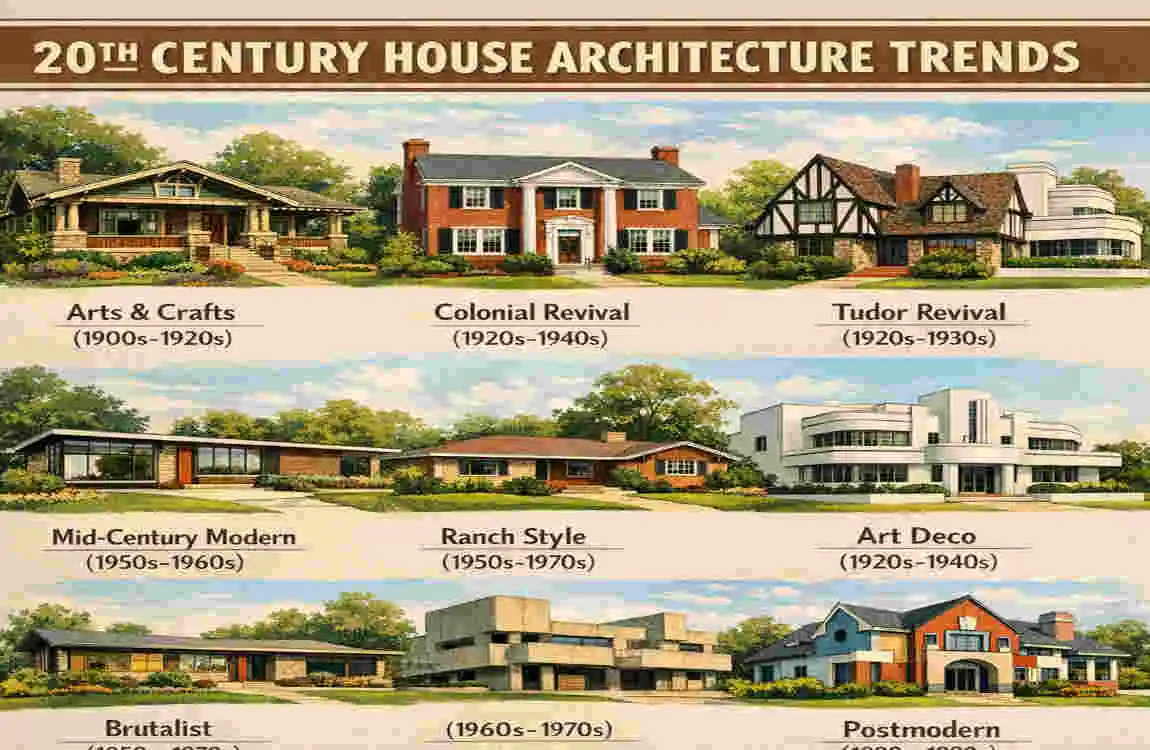
20th Century House Architecture Trends
Minimalist Designs
In the 20th century, many architects started moving away from heavy decoration. They preferred simple shapes, open spaces, and clean lines. This style is often called minimalist design.
The idea was to keep homes practical and uncluttered. Instead of filling every wall with decoration, designers focused on function and space. This approach still influences many homes today.
Suburban Homes
After World War II, many families moved to the suburbs. This led to the rise of the detached family house. These homes often had yards, garages, and more privacy.
Suburban houses were designed for family life. They gave people more room and a quieter setting. For many, this became the ideal picture of a modern home.
Modern Architecture
Modern architecture pushed even further. It used flat roofs, large glass windows, simple shapes, and open layouts. The goal was to make homes feel bright, efficient, and useful.
Instead of adding extra ornament, modern homes focused on honest design. Every part of the house had a purpose. This style remains popular because it fits modern living so well.
How Has House Architecture Changed Over Time in the 21st Century?
Smart Homes
Today, houses are becoming smarter. Many homes now include automated lighting, security systems, smart thermostats, and connected appliances. These features make life easier and safer.
Smart homes also help people save time and energy. You can control many parts of your home with a phone or voice command. This is a big shift from older homes, where everything had to be done manually.
Sustainable Architecture
Sustainability is now one of the most important ideas in home design. Builders use solar panels, eco-friendly materials, better insulation, and green roofs to reduce waste and energy use.
People want homes that are good for both families and the environment. This has led to a strong focus on energy efficiency and cleaner building methods.
Multi-Purpose Living Spaces
Modern homes also need to do more than one job. A room may be used as a bedroom, office, study area, or play space. This became especially important as more people began working from home.
A flexible design helps people adapt their homes to their changing lives. This makes house architecture more practical than ever before.
Common 21st-century home features
- Home offices
- Open-plan kitchens
- Energy-saving systems
- Flexible rooms
- Storage-smart layouts
Key Factors That Changed House Architecture Over Time
Several forces have shaped house design across history. Here are the biggest ones:
FactorHow It Changed Homes
Climate Affected roof shape, wall thickness, and materials
Population growth Created demand for apartments and smaller city homes
Technology Brought plumbing, electricity, and smart systems
Culture Influenced style, layout, and decorative choices
Economy Decided what materials and features people could afford
Lifestyle needs Changed room sizes, storage, and flexible spaces
These factors worked together at every stage. Homes changed because people changed.
Future of House Architecture

AI and Smart Building Systems
In the future, homes will likely become even smarter. AI-powered systems may automatically control heating, lighting, security, and energy use.
This will make homes more efficient and easier to manage. Builders are already thinking about how to make homes respond better to the people living in them.
Sustainable Cities
Future homes will also focus more on the planet. We may see more net-zero homes, recycled materials, and low-waste construction.
As cities grow, people will need homes that use less energy and take up less space. Sustainability will not be optional. It will be a basic part of good design.
Space-Saving Designs
Many future homes will likely be smaller but smarter. Tiny houses, modular homes, and foldable spaces can help solve housing shortages and rising costs.
These designs show that good architecture is not only about size. It is about using space well.
FAQ: How Has House Architecture Changed Over Time?
How has house architecture changed over time?
House architecture has evolved from simple caves and mud huts to advanced smart homes. Changes in materials, technology, and lifestyle needs have greatly shaped home design.
What were the earliest types of houses?
The earliest houses included caves, huts made of mud, straw, wood, and stone shelters built mainly for protection.
Why did house designs change over history?
House designs changed because of climate, cultural traditions, population growth, building materials, and new construction technology.
How did the Industrial Revolution affect house architecture?
It introduced stronger materials like steel and concrete, improved plumbing, and allowed faster construction of urban homes and apartments.
What makes modern house architecture different?
Modern homes focus on open layouts, energy efficiency, smart technology, sustainability, and multi-functional spaces.
What is the future of house architecture?
Future homes may include AI automation, eco-friendly materials, net-zero energy systems, and flexible modular designs.