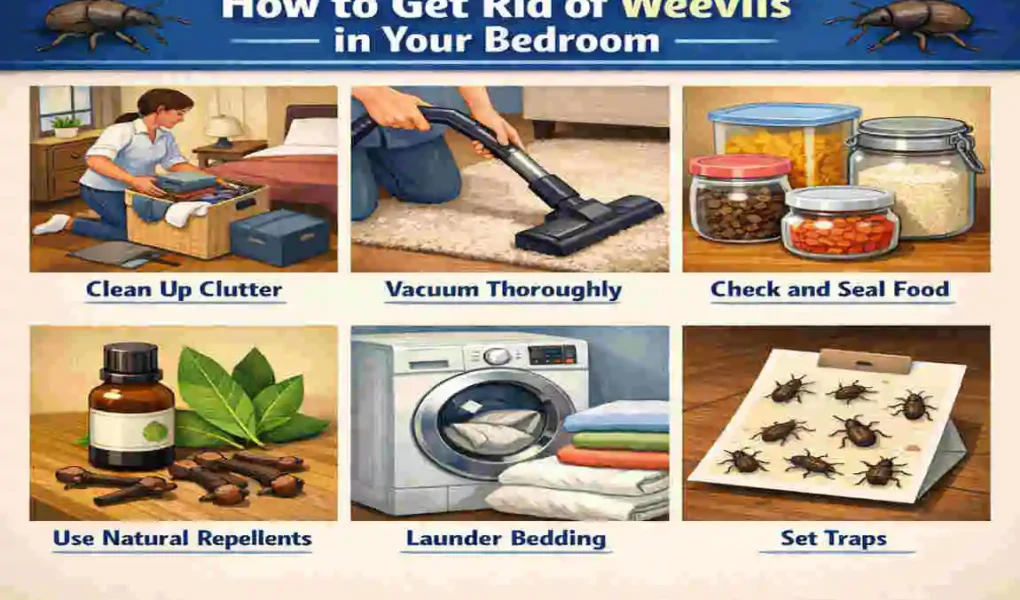
If so, you are not alone. Many people notice small beetle-like bugs and wonder where they came from, why they are there, and how to remove them fast. These pests are often weevils, and while they are usually more common in kitchens and pantries, they can also show up in bedrooms.
Weevils are small insects that usually feed on grains, dried food, and stored products. But sometimes they end up in other rooms, too. They may travel through cracks, hide in furniture, or move from another part of the house. If your bedroom has crumbs, clutter, moisture, or old items stored away, it can become a hiding place for them.
The good news is that you can deal with them. You do not need to panic, and you do not need to let them spread. The key is to act quickly, clean carefully, and remove anything that may be attracting them.
What Are Weevils? Understanding the Problem
What are weevils?
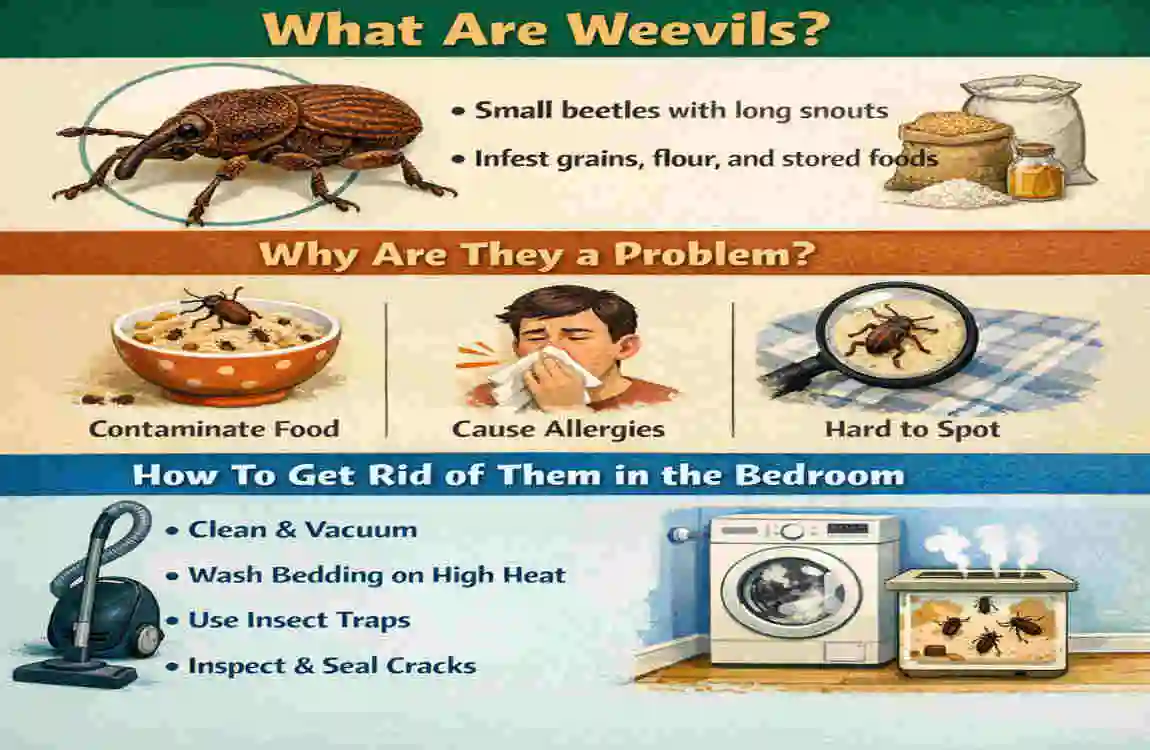
Weevils are small beetles with long snouts. They are known for getting into grains, seeds, flour, rice, cereals, and other dry food items. Some of the most common indoor types include rice weevils and grain weevils.
They are small, but they can become a real nuisance when they multiply. A few weevils may not seem like a big problem at first. But if they find food and a safe place to hide, they can spread very quickly.
Weevils do not usually live in your bedroom on purpose. Most of the time, they are just looking for food, shelter, or a place to move through. That is why understanding their habits matters so much.
Why might they end up in your bedroom?
You may wonder why a bug that likes dry food would appear near your bed or clothes. There are a few common reasons.
Sometimes, weevils get into bedrooms because of:
- Food crumbs on the floor, carpet, or bedside table
- Open snacks stored in drawers or bags
- Clutter that gives them a place to hide
- Furniture or boxes brought in from another room
- Warm and slightly damp conditions help them survive
Weevils may also move from the kitchen, pantry, or hallway into your bedroom. They can crawl through small gaps and reach nearby rooms without being noticed.
Signs of a weevil infestation in the bedroom
It is not always easy to spot weevils right away. Still, there are a few warning signs you can look for.
Common signs include:
- Tiny brown or black insects on the floor, window sill, or bedding
- Small bugs around furniture or baseboards
- Insects near windows, especially where light comes in
- Tiny holes or damage in stored items
- Signs of pests in nearby food, boxes, or old fabrics
If you notice repeated sightings, do not ignore them. Even a small number of weevils can point to a bigger issue somewhere nearby.
How Do Weevils Enter Your Bedroom? Causes of Infestation
Common entry points for weevils
Weevils often enter luxury homes through very small openings. They do not need much space at all. A crack in a wall, a loose window screen, or a gap under a door may be enough.
Here are a few common entry points:
- Open windows
- Cracks in walls or baseboards
- Gaps around doors
- Used furniture
- Storage boxes or bags
- Food items are carried from one room to another
If you live in an older home, entry may be even easier because small gaps tend to form over time. Even a tiny opening can become a path into your room.
Factors that encourage their presence
Weevils are more likely to stay when your bedroom provides a good environment for them. They like places where they can hide and where food is easy to find.
A few things can make your bedroom more attractive to pests:
- Poor cleaning habits
- Food left in the room
- Dust and clutter
- Old cardboard boxes
- Soft furnishings that rarely get cleaned
- Moisture from leaks or poor airflow
A bedroom does not need to be dirty to have weevils. Sometimes, just a few crumbs, some clutter, or one infested item is enough to bring them in.
How to stop them from entering
Prevention starts with simple checks. You can make your bedroom much less inviting by sealing entry points and keeping the space tidy.
Try these steps:
- Seal cracks in walls and around windows
- Use door sweeps if there is space under the door
- Check boxes, bags, and secondhand items before bringing them in
- Keep food out of the bedroom when possible
- Fix any damp spots or leaks quickly
These small steps can make a big difference over time.
Step-by-Step Guide on How to Get Rid of Weevils in Your Bedroom
Identify the source of the infestation
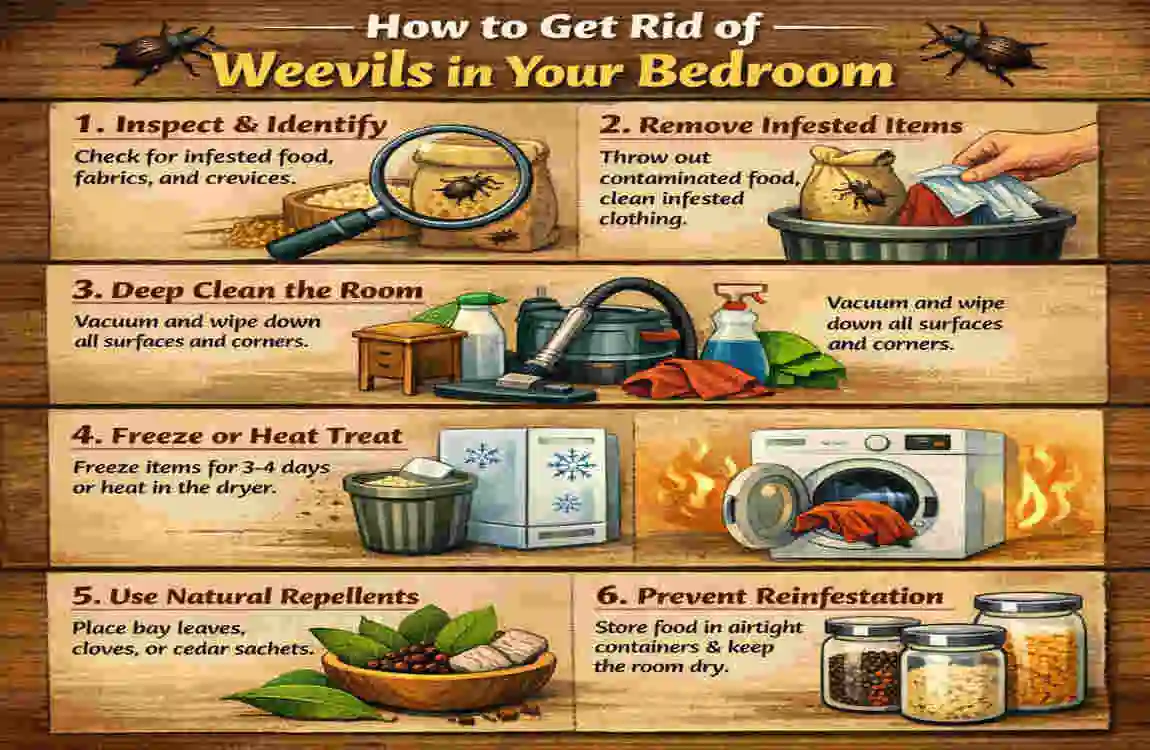
Before you clean, try to find where the weevils are coming from. This is one of the most important parts of the process.
Look around your bedroom and nearby areas. Check:
- Under the bed
- Inside drawers
- Around windows
- Behind furniture
- In boxes or storage bags
- Near any snacks or food containers
If the source is in another room, such as a pantry or kitchen, you may need to treat that area as well. If you only clean the bedroom but ignore the source, the weevils may return.
Clean the bedroom thoroughly
A deep clean helps remove both visible bugs and hidden eggs or debris.
Start by removing any food, trash, or open containers. Then vacuum the entire room carefully. Do not rush this step. Focus on:
- Corners
- Baseboards
- Carpets
- Under the bed
- Behind furniture
- Window edges
- Closets and storage areas
After vacuuming, empty the vacuum outside if possible. This helps keep any captured pests from getting back into the room.
Next, wipe hard surfaces with a simple vinegar-and-water solution. This can help clean areas where bugs may have crawled and may also make the area less appealing to pests.
Wash bedding, pillow covers, and blankets if needed. If you have rugs or soft items that may be infested, clean them carefully as well.
Use natural methods to remove weevils
Natural methods can be a good first step, especially if the infestation is small.
One useful option is diatomaceous earth. This is a fine powder made from natural material. When placed in cracks or hidden areas, it can help dry out and kill small insects. Use only food-grade diatomaceous earth and apply it lightly in places where children and pets will not disturb it.
You can also use natural repellents such as:
- Lavender sachets
- Bay leaves
- Cedarwood blocks
- Peppermint scent products
These will not always kill weevils, but they can help keep them out of certain areas. They are especially helpful as a support method after cleaning.
Use chemical methods with caution
If the problem persists and natural methods are not enough, you may need an indoor pest control product. This should be a last step, not your first choice.
If you use a chemical product:
- Follow the label directions exactly
- Keep children and pets away from treated areas
- Do not spray near bedding or clothing unless the label allows it
- Make sure the room is well ventilated
- Use only products meant for indoor use
You should never guess with pesticides. Too much can be unsafe, and the wrong product can cause more harm than good.
Dispose of infested items properly
If you find infested food, boxes, or old items, remove them from the room right away. Do not leave them sitting nearby.
A simple disposal plan can help stop the spread:
- Place the item in a sealed bag.
- Take it out of the bedroom immediately.
- Throw it away in an outdoor bin if needed.
- Clean the area where it was stored.
- Check nearby items for signs of bugs.
If an item is valuable, like a piece of furniture, inspect it carefully before deciding whether to keep it. In some cases, cleaning and treating the item may be enough. In other cases, removal may be the safer option.
Monitor and repeat if necessary
Weevils can return if you miss a hiding spot or if eggs are still present. That is why follow-up matters.
Check your bedroom every few days for:
- New bugs
- Tiny droppings
- Damage to stored items
- Signs around windows or corners
You may also need to reapply natural repellents every few weeks. This helps keep the room less attractive to pests.
Quick comparison of common removal methods
MethodBest ForNotes
Vacuuming , removing bugs, eggs, and debris , is the best first step
Vinegar and water cleaning. Wiping surfaces helps clean and discourage pests
Diatomaceous earth: Cracks and hidden edges. Use carefully and lightly
Lavender or bay leaves. Ongoing prevention works best as a support method
Indoor pesticide Stubborn infestations Use with caution
Preventing Future Weevil Infestations in Your Bedroom
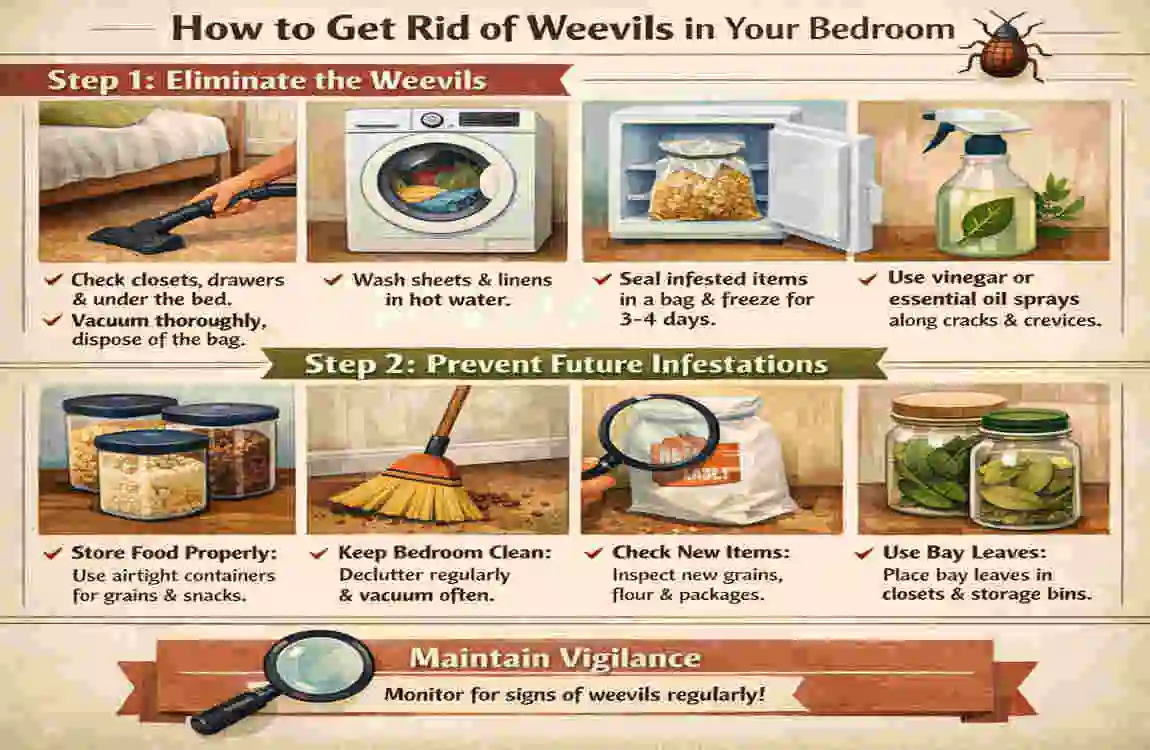
Proper food storage practices
If you ever eat in your bedroom, keep the area very clean. Food crumbs can attract pests quickly.
A few smart habits include:
- Avoid storing open food in the bedroom
- Use airtight containers if you must keep snacks there
- Clean up crumbs right away
- Empty trash often
- Do not leave cups, plates, or wrappers on the floor
If possible, keep all food in the kitchen or dining area. This is one of the easiest ways to reduce pest problems.
Declutter and organize your bedroom.
Clutter gives pests more places to hide. It also makes cleaning harder.
Try to reduce:
- Piles of clothes
- Old boxes
- Bags you do not use
- Forgotten items under the bed
- Stacks of papers or storage containers
A tidy room is much easier to inspect and much harder for pests to settle into.
Maintain regular cleanliness
Routine cleaning matters more than most people think. Even a room that looks clean can hide bugs in corners or under furniture.
Make it a habit to:
- Vacuum regularly
- Dust shelves and baseboards
- Wash bedding often
- Check closets and drawers
- Clean around windows and doors
If your bedroom stays fresh and dry, it becomes far less appealing to weevils.
Use natural deterrents long-term.
Once the pests are gone, natural deterrents can help keep them away.
You can place:
- Lavender sachets in drawers
- Cedarwood blocks in closets
- Bay leaves near storage areas
These are simple, low-effort options that can support your prevention plan. They are not magic fixes, but they can help.
Inspect and maintain the room.
A quick inspection every so often can save you a lot of trouble later.
Check for:
- Cracks near windows or walls
- Loose screens
- Food crumbs or spills
- Signs of old storage items
- Moist spots or damp areas
If you spot a problem early, it is much easier to handle. That is why prevention is just as important as removal.
Frequently Asked Questions
Can weevils bite humans?
No, weevils do not bite humans. They are mainly a nuisance because they can get into food, spread through rooms, and become hard to control if ignored.
How long does it take to get rid of weevils?
That depends on how bad the infestation is. A small problem may clear up in a few days with deep cleaning and removal of the source. A larger infestation may take longer and require repeated treatment.
Are pesticides safe to use in bedrooms?
They can be, but only when used correctly and only if the label says they are safe for indoor use. Always follow the instructions carefully, keep the room ventilated, and avoid spraying near bedding unless allowed.
Can weevils spread to other rooms?
Yes, they can. If they find a food source or a hiding place, they may move from one room to another. That is why it is important to clean the surrounding areas, not just the bedroom.
Do I need professional pest control?
You may need professional help if the infestation keeps returning, you cannot find the source, or the problem has spread to several rooms. A pest control expert can inspect the home and recommend a stronger solution.
| Topic | Quick Answer |
|---|---|
| What are weevils? | Small beetles that usually feed on grains, dry food, and stored items. |
| Why are they in my bedroom? | They may come from food crumbs, clutter, furniture, or another room in the house. |
| First step to remove them | Find the source and clean the room thoroughly. |
| Best cleaning method | Vacuum corners, under the bed, and around furniture, then wipe surfaces with vinegar and water. |
| Natural ways to get rid of them | Use diatomaceous earth, bay leaves, lavender, or cedarwood blocks. |
| When to use chemicals | Only if natural methods do not work and the product is safe for indoor use. |
| How to stop them from returning | Keep food out of the bedroom, reduce clutter, and seal cracks or gaps. |
| When to call a professional | If the infestation keeps coming back or spreads to other rooms. |