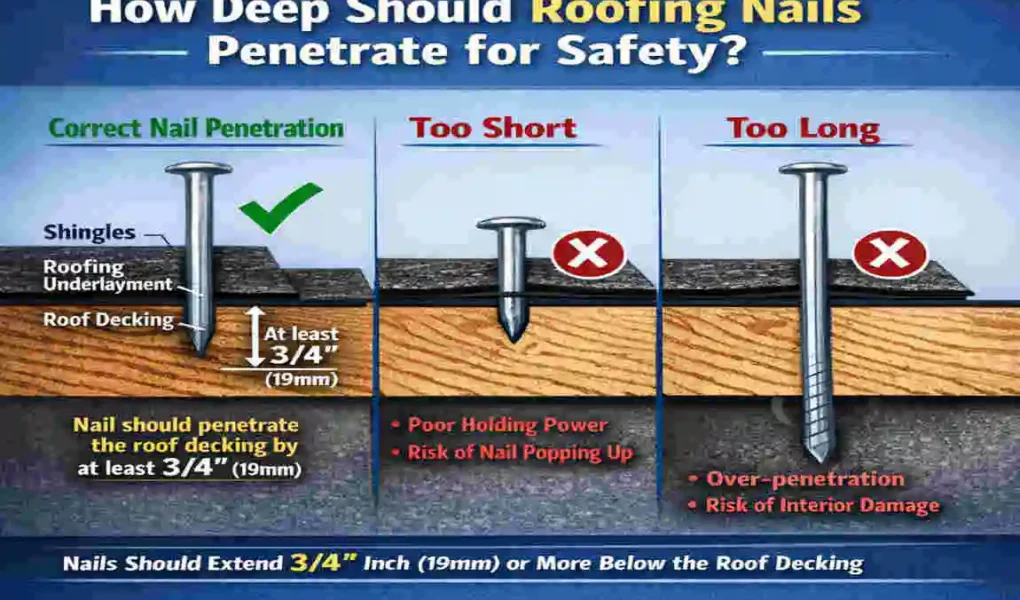
Roof nails may look small, but they play a big role in keeping your home safe. If they are too short, shingles can loosen. If they are driven in the wrong way, they can weaken the roof and create leaks.
That is why understanding how deeply house roofing nails should penetrate is essential for maintaining a safe, durable roof. The right nail depth helps your roof withstand strong winds, rain, and everyday wear. It also helps prevent costly repairs later.
In simple terms, roofing nails must hold the shingles tightly and reach deep enough into the roof deck to stay secure. When they do not, problems can appear fast. You may see lifted shingles, water damage, or even early roof failure.
Why Roofing Nail Penetration Matters
Structural Strength
Roofing nails are the fasteners that keep shingles attached to the roof deck. Their main job is to hold everything in place.
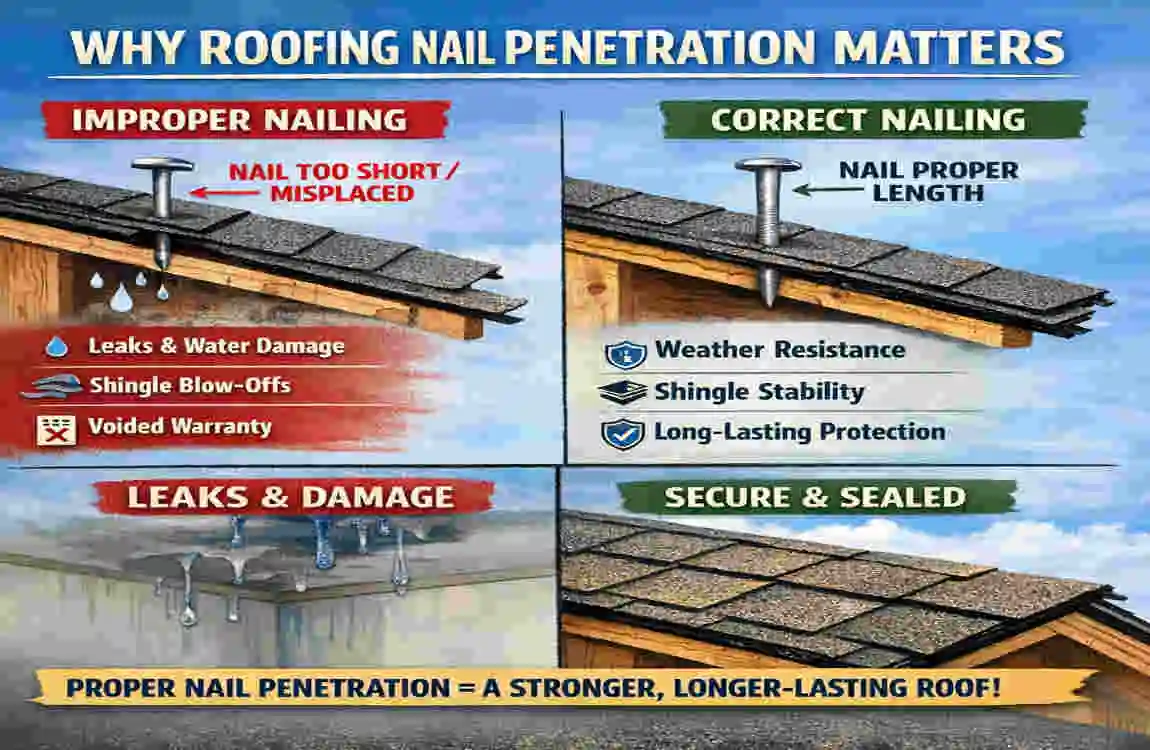
When nails are driven to the proper depth, they help shingles resist wind uplift. This is especially important during storms, heavy rain, or strong gusts. If nails are too shallow, shingles can shift, lift, or blow off. That can leave your roof exposed and weaken the whole system.
A roof is only as strong as its weakest point. Even a small fastening issue can create bigger problems when the weather gets rough.
Water Protection
Proper nail penetration also helps protect against water damage. Loose shingles can create small gaps where water can enter. Once moisture gets in, it may damage the roof deck, attic space, insulation, and even interior ceilings.
When nails are installed correctly, shingles stay flatter and tighter. That means less room for water to slip through. It also reduces the chance of hidden leaks that may go unnoticed for a long time.
Roof Lifespan
A roof lasts longer when its shingles are fastened correctly. Proper nail depth supports the roof’s overall strength and reduces stress on materials.
If nails are installed badly, shingles can wear out faster, curl, crack, or pull away. That often leads to premature repairs or even a full replacement sooner than expected.
Key points to remember
- Building code compliance matters
- Manufacturer warranty rules often depend on correct installation
- Safety becomes a major concern when fasteners fail
How Far Should House Roofing Nails Penetrate?
Standard Roofing Nail Penetration Rule
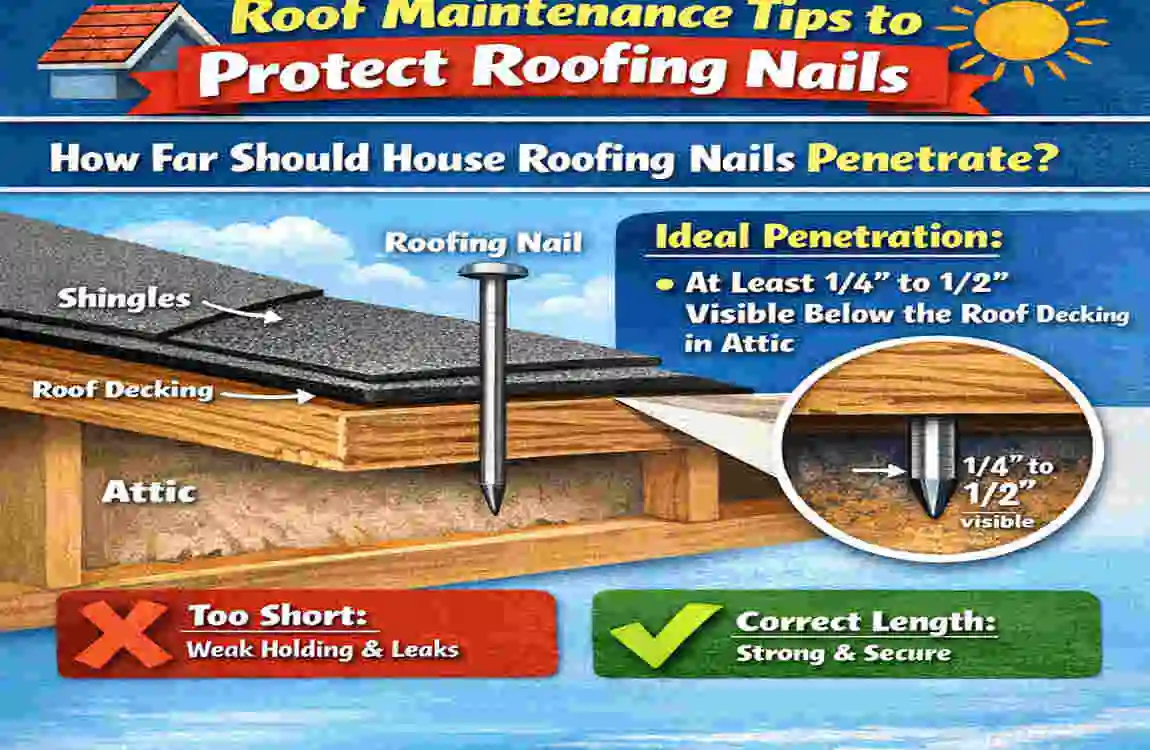
So, how far should house roofing nails penetrate?
The standard rule is simple: roofing nails should penetrate at least 3/4 inch into the roof deck or pass completely through the decking material.
This depth helps ensure the nail has enough grip to hold shingles securely. If the roof deck is thin, the nail may pass through it fully, which is also acceptable in many cases. The key point is that the nail must anchor firmly enough to resist movement.
If nails do not reach the proper depth, they may fail under wind or temperature changes. That can reduce the roof’s performance and create safety issues.
Recommended Nail Lengths
The right nail length depends on the thickness of the shingles and the roof deck. In general, longer nails are used when shingles are thicker or when the decking is deeper.
Common roofing nail lengths are often selected to give enough penetration without going too far. A nail that is too short may not hold well. A nail that is too long may be unnecessary or unsuitable for certain materials.
Roofing Material Considerations
Different roofing materials need different fastening approaches.
Asphalt shingles are the most common and usually need standard roofing nails with enough length to penetrate the deck properly. These nails should sit flush, neither buried too deeply nor sticking up.
Wood shingles may need extra care because the material can split if the wrong nail type or length is used. The goal is to secure the shingle without damaging it.
Metal roofing often uses special fasteners designed for the system. These are not always the same as nails used for shingles, so the product instructions matter a lot.
Local Building Code Requirements
Local building codes may require different fastening rules depending on your area. This is especially true in wind-prone regions or places that get heavy storms.
Some areas require stronger fastening methods or specific nail lengths. Others may have rules about nail spacing, placement, and the number of nails per shingle.
Always check local requirements before installing or replacing a roof. Following the code helps protect your home and avoid failed inspections.
Types of Roofing Nails and Their Uses
Galvanised Roofing Nails
Galvanised nails are very common in roofing work. They have a protective coating that helps resist rust.
This makes them a strong choice for asphalt shingles and many other roof types. Since roofs are exposed to moisture, this rust protection is important for long-term performance.
Stainless Steel Nails
Stainless steel nails are a better choice in coastal or humid areas. They resist corrosion very well and last a long time.
They may cost more, but the added durability can be worth it when salt air or heavy moisture are a concern.
Aluminum Nails
Aluminium nails are lightweight and used in certain roofing applications. They are not always the best choice for every roof, but they can work in the right application.
Because they are softer than steel, they may not be ideal for every deck or climate.
Nail Shank Types
The shank is the body of the nail, and its shape affects holding power.
- Smooth shank: Easier to drive, but less gripping strength
- Ring shank: Better holding power, often used where a stronger grip is needed
- Screw shank: Designed for extra resistance against pulling out
The right shank type depends on the roof material, weather conditions, and fastening needs.
Common Roofing Nail Installation Mistakes
Under-Driven Nails
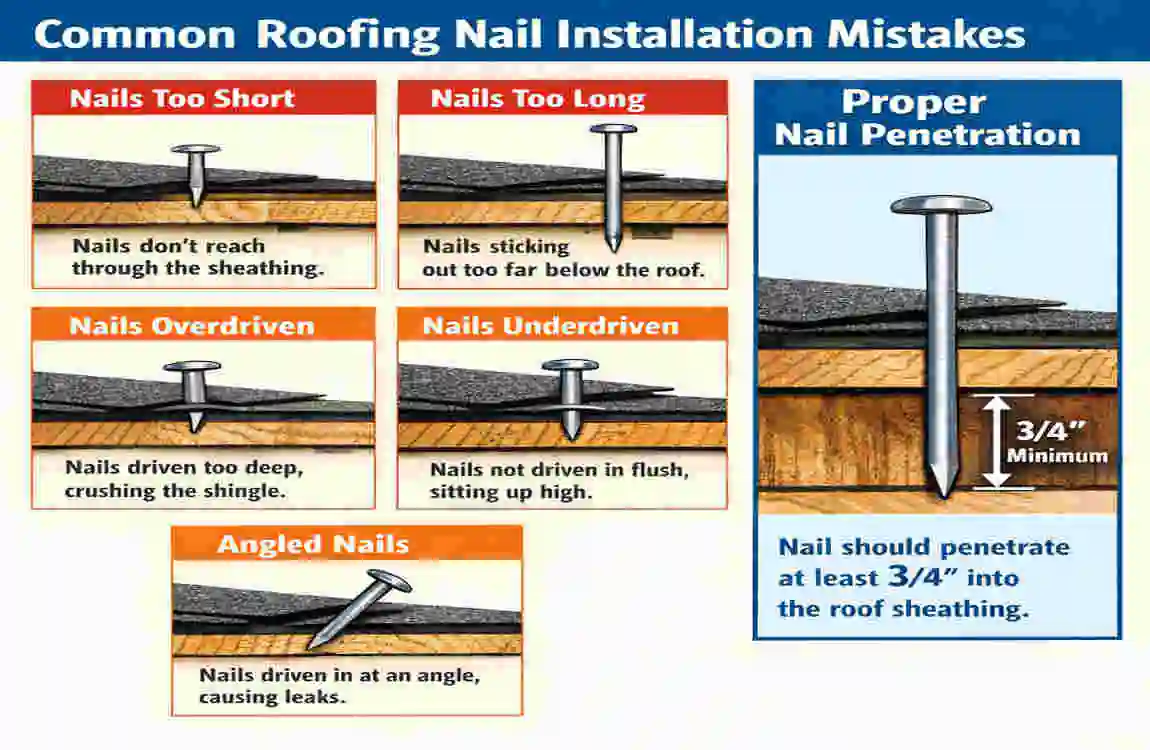
Under-driven nails are not set deep enough. This means the shingle is not fully secured.
When this happens, the shingle may lift in the wind or move over time. That creates a weak spot in the roof and increases the chance of leaks.
Overdriven Nails
Overdriven nails are pushed too far into the shingle. This can damage the material and reduce holding strength.
If the nail tears through the shingle surface, the fastener may not hold properly. Overdriving can also create a path for water to enter.
Crooked Nails
A crooked nail may not sit correctly in the roof deck. It can leave gaps or stress the shingles in the wrong place.
This can lead to uneven placement, poor sealing, and possible water entry points. Roof nails should be straight and secure.
Wrong Nail Length
Using the wrong nail length is one of the most common mistakes. Nails that are too short may not grip the deck well enough. Nails that are too long may not be suitable for the roof system.
This can lead to weak attachment, repair issues, and extra costs later.
Best Practices for Proper Roofing Nail Penetration
Use the Correct Nail Gun Pressure
If nails are installed with a nail gun, the pressure must be set correctly. Too much pressure can overdrive the nail. Too little pressure can leave it sitting high.
The goal is a nail that sits flush with the shingle surface without damaging the material.
Check Roof Deck Thickness
Before starting, it is important to know the thickness of the roof deck. That helps you choose a nail long enough to penetrate properly.
A thicker deck may need a longer nail for proper grip. A thinner deck may need a different approach.
Follow Manufacturer Instructions
Every roofing material has its own installation rules. Manufacturer instructions often explain the correct nail type, length, and spacing.
Following those steps is important for warranty protection and better roof performance.
Inspect Nail Placement
Correct placement matters as much as nail depth. Nails should be aligned properly and spaced according to the product instructions.
A quick inspection during installation can help catch problems early.
Hire Professional Roofers
Professional roofers understand how far house roofing nails should penetrate and how to apply that rule in real conditions.
They know how to match nail types to roof systems, avoid common mistakes, and work more efficiently. That can save time, reduce risk, and improve long-term safety.
Quick best practice checklist
- Use the right nail length
- Keep nails straight and flush
- Match nails to the roofing material
- Follow local code and product instructions
- Inspect work before finishing the job
Signs Your Roofing Nails Were Installed Incorrectly
If roofing nails were not installed properly, you may notice a few warning signs.
- Loose or missing shingles
- Leaks in attic areas
- Sagging roof sections
- Nails popping out
- Higher energy bills from ventilation problems or roof damage
These signs do not always mean nail failure alone, but they often point to fastening problems or roof wear. If you notice any of them, it is smart to have the roof checked soon.
Roof Maintenance Tips to Protect Roofing Nails
Annual Roof Inspections
A yearly inspection can catch nail problems early. Look for lifted shingles, exposed nails, or signs of wear.
Catching issues early often means smaller repairs and lower cost.
Gutter Cleaning
Clogged gutters can cause water to back up and overflow onto the roof edges. That extra moisture can affect shingles and fasteners over time.
Keeping gutters clean supports better drainage and helps protect the roof.
Storm Damage Checks
After strong winds or heavy storms, check the roof for missing shingles or visible nail problems.
Storm damage is often easier to fix when found quickly.
Timely Repairs
Do not wait to address a roof issue. A small nail or shingle problem can turn into a larger repair if ignored.
Fast repairs help protect the structure, the attic, and the rest of the home.
FAQ
How far should house roofing nails penetrate?
Roofing nails should typically penetrate at least 3/4 inch into the roof deck or fully pass through the decking material. This gives the nail enough grip to hold shingles securely.
What happens if roofing nails are too short?
Short nails may not secure the shingles well. That can lead to loose shingles, leaks, and wind damage.
Can overdriven roofing nails cause problems?
Yes. Overdriven nails can damage shingles, weaken holding strength, and create paths for water to enter the roof.
What type of roofing nails are best?
Galvanised steel roofing nails are commonly recommended because they resist rust and work well for many residential roofing jobs.
How do I know if my roof nails were installed properly?
Proper nails usually sit flush with the shingle and penetrate deeply enough into the deck. They should not stick out or sink in too far.
Are roofing nail requirements different by climate?
Yes. Areas with strong wind, storms, or heavy moisture may need different nail lengths, materials, or fastening rules. Always check local requirements.