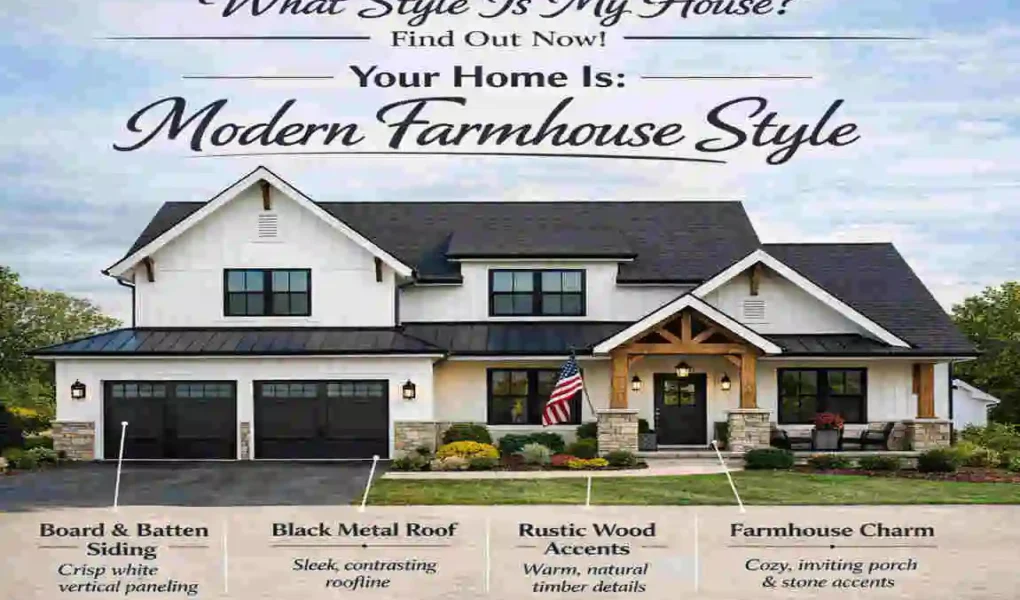
Many homeowners ask, what style is my house when they want to remodel, decorate, or sell their home. It is a simple question, but the answer can help you make smarter design choices.
Knowing your house style gives you a clear starting point. It helps you choose the right paint, furniture, windows, and even outdoor details. Most importantly, it helps you keep your home looking balanced and beautiful.
Why Knowing Your House Style Matters
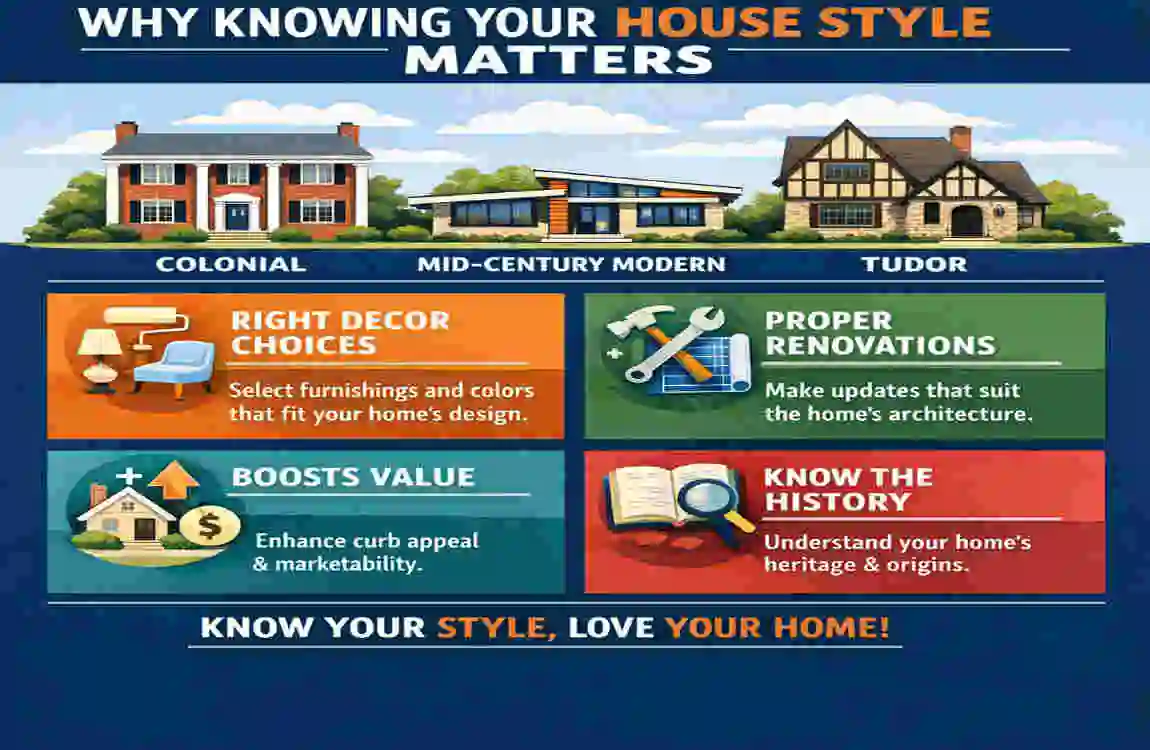
Understanding your luxury home‘s style is useful for many reasons.
Better design choices
When you know the style, you can pick updates that match the home rather than fight it.
Higher property value
A home that keeps its original character often looks more appealing to buyers.
Easier decorating
You can choose colours, furniture, and décor that fit naturally with the house.
Better renovations
Knowing the style helps you avoid changes that may look out of place.
Key Features to Identify House Style
If you are wondering what style my house is, start with the main parts of the exterior. These details usually tell the story.
Roof shape
The roof is one of the easiest clues.
- A gable roof often points to Colonial or Cape Cod
- Flat roof is common in Modern or Contemporary homes
- A steep roof may suggest Victorian or Gothic style
Windows
Windows can reveal a lot about the design.
- Large glass windows often belong to Modern homes
- Symmetrical windows are common in Colonial homes
- Decorative windows often appear in Victorian homes
Exterior materials
The materials on the outside can also help.
- Bricks often appear in Colonial or Georgian homes
- Stucco is common in Mediterranean or Spanish homes
- Wood siding often fits Farmhouse or Craftsman homes
Layout and shape
The overall shape of the house matters too.
- A simple rectangular shape may be a Ranch
- A multi-level design may be a Split-Level
- An open layout often suggests a contemporary style
Common House Styles
Here is a simple guide to some of the most common home styles.
House StyleMain Features
Colonial Symmetrical design, brick or wood exterior, central front door
Craftsman Low roof, exposed beams, large front porch
Ranch Single story, wide shape, simple design
Victorian Decorative trim, tall windows, steep roof
Modern Flat roof, clean lines, large glass areas
Farmhouse , simple form, big porch, wood or metal roof
Colonial style
Colonial homes often look balanced and neat. They usually have a centrally located front door and evenly spaced windows.
Craftsman style
Craftsman homes feel warm and detailed. They often include a front porch and visible wood features.
Ranch style
Ranch homes are usually long, low, and simple. They are easy to live in and often have one floor.
Victorian style
Victorian homes stand out because of their decorative details. They often look elegant and a little more dramatic.
Modern style
Modern homes emphasise clean lines, open spaces, and minimal decoration. They often use glass and simple shapes.
Farmhouse style
Farmhouse homes feel practical and welcoming. They usually have a simple look and a strong porch.
How to Find Out Your House Style
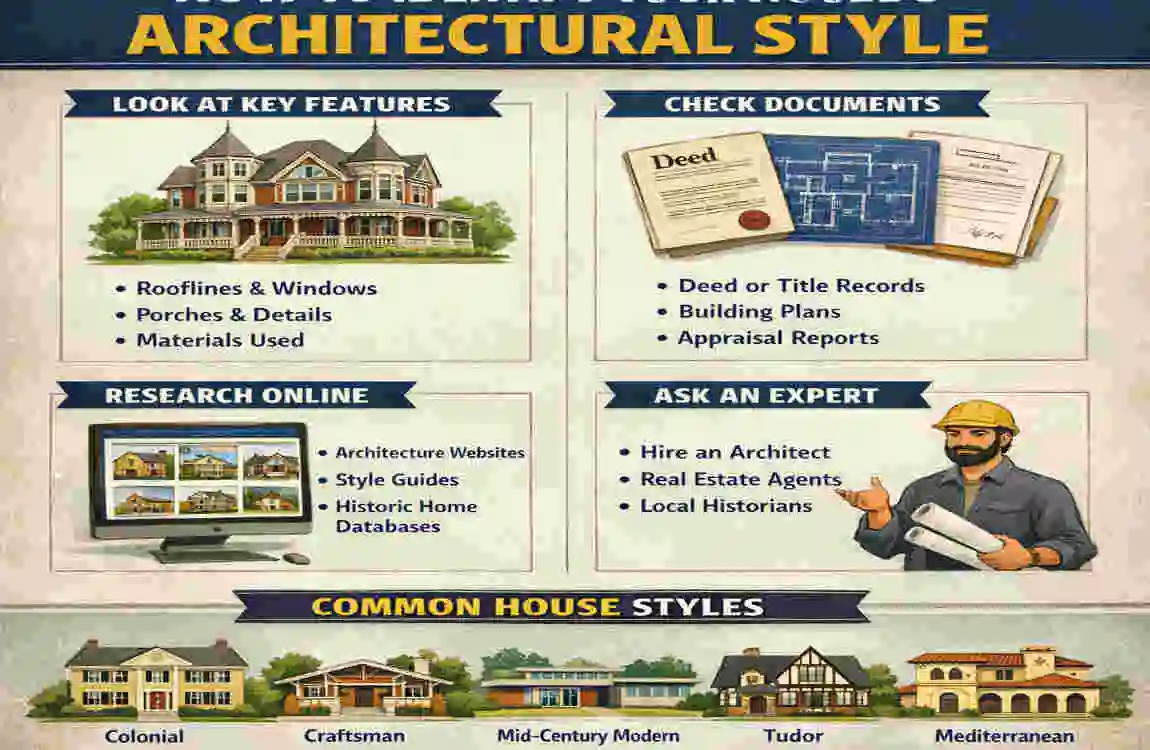
If you’re still asking, “What style is my house?” try these simple steps.
- Look at the roof
- Check if it is flat, steep, or shaped with peaks.
- Study the windows
- Notice if they are large, plain, decorative, or perfectly balanced.
- Check the outside materials
- Look for brick, wood, stucco, stone, or siding.
- Examine the layout
- See if the home is wide, tall, simple, or multi-level.
- Compare with known styles
- Match your home’s features with common architectural styles.
Can a House Have More Than One Style?
Yes, absolutely. Many homes mix styles, especially after renovations or additions.
For example, you may see:
- Modern Farmhouse
- Contemporary Colonial
- Rustic Craftsman
This is very common, so do not worry if your home does not fit only one category. A mix of styles can still look beautiful when done well.
Tips for Matching Design to Your House Style
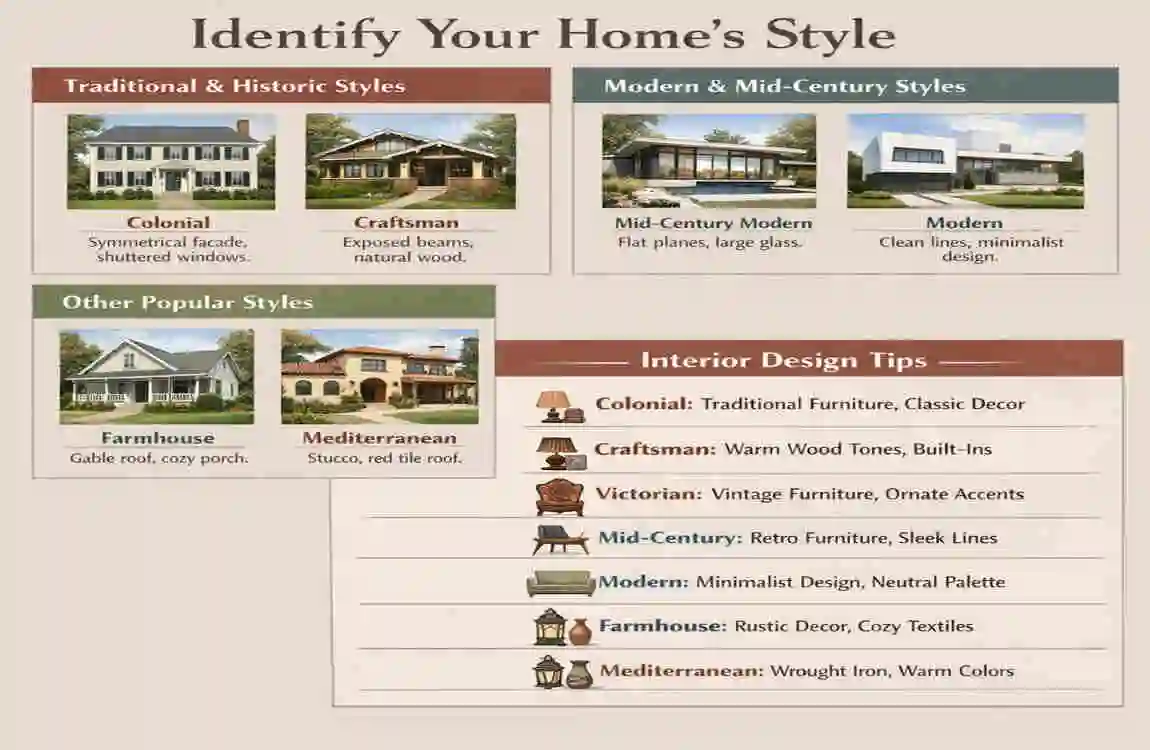
Once you know your house style, keep the design consistent.
- Use paint colours that suit the modern home
- Choose furniture that matches the style
- Keep windows and doors in harmony with the original design
- Protect features that give the house its character
FAQ
How do I know what style my house is?
Look at the roof, windows, materials, and layout. These are the best clues.
Can a house have more than one architectural style?
Yes. Many homes mix styles because of updates or additions.
Does house style affect home value?
Yes. A home with a clear and well-kept style often has better curb appeal.
What is the most common house style?
Ranch, Colonial, and Modern homes are among the most common.
Why should I identify my home style?
It helps with decorating, remodelling, maintenance, and resale planning.
| Factor | What to Look For |
|---|---|
| Roof shape | Gable, hip, flat, or steep rooflines help identify the style. |
| Exterior materials | Brick, stone, wood, stucco, or siding often point to a specific era or style. |
| Windows and doors | Window shape, trim, and door placement are key style clues. |
| Porch design | Full porches, wraparound porches, or no porch can narrow it down. |
| Floor plan | Symmetry, open layouts, or compact plans can suggest certain home styles. |
| Decorative details | Columns, shutters, beams, and trim often reveal historical influence. |
| Common styles | Colonial, Craftsman, Ranch, Cape Cod, Tudor, Victorian, and Modern are popular examples. |