Welcome to the ultimate guide on protecting your manufactured home from the unpredictable elements of the Sunshine State. As we navigate the 2026 hurricane season in Florida, experts are predicting another year of intense storms, high winds, and heavy rainfall. If you own a mobile home, you already know that your roof is your primary shield against these fierce weather patterns. But when that shield starts to wear down, it leaves your entire home incredibly vulnerable to devastating water damage and structural issues.
Upgrading your roofing system before disaster strikes is one of the smartest investments you can make. While putting off repairs is a way to save money right now, timely replacement protects your wallet in the long run by preventing costly indoor water damage, mould remediation, and skyrocketing energy bills.
Are you ready to secure your home for the next big storm? Let’s dive into the details. And remember, if you want a personalised estimate right away, you can fill out our contact form below to get a free, no-obligation quote from our top-rated roofing professionals!
| Material | Single-Wide (500 sq ft) | Double-Wide (1,500 sq ft) | Per Sq Ft Avg | Lifespan in FL |
|---|---|---|---|---|
| Asphalt Shingles | $1,500–$5,000 | $4,500–$12,000 | $3–$8 | 15–25 years |
| Metal Roofing | $3,500–$8,000 | $10,500–$24,000 | $7–$12 | 40–70 years |
| TPO/Rubber | $2,000–$5,000 | $6,000–$15,000 | $4–$10 | 20–30 years |
| Roof-Over (Budget Option) | $1,000–$4,500 | N/A | $2–$3 | 10–15 years |
Signs Your Mobile Home Roof Needs Replacement
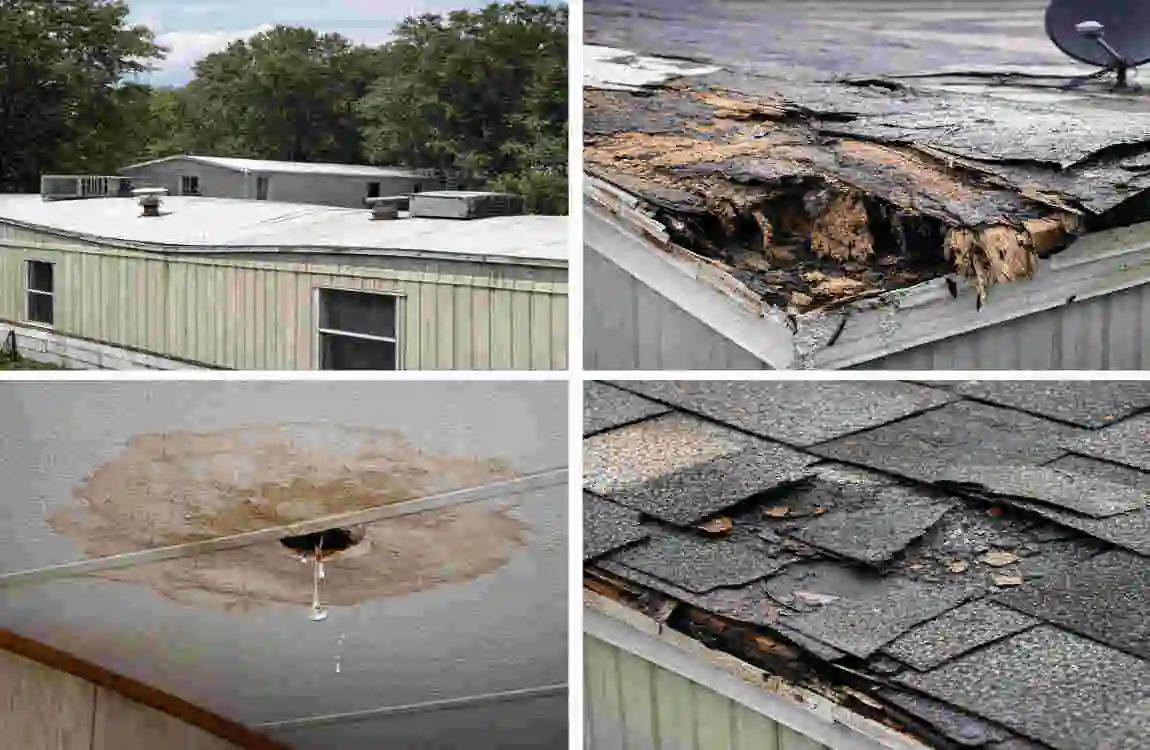
How do you know when it is finally time to say goodbye to your old roof and invest in a new one? Mother Nature is rarely subtle, and your home will usually give you clear warning signals if you know where to look. Here are eight undeniable visual and physical signs that your mobile home roof requires immediate professional attention:
Persistent Water Leaks
If you notice brown water stains on your ceiling, dripping water during heavy rainstorms, or unexplained puddles on your floor, your roof’s waterproof barrier has failed. Even a tiny leak can lead to catastrophic damage if left unchecked.
Missing or Cracked Shingles
Take a quick walk around your property. Can you see bare patches on your roof? High winds frequently tear away old, brittle asphalt shingles. Once a shingle goes missing, the delicate wood and underlayment beneath it are completely exposed to the elements.
Severe Granule Loss
If you have an asphalt roof, check your gutters and the ground around your downspouts. Do you see a buildup of coarse, sand-like material? These are the protective granules that shield your shingles from the sun. When they wash away, your roof’s lifespan plummets.
Sagging Roof Decking
A sagging roof is an emergency. This usually means that moisture has penetrated the outer layers and begun rotting the wooden structural supports underneath. If your roofline looks wavy or dips in the middle, you need a replacement immediately before a collapse.
Mould and Mildew Growth
Florida’s notoriously high humidity is a breeding ground for fungi. If you spot dark streaks of mould, green algae, or fuzzy mildew on your ceiling or exterior walls, moisture is trapped inside your home’s structure. A failing roof is often the primary culprit.
Extensive UV Damage
The harsh Florida sun relentlessly bakes your home year-round. Over time, exposure to extreme ultraviolet (UV) radiation causes roofing materials to blister, crack, and shrink. If your roof looks incredibly faded or warped, the sun has likely compromised its integrity.
Salt Air Corrosion
Do you live near the beautiful Florida coastline? The salty ocean breeze might feel amazing, but it is highly corrosive to metal fixtures. If you have an older metal roof or metal flashing that is showing extensive rust and decay, the salt air has eaten through the protective coatings.
Post-Storm Bruising
After a severe thunderstorm or hurricane, you should always perform a visual check. Look for dented metal panels, cracked vents, or debris scattered across your roof. Even if you cannot see massive holes, flying branches can cause invisible structural bruising that leads to leaks months later.
The Florida-Specific Diagnostic Checklist
Living in Florida means dealing with unique environmental triggers. To keep your home safe, follow this quick diagnostic checklist every six months:
- Check the Perimeter: Look for loose siding and damaged drip edges where the roof meets the walls.
- Inspect the Seals: Examine the heavy caulking around your air vents, skylights, and plumbing pipes. Florida heat dries out sealants fast.
- Look Up Inside: Check your attic or the crawl space above your ceiling for signs of damp insulation.
When to Call the Pros vs DIY Risks
It can be incredibly tempting to grab a ladder and a bucket of tar and attempt to patch a leak yourself. However, DIY roofing on a mobile home is risky. Walking on a mobile home roof requires knowing exactly where the load-bearing supports are; otherwise, you might step right through the ceiling! Minor patching with a silicone sealant is fine for a temporary fix. Still, if you notice any of the eight signs above, it is time to call in a licensed professional.
Factors Affecting Roof Replacement Costs in Florida
When you start budgeting for your project, you will quickly realise that pricing is not a one-size-fits-all scenario. Several variables impact the final number on your invoice. To help you understand where your money goes, let’s break down the core components.
Factor Impact on Cost Florida-Specific Notes
Home Size (Single vs Double-Wide): $1,500–$9,600 for single; $3,000–$16,000 for double. Larger roofs require significantly more raw materials and person-hours.
Roof Size (Square Footage) $3–$8 per square foot. Mobile homes typically range from 500 to 1,500 square feet.
Material Type: Asphalt is the lowest cost; Metal is higher. Strict Florida hurricane codes require specific wind-resistance ratings for all materials.
Location (e.g., Miami vs the Panhandle). Add 20%+ for coastal regions. Local building permits, insurance requirements, and labour rates vary drastically by county.
Labour & Permits: $2,000–$5,000 added to the total. The 2026 building codes are much stricter following the devastating storms of 2025.
Understanding the Details Behind the Costs
Labour Expenses: You will be surprised to learn that labour accounts for 40% to 50% of your total bill. Roofing is exhausting, dangerous work, especially under the sweltering Florida sun. You are paying for a team of trained experts who know how to safely dismantle your old roof, haul away the heavy debris, and install the new system perfectly so it passes strict state inspections.
Permits and Regulations: Florida does not play around when it comes to building codes. Depending on your county, pulling a permit for a mobile home roof replacement can cost between $200 and $1,000. Coastal cities with high hurricane risks, like Miami or Tampa, have much stricter codes than inland towns like Ocala. Following the severe storm damage of 2025, the 2026 regulations now require enhanced tie-downs and upgraded underlayment, which slightly increases the baseline cost.
Tear-Off and debris Removal: If your current roof is rotting or has too many existing layers, the crew cannot simply build over it. They must perform a “tear-off.” Ripping out old materials, renting a commercial dumpster, and paying environmental disposal fees at the local landfill will increase your overall estimate.
Average Costs: How Much to Replace a Mobile Home Roof in Florida
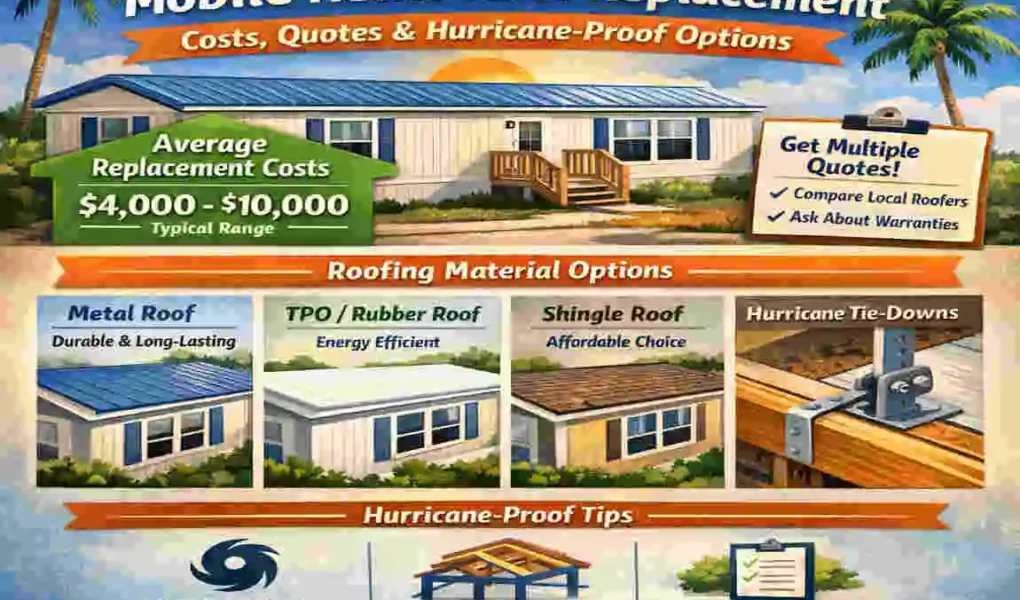
So, what is the bottom line? If you are planning a project in 2026, you can generally expect the total project to range from $4,000 to $20,000, depending on your choices. Keep in mind that heavy storm seasons have inflated material prices by roughly 10% to 15% this year.
Here is a comprehensive breakdown of average costs based on the material you choose:
Material Type Single-Wide Cost Double-Wide Cost Expected Lifespan in FL
Asphalt Shingles $2,500–$5,000 $5,000–$12,000 15–25 years
Metal Roofing $4,000–$8,000 $10,000–$24,000 40–70 years
TPO / Rubber Membrane $2,000–$5,000 $6,000–$15,000 20–30 years
Roof-Over (Alternative) $1,000–$4,500 N/A (Rare on doubles) 10–15 years
Asphalt Shingles: The Traditional Choice
Asphalt shingles are the most common and budget-friendly option. They look great and provide a traditional residential aesthetic. However, standard asphalt shingles can struggle against category 4 or 5 hurricane winds. If you choose asphalt, make sure your contractor installs “architectural” shingles, which are thicker and carry a higher wind-resistance rating.
Metal Roofing: The Ultimate Armour
While the upfront price is higher, metal roofing is widely considered the best long-term investment for a Florida mobile home. Heavy-gauge steel or aluminium panels lock together seamlessly, creating an impenetrable barrier against torrential rain. Plus, metal roofs effortlessly reflect the sun’s harsh UV rays, which can drastically lower your monthly air conditioning bills.
TPO and Rubber Membrane: The Flat Roof Hero
Thermoplastic Polyolefin (TPO) is a fantastic, modern choice, especially if your mobile home has a flat or very low-sloped roof. It looks like a thick, white rubber mat. TPO is incredibly affordable, highly UV-resistant, and, when heat-welded by a professional, completely waterproof.
The “Roof-Over” Alternative
If your existing roof structure is entirely sound, dry, and structurally intact, you might qualify for a “roof-over.” This process involves installing a new layer of metal or TPO directly over your current roof. It saves thousands of dollars by skipping the messy tear-off phase. However, building codes typically only allow one roof-over in a home’s lifetime due to weight restrictions.
Hidden Costs to Watch Out For
When reviewing your per-square-foot breakdown, always ask your contractor about hidden costs. If the crew tears off your old shingles and discovers that the plywood decking beneath is rotten from hidden leaks, replacing that wood will add unexpected material and labour costs to your final bill.
Regional Price Variations
Where you park your mobile home matters. If you live in Northern Florida or the Panhandle, like Jacksonville or Tallahassee, average replacements hover around $6,000 to $10,000. However, if you live in South Florida markets like Fort Lauderdale or the Keys, tighter regulations, higher labour rates, and Premium wind-mitigation requirements will significantly increase your quotes.
Hurricane-Proof Roof Options for Florida Mobile Homes
Surviving a Florida hurricane requires more than just luck; it requires careful preparation and the right materials. Your roof needs to withstand sustained winds, flying debris, and heavy rainfall. Let’s look at the best hurricane-proof options available in 2026.
Top-Rated Hurricane Materials
- Metal Roofing (Wind-Rated for 150+ mph): Corrugated or standing-seam metal roofs are the gold standard in hurricane zones. Because they are installed in large, interlocking panels, there are very few seams for the wind to catch.
- TPO with Heat-Welded Seams: Because TPO is applied in wide sheets and heat-welded at the seams, it acts like a giant, waterproof shrink wrapshrink wrap for your home. High winds easily glide right over the smooth surface.
- Impact-Rated Asphalt: If you prefer the look of shingles, you must upgrade to Class 4 impact-resistant asphalt. These are manufactured with a rubberised polymer that allows them to bend rather than break when struck by flying tree branches.
Materials to Avoid in High-Wind Zones
Whatever you do, avoid cheap fibreglass panels or basic 3-tab asphalt shingles. Lightweight fibreglass shatters easily under impact, and basic 3-tab shingles will peel right off your roof in winds as low as 60 mph.
Pros and Cons of Premium Upgrades
Metal Roofs
- Pros: Incredible durability, highly reflective surfaces that cool your home, and they often qualify for Florida energy efficiency rebates.
- Cons: Higher initial cost, and they can be noisy during heavy rainstorms if not properly insulated.
TPO Roofs
- Pros: Very affordable, entirely seamless, highly UV-resistant, and quick to install.
- Cons: Not suitable for steeply pitched roofs, and they can be punctured by extremely sharp, heavy falling debris.
2026 Wind Mitigation Upgrades
When replacing your roof, it is the perfect time to invest in wind mitigation features. These are structural reinforcements that tie your roof directly to the walls and foundation of your mobile home.
Adding hurricane straps, heavy-duty tie-downs, and specialised roof-to-wall clips typically costs an extra $1,000 to $3,000 during a replacement. However, these upgrades are incredibly valuable. Not only do they keep your roof attached during a Category 5 storm, but submitting a wind mitigation inspection report to your insurance provider can unlock Premium savings of up to 30% every single year.
Getting Accurate Quotes & Saving Money
Finding a reliable roofing contractor in Florida can feel overwhelming. Still, a systematic approach will protect you from scams and ensure you get a fair price. Follow this step-by-step guide to secure the best deal.
Step-by-Step Guide to Hiring a Pro
- Gather 3 to 5 Bids: Never accept the very first estimate you receive. Call several local, established roofing companies and ask them to perform an on-site inspection.
- Ask the Right Questions: Do not just look at the bottom line. Ask them: What specific materials are you using? How long will the project take? Who handles pulling the city permits? What is your cleanup process?
- Check the Warranties: A great contractor stands by their work. You want two warranties: a manufacturer’s warranty on the materials (usually 20 to 50 years) and an artistry warranty from the installer (usually 5 to 10 years).
Smart Cost-Saving Tips
You do not have to drain your savings account to get a great roof. Here are a few ways to keep costs manageable:
- Consider a Roof-Over: As mentioned earlier, if your underlying wood is healthy, installing a new metal or TPO layer directly over the old roof saves significant labour and disposal costs.
- Book in the Off-Season: Roofing companies are swamped from June through November. If you can schedule your replacement during the cooler, drier months of January or February, contractors are often willing to offer discounts to keep their crews busy.
- File an Insurance Claim: If your current roof was damaged by a specific weather event, such as a recent hurricane or hailstorm, your homeowner’s insurance policy might cover most of the replacement cost.
Red Flags to Watch Out For
Unfortunately, the roofing industry has its share of bad actors, especially “storm chasers” who knock on doors immediately after a hurricane. Beware of these warning signs:
- Extremely Low Bids: If one quote is drastically cheaper than the others, the contractor is likely cutting corners, using substandard materials, or ignoring mandatory building codes.
- Demand for Cash Upfront: Never pay the entire amount before the work begins. A standard deposit is 10% to 30%.
- Unlicensed Workers: Always verify a contractor’s credentials. You can easily use the free online tools provided by the Florida Department of Business and Professional Regulation (DBPR) to verify that their license is active and that they have no outstanding complaints.
DIY vs Professional Replacement
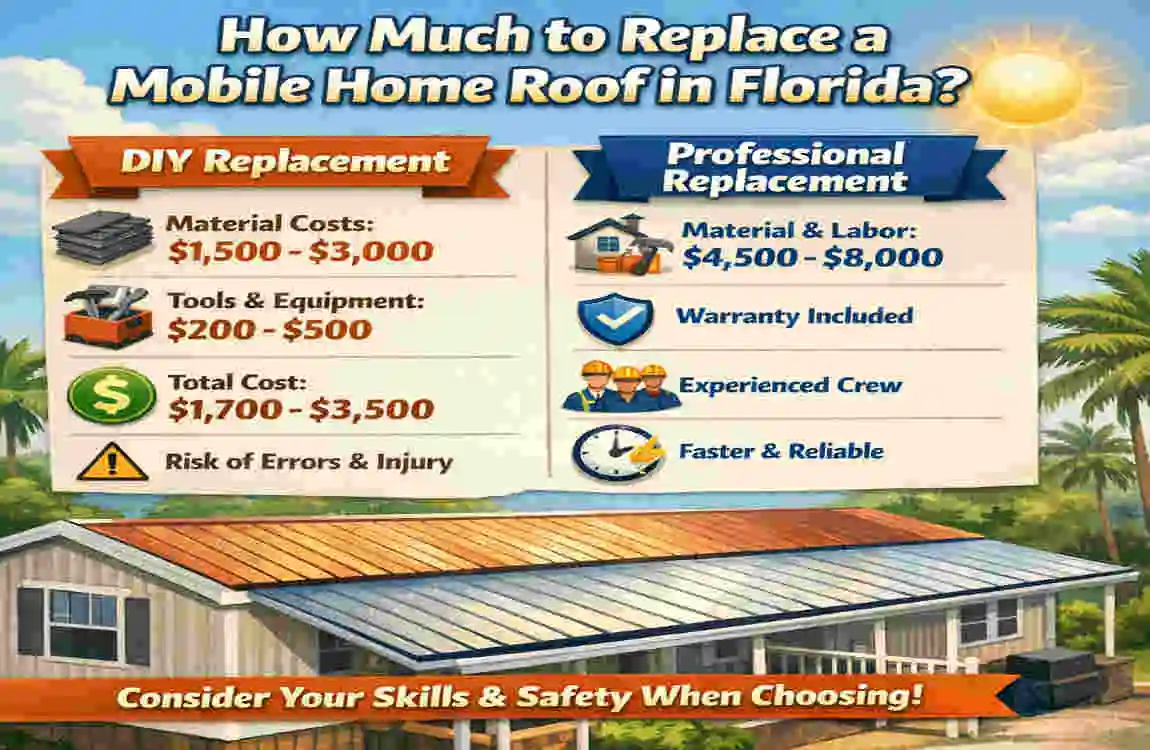
With inflation rising, many homeowners wonder if they can buy the materials at a big-box store and do the work themselves. When it comes to full roof replacements, the answer is usually a resounding no.
The Limits of DIY Roofing
DIY work is perfectly acceptable for minor maintenance. If you need to apply a small patch of silicone sealant over a tiny pinhole leak, or if you want to apply a white, reflective elastomeric coating over your existing metal roof, you can safely tackle those projects on a Saturday afternoon.
However, tearing off an entire roof is incredibly dangerous. Mobile home roofs are slippery, and a single misstep off a ladder can result in severe injury. Furthermore, if you do not know exactly how to flash the seams around your air conditioning vents, water will inevitably find its way inside.
The Benefits of Hiring Professionals
Hiring a licensed professional offers peace of mind that cannot be put into words.
- Code Compliance: Pros ensure your home meets the rigorous 2026 Florida building codes.
- Speed: A professional crew can usually finish a mobile home roof in just 1 to 3 days.
- Guarantees: Most importantly, professional installations come with 10 to 20-year warranties. If a leak develops a year later, they come back and fix it for free. If you do it yourself, you are entirely on your own.
Feature DIY Installation Professional Installation
Upfront Cost Very Low (Materials Only) Moderate to High
Time Required Weeks (Working weekends) 1 to 3 Days
Safety Risk Extremely High Zero risk to the homeowner
Work Warranty None 5 to 20 Years
Code Compliant Unlikely Guaranteed
Frequently Asked Questions (FAQs)
Still have a few things on your mind? Let’s clear up the most common questions Florida homeowners ask us.
How much does it cost to replace a mobile home roof in Florida on average?
In 2026, the average total cost ranges from $4,000 to $20,000. For a standard single-wide using asphalt shingles, you might pay around $3,500. For a large double-wide, upgrading to Premium metal roofing costs between $10,000 and $20,000.
What are the best hurricane-proof roofs for mobile homes?
Heavy-gauge metal roofing panels and heat-welded TPO membranes are the absolute best choices. They offer the highest wind resistance and the lowest chance of water intrusion during a major storm.
Will my homeowner’s insurance cover the replacement?
It depends on the cause of the damage. If your roof failed simply due to age and normal wear and tear, insurance will not cover it. However, if it was ripped off by a documented storm, high winds, or a fallen tree, your policy should cover the replacement (minus your deductible).
How long does the actual installation take?
Because mobile homes have relatively straightforward, low-slope rooflines, a professional crew can complete a full tear-off and replacement in just 1 to 3 days, depending on the weather.
Can I just put a new roof over my old one?
Yes, this is called a “roof-over” or a “retrofit.” If your existing roof structure is dry and sturdy, installing a new TPO or metal system directly over the old one is a great way to save on labour costs.
Do I need a permit to replace my mobile home roof?
Yes. Almost every county in Florida requires a building permit for a full roof replacement to ensure the work meets local wind-load and safety codes. Your roofing contractor should handle the application process for you.
What is roof underlayment, and why is it important?
Underlayment is the waterproof synthetic sheet installed directly onto the wooden deck before the shingles or metal panels go on. In Florida, a high-quality “peel-and-stick” underlayment is essential because it serves as a secondary water barrier if the top layer is blown off in a hurricane.
How often do mobile home roofs need replacing?
With Florida’s harsh sun and frequent storms, asphalt roofs generally last 15 to 20 years. TPO roofs last 20 to 30 years, and a well-maintained metal roof can easily last 40 to 50 years.
Will a new roof lower my electric bill?
Absolutely. Upgrading to a reflective metal roof or a bright white TPO membrane bounces the sun’s radiant heat away from your home, significantly reducing the workload on your air conditioner during the blistering summer months.
Does a new roof increase my mobile home’s value?
Yes. A brand-new, hurricane-rated roof is one of the highest-returning investments you can make. It dramatically increases your home’s curb appeal, makes it easier to sell, and assures buyers that the home is protected.