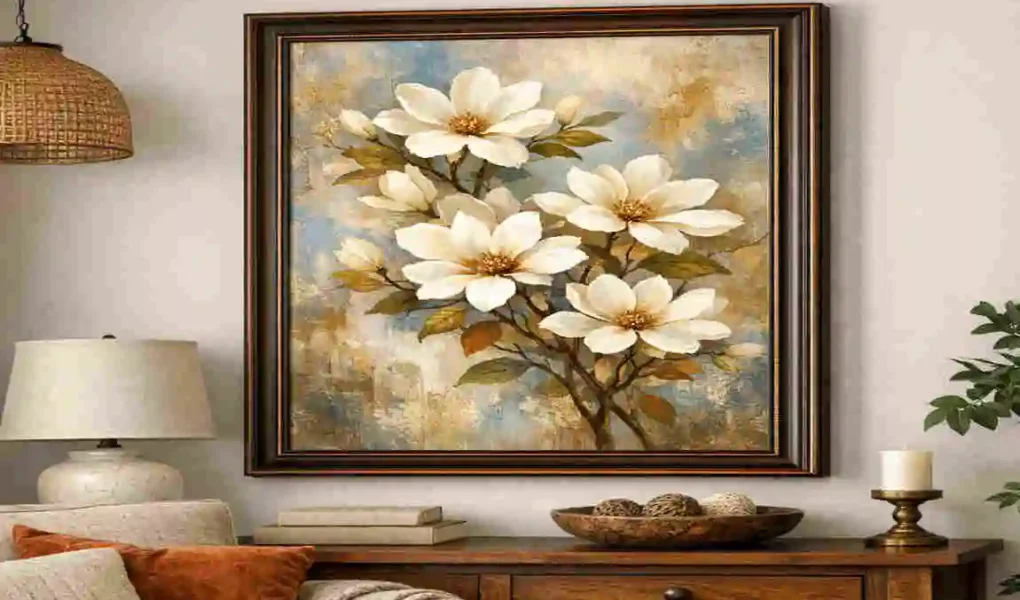
If you’re someone who loves decorating your home with canvas art, you’ve probably asked yourself this question: “Can you get frames for canvas on home walls?” The good news is that you absolutely can! Framing canvas art is not only possible but also a fantastic way to add elegance, protection, and personality to your space.
Understanding Canvas Art
What Is Canvas Art?
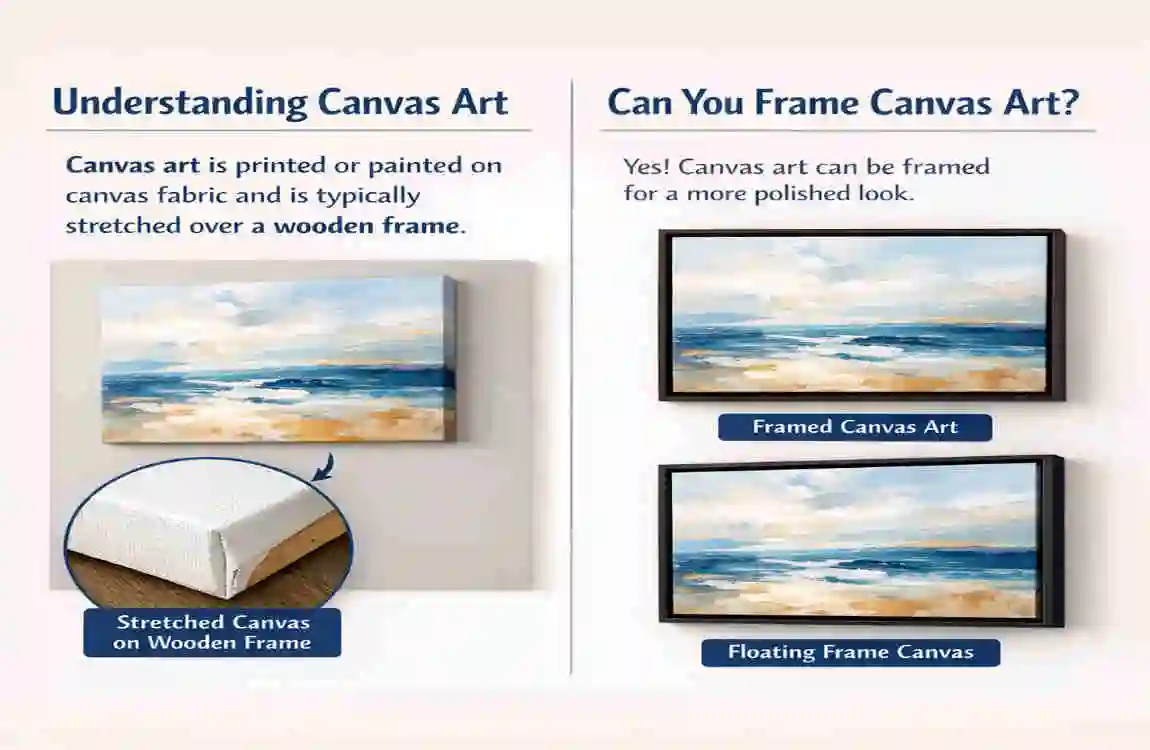
Canvas art refers to artwork printed or painted on canvas. This material is often stretched over a wooden frame to create a durable and textured surface for artistic expression. Canvas art is widely loved for its versatility and timeless appeal.
Why Is Canvas Art So Popular in Home Décor?
Canvas art has become a staple in interior design for many reasons:
- Texture and Depth: Unlike flat posters or prints, canvas art adds a three-dimensional feel to your walls.
- Customizable Sizes: Canvas art comes in various sizes, making it easy to find pieces that fit your space perfectly.
- Versatility: Whether your home has a modern, rustic, or classic theme, there’s a canvas style to match.
Types of Canvas Art
Before we discuss framing, let’s understand the common types of canvas art:
- Stretched Canvas: The most common type, in which the canvas is tightly stretched over a wooden frame.
- Unstretched Canvas: This type is rolled up and requires stretching or framing before display.
- Gallery-Wrapped Canvas: The canvas is stretched over a wooden frame, with the artwork’s edges visible on the sides.
Can You Get Frames for Canvas on Home Walls?
The short answer is yes, you can frame canvas art for your home walls! However, the possibilities depend on the type of canvas and your personal preferences.
Why Frame Canvas Art?
Framing canvas art has several advantages:
- Protection: A frame helps protect the edges of your canvas from wear and tear, dust, and accidental damage.
- Aesthetic Appeal: Frames add a polished and professional look to your artwork, making it a focal point in your home.
- Customization: Choosing a frame allows you to complement your room’s décor, color scheme, and style.
Compatibility with Wall Types
Framed canvas art works well on various wall types, including:
- Drywalls: The most common type of home wall, where framed canvas art can be securely hung with hooks or nails.
- Brick or Concrete Walls: Use wall anchors or specialized hardware for stability.
- Wooden Walls: Frames can be easily mounted with screws or nails.
Types of Frames for Canvas Art
Framing your canvas art opens up a world of options. Let’s explore the most popular types of frames you can choose from:
Traditional Wooden Frames
These classic frames are made from materials like oak, pine, or walnut. They’re perfect for adding a timeless and elegant touch to your artwork. Wooden frames work well for both vintage and modern art pieces.
Floating Frames
Floating frames create a visual gap between the canvas edges and the frame. This style gives the illusion that your canvas is “floating” within the frame, creating a sophisticated, contemporary look.
Box Frames
Box frames enclose the entire canvas, offering maximum protection. They are ideal for preserving valuable or delicate art pieces.
Frameless Options
Although not technically a frame, you can opt to leave your canvas art unframed, especially if it’s gallery-wrapped. This creates a minimalist and modern look.
How to Choose the Right Frame for Canvas Art
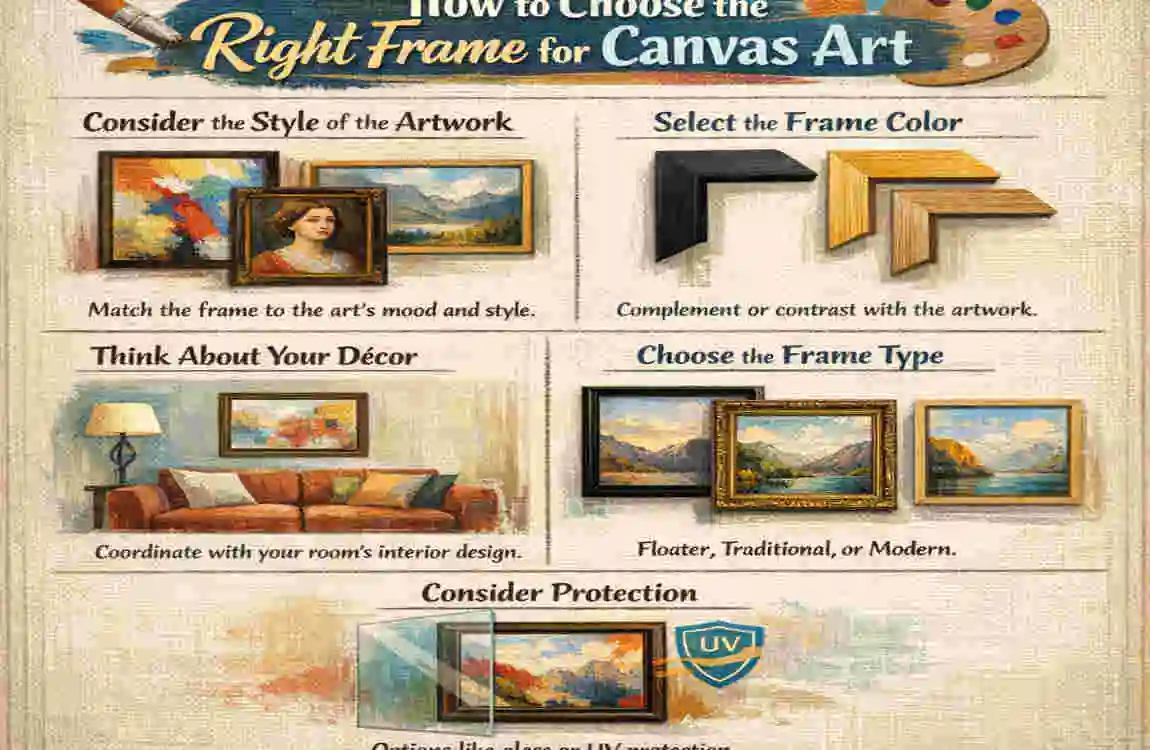
Choosing the perfect frame for your canvas art can feel overwhelming, but it doesn’t have to be. Here’s how to make the right decision:
Factors to Consider
- Canvas Size: Larger canvases often look better with minimalist frames, whereas smaller canvases can handle more ornate designs.
- Art Style: Match the frame to the artwork’s theme. For example, abstract art pairs well with sleek frames, while traditional paintings pair well with ornate designs.
- Frame Material and Color: Consider materials like wood, metal, or acrylic, and choose colors that complement your luxury room.
- Room Aesthetic: Make sure the frame enhances the overall vibe of your space.
Step-by-Step Guide
- Measure the dimensions of your canvas.
- Decide whether you want a floating, box, or traditional frame.
- Visit a local framing store or browse online to explore options.
- Test out different styles before making a final choice.
DIY Framing vs. Professional Services
Framing canvas art can be done as a DIY project or by a professional. Let’s weigh the pros and cons of each.
DIY Framing
Pros:
- Cost-effective.
- Full control over customization.
- A fun and creative project for art enthusiasts.
Cons:
- Requires tools and skills.
- Time-consuming.
- May not achieve the same quality as professionals.
Professional Framing Services
Pros:
- High-quality results.
- Expertise in handling delicate or valuable artwork.
- Wide range of frame options.
Cons:
- It can be expensive.
- Less hands-on involvement.
Tips for Hanging Framed Canvas Art on Walls
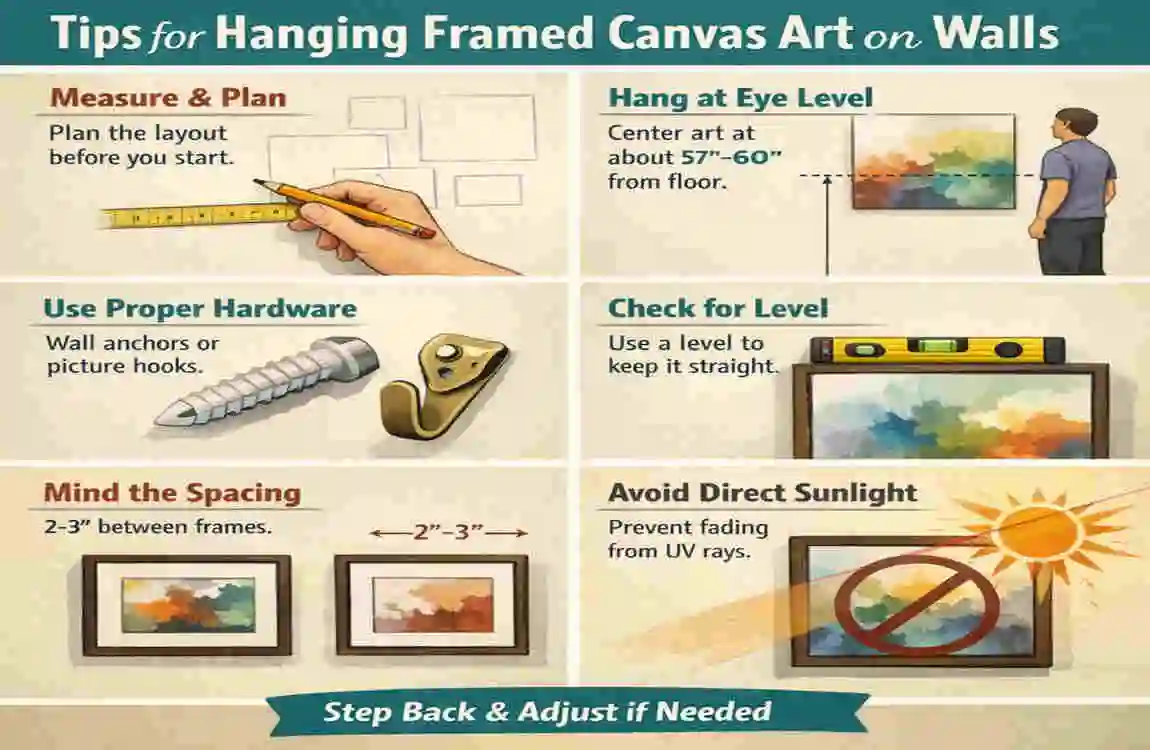
Once you’ve framed your canvas art, the next step is to hang it securely. Follow these tips for the best results:
Choose the Right Hardware
- Use wall hooks, nails, or adhesive strips based on your wall type.
- For heavier frames, consider using wall anchors.
Align Your Artwork
- Mark the wall with a pencil to ensure proper alignment.
- Use a spirit level to keep the frame straight.
Create a Gallery Wall
If you have multiple art pieces, arrange them in a gallery wall format. Mix and match frames of different sizes for a dynamic look.
Frequently Asked Questions
Can all canvas types be framed?
Yes, but the framing process may vary depending on whether the canvas is stretched or unstretched.
Is framing canvas art expensive?
The cost depends on the frame type and size. DIY framing is often cheaper, while professional services may cost more but offer better quality.
What are the best materials for frames?
Wood and metal are the most popular choices due to their durability and aesthetic appeal.
Can you change the frame later?
Absolutely! Frames can be swapped out to refresh the look of your artwork.
How do you maintain framed canvas art?
Dust the frame and canvas regularly with a soft cloth. Avoid placing it in direct sunlight to prevent fading.