Caravan owners know how important it is to keep their vehicles looking pristine while safeguarding them against harsh weather, UV rays, and road wear. Whether you’re a weekend traveler or a long-haul adventurer, the right paint for a caravan exterior can make all the difference. It’s not just about aesthetics—choosing the correct paint ensures your caravan remains protected and maintains its value for years to come.
Why Is Choosing the Right Exterior Paint Important?
Before diving into the best paint options, let’s first understand why selecting the right paint for a caravan exterior is critical.
The Unique Challenges of Caravan Exteriors
Caravans are different from buildings or stationary objects—they’re constantly exposed to dynamic forces and harsh environments. Here are some of the challenges they face:
- Flexibility and Movement: Caravans flex and shift during travel. Standard paints can crack under this pressure, leading to unsightly peeling and reduced durability.
- Weather Resistance: From scorching sun to heavy rain, caravans face extreme weather conditions. The wrong paint won’t stand up to UV rays, water, or fluctuating temperatures.
- Scratches and Wear: Gravel roads, tree branches, and general wear can damage the surface. Durable, scratch-resistant coatings are essential to prevent premature deterioration.
Protecting Your Investment
Your caravan is a significant investment, and choosing a high-quality paint ensures:
- Enhanced Longevity: Proper paint prevents rust, water ingress, and UV-related damage.
- Maintained Resale Value: A well-painted caravan looks more appealing to buyers.
- Cost Savings: Investing in the right paint reduces the need for frequent touch-ups or complete repaints.
Standard Paints vs. Specialized Paints
Many people mistakenly use standard house paints or low-quality options, which may be cheaper initially but lead to costly repairs later. Specialized paints, such as polyurethane-based coatings or marine-grade enamels, are designed to meet the unique demands of a caravan’s exterior.
The Top 7 Best Paints for Caravan Exteriors
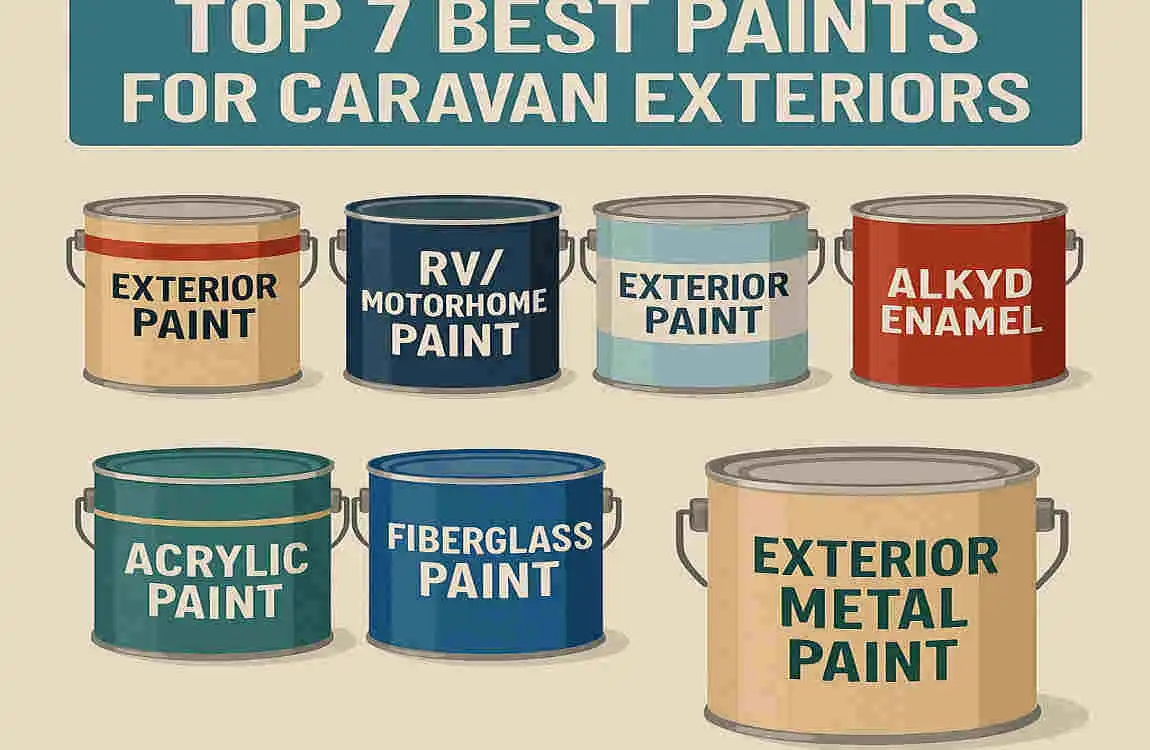
Choosing the right paint can feel overwhelming, but we’ve narrowed down the top 7 options that balance durability, aesthetics, and ease of application.
Raptor Tough & Tintable Protective Coating
- Type: Polyurethane-based truck bed liner
- Best For: Caravans exposed to rough terrain or extreme conditions
- Pros:
- Highly durable and scratch-resistant
- UV-stable, meaning it won’t fade over time
- Textured finish that hides imperfections
- Cons:
- Requires a spray gun for application
- Textured finish may not suit all aesthetic preferences.
- Application Tip: Apply using a spray gun for even coverage. Ideal for caravan bases or areas prone to heavy wear.
Rust-Oleum Automotive Enamel Spray Paint
- Type: Spray enamel with rust inhibitors
- Best For: Budget-friendly DIY projects
- Pros:
- Quick-drying and easy to apply
- Provides a glossy, chip-resistant finish
- Suitable for metal and fiberglass surfaces
- Cons:
- Limited color options
- Requires multiple coats for full coverage
- Application Tip: Use in well-ventilated areas and apply thin, even coats.
PPG Timeless Exterior Paint + Primer
- Type: All-in-one semi-gloss
- Best For: Pop-up campers and smaller caravans
- Pros:
- Mildew and UV-resistant
- Easy to apply with a roller or brush
- Excellent adhesion on multiple surfaces
- Cons:
- May not be as durable as polyurethane paints
- Application Tip: Use a foam roller for smooth application and avoid overloading to prevent drips.
Interlux Brightside Polyurethane Paint
- Type: Marine-grade polyurethane
- Best For: Sunny or coastal regions
- Pros:
- High-gloss finish with self-leveling properties
- Extremely durable and abrasion-resistant
- Ideal for fiberglass and aluminum surfaces
- Cons:
- Requires careful preparation and multiple coats
- Application Tip: Sand between coats for a flawless finish.
Rust-Oleum Peganox
- Type: Water-based, rubber-like paint
- Best For: Waterproofing roofs and seams
- Pros:
- 200% elasticity to prevent cracking
- Easy to apply with a brush or roller
- Excellent waterproofing properties
- Cons:
- Limited to specific surfaces
- Matte finish may not appeal to all users.
- Application Tip: Focus on seams and roof areas for extra protection against leaks.
Coach Enamel (Tekaloid Paint)
- Type: Flexible, glossy enamel
- Best For: Full caravan exteriors
- Pros:
- Durable and water-resistant
- Custom color options available
- Retains flexibility to prevent cracking
- Cons:
- Longer drying time compared to other paints.
- Application Tip: Allow ample curing time between coats for a professional-grade result.
Dupli-Color Perfect Match Automotive Paint
- Type: Spray lacquer
- Best For: Touch-ups and minor repairs
- Pros:
- OEM color matching for precision
- Fast-drying and chip-resistant
- Easy for DIYers
- Cons:
- Not ideal for large areas
- Application Tip: Match the exact color code of your caravan for seamless repairs.
Preparation Steps for Optimal Results
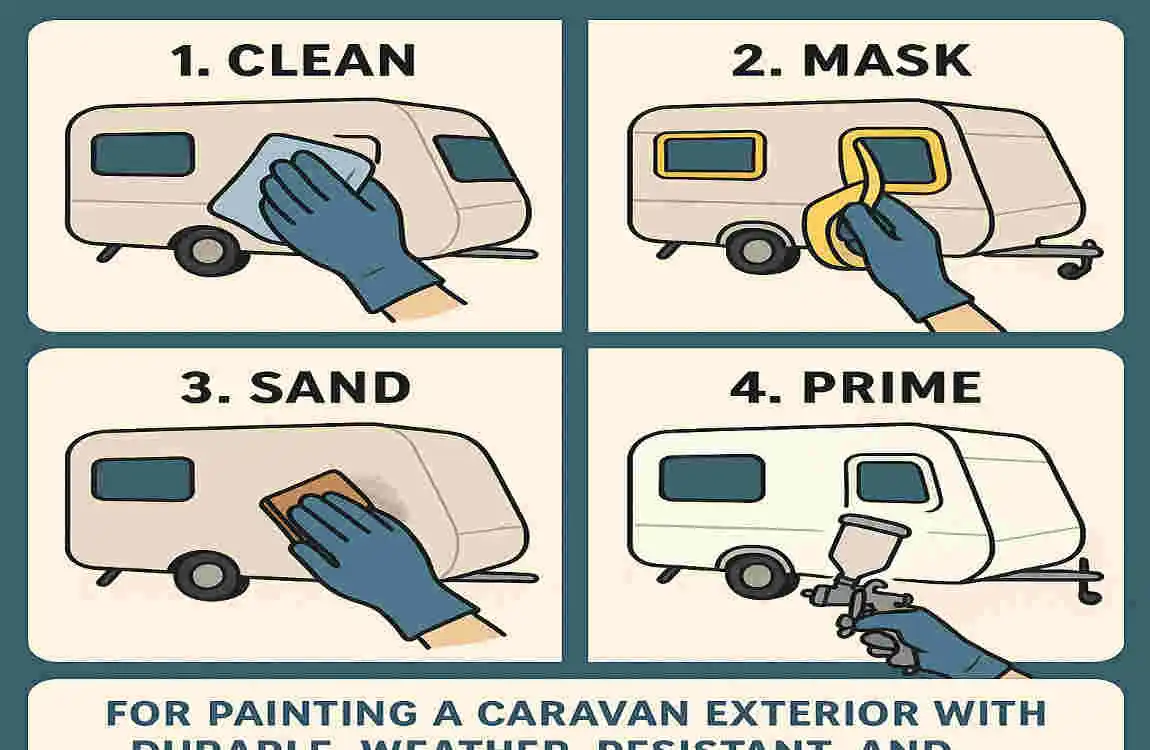
Preparation is key to achieving a flawless, long-lasting finish. Follow these steps to ensure your caravan is ready for painting:
- Clean the Surface: Wash thoroughly with soap and water to remove dirt, grease, and debris. Use a degreaser for stubborn stains.
- Sand the Surface: Lightly sand the exterior using fine-grit sandpaper. This helps the paint adhere better.
- Apply Primer: Use a high-quality primer, such as Zinsser 123, to create a smooth base. Avoid skipping this step, as primer enhances adhesion and durability.
- Mask Areas: Use painter’s tape to cover windows, trim, and other areas you don’t want painted.
- Two Coats Minimum: Always apply at least two thin coats of paint, allowing sufficient drying time between layers.
Application Techniques and Tools

The right tools and techniques make all the difference in achieving a professional finish.
Recommended Tools
- Spray Gun: Ideal for even application of textured or polyurethane paints.
- Foam Rollers: Best for smooth finishes with enamels or water-based paints.
- Brushes: Great for small areas or touch-ups.
Key Application Tips
- Work in a shaded, dust-free area to avoid contaminants.
- Apply multiple thin coats rather than one thick layer.
- Use proper safety gear, including gloves and a mask, especially when working with spray paint.
Maintenance and Longevity Tips
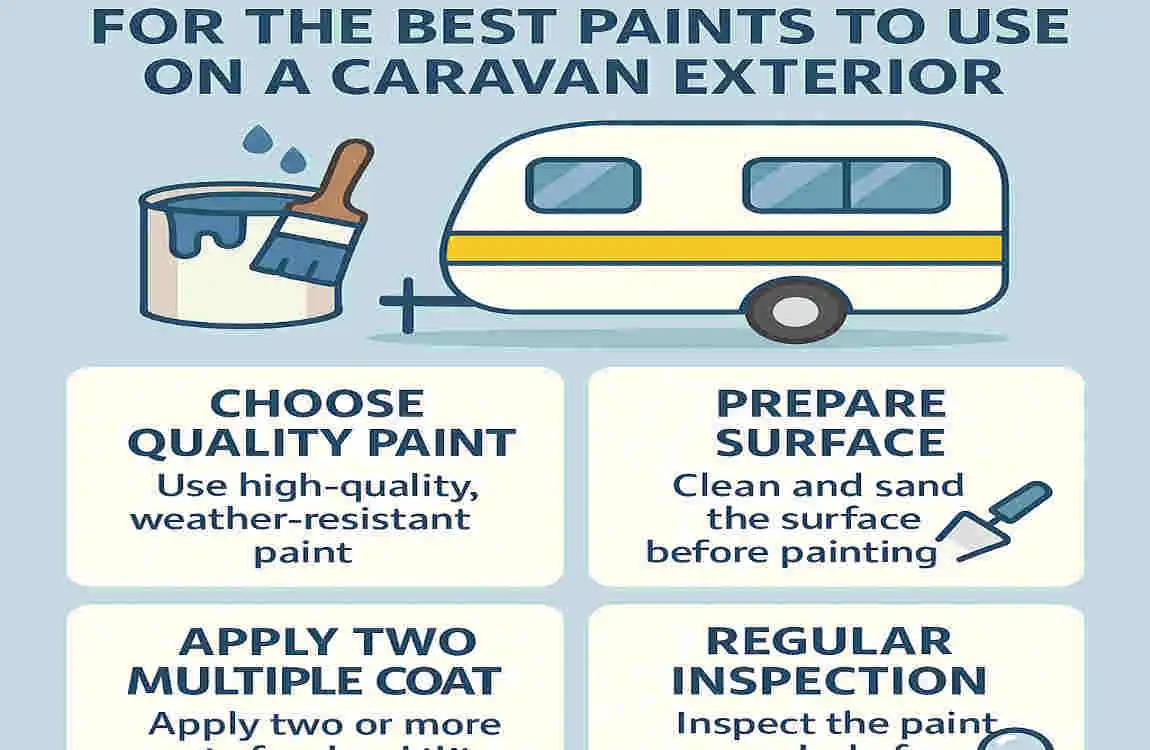
To keep your caravan looking its best, regular maintenance is essential:
- Wash Frequently: Use mild soap and water to remove dirt and grime.
- Inspect for Damage: Address chips, cracks, or fading early to prevent further wear.
- Reapply Touch-Ups: Flexible paints like coach enamel may need touch-ups every 3-5 years, depending on exposure.
FAQ: What Paint to Use on a Caravan Exterior
Can I use regular house paint on my caravan exterior?
No, regular house paint is not suitable for caravan exteriors. Caravans are exposed to constant movement, weather changes, and UV rays, which house paints cannot withstand. Using house paint can lead to cracking, peeling, and poor durability. Instead, opt for specialized paints like polyurethane-based coatings, automotive paints, or coach enamels designed for flexibility and weather resistance .
What is the best type of paint for a caravan exterior?
The best paint depends on your caravan’s material and your desired finish. Here are some top options:
- Polyurethane Paints: Extremely durable, UV-resistant, and flexible, ideal for rough conditions.
- Coach Enamel: Perfect for a vintage look with a glossy finish; great for hand-painting .
- Automotive Paints: Provide a professional, modern finish and are highly durable.
- Water-Based Rubber Paints: Excellent for waterproofing roofs and seams.
Can I use spray paint on my caravan?
Yes, spray paint is a great option for achieving a smooth, professional finish. It’s particularly effective for automotive paints or polyurethane coatings. However, proper preparation is crucial to ensure the paint adheres well and lasts long .
How do I prepare my caravan for painting?
Preparation is key to a successful paint job. Follow these steps:
- Clean the Surface: Wash the caravan thoroughly with soapy water to remove dirt and grease .
- Repair Damage: Fill any dents, cracks, or rust spots with an appropriate filler and sand smooth .
- Sand the Surface: Lightly sand the entire exterior to improve paint adhesion.
- Apply Primer: Use a high-quality primer suitable for your caravan’s material, such as Resincoat Caravan Paint Primer for aluminum .
How many coats of paint should I apply?
For the best results, apply at least two thin coats of paint. Allow each coat to dry completely before applying the next. This ensures even coverage and durability .
What tools should I use for painting a caravan?
The tools you use depend on the type of paint and the finish you want:
- Spray Gun: Ideal for smooth, even application of automotive or polyurethane paints.
- Foam Rollers: Great for applying coach enamel or water-based paints.
- Brushes: Useful for touch-ups or painting small areas .