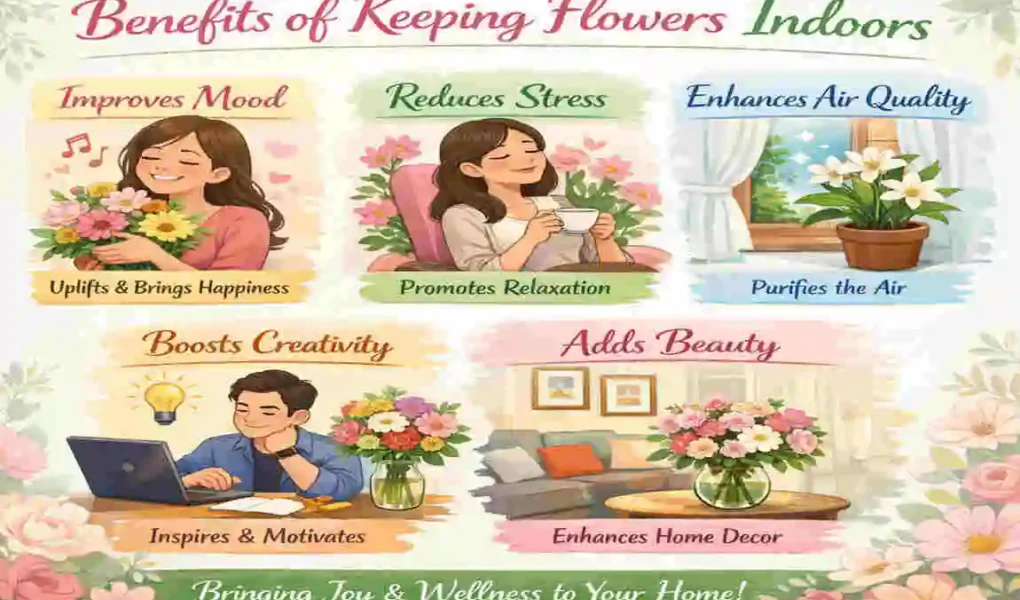
Flowers do more than look pretty. They can change how a room feels, how you feel, and even how you start your day. If you have ever placed a fresh bouquet on a table and instantly felt a little lighter, you already know part of the answer to what the benefits of having flowers in the house are.
In simple words, indoor flowers can lift your mood, brighten your space, and make your home feel more welcoming. They can also support focus, add a touch of calm, and turn ordinary rooms into places you actually enjoy spending time in.
Emotional and Mental Health Benefits of Indoor Flowers
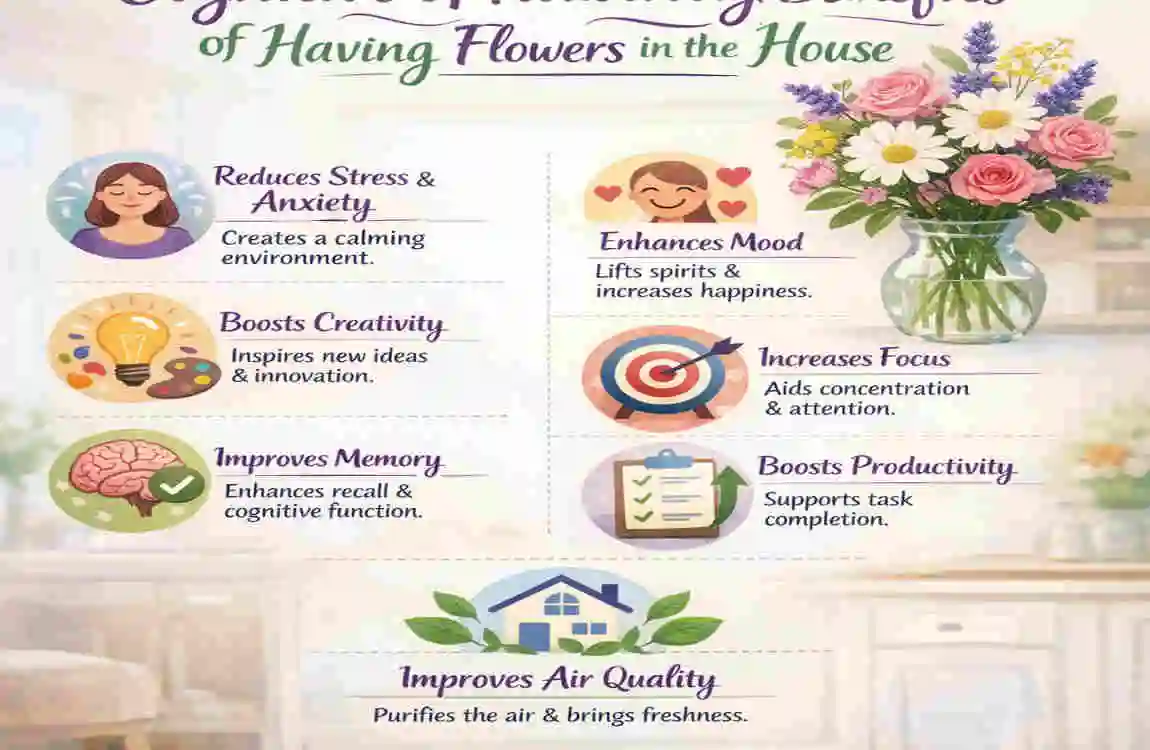
Flowers can lift your mood.
Flowers bring color, softness, and life into your luxury home. That may sound simple, but simple things often have the biggest effect. When you see fresh blooms, your mind gets a small break from routine and stress.
This is why many people feel happier when flowers are nearby. A bright vase on a kitchen counter or bedside table can make the whole space feel more cheerful.
Flowers can help reduce stress.
A home should feel restful, and flowers help create that feeling. Their natural beauty can make a room feel calmer and less heavy. When your eyes land on something fresh and colorful, it is easier to slow down.
This is one reason flowers are often used in self-care routines. They can give your mind a soft, peaceful pause during a busy day.
Flowers can support emotional comfort.
Flowers also have a gentle emotional value. People use them during hard times, celebrations, or quiet moments at home. They can bring comfort, remind you of nature, and make a room feel less empty.
For many people, that small emotional lift matters.
Flowers Boost Focus and Productivity
They make your space feel more inspiring.
Flowers are not only for decoration. They can also help your mind feel more awake. A fresh arrangement on a desk or study table can make the area feel more inviting and less dull.
When your space looks cared for, you are often more likely to care for your work too.
They can support concentration.
A clean, pleasant environment helps reduce distraction. Flowers add beauty without clutter, especially when you choose a simple arrangement. This is useful in a home office, reading corner, or study area.
Best places to put flowers for focus:
- A work desk
- A study table
- A reading nook
- A quiet corner near natural light
Physical Health Benefits: Air, Humidity, and Freshness
Flowers can improve the feel of indoor air.
Indoor flowers are not magic air purifiers, but they can still make a room feel fresher. Some flowering plants may add a little humidity and soften the dry feel of indoor air.
That said, flowers should not replace ventilation or cleaning. Opening a window and keeping your space tidy still matter most.
Be careful with allergies.
Not all flowers suit every home. Some people react to pollen or strong scents. If that is you, choose low-pollen flowers and avoid heavily scented blooms.
Good options may include:
- Orchids
- Roses
- African violets
- Kalanchoe
If you have allergies, it is smart to keep flowers in small amounts and check how you feel after bringing them inside.
Flowers as Home Decor
They add color and style instantly.
One of the biggest benefits of keeping flowers indoors is how quickly they upgrade a room. You do not need a full redesign. A single vase can make a space feel finished and cared for.
Flowers add:
- Color
- Texture
- Height
- Softness
- A focal point
They work in every room.
Here is a simple room-by-room guide:
RoomBest Flower StyleWhy It Works
Living room , mixed bouquet , creates a warm center point
Bedroom Soft, simple blooms. Feels calm and relaxing
Kitchen Small bright arrangement adds energy and freshness
Bathroom Humidity-friendly flowers. Feels clean and spa-like
Home office Compact vase keeps the desk neat and inspiring
A small arrangement often works better than a big one, especially in busy rooms.
Social and Practical Benefits
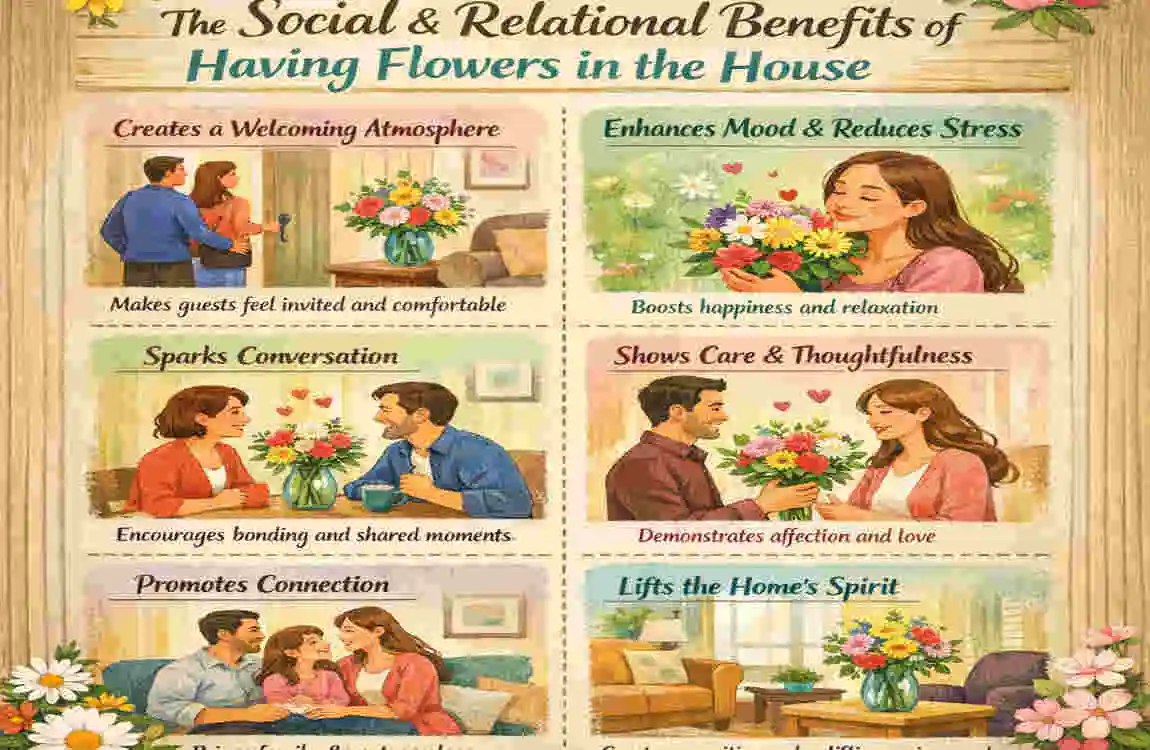
Flowers make your home feel welcoming.
Flowers are a lovely way to greet guests. They show care, warmth, and attention to detail. Even if visitors only stay for a short time, they notice the feeling of your space.
They are easy acts of self-care
Buying flowers for yourself is a simple but meaningful habit. It can feel like saying, “My home matters,” and “I deserve something beautiful too.”
That is a small gesture, but it can make your week feel better.
They are flexible and affordable.
You do not need expensive arrangements to enjoy flowers indoors. A few stems from a market, grocery store, or local shop can still give you the full benefit. Sometimes the simplest bouquet has the biggest effect.
Best Flowers to Keep Indoors
Here are a few easy and popular choices:
- Orchids — elegant and long-lasting
- Peace lilies — attractive and good for low-light spaces, but keep away from pets
- Gerbera daisies — bright and cheerful
- Roses — classic and beautiful in a vase
- African violets — small and great for windowsills
- Kalanchoe — low-maintenance flowering plant
If you want flowers that are easy to enjoy, start with one or two simple varieties.
How to Care for Indoor Flowers
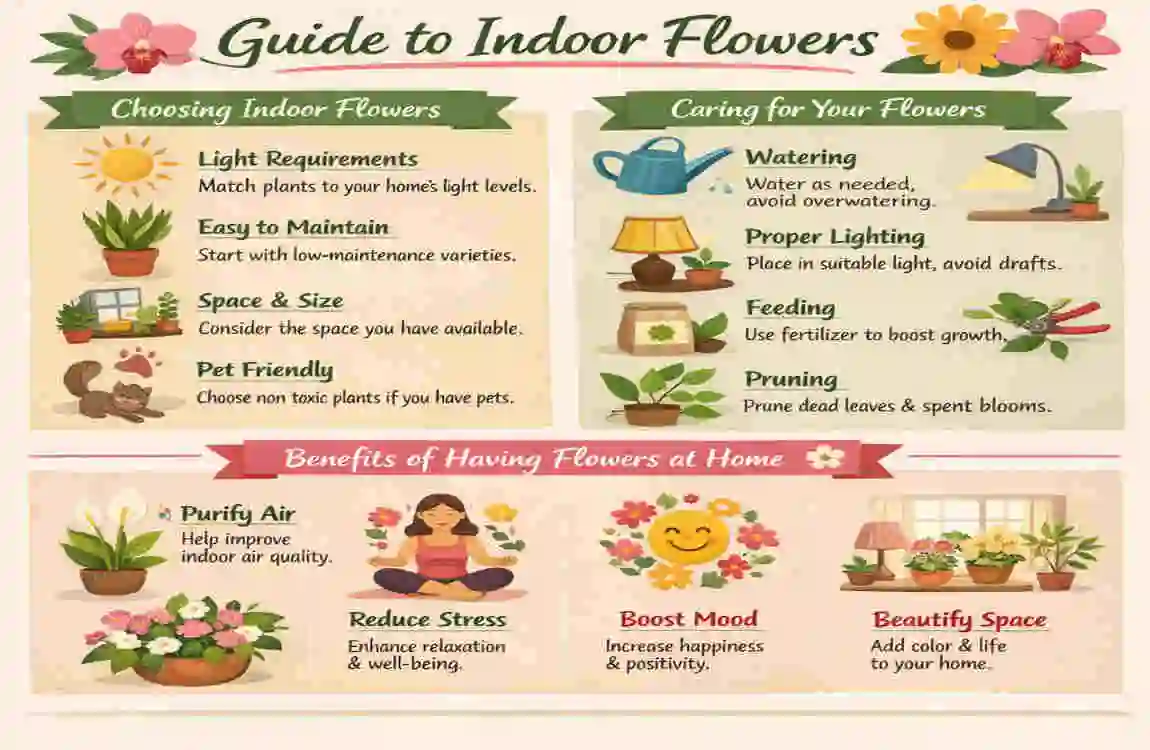
Quick care tips
To help flowers last longer:
- Trim the stems at an angle
- Use clean water
- Change the water every 2–3 days
- Remove wilted petals and leaves
- Keep flowers away from direct heat
- Place them where they get the right amount of light
Fresh flowers can last much longer with just a little care.
When Flowers May Not Be the Best Choice
Flowers are wonderful, but they are not perfect for every home. If you have pets, strong allergies, or very low light, you may need to choose carefully.
Good alternatives include:
- Potted green plants
- Dried flowers
- Faux flowers
- Low-scent flowering plants
You can still enjoy beauty indoors, even if fresh bouquets are not ideal for you.
Frequently Asked Questions
Do flowers really improve mood?
Yes, many people feel happier and calmer around flowers. Their color and natural beauty can create a more positive atmosphere.
How long do indoor cut flowers last?
Most cut flowers last about 3 to 14 days, depending on the type and how well you care for them.
Are indoor flowers safe for pets?
Not always. Some flowers, like lilies, can be dangerous to cats. Always check before bringing new flowers home.
Which flowers are best for allergies?
Low-pollen flowers, such as orchids, roses, and some indoor blooms, are usually better choices.
Do flowers clean indoor air?
Not in a major way. They may help a little, but fresh air and good cleaning habits matter more.
| Benefit | How It Helps You |
|---|---|
| Boosts Mood & Happiness | Vibrant colors and fragrances trigger happy emotions, reduce stress, anxiety, and depression instantly |
| Improves Air Quality | Flowers absorb harmful pollutants/toxins and release oxygen through photosynthesis, creating cleaner air |
| Reduces Stress Levels | Seeing natural elements indoors lowers stress and creates a calming, soothing atmosphere |
| Increases Productivity & Focus | Natural elements stimulate the brain, improving concentration, creativity, and reducing mental fatigue |
| Acts as Natural Humidifier | Plants release moisture into the air, increasing humidity—especially helpful during dry winter months |
| Enhances Aesthetic Appeal | Adds vibrant color and beauty to your space, making it feel brighter and more welcoming |
| Encourages Mindfulness | Caring for flowers (trimming, changing water) creates a calming ritual that helps you stay present |
| Promotes Better Sleep | Fragrant flowers like lavender or jasmine in bedrooms lower anxiety and improve sleep quality |
| Strengthens Social Connections | Flowers symbolize love/thoughtfulness and can remind you of gratitude from gifts or personal choices |
| Connects You to Nature | Provides a soft link to the outdoors, strengthening memory, concentration, and overall well-being |