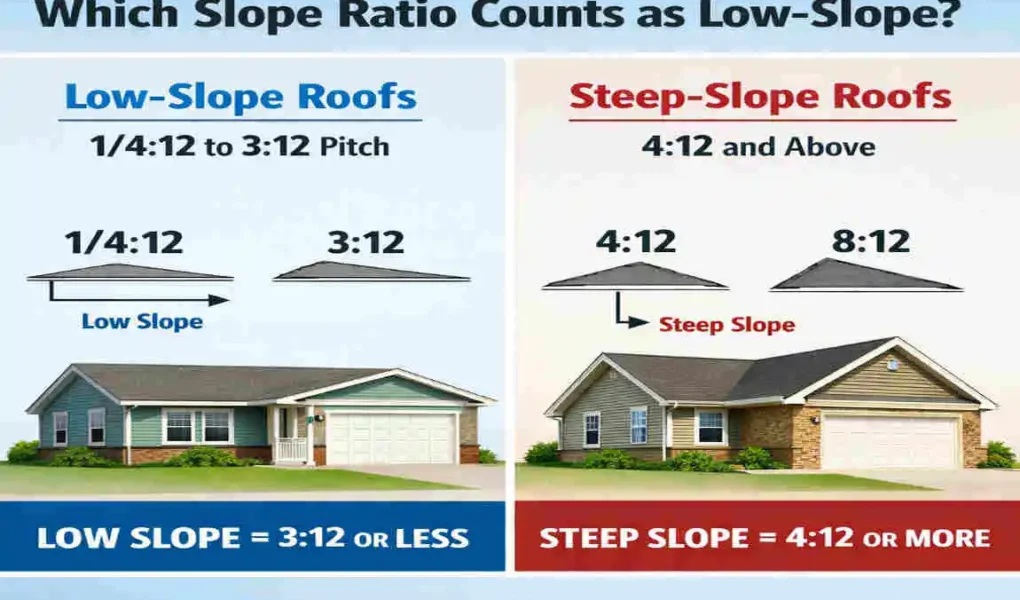
Which of the following roof slope ratios qualifies as low-slope for your next property investment? If you’re involved in real estate, construction, or home improvement, understanding roof slopes is crucial. Roof slope affects everything from material choice and installation costs to energy efficiency and resale value.
Roof Slope Basics
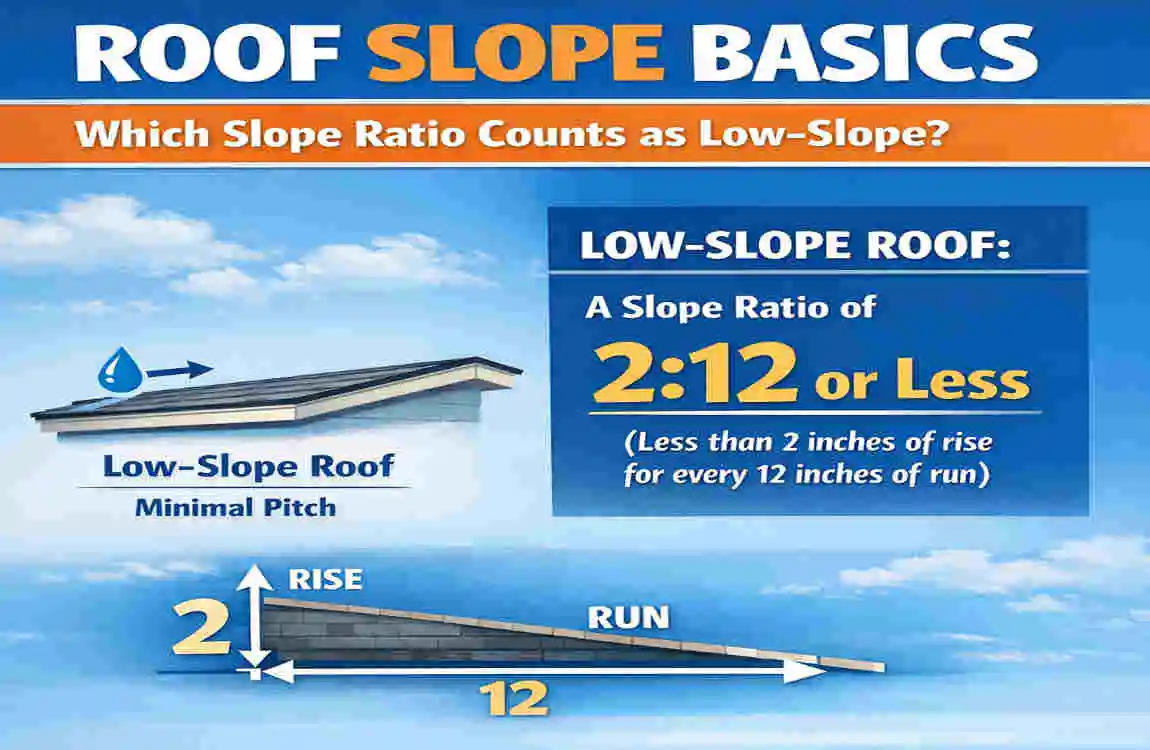
Before we answer the key question, it’s important to understand what roof slope means and how it’s measured.
What Is Roof Slope?
Roof slope is the steepness or pitch of a roof, usually expressed as a ratio of vertical rise to horizontal run. For example, a slope of 3:12 means the roof rises 3 inches vertically for every 12 inches (1 foot) it extends horizontally.
This ratio helps builders and inspectors understand how steep a roof is, which influences water drainage, material choice, and safety.
Categories of Roof Slopes
Roof slopes generally fall into three categories:
- Flat roofs: 0:12 slope (completely flat or nearly flat)
- Low-slope roofs: Typically under 3:12 or 4:12, depending on context
- Steep-slope roofs: Greater than 9:12
Here’s a simple table to clarify:
Slope Ratio Rise per 12″ Run Approximate Angle Category
1:12 1″ 4.8° Low-slope
2:12 2″ 9.5° Low-slope
3:12 3″ 14° Low/Transitional
4:12 4″ 18° Moderate slope
Defining Low-Slope Roofs
Now, let’s answer the core question: Which of the following roof slope ratios qualifies as low-slope?
Industry Standards and Variations
The most common industry standard defines low-slope roofs as those with a slope less than 3:12. This means the roof rises 3 inches or less for every 12 inches of horizontal run. This cutoff is important because it determines the types of roofing materials that can be used and the installation methods required.
However, some building codes and organizations, such as OSHA, consider slopes up to 4:12 to be low-slope for safety and compliance reasons. This slight variation can affect insurance, maintenance, and regulatory requirements.
Roofing Materials and Low-Slope
For roofing materials, the cutoff is often even stricter. Roofs with slopes below 2:12 usually require special membrane roofing systems to ensure waterproofing, as shingles and other traditional materials don’t perform well on very flat surfaces.
Business Implications
Understanding whether a roof is low-slope impacts:
- Insurance premiums: Low-slope roofs may have different risk profiles.
- Energy efficiency: Low-slope roofs often accommodate cool roofing materials that reflect heat.
- Resale value: Buyers may prefer certain roof types for maintenance and aesthetics.
Examples of Low-Slope Roofs
- Commercial buildings often have flat or very low-slope roofs, sometimes as low as 0.25:12.
- Residential homes with slopes of 2:12 or 3:12 may be considered low-slope or transitional.
Common Slope Ratios Breakdown
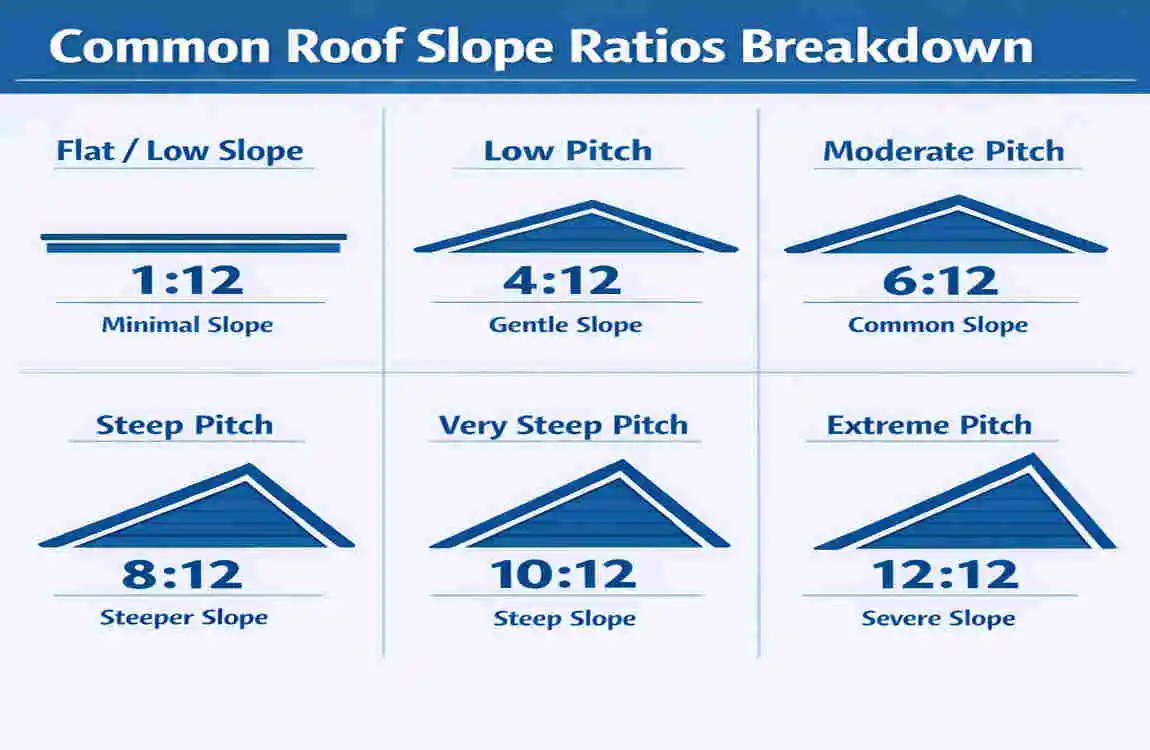
Let’s look at specific slope ratios and whether they qualify as low-slope.
Slopes
- Always low-slope. These roofs are quite flat and require membrane roofing systems to prevent leaks.
- Common in commercial and modern residential designs.
Slope
- Often considered low-slope or transitional.
- Some codes and materials treat it as low-slope; others see it as moderate.
- Offers a balance between drainage and material options.
Slope
- Rarely qualifies as a low-slope roofing material, such as shingles.
- OSHA and some building codes may still classify it as low-slope for safety.
- More typical of moderate-pitch roofs.
Pros and Cons Table for Business Decisions
Slope Ratio: Qualifies as Low-Slope? Best Uses Drawbacks
0:12 Yes Commercial roofs Poor drainage, ponding risk
2:12 Yes, modern homes require membrane roofing
3:12 Often Hybrid residential Check local codes
4:12 Rarely Moderate-pitch Limited low-slope materials.
Materials for Low-Slope Roofs
Choosing the right materials is critical for low-slope roofs because water doesn’t drain as quickly as on steep roofs.
Why Materials Matter
Low-slope roofs need waterproof membranes to prevent leaks. Traditional shingles are not suitable for slopes under 2:12 because water can pool and seep through.
Common Materials
- TPO (Thermoplastic Olefin) and EPDM (Ethylene Propylene Diene Monomer): These synthetic rubber membranes are ideal for slopes with a slope ratio of 2:12 or less. They are durable, flexible, and waterproof.
- Modified Bitumen: A bitumen-based membrane that works well up to 3:12 slopes. It combines asphalt with modifiers for flexibility and durability.
Business Tip
Low-slope roofs can reduce installation costs by 20-30% compared to steep roofs because they require less complex framing and fewer materials.
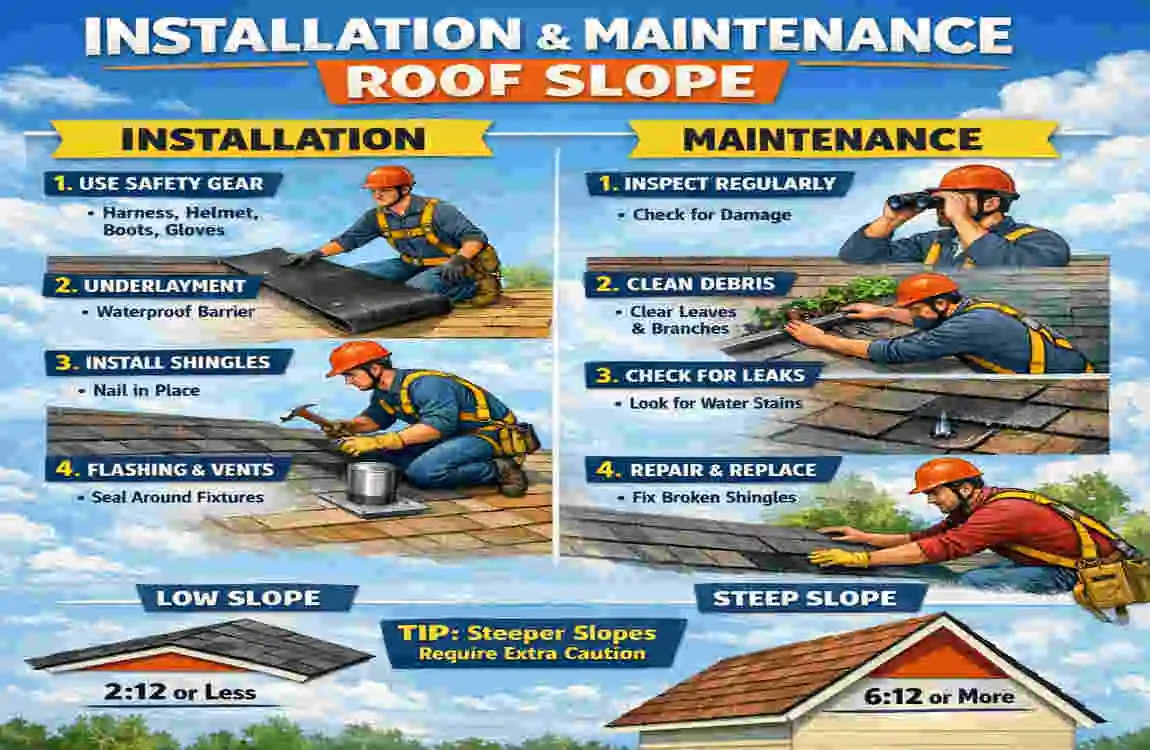
Installation and Maintenance
Measuring Roof Slope
You can measure roof slope yourself using a level and a tape measure:
- Place a level horizontally on the roof.
- Measure the vertical distance from the roof surface to the bottom of the level.
- Multiply this rise by 12 to get the slope ratio (rise:12).
Challenges with Low-Slope Roofs
- Ponding water: Roofs with a slope less than 2:12 are prone to water pooling, which can lead to leaks and damage.
- Drainage: Proper drainage systems and slight slope adjustments are essential.
Maintenance Tips
- Conduct annual inspections to check for membrane damage or debris that may be blocking drains.
- Clean gutters and drains regularly to prevent water buildup.
- Proper maintenance can extend roof life by 15+ years, offering great ROI for property managers .
Business and Real Estate Impacts
Benefits for Investors
- Usable rooftop space: Low-slope roofs allow for rooftop decks, gardens, or solar panels, increasing property value.
- Energy efficiency: Cool roofing materials on low-slope roofs reflect sunlight, reducing cooling costs.
- Compliance: Many local codes (such as the IBC) require slopes under 4:12 to have specific drainage and safety features.
Cost Comparison Chart
Roof Type: Installation Cost: Maintenance Cost: Lifespan
Low-slope (<3:12) Moderate Moderate 15-30 years
Steep-slope (>9:12) Higher Lower 20-40 years
Low-slope roofs can save money upfront but may require more maintenance to prevent water issues.
FAQs
Q1: Which of the following roof slope ratios qualifies as low-slope: 1:12, 5:12, or 3:12?
A: 1:12 and 3:12 qualify as low-slope; 5:12 is too steep skroofing and construction.
Q2: Is 2:12 considered low-slope?
A: Yes, 2:12 is firmly in the low-slope category billragan roofing.
Q3: Can shingles be used on low-slope roofs?
A: Generally, no for slopes under 2:12; membranes are preferred.
Q4: What are the risks of low-slope roofs?
A: Ponding water and leaks if not properly maintained.
Q5: Are low-slope roofs cheaper to install?
A: Often yes, due to simpler framing and fewer materials.