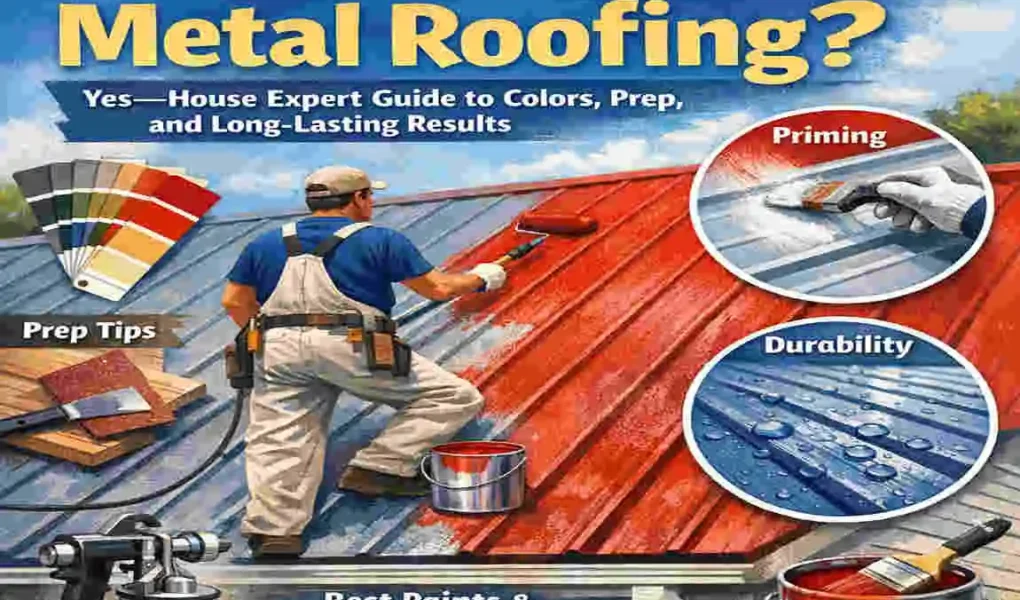
Have you recently looked up at your house and wondered, can you paint metal roofing to refresh your home’s curb appeal without paying for a full replacement? If your roof is looking a little tired, faded, or chalky, you are certainly not alone. Many homeowners face this exact dilemma. The good news? The answer is a resounding yes!
Painting a metal roof is not only possible but also a highly effective way to extend its life by 10 to 20 years. Beyond just looking great, a fresh coat of paint reduces your monthly energy costs and lets you fully customize your home’s exterior colors.
We know the common pain points all too well. Faded roofs make a home look older than it is. Rust spots create an eyesore and threaten the metal’s structural integrity. Outdated colors can clash with new siding or landscaping. But instead of shelling out $10,000 or more for a brand-new roof, painting offers massive cost savings. You can expect to spend just $2 to $5 per square foot for a professional paint job, and even less if you tackle it yourself.
Why Paint Metal Roofing?
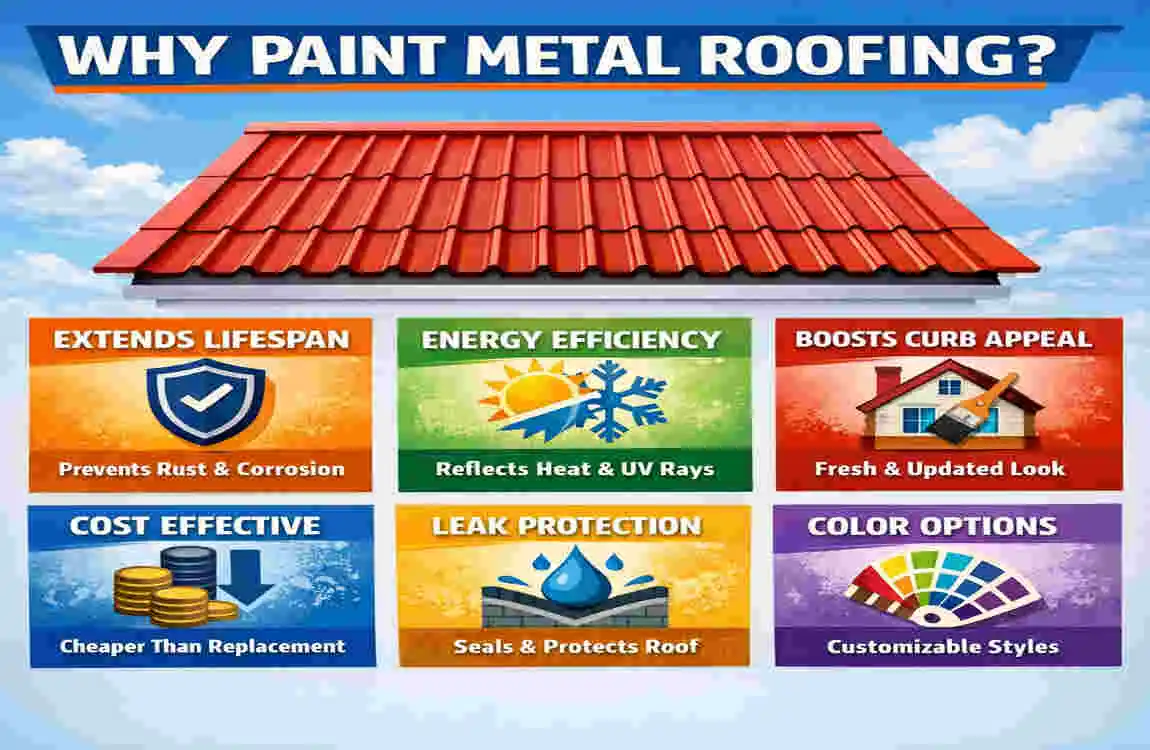
You might be wondering whether painting is truly worth the effort. Let’s break down exactly why giving your metal roof a fresh coat is one of the smartest home improvement investments you can make this year.
The Incredible Benefits Overview
Painting your metal roofing does much more than change its color. First and foremost, it protects against harsh UV rays. The sun beats down on your home every single day, causing the original finish to chalk and fade. A new coat of paint acts like sunscreen for your house.
Furthermore, premium paints seal the metal, stopping rust and weathering in their tracks. When you maintain your roof this way, you can easily boost your home’s value by 5% to 10%. Buyers love a home that looks well-cared for. Finally, specialized reflective paints bounce the sun’s heat away from your attic, leading to 15% to 20% in energy savings during those sweltering summer months.
When is the Right Time to Paint?
Timing is everything when it comes to home maintenance. The ideal time to paint your metal roof is when it reaches 10 years of age or older. By this time, the factory finish has usually begun to wear thin.
This process works exceptionally well for older galvanized steel or aluminum roofs. However, you need to exercise caution. You should avoid painting if your roof is severely rusted through, as paint cannot fix structural holes. Additionally, if your roof is relatively new, always check the manufacturer’s warranty. Painting a new roof could potentially void your coverage.
Common Myths Debunked
Let’s clear the air on a few common misunderstandings.
Myth: Roof paint peels quickly and looks terrible after a year. Fact: This only happens when people skip the preparation phase! With modern, high-quality acrylic coatings and proper cleaning, your new finish will easily last 15 years or more.
As a seasoned roofing pro will tell you: “Proper prep is 80% of success.” If you take the time to clean and prime, your paint will bond tightly to the metal, creating a beautiful, long-lasting shield.
Can You Paint Different Metal Roof Types?
Not all metal roofs are created equal. You need to know exactly what is covering your home before you grab a brush. Yes, metal roofing works with almost every style, but the approach varies depending on the material.
Galvanized Steel
Galvanized steel is incredibly common and highly durable. But can you paint it? Absolutely. However, galvanized steel has a special zinc coating that prevents rust. Paint does not stick well to raw zinc.
To get around this, you must etch the zinc coating first. You can use a mild acidic solution or a specialized etching primer. This creates a microscopic texture on the slick metal, giving your topcoat something to grip onto securely.
Aluminum & Standing Seam Roofs
Aluminum roofs and standing seam styles are highly paintable and look incredible once finished. Because aluminum doesn’t rust like steel, your primary focus is just getting the paint to stick.
For standing seam roofs, the metal panels are designed to expand and contract as the temperature changes. Because of this movement, you must use flexible elastomeric paints. These specialized paints stretch like a rubber band, ensuring your gorgeous new color doesn’t crack or peel when the metal shifts.
Corrugated vs. Smooth Panels
Whether your roof has wavy corrugated panels or sleek, smooth standing seams, both can be painted. Corrugated roofs require more attention during the priming phase. Because the ridges catch more wind and debris, you might need two coats of primer to ensure absolute protection.
Here is a quick breakdown to help you understand your specific roof:
Roof Type Paintable? Key Prep Tip Durability Boost
Galvanized Steel Yes Acid etch the zinc coating first +15 years
Aluminum Yes Wash thoroughly with a mild cleaner +10 to 20 years
Standing Seam Yes Use a flexible elastomeric sealant/paint Massive energy savings
Essential Tools & Materials
Before you climb up that ladder, you need to gather your gear. Having the right tools on hand will make the job faster, safer, and vastly more professional.
Here are the absolute must-haves for your project:
- A powerful pressure washer: To blast away years of dirt and loose paint.
- Stiff wire brushes: For scrubbing away stubborn rust spots.
- Safety respirators: To protect your lungs during cleaning and spraying.
- High-quality primers: Make sure they are explicitly compatible with your metal type.
- Premium top coats: Look for 100% acrylic or silicone-based elastomeric paints.
If you are trying to budget for this project, use this handy table to estimate your material costs:
Item Cost Estimate Purpose
Elastomeric Paint $50 per gallon Provides a flexible, weatherproof topcoat
Metal Primer $30 per gallon Creates an adhesion base for the paint
Safety Gear $50 total Personal protective equipment (PPE) essentials
Step-by-Step Metal Roof Paint Prep Guide
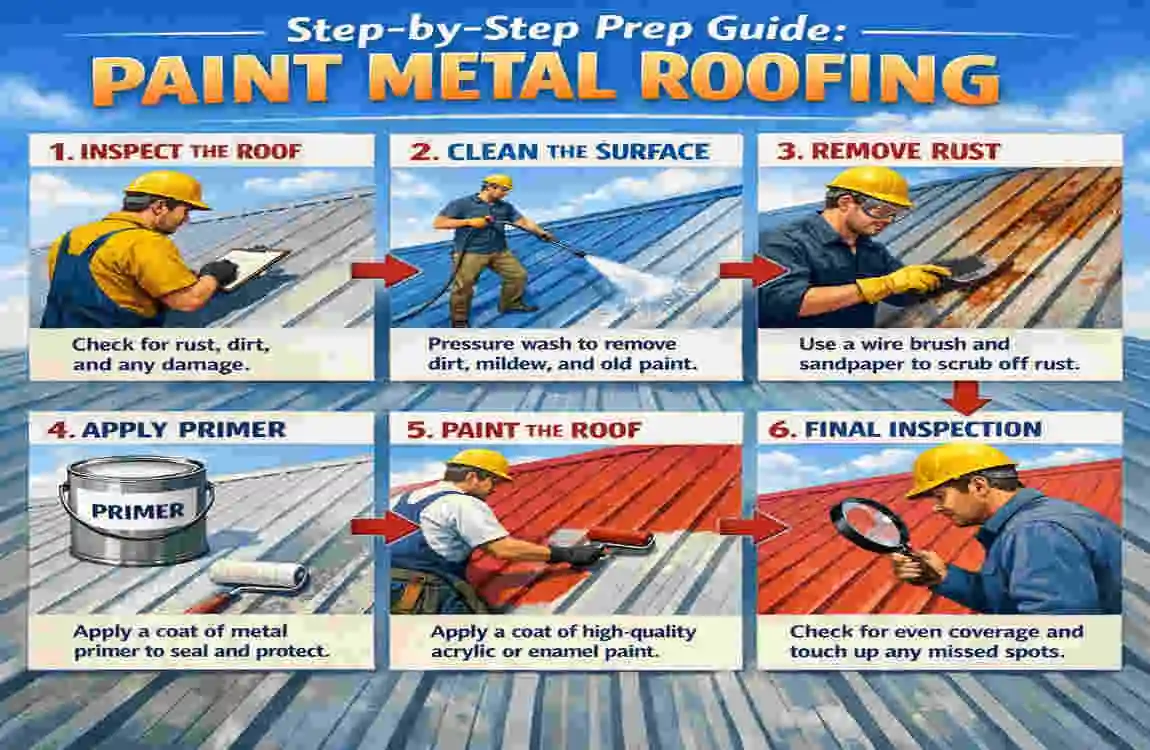
We cannot stress this enough: your paint job will only be as good as your preparation. If you want a factory-smooth finish that lasts for decades, you must follow these metal roof paint prep steps religiously.
Safety First and Foremost
Working on a roof is dangerous. Before you do anything, ensure your ladders are securely fastened to flat, even ground. You should only work in mild weather. The sweet spot is between 50°F and 85°F. If it is too hot, the metal can literally burn your skin, and the paint will dry before it levels out. If it is raining or windy, stay on the ground. Always wear a safety harness tied off to a secure anchor point.
The Cleaning Process
You must remove every speck of dirt, mildew, and flaking paint.
- Inspect for damage: Walk the roof carefully and look for loose screws, missing fasteners, or deep rust holes. Fix these mechanical issues before you even think about paint.
- Pressure wash: Use a pressure washer set to around 1500 PSI. Work your way from the roof peak down to the gutters. This pushes the dirt off the roof instead of forcing water up under your panels.
- Remove rust: If you spot orange or brown rust patches, scrub them vigorously with a wire brush. You can treat these spots with a TSP (Trisodium Phosphate) cleaner or a strong white vinegar solution to neutralize the oxidation. Rinse thoroughly with clean water afterward.
Priming for Success
Once the roof is bone dry, it is time to prime. If you have a galvanized roof, apply your specialized galvanized primer.
You want to apply one to two thin coats, rather than one thick, drippy coat. Thin coats dry harder and bond better. Allow the primer to dry for a full 24 hours.
Pro tip: Always test your primer’s adhesion on a small, hidden area of the roof. Paint a small square, let it dry, and press a piece of duct tape firmly over it. Rip the tape off quickly. If the primer stays on the roof, you are ready to proceed!
Choosing the Best Paint for Metal Roofing & Colors
Now comes the fun part! Choosing your products and picking out the perfect shade will completely redefine how your home looks from the street.
Top Paints for 2026
When searching for the best paint for metal roofing, stick with trusted, heavy-duty brands. You are not buying standard interior wall paint here; you need industrial-grade protection.
- Rust-Oleum Elastomeric: This is an incredible option for ultimate UV and rust resistance. It stretches with your roof and seals hairline cracks beautifully.
- Sherwin-Williams Metal Roof Paint: Known for being low-VOC (better for the environment and your lungs), this paint often comes with a robust 15-year warranty when applied correctly.
- Valspar Siding and Roof Finish: A fantastic choice if your main concern is fading. Their formulas lock in color pigments, keeping your roof looking vibrant for years.
The Ultimate Color Guide
Your choice of metal roofing colors impacts more than just aesthetics; it impacts your wallet.
- Light Colors: Shades like brilliant white, soft beige, or light gray create what we call “cool roofs.” They reflect sunlight, which can reduce your summer air conditioning bills by 10% to 15%.
- Dark Colors: Deep charcoal, forest green, or matte black look incredibly modern and sophisticated. However, they absorb heat. A dark roof can run up to 20°F hotter than a light roof in the midday sun.
Energy Star strongly recommends high-reflectance whites for maximum energy efficiency, especially in warmer climates. For 2026, we are seeing a massive trend toward warm, earthy neutrals. Think soft bronzes, clay tones, and warm slate grays that blend seamlessly with natural surroundings.
How to Paint Metal Roof: Application Techniques
You have prepped the surface and chosen your perfect color. Now, let’s talk about exactly how to paint metal roof surfaces like a seasoned professional.
DIY vs. Professional Help
Should you tackle this yourself? If you have a single-story home with a low, easily walkable pitch, a DIY approach is very feasible and saves you a ton of money.
However, if you have a steep pitch, multiple stories, or complex roof valleys, we highly recommend hiring pros. Professional crews usually charge between $1 and $3 per square foot for labor. They bring commercial airless sprayers, advanced safety scaffolding, and years of muscle memory that guarantee a flawless finish.
Step-by-Step Application
If you are doing it yourself, follow these rules:
- Choose your method: You can use a thick nap roller and a brush, or rent an airless paint sprayer. Spraying is much faster and leaves no brush marks, but you must be incredibly careful about wind carrying the paint onto your car or your neighbor’s house!
- Apply two coats: aim for a total thickness of 10 to 12 mils dry. Apply the first coat, let it dry completely according to the can’s instructions, and then apply the second coat.
- Overlap your seams: Always maintain a “wet edge.” This means you overlap your current paint stroke with the previous one before it dries. This prevents visible lines. Be careful to spread the paint evenly to avoid thick puddles or pooling in the ridges.
- Allow time to cure: Your roof needs a solid 48 hours of dry, sunny weather to cure before the next rainstorm.
Common errors to avoid: Do not rush the drying time! If you apply the topcoat before the primer is dry, or the second coat before the first is ready, the trapped moisture will cause the paint to bubble up and peel off in sheets. Patience is your best friend here.
Maintenance for Long-Lasting Results
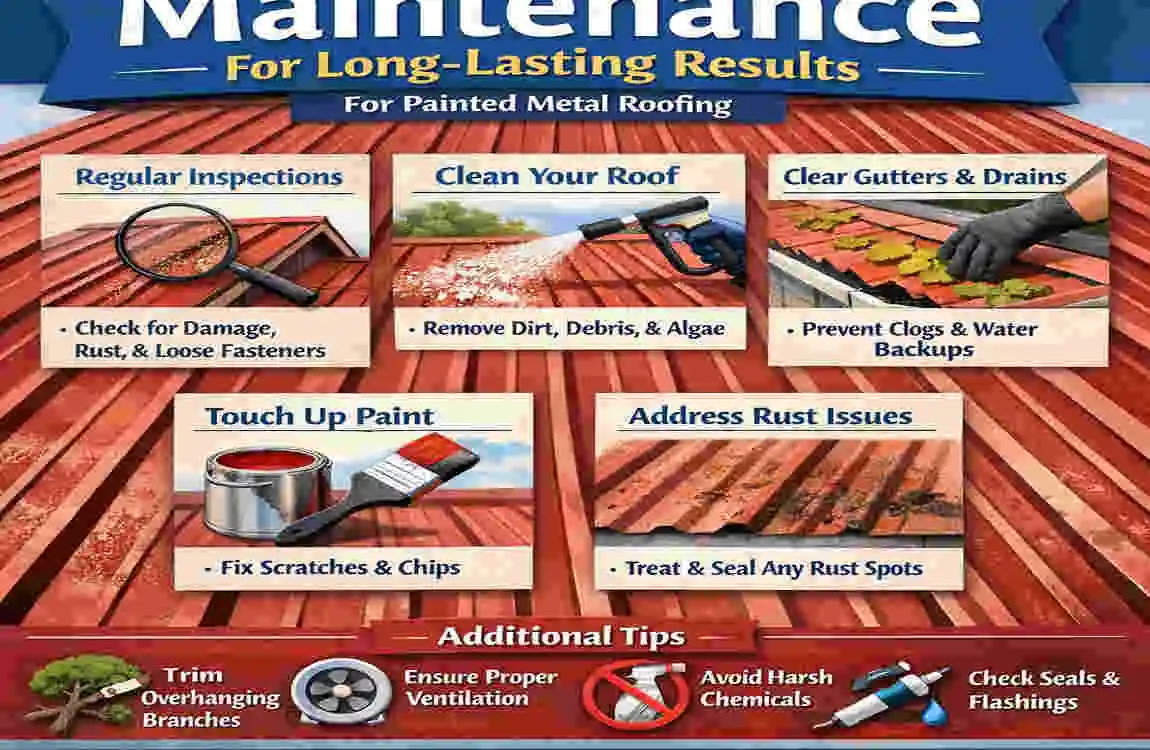
You worked hard to get that perfect finish. Now, you need to protect your investment. Maintaining a painted metal roof is surprisingly simple, but it requires consistency.
Make it a habit to perform annual visual inspections. Grab a pair of binoculars and scan your roof from the ground every spring. Look for any scratches caused by falling tree branches or wind-blown debris.
If you spot a tiny fleck of rust starting to form, don’t panic. Sand that tiny spot, dab on a little primer, and touch it up with your leftover topcoat. Catching these spots early stops them from spreading.
If you keep up with these minor touch-ups, you can easily expect a lifespan of 10 to 20 years from your paint job. To stretch that timeline even further, consider having a clear, protective acrylic sealant sprayed over the roof every 5 to 7 years. This renews the UV protection and keeps the color looking brand new.
Cost Breakdown & ROI
Let’s talk numbers. How much is this going to impact your bank account, and what is your return on investment (ROI)?
Total Costs
If you choose the DIY route, your main expenses are just the paint, primer, and rental equipment. For a typical 1,000-square-foot roof, you can expect to spend between $500 and $1,500.
If you hire a professional service, they handle the labor, insurance, and equipment. For that same 1,000-square-foot roof, the cost will range from $2,000 to $5,000, depending on your location and the roof’s slope complexity.
The Return on Investment
Painting your roof offers a fantastic ROI. If you plan to sell your home, a freshly painted, rust-free roof vastly improves curb appeal. Real estate experts estimate you can recoup 60% to 80% of your painting costs in your final home sale price.
ScenarioCost per sq ftLifespan Gain
DIY Paint Job $0.50 to $1.50 10 to 15 years
Professional Service $2.00 to $5.00 15 to 20 years
FAQs: Can You Paint Metal Roofing?
We hear the same questions from homeowners. Here are the most common inquiries regarding painting a metal roof, answered.
Can you paint metal roofing in any weather?
No, you absolutely cannot. The ideal weather is between 50°F and 90°F with very low humidity. If it is too humid, the paint won’t dry. If it is too cold, the paint won’t bind to the metal. Always check the forecast for a clear 3-day window.
Does paint void metal roof warranties?
Sometimes, yes. If your roof is less than 10 years old, altering the factory finish can void your protection against rust and structural failure. Always read your warranty paperwork carefully and use manufacturer-approved products if required.
How long does metal roof paint last?
When you use high-quality acrylic or elastomeric paint and prep the surface meticulously, your new paint job will last 10 to 20 years before needing another full recoat.
Can I use regular exterior house paint on my metal roof?
Please do not do this! Standard exterior house paint is made for wood or vinyl siding. It is not formulated to handle the extreme heat and rapid expansion of roofing metal. It will crack and peel away within a year. Always use specific metal roofing paint.
Do I need to strip the old paint completely off?
Usually, no. You only need to remove the loose, flaking paint. If the old paint is still firmly attached to the metal, you can clean it, scuff it lightly to help the new paint stick, and paint right over it.
Can I change a dark brown roof to a white roof?
Yes, you can! However, making a drastic color jump from very dark to very light will require a high-hiding primer and likely two solid topcoats to prevent the dark brown from bleeding through.
Is a spray gun better than a roller?
A spray gun provides a smoother, factory-like finish and is much faster. However, a roller pushes the paint deeper into the metal’s microscopic pores. Many pros will actually spray the paint onto the roof and then immediately “back-roll” it with a roller to get the best of both worlds.