Ever wondered what a mansard roof is and why it has been a hallmark of architectural elegance for centuries? This unique roof style, with its distinctive double slopes and timeless appeal, has transformed ordinary homes into architectural masterpieces. Whether you’re a homeowner, an architecture enthusiast, or someone exploring roofing options, understanding the mansard roof can open up a world of possibilities.
A mansard roof is a four-sided design with two slopes on each side. The lower slope is steep and almost vertical, while the upper slope is much shallower. This design not only adds aesthetic charm but also maximizes usable attic space, making it a practical choice for modern homes. From its origins in 16th-century France to its resurgence in contemporary architecture, the mansard roof has a fascinating story to tell.
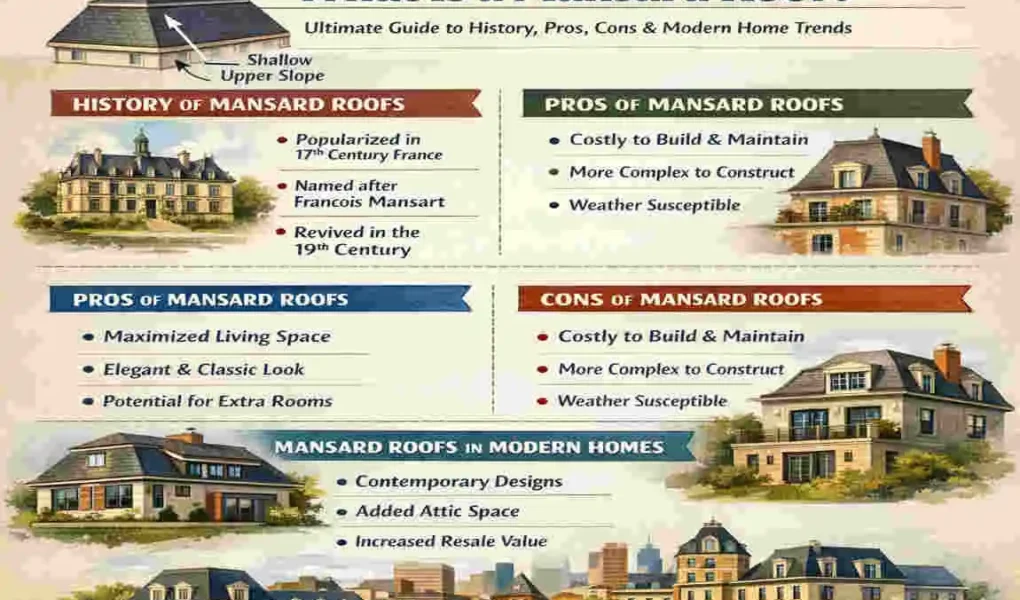
| Aspect | Pros | Cons |
|---|---|---|
| Space | Adds full attic floor or bonus rooms without height increase, aiding zoning. | Steep pitches complicate access for repairs. |
| Aesthetics | Boosts curb appeal with dormers, balconies, and timeless elegance. | Complex framing raises installation costs significantly. |
| Maintenance | Supports natural light via dormers. | Flat upper slope risks leaks, ice, or pooling in wet/snowy climates. |
What Is a Mansard Roof?
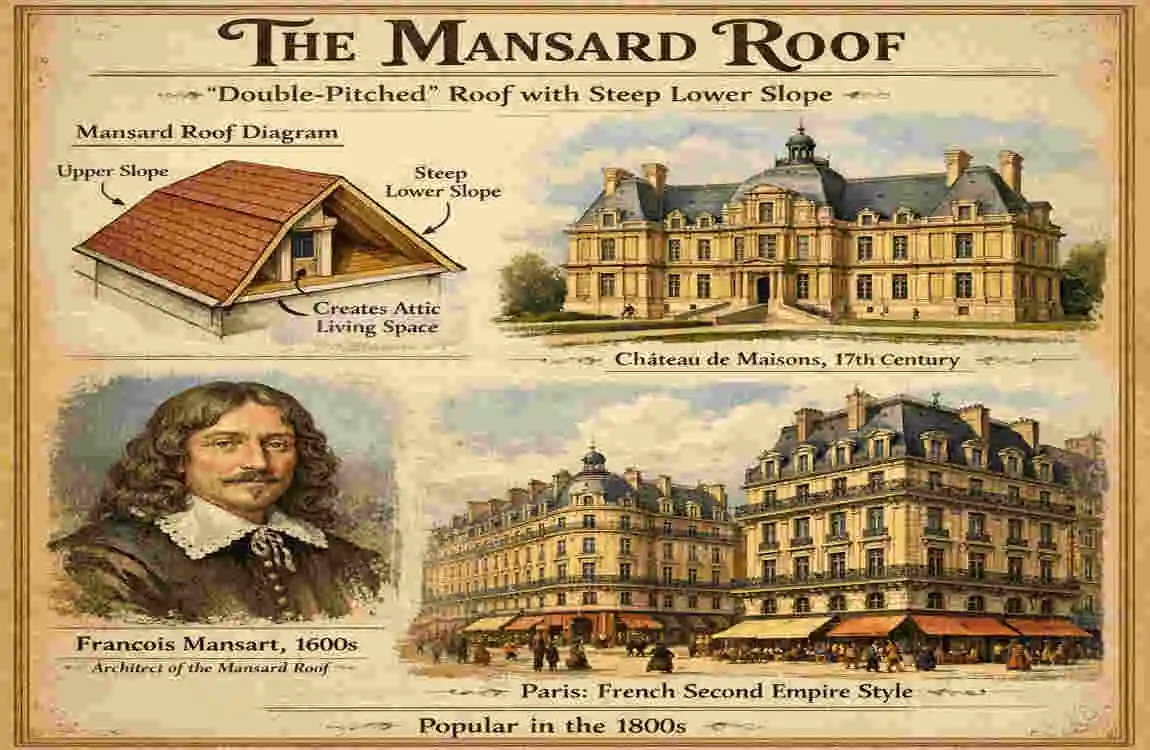
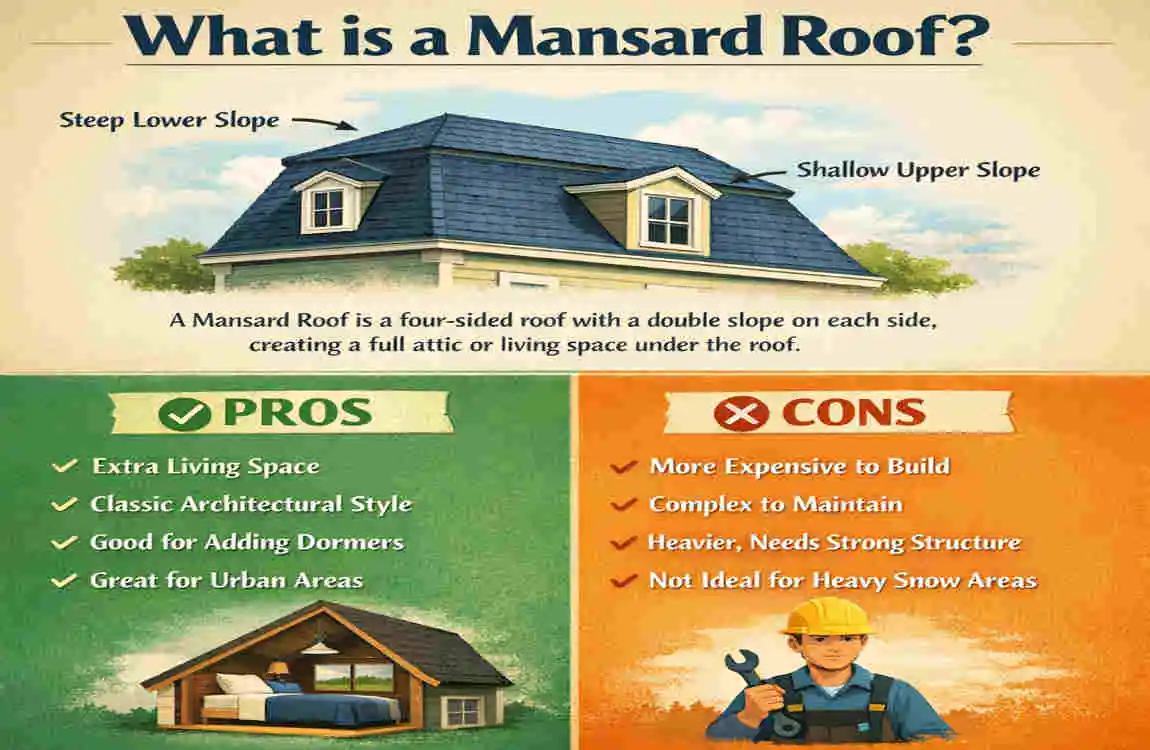
A mansard roof, also known as a French roof, is a four-sided roof characterized by its dual slopes. The lower slope is steep and often includes dormer windows, while the upper slope is much shallower. This design creates a spacious attic or additional living area, making it a popular choice for both historical and modern homes.
Key Features of a Mansard Roof:
- Four-sided structure: Each side has two slopes.
- Steep lower slope: Almost vertical, often featuring dormers for natural light.
- Shallow upper slope: Adds height without making the structure appear bulky.
- Materials: Traditionally slate, but modern versions use asphalt shingles, metal, or eco-friendly materials.
This roof style is not just about aesthetics; it’s a practical solution for maximizing space while maintaining a sophisticated look.
The History of Mansard Roofs
Origins in France
The mansard roof traces its roots back to 16th-century France, with one of the earliest examples being Pierre Lescot’s design for the Louver in the 1550s. However, it was François Mansart, a 17th-century French architect, who popularized this style. Mansart’s designs blended Baroque grandeur with practicality, making the mansard roof a symbol of aristocratic elegance.
During the Second Empire period (1852-1870) under Napoleon III, the mansard roof became a defining feature of Parisian architecture. It was not just a stylistic choice but also a clever way to bypass height restrictions, as the upper slope was often considered an attic rather than an additional floor.
Global Spread
The mansard roof’s popularity spread beyond France, particularly during the Gilded Age in the United States. It became a hallmark of opulent mansions and public buildings, symbolizing wealth and sophistication. Today, you can find mansard roofs in historic districts, luxury homes, and even commercial buildings worldwide.
Regional Adoption in Pakistan
In regions like Lahore, Pakistan, colonial influences introduced the mansard roof to local architecture. Modern adaptations have made it a popular choice for luxury homes, where space efficiency and aesthetic appeal are paramount. The steep slopes are also well-suited to the region’s climate, with modifications for better drainage during monsoons.
Anatomy and Design of Mansard Roofs
What Makes a Mansard Roof Unique?
The mansard roof stands out for its dual-slope design. The steep lower slope creates ample space for an attic or additional rooms. In contrast, the shallow upper slope adds height without overwhelming the structure. Dormer windows are often integrated into the lower slope, providing natural light and ventilation.
Common Materials:
- Slate: Traditional and durable, though expensive.
- Asphalt shingles: Affordable and versatile.
- Metal: Modern and eco-friendly, often used in contemporary designs.
Variations of Mansard Roofs
Mansard roofs come in several variations, each offering a unique aesthetic:
Type Description Best For
Straight Vertical lower slope Urban homes
Convex Outward curve Historic charm
Concave Inward curve Modern minimalism
S-Shape Double curve Dramatic appeal
These variations allow homeowners to customize the roof to suit their architectural preferences and functional needs.
Pros and Cons of Mansard Roofs
Key Advantages
- Maximized Space: The steep lower slope creates a spacious attic, perfect for extra bedrooms, offices, or rental units.
- Elegant Aesthetic: The mansard roof adds a touch of historic charm and sophistication to any building.
- Natural Light and Ventilation: Dormer windows enhance the interior space with light and airflow.
- Zoning-Friendly: In urban areas, the design allows for additional height without violating building codes.
Major Drawbacks
- High Cost: The complex framing and materials make mansard roofs more expensive than simpler designs.
- Maintenance Challenges: The steep slopes and dormers require regular upkeep to prevent leaks.
- Weather Vulnerability: In regions with heavy snow or rain, the shallow upper slope can lead to water pooling or ice buildup.
- Complex Installation: Requires skilled labor and precise engineering.
Comparison Table: Mansard vs. Other Roofs
Feature Mansard Roof, Gable Roof, Hip Roof
Space Added High (attic floor) Medium Low
Cost High Low Medium
Aesthetic Elegant/historic , simple, balanced
Maintenance Challenging Easy Moderate
Modern Mansard Roof Trends
2026 Revival
In 2026, the mansard roof is experiencing a revival, particularly in luxury homes and sustainable architecture. Modern materials, such as metal and asphalt shingles with solar panel integration, are making this historic design more eco-friendly and efficient.
Celebrity Influence and Case Studies
Inspired by French chateaux, mansard roofs are now featured in high-end hotels, restaurants, and even fast-food chains as a branding element. In the U.S., they remain a popular choice for historic renovations and upscale neighborhoods.
Applications in Lahore
In Lahore, mansard roofs are being adapted to the local climate with features such as ventilated dormers and enhanced drainage systems. They are particularly popular in urban plots where zoning laws favor vertical expansion.
Installation Guide
Installing a mansard roof requires careful planning and skilled labor. Here’s a step-by-step overview:
- Site Assessment: Evaluate the building’s structure and local zoning laws.
- Framing: Construct the steep lower slopes and shallow upper slopes with precision.
- Flashing and Waterproofing: Ensure all joints and dormers are sealed to prevent leaks.
- Finishing Touches: Add dormer windows, gutters, and decorative elements.
Pro Tip: Always hire certified roofers and consult local building codes to ensure compliance.
Cost and Maintenance
Pricing Breakdown
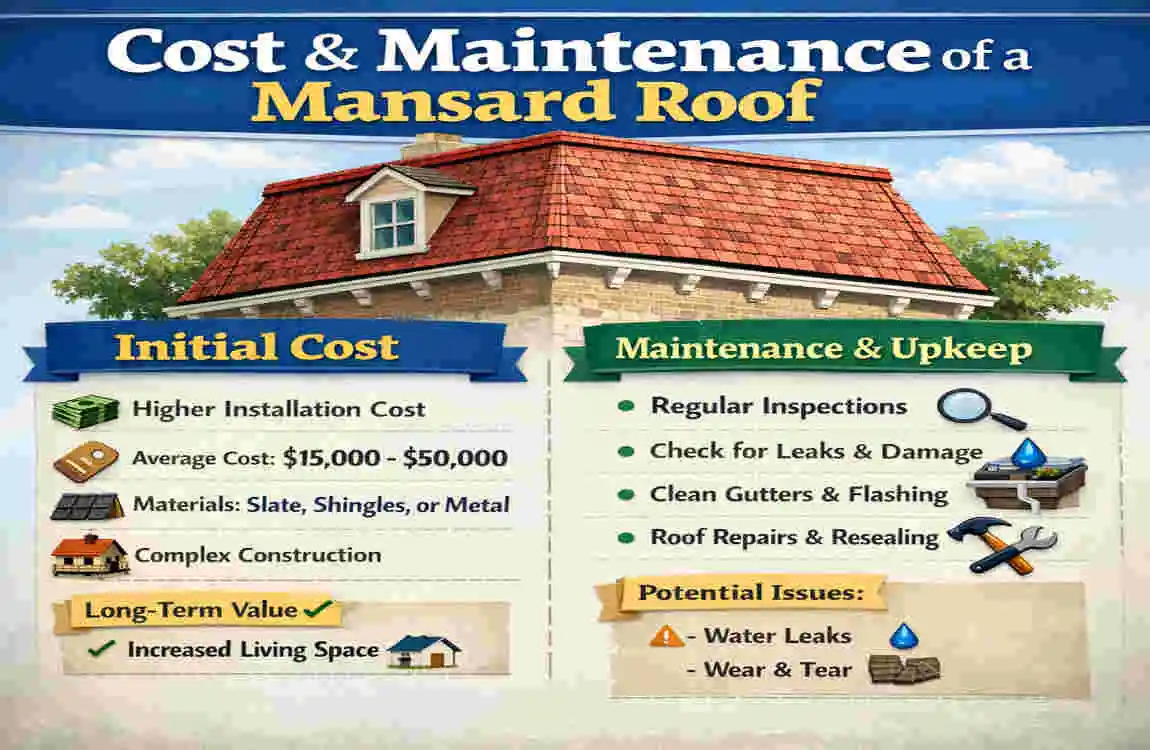
The cost of a mansard roof ranges from $20,000 to $50,000, depending on factors like size, materials, and labor. While the initial investment is high, the added space and aesthetic value often justify the expense.
Maintenance Tips
- Schedule annual inspections to check for leaks or damage.
- Keep gutters and dormers clean to prevent water buildup.
- Avoid DIY repairs on steep slopes; hire professionals for safety.
FAQ
What is a mansard roof?
A mansard roof is a four-sided roof with two slopes on each side, maximizing attic space and adding aesthetic appeal.
Is it suitable for Lahore?
Yes, with modifications for better drainage and ventilation, it’s an excellent choice for Lahore’s climate.
How much does it cost to replace a mansard roof?
Replacement costs range from $15 to $30 per square foot, depending on materials and labor.