A postmodern-style home is all about creativity, personality, and visual interest. It takes the clean idea of modern design and adds more playfulness, colour, shape, and detail.
This style remains popular because it feels fresh and expressive. If you want a home that stands out rather than blends in, postmodern design gives you that freedom.
Unlike strict modern homes, a postmodern style home welcomes bold forms, mixed materials, and unexpected touches. That makes it a great choice for homeowners who want something unique and memorable.
Understanding Post Modern Architecture
Origins of Post Modern Design
Postmodern design emerged as a response to modernism. Modern homes often focus on simplicity, straight lines, and minimal decoration. Postmodern style did the opposite by bringing back character, decoration, and visual variety.
Over time, architects began using this style to make homes feel more expressive and less uniform. The result was a design approach that values imagination as much as function.
Main Features of a Postmodern Style Home
A postmodern style home usually includes a mix of the following:
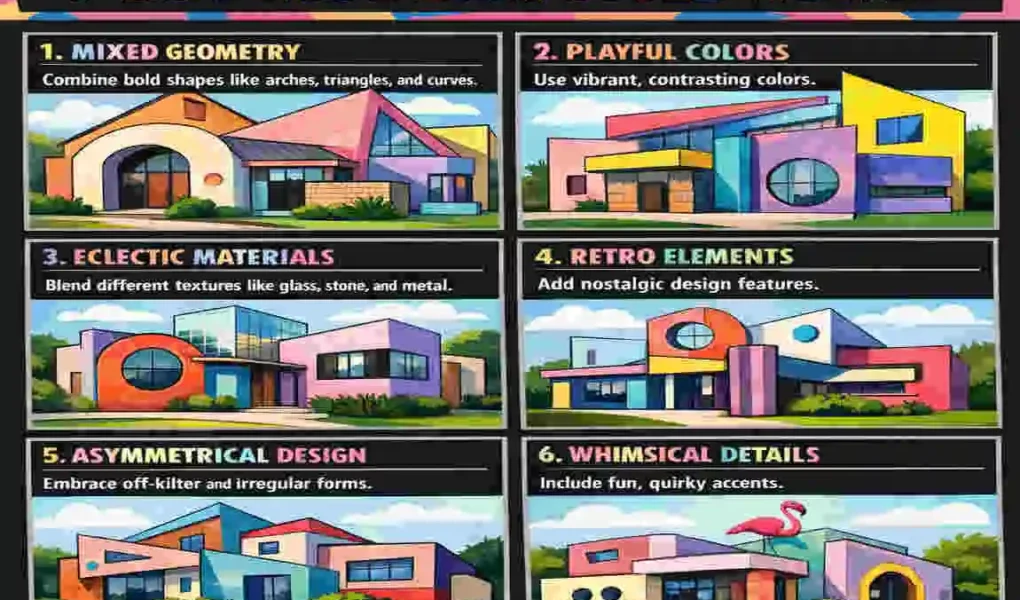
- Bold geometric forms
- Asymmetrical layouts
- Mixed materials and textures
- Creative colour palettes
These features help the home feel lively and artistic. Instead of looking plain, the design creates interest from every angle.
Exterior Design Ideas for a Post-Modern Style Home
Use Unique Shapes and Forms
The outside of the home should feel memorable. Curves, sharp angles, and unusual rooflines all work well in postmodern design.
You do not need to make every part of the house dramatic. Even one or two unusual forms can change the whole look and make the home feel special.
Mix Different Materials
One of the strongest features of a postmodern-style home is the use of mixed materials. Combining surfaces adds contrast and depth.
Common choices include:
- Glass
- Concrete
- Brick
- Metal accents
- Wood details
When these materials are balanced well, they create a home that feels layered and creative.
Choose Eye-Catching Colours
Colour plays a big role in this style. Instead of using only safe or neutral shades, postmodern homes often feature bright, bold, or contrasting colours.
You can use colour on walls, trim, doors, or exterior features. The goal is not to overwhelm the eye, but to add energy and personality.
Interior Design Elements
Open and Functional Spaces
Inside a postmodern-style home, the layout should feel open and useful. Rooms can connect in flexible ways, which makes the space feel easier to live in.
This style works best when comfort and creativity come together. You want the home to look interesting, but it should still support everyday life.
Statement Furniture
Furniture in this style can be artistic and bold. Sculptural chairs, unusual tables, and standout sofas all fit well.
Instead of filling the room with too many items, choose pieces that feel intentional. One strong statement piece can do more than several ordinary ones.
Creative Lighting
Lighting is another chance to make a design statement. Pendant lights, shaped lamps, and architectural fixtures help bring the room to life.
Good lighting does more than brighten a space. It also adds mood and highlights the design’s best parts.
Bold Patterns and Textures
A postmodern-style home often uses patterns and textures to keep the space from feeling flat. Geometric prints, shiny finishes, soft fabrics, and rough surfaces can all work together.
The key is balance. If one element is very bold, keep the others simpler so the room still feels easy to enjoy.
Landscaping for a Post-Modern Style Home
The outdoor space should match the house’s energy. A plain yard may feel disconnected from a bold home design.
To create a strong look, consider:
- Sculptural gardens
- Minimalist outdoor furniture
- Water features
- Modern pathways
Clean planting shapes and simple outdoor furniture can help the home’s architecture stand out. A water feature can also add movement and calm simultaneously.
Common Mistakes to Avoid
Designing a postmodern-style home is exciting, but it is easy to overdo it. A few common mistakes can weaken the overall look.
- Overcrowding the space
- Too many objects, colours, or shapes can make the home feel busy rather than stylish.
- Ignoring balance and proportion
- Bold design still needs structure. Every feature should feel connected to the rest of the home.
- Using too many competing colours
- A few strong colours work better than a large mix of random shades.
- Neglecting functionality
- A home should look good, but it also needs to work well for daily living.
Benefits of Choosing a Postmodern Style Home
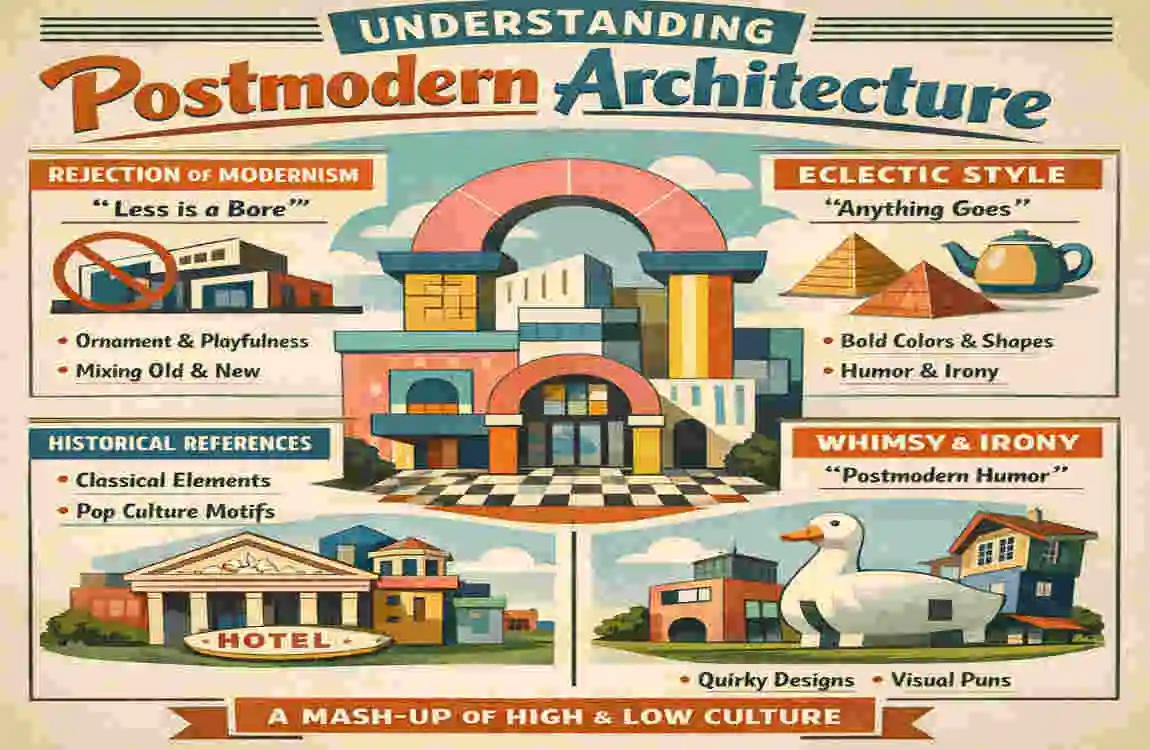
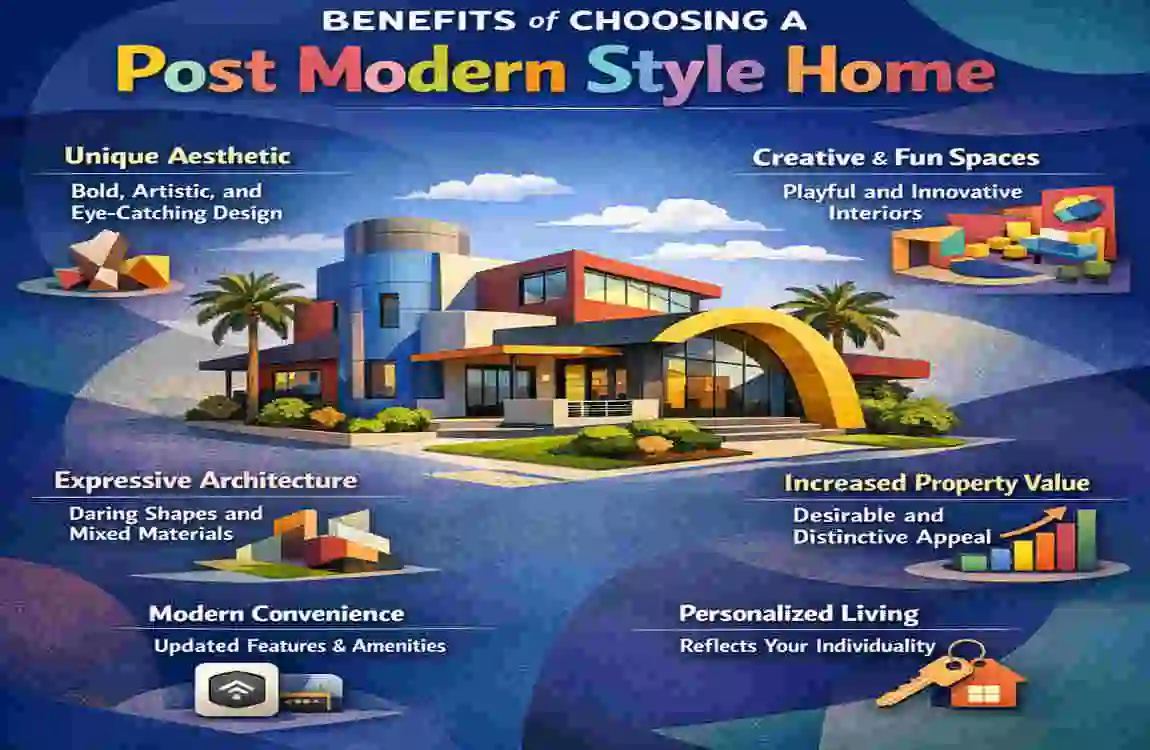
A postmodern-style home offers more than visual appeal. It also gives you creative freedom.
Here are some of the biggest benefits:
- Unique curb appeal
- Personalised living spaces
- Strong architectural identity
- Room for creative expression
If you want a home that reflects your personality, this style gives you many ways to make it happen.
Frequently Asked Questions
What is a postmodern style home?
A postmodern-style home is an architectural design that combines creativity, bold shapes, mixed materials, and decorative elements to create a unique appearance.
What colours work best in a postmodern-style home?
Bold colours, contrasting tones, and unexpected colour combinations are commonly used in postmodern design.
Is a postmodern-style home expensive to build?
Costs vary depending on customisation, materials, and architectural complexity, but unique features can increase construction expenses.
How is postmodern architecture different from modern architecture?
Modern architecture focuses on simplicity and minimalism, while postmodern architecture embraces ornamentation, variety, and expressive design.
Can a small house be designed in a postmodern style?
Yes. Even small homes can incorporate postmodern elements such as geometric forms, bold colours, and creative interior layouts.
What materials are commonly used in a postmodern-style home?
Glass, concrete, brick, steel, wood, and mixed-texture finishes are frequently used to create visual interest and contrast.
| Aspect | Key Design Elements |
|---|---|
| Core Philosophy | Less rigid than modernism; embraces complexity, contradiction, and playful expression |
| Colors | Bold, vivid colors (blues, greens, reds, neon) paired with geometric patterns; pops of color against neutral backdrops |
| Shapes & Forms | Sculptural/abstract forms, asymmetry, unconventional angles, playful symmetry, curved/funky furniture shapes |
| Materials | Mix of plastic, laminates, concrete, marble, glass, metal, brass, velvet; wood still preferred; recycled materials |
| Historical Elements | Historical mashups: traditional motifs (arches, columns) reinterpreted with unexpected finishes |
| Furniture | Form over function; ergonomic yet playful; bold statement pieces; Memphis Group style; vintage + contemporary mix |
| Decor & Art | Pop art motifs, posters, whimsical themes, graphic tiles, neon signs, sculptural décor, oversized art |
| Walls | Vibrant wallpaper or paint (accent or full); geometric shelving; playful installations; colorful tiles |
| Textures | Layered textures; glossy lacquer + raw concrete; plush velvet + industrial metal; eclectic contrasts |
| Lighting | Quirky lighting, sculptural lamps, neon accents, unconventional fixtures |
| Key Rooms | Kitchen: vintage neon cabinetry, quirky lighting, mixed bar stools Bedroom: bold statement furniture Living Room: funky furniture, neon accent chairs Bathroom: graphic tiles, mosaic sink, unusual mirror frames |
| Design Rules | No exact rules—creative leeway to mix styles; thrives on wit, humor, surprise; maximalism |