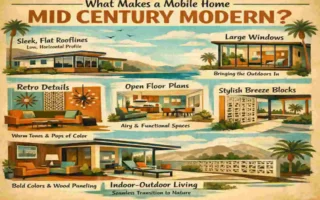
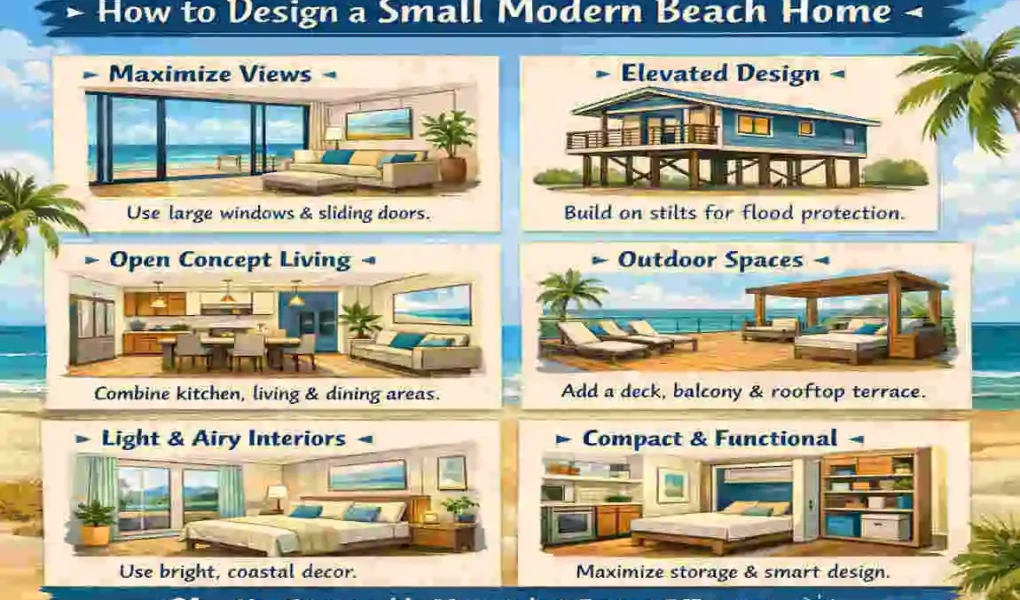
The best part is that modern design and beach-inspired style work very well together. Modern homes bring clean lines, open layouts, and simple forms. Beach style brings softness, warmth, and a relaxed feeling. When you combine them correctly, you get a home that feels fresh, bright, and timeless.
What Is a Small Modern Beach Home?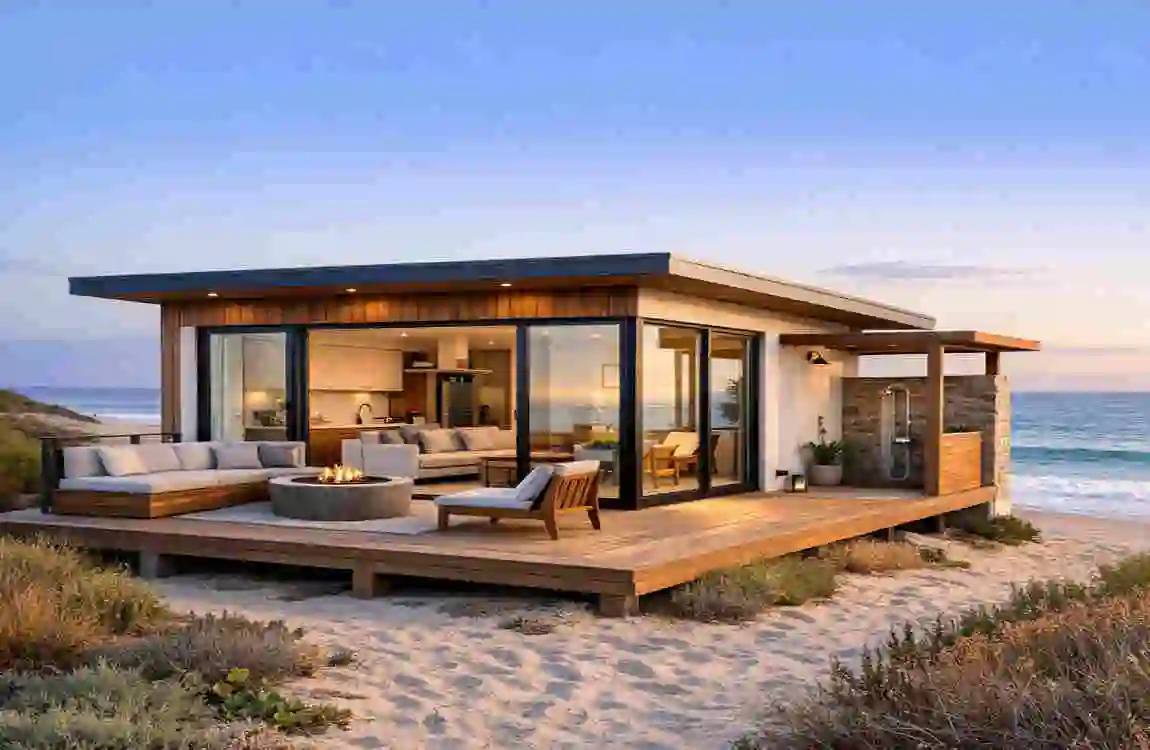
A small modern beach home is a compact coastal home that blends modern architecture with a relaxed seaside feeling. It usually focuses on clean design, open spaces, and natural light. Instead of being filled with heavy detail, it feels simple, airy, and easy to live in.
Defining Modern Coastal Architecture
Modern coastal architecture mixes the best parts of contemporary design with beach-friendly comfort. That means straight lines, open layouts, and a strong connection to the outside. You will often see wide windows, simple roof shapes, and spaces that flow naturally from room to room.
The idea is to make the home feel open and calm, even with limited square footage. In a compact beach home, every design choice matters. You do not want clutter or dark corners. You want fresh air, sunlight, and a layout that makes the space feel bigger than it is.
A modern coastal home also avoids looking too themed. It does not rely on anchors, rope trim, or overly obvious beach decor. Instead, it hints at the coast through texture, color, light, and materials. That gives the home a more refined and lasting style.
Key Characteristics
A few features keep popping up in a small, modern beach home.
Large windows are one of the most important features. They bring in natural light and frame outdoor views. When you can see the ocean, dunes, or even just a breezy garden, the whole home feels more open.
Natural light plays a huge role as well. Sunlight makes small spaces feel brighter and less boxed in. It also helps create that relaxed, cheerful beach feel many people want.
Neutral color palettes are another common feature. White, sand, soft gray, pale blue, and warm beige all work well. These colors keep the space feeling light and peaceful.
Functional floor plans are just as important as style. In a small home, you cannot waste square footage. Every corner should serve a purpose, whether for storage, seating, or a flexible work area.
Why Small Beach Homes Are Trending
Small beach homes are becoming more popular for several good reasons.
First, they are often more affordable than larger coastal properties. That matters a lot in beach areas where land and construction costs can be high.
Second, they are easier to maintain. A smaller home means less cleaning, fewer repairs, and less time spent caring for the space. That leaves more time to enjoy the beach lifestyle itself.
Third, many buyers are thinking more about sustainability. A smaller home often uses fewer materials, less energy, and less water. That makes it a practical choice for people who want a lower-impact lifestyle.
A compact home can still feel rich and inviting. In fact, many people find that a smaller layout encourages better design decisions and a more peaceful daily routine.
Planning the Perfect Small Modern Beach Home
Before you start choosing furniture or paint colors, you need a strong plan. Good planning helps you avoid expensive mistakes and makes the whole process smoother. When designing a small modern beach home, the location, budget, and lifestyle must work together.
Choose the Right Location
Your location shapes almost everything about the home. A waterfront lot and a home near the beach are not the same thing. Each one brings different opportunities and challenges.
A waterfront property gives you direct access to the view and the atmosphere of coastal living. But it also usually comes with stricter rules, higher insurance costs, and more weather exposure. You may need extra protection from wind, salt air, and flooding.
A near-beach property may be easier to build on and maintain. It can still give you the coastal lifestyle without some of the heavier risks that come with being right on the water.
You also need to understand local building regulations. Coastal areas often have special rules about height, structure, setbacks, storm protection, and materials. These rules exist for a reason, so it is important to know them early.
Do not ignore flood zone considerations either. A home in a flood-prone area may need raised foundations, special drainage, or stronger materials. Planning for that from the beginning is much smarter than trying to fix it later.
Set a Realistic Budget
A beach home budget should include more than just construction. Many people focus on the house shell and forget the rest.
Here is a simple way to think about the main cost areas:
Budget AreaWhat It IncludesWhy It Matters
Land Costs: Property purchase, site prep, permits. Coastal land can be expensive and may require additional preparation.
Construction Expenses Foundation, framing, roofing, siding, labor Beach homes often need durable, weather-ready materials
Interior Furnishings Furniture, lighting, window treatments, decor A small home still needs smart, comfortable pieces
Prioritize Lifestyle Needs
A home should fit the way you actually live. That sounds simple, but people often forget it during the design stage.
Ask yourself whether this is a vacation home or a full-time residence. A vacation home can be more relaxed in its layout because you may only stay there seasonally. A full-time home needs more storage, more durable materials, and better long-term comfort.
You should also think about family size. A couple, a small family, and a home that hosts frequent guests all need different layouts. If you love entertaining, you may want a larger common area and more flexible sleeping spaces.
It is also smart to think about future expansion plans. Even if you are building small now, you may want to add a room, deck, or storage area later. Planning for possible growth helps the home stay useful over time.
A well-planned small home should feel tailored to your daily life, not squeezed into a generic template.
Designing an Efficient Floor plan
The floor plan is the heart of any small modern beach home. When space is limited, the layout has to do more work. It must feel open, support daily routines, and still leave room for the relaxed rhythm of coastal living.
Embrace Open-Concept Living
Open-concept living is one of the most effective ways to make a small home feel larger. By combining the kitchen, dining, and living areas into a single shared space, you remove visual barriers and improve the flow.
This does not mean the home has to feel like one giant empty room. You can still define areas with rugs, lighting, furniture placement, or ceiling details. The point is to keep movement easy and sightlines open.
Fewer interior walls also allow more natural light to spread through the home. That is a huge benefit in a small beach house, where light is one of the most powerful design tools.
Open layouts also make social time easier. If you are cooking, relaxing, or entertaining, you can stay connected with everyone in the space.
Maximize Every Square Foot
In a small home, you cannot afford wasted space. That means every square foot should serve a purpose.
One smart approach is to create multi-purpose rooms. A guest room can also be a home office. A window bench can double as storage. A hallway nook can hold a small desk or reading chair.
Furniture should also be chosen carefully. Look for pieces that are scaled to the room. A huge sofa might overwhelm the living area, while a slimmer sectional or two smaller chairs may feel more balanced.
Flexible furniture layouts are another smart move. If the home needs to serve different functions throughout the year, choose pieces that can be moved easily. Nesting tables, ottomans, fold-out desks, and lightweight chairs are all helpful in a small space.
When every piece has a job, the home feels more intentional and less crowded.
Create Seamless Indoor-Outdoor Living
Beach homes feel best when the inside and outside work together. This connection makes the home feel larger and more relaxed.
Sliding glass doors are one of the best ways to create that connection. They open the view, let in more air, and make it easy to move between the living room and outdoor areas.
A covered patio or deck adds useful square footage without making the inside feel cramped. It gives you a place to eat, relax, or enjoy the view in a sheltered setting.
Outdoor dining areas are especially valuable in coastal homes. They encourage you to use the outdoors as part of everyday life, not just as a view from inside.
If possible, line up the main living spaces with the best outdoor connection. That way, the home feels open from the moment you walk in.
Smart Storage Solutions
Storage is one of the biggest challenges in a small home and one of the easiest things to overlook. Without enough storage, even a beautiful home starts to feel messy.
Built-in shelving is a great solution because it saves space and creates a custom look. It can be used in living rooms, bedrooms, hallways, and even under windows.
Hidden storage benches are another smart idea. They provide seating and a place to tuck away beach gear, blankets, or extra pillows.
Under-stair storage is also useful if the home has a second level. That space is often wasted, but it can hold drawers, cabinets, or even a small closet system.
A good rule to follow is this: if a space can store something without getting in the way, it should.
Exterior Design Ideas for a Small Modern Beach Home
The outside of the home matters just as much as the inside. In fact, the exterior is often the first thing people notice. For a small modern beach home, the outside should feel clean, durable, and in tune with the coastal setting.
Choose a Coastal-Friendly Exterior
Beach homes take more wear and tear than many other homes. Salt air, strong sun, wind, humidity, and storms all affect the structure. Because of that, material choice matters a lot.
Weather-resistant siding is a smart starting point. It holds up better in coastal conditions and usually requires less maintenance.
Fiber cement materials are especially popular because they resist moisture, insects, and warping. They also come in styles that can look modern and refined.
Composite decking is another excellent choice for beach homes. It is more durable than many natural wood options and often requires less upkeep. That is a big plus when the home is near salt and sand.
The goal is to choose materials that can handle the environment while still looking beautiful.
Modern Architectural Features
A modern beach home usually looks best when the exterior stays simple. Overly complicated shapes can feel heavy or dated.
Flat or low-pitched roofs are common in modern design. They create a clean profile and can make the home look more contemporary.
Simple geometric shapes also help. A structure with strong lines and clear forms looks calm and uncluttered.
Large glass panels can create a strong connection to the outdoors. They also let in natural light, helping the home feel more open.
These features work especially well in a compact home because they make the house feel lighter and more spacious from the outside.
Coastal Color Schemes
Color helps set the mood before anyone even steps inside.
A classic palette of white and sandy beige creates a soft, timeless look. It feels fresh, calm, and easy to pair with natural materials.
Soft gray tones can make the home feel a little more modern while still staying gentle and coastal.
If you want a little more personality, try ocean-inspired accents like muted blue doors, sea glass green details, or pale aqua trim. These colors should feel quiet and natural, not loud.
The best coastal color schemes usually look sun-washed and easy on the eyes. They reflect the mood of the shore without becoming too decorative.
Sustainable Landscaping
Landscaping should support the home, not compete with it. In a small beach setting, simple outdoor design is often the smartest choice.
Native plants are a great option because they already suit the local climate. They usually need less water and less care.
Drought-resistant gardens also make sense, especially in areas where water conservation matters. These gardens can be beautiful without being high-maintenance.
Low-maintenance outdoor spaces help the whole property feel more relaxed. You want the landscaping to enhance the home, not become a second full-time job.
A small modern beach home looks best when the exterior feels easy, clean, and built for the environment.
Interior Design Tips for a Small Modern Beach Home
Inside the home, the goal is to create a space that feels bright, calm, and uncluttered. Interior design for a small modern beach home should support both comfort and simplicity.
Use a Light and Airy Color Palette
Color changes the way a room feels almost instantly.
White walls are one of the most effective choices for small beach homes. They reflect light, making rooms feel bigger and cleaner.
Soft blues bring in a sense of the sea without becoming too bold. They work well in bedrooms, bathrooms, and accent details.
Warm neutrals like beige, cream, and soft taupe add balance. They keep the home from feeling too cold or overly bright.
A light color palette does not have to feel plain. If you combine several soft tones and add texture, the home will still feel rich and inviting.
Select Coastal-Inspired Materials
Materials help define a home’s mood more than many people realize. For a beach home, the best materials feel natural, relaxed, and easy to live with.
Natural wood adds warmth and keeps the space from feeling too sterile. Light oak, driftwood tones, and weathered finishes all work well.
Rattan furniture adds texture and a casual beach feel. It can be used in chairs, baskets, light fixtures, and accent tables.
Linen fabrics are ideal for a beach setting because they feel soft and breathable. They also support the relaxed look that many people want in a coastal home.
When you choose these materials, keep the overall look simple. A few strong textures are better than too many competing finishes.
Incorporate Minimalist Decor
Minimalist decor is not about making a home empty. It is about making the right choices and leaving room to breathe.
Decluttered spaces feel larger and calmer. That matters a lot in a small home, where too many objects can quickly make the rooms feel crowded.
Simple accessories work better than oversized collections. A ceramic vase, a woven basket, or a framed piece of coastal art can say more than a shelf full of small decorations.
Functional furniture is also part of the minimalist approach. Choose items that are useful, comfortable, and visually light. The best pieces should support the room rather than dominate it.
If you keep the decor controlled and intentional, the home will feel more peaceful.
Maximize Natural Light
Natural light can completely transform a small home. It brightens rooms, expands sightlines, and creates a healthy, open feeling.
Skylights are a smart option when wall space is limited or when you want to bring more light into the center of the home.
Floor-to-ceiling windows work beautifully if the view is strong and privacy is not a major issue. They create a bold, open look and help connect the interior to the outdoors.
Reflective surfaces can also help spread light around the room. Think of glossy tiles, mirrors, glass tables, or light-toned finishes that bounce daylight deeper into the space.
The more you can use and protect natural light, the better the home will feel throughout the day.
Create a Relaxing Coastal Atmosphere
A good beach home should feel restful. You want people to walk in and immediately relax.
Ocean-inspired artwork can help set the mood without becoming too obvious. Choose pieces that feel soft, abstract, or naturally colored.
Textured fabrics also help. Throw pillows, blankets, and curtains in woven or lightly patterned materials create depth and comfort.
Natural elements like wood bowls, stone details, and woven baskets bring the outside in. These details help the home feel grounded and connected to the coast.
The key is balance. You want the home to feel like a quiet escape, not a themed showpiece.
Energy-Efficient Features for Beach Homes
A small modern beach home should not only look good; it should also feel good. It should also perform well. Energy efficiency matters in coastal homes because it can improve comfort, lower bills, and reduce strain on the home over time.
Install High-Performance Windows
Windows are a major part of coastal design, so they need to do more than look nice.
High-performance windows help protect the home from UV exposure. That means less fading on furniture, flooring, and fabrics.
They also support energy savings by reducing heat gain in warm weather and improving insulation in cooler seasons.
In a beach environment, good windows are worth the investment. They protect the home and make daily living more comfortable.
Use Sustainable Building Materials
Sustainable materials are a smart choice for both environmental and practical reasons.
Recycled materials can reduce waste and still provide strong performance.
Eco-friendly finishes are a good way to avoid harsh chemicals inside the home. This can improve indoor air quality and create a healthier living space.
Choosing responsible materials does not mean giving up style. Many modern products look beautiful and perform well.
Solar Power Options
Solar power makes a lot of sense for beach homes, especially when the roof gets strong sun exposure.
Rooftop solar panels can reduce energy use and make the home more self-sufficient.
Battery storage systems add another layer of value by saving power for later use. That can be especially useful in areas where storms or outages may happen.
Solar does not have to be the entire energy solution, but it can be a powerful part of a smarter home design.
Improve Ventilation Naturally
Good airflow is essential in coastal areas. It helps the home feel fresh and reduces the need for constant mechanical cooling.
A cross-ventilation design allows air to move through the home more easily. When windows or openings line up properly, breeze can flow from one side to the other.
Ceiling fans are another simple but effective feature. They help circulate air and make rooms feel cooler while using less energy.
Natural ventilation supports comfort and makes the home feel more connected to the coastal environment.
Common Mistakes to Avoid When Designing a Small Modern Beach Home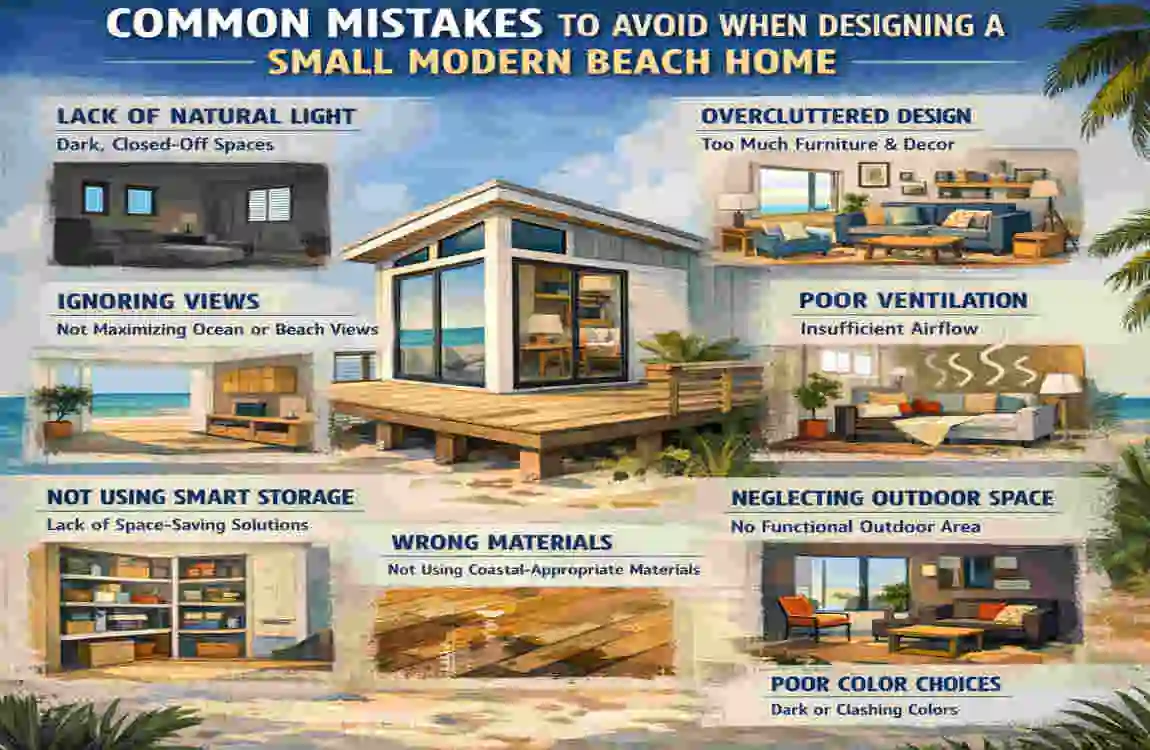
Even a beautiful design can run into problems if the basics are not handled well. A few common mistakes can make a small beach home feel cramped, fragile, or hard to maintain.
Overcrowding Small Spaces
This is one of the biggest mistakes people make. Too much furniture, too many rugs, and too many decorations can quickly overwhelm a small room.
Leave breathing room between pieces. Let the architecture show itself. In a compact home, space is part of the design.
Ignoring Storage Needs
A small beach home needs smart storage from the start. Without it, clutter will build up fast.
Think about where towels, shoes, beach gear, cleaning supplies, and guest items will go. If the home lacks a place for these things, the whole space will feel messy.
Choosing Non-Durable Materials
Not all materials can handle the beach environment. If you pick finishes that are not designed for moisture, salt, or strong sunlight, you may need repairs sooner than expected.
Durability should always be part of the design decision. A beautiful material is not helpful if it wears out quickly.
Neglecting Weather Protection
Coastal homes need extra protection. That means planning for strong winds, heavy rain, sun exposure, and sometimes flooding.
Weather protection should be built into the structure, not added as an afterthought.
Using Too Many Decorative Elements
A beach home can easily become overstyled. Too many shells, too much coastal signage, or too many color accents can make the space feel busy.
Instead, keep the decor simple and meaningful. Let texture, light, and a few well-chosen pieces do the work.
Here is a quick list of mistakes to avoid:
- Overfurnishing rooms with oversized pieces
- Skipping built-in storage in a small floor plan
- Using materials that fade, warp, or corrode easily
- Forgetting ventilation and natural airflow
- Decorating too heavily with theme-based items
Frequently Asked Questions
What size is considered a small modern
Most small modern beach homes range from about 500 to 1,500 square feet, depending on the property, budget, and lifestyle needs. The exact size can vary, but the idea is to keep the layout compact, efficient, and comfortable.
How can I make a small beach house feel larger?
Use open floor plans, large windows, light colors, and multi-functional furniture. Keeping the space uncluttered also helps a lot. When you remove visual barriers, the home feels more open right away.
What materials work best for beach homes?
The best materials are usually weather-resistant and low-maintenance. Good choices include fiber cement siding, composite decking, aluminum, and treated wood. These options perform better in coastal conditions than many standard materials.
What colors are best for a small modern beach home?
Popular coastal colors include white, beige, soft gray, pale blue, and seafoam green. These shades keep the home bright, calm, and connected to the beach setting.
Are small modern beach homes energy efficient?
Yes, they can be very efficient. With proper insulation, energy-efficient windows, solar panels, and passive cooling strategies, a small beach home can use energy wisely while staying comfortable.
How much does it cost to build a small modern beach home?
Costs vary a lot based on location, land prices, materials, and coastal building rules. In many cases, beach construction is more expensive than inland construction due to additional weather and structural requirements.
What is the biggest advantage of a small modern beach home?
The biggest advantage is the mix of lower maintenance, efficient living, and a relaxing coastal lifestyle. You get a home that feels calm and beautiful without the burden of caring for too much space.
| Design Element | Key Tips for Small Modern Beach Homes |
|---|---|
| Layout | Open-concept floor plan to maximize space; combine living, dining, and kitchen areas |
| Windows & Views | Large floor-to-ceiling windows and sliding glass doors to capture ocean views and flood space with natural light |
| Materials | Use natural, weather-resistant materials: reclaimed wood, stone, bamboo, and corrosion-resistant metal |
| Color Palette | Light, coastal colors: whites, sandy beiges, soft blues, seafoam greens; add pops of coral or yellow |
| Roofing | Reflective metal roof (silver/white) to reduce heat absorption; considerガルバニウム (galvanized) for salt-air durability |
| Elevation | Raisehome 6–12 ft off ground to allow floodwater/waves to pass beneath;符合 coastal building codes |
| Outdoor Living | Wraparound porch, deck, or veranda to extend living space outdoors; add outdoor kitchen or lounge area |
| Storage | Built-in cabinetry, under-stair storage, and multi-functional furniture to reduce clutter in small space |
| Interior Style | Minimalist aesthetic with clean lines, uncluttered surfaces, and modern fixtures |
| Sustainability | Add solar panels, rainwater harvesting, and energy-efficient appliances for eco-friendly coastal living |