Are you thinking about giving your bedroom a fresh new look with vinyl plank flooring? You’re not alone! Vinyl plank flooring has become a popular choice for bedrooms thanks to its durability, comfort, and stylish appearance. However, before you begin the installation process, there’s one crucial question you need to answer: which direction should you lay the vinyl plank flooring in your bedroom?
Choosing the right direction for your vinyl plank flooring can significantly impact both the style and functionality of your bedroom. The proper direction can enhance the visual flow of the room, make it feel more spacious, and even affect how natural and artificial light interacts with the flooring.
Understanding Vinyl Plank Flooring

What is Vinyl Plank Flooring?
Vinyl plank flooring, also known as luxury vinyl plank (LVP), is a type of resilient flooring that mimics the look of real wood or stone. It’s made from multiple layers of vinyl, including a wear layer, a printed design layer, and a core layer. Vinyl plank flooring is known for its durability, water resistance, and ease of installation and maintenance.
Advantages of Vinyl Plank Flooring for Bedrooms
Vinyl plank flooring offers several advantages that make it a great choice for bedrooms:
- Durability: Vinyl plank flooring can withstand heavy foot traffic and is resistant to scratches, stains, and dents.
- Comfort: The cushioned core layer of vinyl plank flooring provides a comfortable underfoot feel, making it ideal for bedrooms where you’ll be walking barefoot.
- Aesthetics: With a wide range of colors, patterns, and textures available, vinyl plank flooring can mimic the look of real wood or stone, adding warmth and style to your bedroom.
Different Types of Vinyl Plank Flooring Relevant to the Bedroom
When choosing vinyl plank flooring for your bedroom, you’ll come across different types, including:
- Glue-down vinyl plank flooring: This type of flooring is adhered directly to the subfloor using a special adhesive. It’s a good choice for bedrooms with uneven subfloors.
- Click-lock vinyl plank flooring features a tongue-and-groove system that allows the planks to click together without the need for adhesive. It’s an excellent choice for DIY installations.
- Loose-lay vinyl plank flooring: This type of flooring is designed to be laid directly on the subfloor without the use of adhesive or click-lock systems. It’s a good option for bedrooms where you may need to remove the flooring in the future.
Why Direction Matters When Laying Vinyl Plank Flooring
Impact on Room Appearance and Visual Flow
The direction you choose to lay your vinyl plank flooring can significantly impact the overall appearance and visual flow of your bedroom. Laying the planks in the right direction can create a cohesive look that ties the room together, while laying them in the wrong direction can make the room feel disjointed.
Effect on Perceived Room Size and Spaciousness
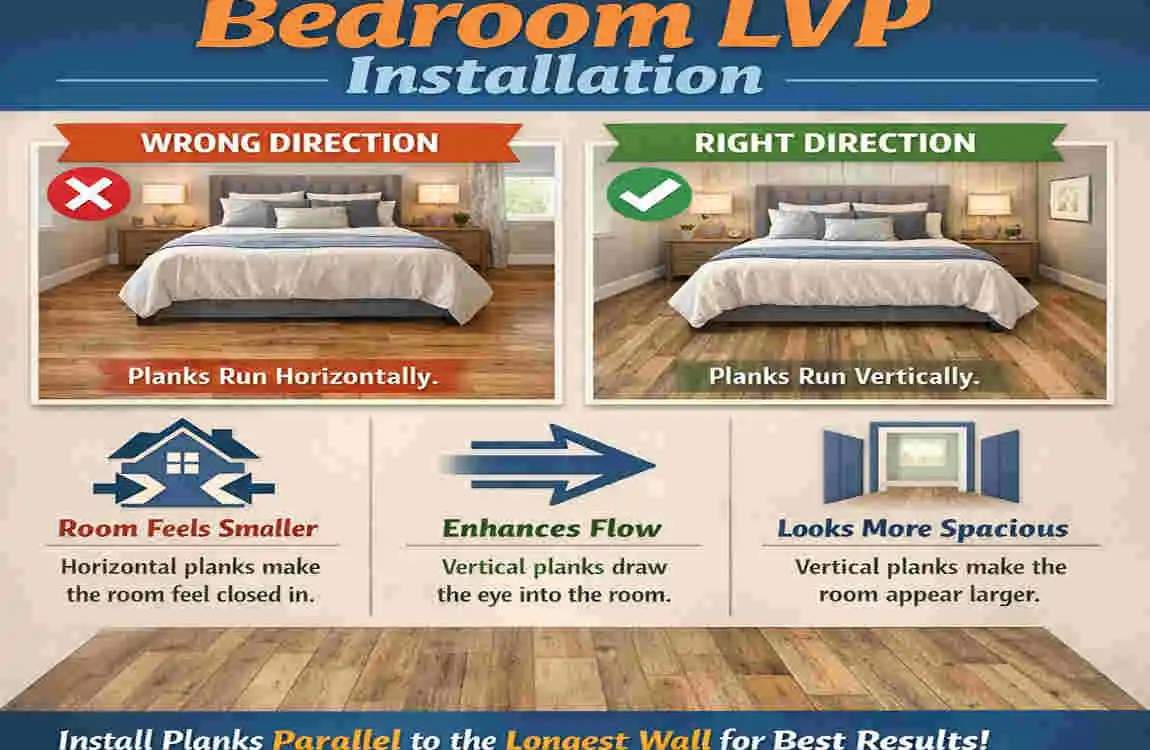
Believe it or not, the direction of your vinyl plank flooring can also affect how spacious your bedroom feels. By laying the planks in a direction that emphasizes the length or width of the room, you can create the illusion of a larger, more open space.
Influence on How Natural and Artificial Light Interact with the Flooring
The direction of your vinyl plank flooring can also influence how natural and artificial light interacts with the surface. Laying the planks in a direction that aligns with the path of natural light can highlight the texture and color of the flooring, creating a warm and inviting atmosphere in your bedroom.
Practical Implications: Traffic Flow, Ease of Installation, and Seam Visibility
In addition to the aesthetic considerations, the direction of your vinyl plank flooring also has practical implications. Laying the planks in a direction that follows the main traffic flow of the room can make it easier to navigate and maintain. The direction can also affect the ease of installation and the visibility of seams between the planks.
Factors to Consider When Deciding Direction
When deciding which direction to lay your vinyl plank flooring in your bedroom, there are several factors to consider:
Room Dimensions and Shape
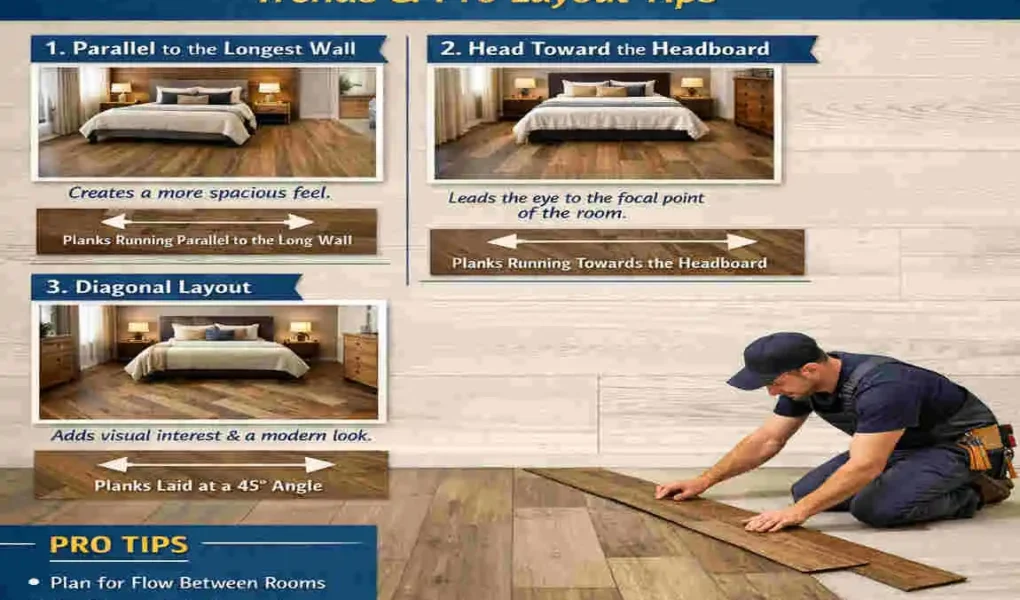
The dimensions and shape of your bedroom can significantly influence the optimal direction for your vinyl plank flooring. Laying the planks parallel to the longest wall can create a lengthening effect, making the room feel more spacious.
Location of Natural Light (Windows and Doors)
The location of natural light sources, such as windows and doors, can also influence the direction of your vinyl plank flooring. Laying the planks in a direction that aligns with the path of natural light can highlight the texture and color of the flooring, creating a warm and inviting atmosphere.
Main Entry Points and Foot Traffic Patterns in the Bedroom
Consider the main entry points and foot traffic patterns in your bedroom when deciding on the direction of your vinyl plank flooring. Laying the planks in a direction that follows the natural flow of traffic can make it easier to navigate the room and maintain the flooring.
Existing Architectural Elements (e.g., Built-ins, Fireplace, Closets)
Take note of any existing architectural elements in your bedroom, such as built-ins, fireplaces, or closets. These elements can influence the direction of your vinyl plank flooring and help create a cohesive look that ties the room together.
Furniture Layout and Placement
The layout and placement of your furniture can also influence the optimal direction for your vinyl plank flooring. Consider how the direction of the planks will interact with your furniture arrangement and choose a direction that enhances the room’s overall look and feel.
Subfloor Condition and Installation Type (Glue-down, Click-lock, etc.)
Finally, the condition of your subfloor and the type of vinyl plank flooring you choose can also influence the direction of installation. Some types of flooring, such as glue-down vinyl plank, may be more suitable for certain subfloor conditions and installation directions.
Expert Recommendations for Which Direction to Lay Vinyl Plank Flooring in a Bedroom
Now that we’ve covered the factors to consider, let’s dive into some expert recommendations for which direction to lay vinyl plank flooring in your bedroom:
Lay Planks Parallel to the Longest Wall for a Lengthening Effect
One of the most common recommendations for laying vinyl plank flooring in a bedroom is to lay the planks parallel to the longest wall. This direction can create a lengthening effect, making the room feel more spacious and inviting.
Align Planks with the Direction of Natural Light to Highlight Texture and Color
If your bedroom has a lot of natural light, consider aligning the planks with the direction of the light. This can highlight the texture and color of the flooring, creating a warm and inviting atmosphere in the room.
Consider Laying Planks Perpendicular to Doorways for a Wider Room Appearance
If you want to make your bedroom feel wider, consider laying the planks perpendicular to the doorways. This direction can create the illusion of a wider, more open space, making the room feel more inviting.
When in Doubt, Follow the Main Traffic Flow Direction
If you’re unsure which direction to lay your vinyl plank modern flooring, a good rule of thumb is to follow the main direction of traffic in the room. Laying the planks in a direction that follows the natural flow of traffic can make it easier to navigate the room and maintain the flooring.
Special Considerations for Irregularly Shaped or Small Bedrooms
If your bedroom is irregularly shaped or small, you may need to take special considerations when deciding on the direction of your vinyl plank flooring. In such cases, it’s advisable to consult with a professional to determine the best approach for your specific space.
Visual and Functional Benefits of Proper Direction
Choosing the right direction for your vinyl plank flooring can provide several visual and functional benefits:
Creating a Cohesive and Stylish Look
Laying your vinyl plank flooring in the right direction can create a cohesive and stylish look that ties the room together. By considering factors such as room dimensions, natural light, and furniture layout, you can choose a direction that enhances the overall aesthetic of your bedroom.
Enhancing Room Warmth and Coziness
The right direction can also enhance the warmth and coziness of your bedroom. By aligning the planks with the path of natural light or laying them in a direction that emphasizes the room’s length, you can create a warm and inviting atmosphere that makes you feel right at home.
Minimizing Visible Seams and Reducing Floor Damage Risk
Laying your vinyl plank flooring in the proper direction can also help minimize the visibility of seams between the planks and reduce the risk of floor damage. By following the main traffic flow and choosing a direction that aligns with the subfloor, you can create a seamless and durable flooring surface.
Improving Ease of Cleaning and Maintenance
The direction of your vinyl plank flooring can also affect the ease of cleaning and maintenance. Laying the planks in a direction that follows the natural flow of traffic can make it easier to sweep or vacuum the floor, while choosing a direction that minimizes seam visibility can help keep the floor clean and looking its best.
Common Mistakes to Avoid
When laying vinyl plank flooring in your bedroom, there are several common mistakes to avoid:
- Laying planks randomly without planning direction: Failing to plan the direction of your vinyl plank flooring can result in a disjointed and unappealing look. Take the time to consider the factors we’ve discussed and choose a direction that enhances the overall aesthetic of your bedroom.
- Ignoring natural light and traffic flow: Failing to consider the path of natural light and the main traffic flow in your bedroom can result in a flooring installation that feels off or uninviting. Please take note of these factors and choose a direction that aligns with them.
- Starting installation from a problematic or uneven wall: Beginning your vinyl plank flooring installation from a problematic or uneven wall can result in an uneven or misaligned flooring surface. Take the time to prepare your subfloor and choose a starting point that ensures a smooth and level installation.
- Overlooking furniture placement in final design: Failing to consider the placement of your furniture when planning the direction of your vinyl plank flooring can result in a flooring surface that feels disjointed or unappealing. Take note of your furniture layout and choose a direction that enhances the room’s overall look and feel.
How to Prepare Your Bedroom for Vinyl Plank Flooring Installation

Before you begin installing your vinyl plank flooring, there are several steps you should take to prepare your bedroom:
Measuring and Planning the Layout
Start by measuring your bedroom and planning the layout of your vinyl plank flooring. Consider the factors we’ve discussed, such as room dimensions, natural light, and furniture placement, and choose a direction that enhances the room’s overall aesthetic.
Preparing the Subfloor Properly
Next, take the time to prepare your subfloor properly. This may involve removing old flooring, repairing any damaged areas, and ensuring the subfloor is clean, dry, and level. A well-prepared subfloor is essential for a successful vinyl plank flooring installation.
Acclimatizing Vinyl Planks Before Installation
Before installing your vinyl plank flooring, it’s important to acclimate the planks to the temperature and humidity of your bedroom. This typically involves leaving the planks in the room for 24-48 hours before installation to allow them to adjust to the environment.
Tools and Materials Checklist
Finally, make sure you have all the necessary tools and materials on hand before beginning your vinyl plank flooring installation. This may include a utility knife, a measuring tape, a straightedge, a tapping block, and any adhesives or underlayment required for your specific type of flooring.
Step-by-Step Guide to Laying Vinyl Plank Flooring in a Bedroom in the Right Direction
Now that you’ve prepared your bedroom for vinyl plank flooring installation, let’s walk through the step-by-step process of laying the planks in the right direction:
Marking the Starting Line According to Chosen Direction
Begin by marking the starting line for your vinyl plank flooring installation. Use a straightedge and a pencil to draw a line along the chosen direction, ensuring the line is both straight and level.
Installing the First Row Carefully for Alignment
Next, begin installing the first row of vinyl plank flooring along the starting line. Take care to ensure the planks are aligned properly and securely fastened to the subfloor, using any necessary adhesives or underlayment.
Techniques to Maintain Straight Lines and Minimize Gaps
As you continue installing the vinyl plank flooring, use techniques such as tapping blocks and spacers to maintain straight lines and minimize gaps between the planks. Take your time and work carefully to ensure a seamless and professional-looking installation.
Cutting Planks to Fit Edges and Obstacles
When you reach the edges and obstacles in your bedroom, such as walls, doorways, or built-ins, you may need to cut the vinyl planks to fit. Use a utility knife and a straightedge to make precise cuts, ensuring the planks fit snugly and securely.
Finishing Touches and Trim Installation
Once you’ve installed all the vinyl plank flooring in your bedroom, it’s time to add the finishing touches. This may involve installing baseboards, quarter-round molding, or other types of trim to cover the expansion gaps and create a polished, finished look.
Design Tips to Complement Vinyl Plank Flooring Direction
Now that you’ve installed your vinyl plank flooring in the right direction, let’s explore some design tips to complement the flooring and enhance the overall look and feel of your modern bedroom:
Coordinating Wall Colors and Décor with Flooring Orientation
One way to complement the direction of your vinyl plank flooring is to coordinate the wall colors and décor with the flooring orientation. For example, if you’ve laid the planks parallel to the longest wall, you might choose to paint the walls a warm, neutral color that complements the flooring and creates a cohesive look.
Using Rugs Strategically with Plank Direction
Another way to enhance the look of your vinyl plank flooring is to use rugs strategically, aligning them with the direction of the planks. For example, if you’ve laid the planks perpendicular to the doorways, you could place a rug in the center of the room that runs parallel to the planks, creating a visual contrast that adds depth and interest to the space.
Lighting Solutions to Enhance Flooring Appearance
Finally, consider using lighting solutions to enhance the appearance of your vinyl plank flooring. For example, if you’ve aligned the planks with the path of natural light, you might install recessed lighting or wall sconces that highlight the texture and color of the flooring, creating a warm and inviting atmosphere in the room.
Maintenance Tips for Vinyl Plank Flooring in Bedrooms
To keep your vinyl plank flooring looking its best, it’s important to follow a regular maintenance routine. Here are some tips to help you care for your flooring:
Cleaning Routine to Preserve Floor Look
To maintain the appearance of your vinyl plank flooring, it’s essential to follow a regular cleaning routine. This may involve sweeping or vacuuming the floor regularly to remove dirt and debris, as well as mopping the floor with a mild detergent and water solution to remove any stubborn stains or grime.
Tips to Avoid Scratches and Dents Related to Plank Direction
To prevent scratches and dents on your vinyl plank flooring, it’s essential to exercise care when moving furniture or other heavy objects across the floor. Use furniture pads or sliders to protect the flooring, and avoid dragging heavy items across the surface. Additionally, consider the direction of the planks when arranging your furniture, as certain directions may be more prone to scratches or dents.
When to Consider Professional Maintenance
While regular cleaning and maintenance can help keep your vinyl plank flooring looking its best, there may be times when professional cleaning and maintenance are necessary. If your flooring becomes severely damaged or stained, or if you notice any issues with the installation or subfloor, it’s a good idea to consult with a professional to determine the best course of action.