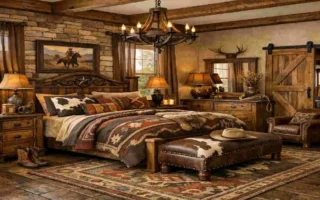
When designing or remodeling a home, one of the most important spaces to consider is the main bedroom. It’s not just a place to sleep; it’s a sanctuary for relaxation, a space that reflects your lifestyle, and a key factor in your home’s overall value. But how big is a main bedroom supposed to be?
Why Does Master Bedroom Size Matter?

The size of a main bedroom plays a significant role in several aspects of your home:
- Comfort and Functionality: Adequate space allows you to relax, move freely, and incorporate desired furniture or features, such as a sitting area.
- Resale Value: A well-sized main bedroom adds to your home’s overall value, making it more attractive to potential buyers.
- Design Flow: The proportions of your main bedroom affect the layout and how well it integrates with the rest of your home.
Understanding the Master Bedroom Concept
What Defines a Main Bedroom in Modern Homes?
A main bedroom (often referred to as a primary bedroom) is typically the largest bedroom in the house, designed to provide a private retreat. Its defining features often include:
- A spacious sleeping area that accommodates larger beds, such as king or queen-sized.
- An en-suite bathroom for added convenience and privacy.
- A walk-in closet or large wardrobe for ample storage.
In luxury homes, master bedrooms may also include features such as a sitting area, a fireplace, or even a private balcony.
Difference Between “Main Bedroom” and “Primary Bedroom”
In recent years, many real estate professionals have shifted to using the term’ primary bedroom ‘ instead of ‘master bedroom’. While the terminology may vary, the concept remains the same: it’s the most spacious and well-appointed bedroom in the house.
Benchmarking by Square Footage
Typical Main Bedroom Sizes: Global and Regional Trends
How big is the main bedroom? The answer depends on various factors, including the size of the home, location, and architectural trends. Here are some standard benchmarks:
Home SizeMaster Bedroom Size Range
Small homes (below 1,500 sq ft) 120–150 sq ft (11–14 m²)
Medium homes (1,500–3,000 sq ft) 150–250 sq ft (14–23 m²)
Large/luxury homes (above 3,000 sq ft) 300+ sq ft (28+ m²)
Small to Medium Homes: Prioritizing Efficiency
In smaller homes, the main bedroom is often compact but functional. Every square foot is optimized to ensure there’s enough space for essentials like the bed, nightstands, and a small closet. Creative layouts and multipurpose furniture can make these spaces feel more spacious.
Large and Luxury Homes: Expansive Spaces
In larger homes, the main bedroom often becomes a main suite, incorporating features such as a sitting area, walk-in closets, and a luxury en-suite bathroom. These spaces typically start at 300 square feet but can go well beyond, depending on the homeowner’s preferences.
Breakdowns by Floor Plan Type
Single-Story Ranch and Open-Concept Homes
In single-story homes, the main bedroom is often located on one end of the house for privacy. These bedrooms typically range from 150 to 250 square feet, with layouts focusing on accessibility and flow.
Two-Story Family Homes
In two-story homes, master bedrooms are often positioned upstairs. These are slightly larger, averaging 200 to 300 square feet, and usually include features such as walk-in closets and en-suite bathrooms.
Townhomes and Multi-Family Layouts
In townhomes, space is at a premium. Master bedrooms usually measure 120 to 180 square feet, with careful attention paid to maximizing storage and functionality.
Room Components and Their Ideal Sizes
A main bedroom isn’t just one big space—it’s a combination of functional zones. Here’s a breakdown of standard components and their ideal dimensions:
En-Suite Bathroom
An en-suite bathroom is a hallmark of a well-designed main bedroom. Standard dimensions vary:
- Compact layouts: 35–50 sq ft (3–4.5 m²), often with a shower and small vanity.
- Luxury layouts: 70+ sq ft (6.5+ m²), including a double vanity, separate tub, and shower.
Walk-In Closet
A walk-in closet is another must-have. Sizes range from:
- Minimum: 25 sq ft (2.3 m²), enough for basic hanging and shelving space.
- Generous: 50–100 sq ft (4.6–9.3 m²) for more organized storage.
Sleeping Area
The sleeping area should comfortably accommodate your bed size:
- Queen bed: Requires at least 10 x 10 ft (3 x 3 m) of clear space.
- King bed: Needs 12 x 12 ft (3.6 x 3.6 m) or more.
Sitting Area or Private Lounge
In larger master bedrooms, a sitting area adds a touch of luxury. These spaces typically require 50–100 sq ft (4.6–9.3 m²).
Design Considerations and Trade-Offs

Proportions and Furniture Placement
The key to a well-designed main bedroom is maintaining proportions. For example:
- Ensure at least 3 feet (0.9 m) of clearance around the bed for easy movement.
- Avoid overcrowding with oversized furniture.
Natural Light and Privacy
Strategically placed windows and curtains can enhance natural light while maintaining privacy. Larger bedrooms benefit from multiple windows or even sliding doors to outside spaces.
Practical Rules of Thumb for Builders and Homeowners
Quick Sizing Rules
- A main bedroom should be 10-15% of the home’s total square footage.
- Avoid making the room feel cramped by ensuring a minimum width of 10 feet (3 m).
Common Mistakes to Avoid
- Overfilling the space with furniture.
- Neglecting circulation space for easy movement.
Evaluating Real-World Examples
Here are some real-world examples of main bedroom sizes based on floor plans:
- Small homes: 12 x 12 ft (144 sq ft)
- Medium homes: 15 x 15 ft (225 sq ft)
- Luxury homes: 20 x 20 ft (400 sq ft)