
Picture this: You are sitting at your kitchen table, looking at a pile of paperwork. Years ago, you made a smart decision to place your assets, including your home, into a trust. It was a great move for estate planning, designed to protect your family and avoid the nightmare of probate court. But now, life has changed. You may want to downsize, move closer to the grandkids, or, as a successor trustee, sell a parent’s home.
Suddenly, a panic sets in. You ask yourself, “Wait, can I sell my house if its in a trust?”
The short answer is a resounding yes. You absolutely can sell a house held in a trust. However, the process isn’t the same as selling a home that’s in your name only. There are extra steps, specific documents, and a few rules you need to follow to keep everything legal and above board.
Revocable vs. Irrevocable Trusts: Can I Sell?
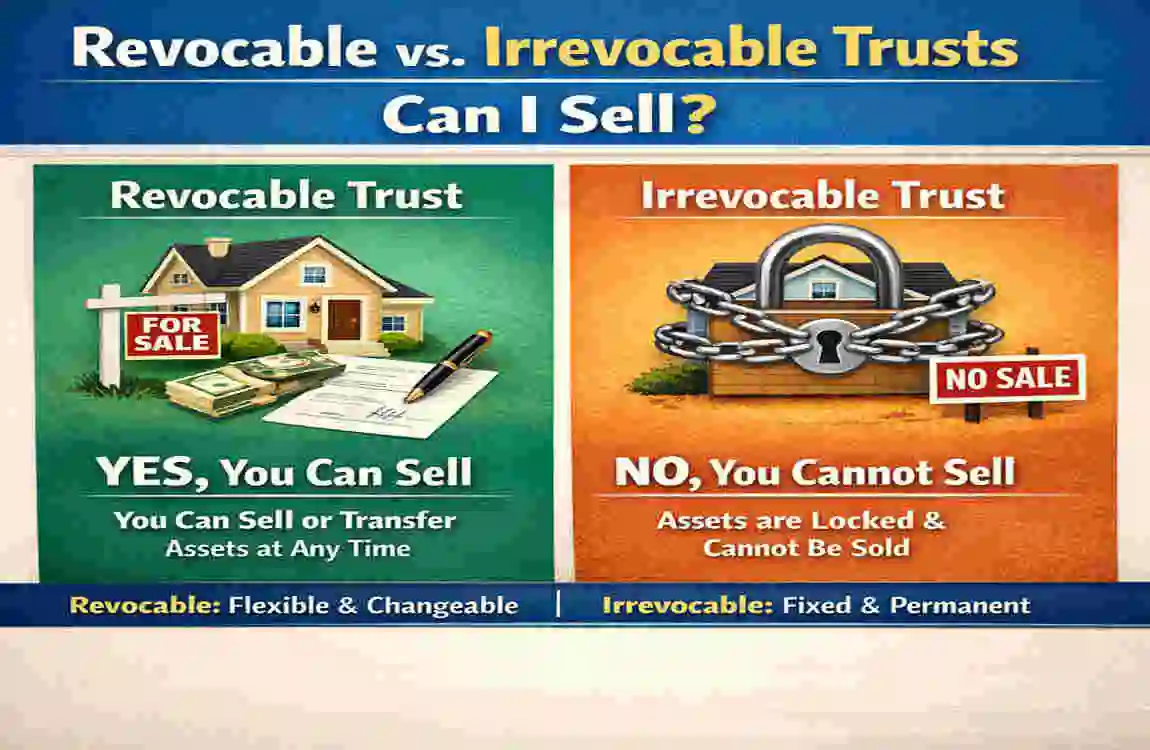
To understand how to sell your home, you first need to identify what kind of trust vehicle you are driving. Not all trusts are created equal, and the rules for selling property depend heavily on whether the trust is revocable or irrevocable.
The Revocable Living Trust: The Flexible Option
If you set up a revocable living trust, you are likely in the driver’s seat. This is the most common type of trust for homeowners. In this scenario, you are usually the “Grantor” (the person who created the trust) and the “Trustee” (the person who manages it).
Here is the good news: Selling a house in a revocable trust is almost identical to selling a house in your own name. Because the trust is “revocable,” you can change it, dissolve it, or move assets in and out of it whenever you want. You do not need permission from your children or other beneficiaries to sell the property. You sign the paperwork as the trustee, not as an individual.
The Irrevocable Trust: The Locked Vault
An irrevocable trust is a different beast entirely. Once you move a house into an irrevocable trust, it is like putting it in a locked vault, where you have given the key to someone else. You cannot easily change the terms or take the house back out.
So, can you sell a house in an irrevocable trust? Yes, but it is more complicated. The trustee (which might not be you) must have the specific authority granted in the trust document to sell real estate. Furthermore, because the house technically belongs to the trust, not you, the proceeds from the sale must usually remain within the trust. You can’t just take the cash and go on a vacation; the money has to be managed in accordance with the trust’s rules.
Key Factors Affecting Sales
Before you list the home, you need to look at two major factors:
- Trustee Powers: Does the legal language in the trust document explicitly give the trustee the power to sell real estate? Usually, the answer is yes, but you have to check.
- Beneficiary Consent: In some irrevocable trusts, or if the original grantor has passed away, you might need to notify the beneficiaries (the people who will eventually inherit the money) before you sell.
Here is a quick snapshot of how the two compare:
Trust TypeSale Allowed?Who Decides?Where does the money go?
Revocable Trust Yes, easily The Grantor / Trustee (You) To you or back into the trust—your choice.
Irrevocable Trust Yes, with conditions The designated Trustee (often needs consent) Must remain in the trust or be distributed per strict rules.
How to Sell Your House If It’s in a Trust
Now that we have established that it is possible, let’s look at the mechanics. You cannot just shake hands and hand over the deed. You need to follow a protocol to ensure the title company accepts the sale and you don’t get sued later.
Here is your step-by-step game plan for selling your house if it’s in a trust.
Review the Trust Document for Sale Powers
Before you call a real estate agent, you need to find your original trust agreement. This is the rulebook. You are looking for a section usually titled “Powers of the Trustee.”
Read this section carefully. You want to see clear language that authorizes the trustee to “sell, convey, exchange, or dispose of” real property. If the document is silent on selling real estate, or if it explicitly forbids it (which is rare but happens), you might have a problem. In that case, you would need to consult a lawyer to petition the court for permission to sell, which takes time and money.
Confirm Trustee Authority and Notify Beneficiaries
If you are the Grantor of a revocable trust, you are the boss. You don’t usually need to tell anyone. However, if you are a Successor Trustee—meaning you took over because the original owner passed away or became incapacitated—your duties are stricter.
You have a “fiduciary duty.” This means you must act in the beneficiaries’ best interests. Even if the trust doesn’t legally require your permission, it is a smart move to notify them of your intent to sell. Transparency prevents family arguments and lawsuits later. If the trust is irrevocable, you definitely need to check if beneficiary consent is legally required.
Get Appraisals and Valuations
You cannot just sell the house to your nephew for $100 because you like him. The trustee is legally required to sell the home for Fair Market Value. If you sell it for less, you are cheating the beneficiaries out of their inheritance, and you can be held personally liable.
To protect yourself, get a professional appraisal. Do not rely on Zillow or tax assessments. A licensed appraiser will give you a defensible number. If the market is hot, getting a Comparative Market Analysis (CMA) from a reputable real estate agent might be enough. Still, a formal appraisal is the safest shield against future disputes.
Prepare the Deed Trustee’s Deed
When you sell a house personally, you sign a standard Warranty Deed. When a trust sells a house, you generally use a Trustee’s Deed.
This document formally transfers the property from the trust to the new buyer. The language must be precise. It will not say “Sold by John Smith.” It will say something like “Sold by John Smith, Trustee of the Smith Family Trust, dated 1 January 2020.” The title company will usually handle this, but you must ensure they have the correct full name and date of the trust.
List and Market the Home
Now comes the fun part: putting the house on the market. When you hire a real estate agent, tell them immediately that the home is in a trust. You want an agent who isn’t scared of a little extra paperwork.
You must sign the listing agreement as the trustee. So, when you autograph that contract, you will sign “Jane Doe, Trustee.” Market the home just like any other property. Clean it up, stage it, and take great photos. The fact that it is in a trust typically doesn’t matter to buyers—they want a nice house.
Close the Sale
You found a buyer! Congratulations. During the closing process, the title company will likely ask for a “Certificate of Trust” or a “Memorandum of Trust.”
This is a condensed version of your trust document. It proves to the title company that the trust exists and that you have the authority to sign for it, without forcing you to reveal the private details of who inherits what.
At the closing table, you will sign a mountain of paperwork. Remember: always sign in your capacity as trustee.
Distribute Funds or Reinvest
Here is the most critical step regarding the money. When the buyer hands over the check, whom is it made out to?
It cannot be made out to you personally (unless it’s a revocable trust and you immediately transfer it). The check must be made payable to “The Smith Family Trust.” You then deposit it into the trust’s bank account.
- If it’s a Revocable Trust, you can transfer that money to your personal checking account if you wish.
- If it’s an Irrevocable Trust: The money stays in the trust account. You can then use it to buy another investment property or stock, or to distribute it to beneficiaries according to the trust’s schedule.
Special Case: Inherited House in Trust
If you are selling a home because the parents passed away, the trust has likely become irrevocable upon their death. In this case, selling is often the first step in “settling the estate.” You sell the home, turn the asset into cash, pay off any of the parents’ final debts and taxes, and then split the remaining cash among the heirs.
Taxes When You Sell a House in a Trust
“Death and taxes,” as the saying goes. When asking “can I sell my house if its in a trust,” the follow-up question is usually, “Will I get hammered by the IRS?” The tax implications vary wildly depending on the trust type.
Capital Gains in a Revocable Trust
If you are selling your primary residence held in a revocable trust, you are in luck. For tax purposes, the IRS treats this transaction exactly as if you owned the house in your own name.
This means you can still claim the Section 121 Exclusion. This is the famous capital gains tax break that allows individuals to exclude up to $250,000 of profit (or $500,000 for married couples) from federal taxes, provided they lived in the house for 2 of the last 5 years. The trust does not strip you of this benefit.
The “Step-Up in Basis” Advantage
If you sell a home from an irrevocable trust after the original owner has died, you get a significant tax benefit called the “step-up in basis.”
Let’s say your parents bought the house in 1980 for $50,000. It is now worth $500,000. If they sold it while alive, they would owe taxes on that $450,000 gain. However, when they pass away, the “basis” of the house steps up to the current market value ($500,000). If you sell it immediately for $500,000, the capital gains tax is zero. This makes selling an inherited home in a trust very tax-efficient.
Reporting the Sale
- Revocable: You report the sale on your personal IRS Form 1040.
- Irrevocable: The trust is a separate tax entity. The trustee must file IRS Form 1041 (Income Tax Return for Estates and Trusts) to report the sale.
Hidden Costs to Watch For
While you might save on taxes, remember that selling from a trust often involves administrative costs:
- Legal Fees: You may need an attorney to draft the Certification of Trust ($500-$1,500).
- Accountant Fees: Filing Form 1041 is complex and requires a CPA ($500+).
- Maintenance: Until the house sells, the trust must pay for utilities, insurance, and taxes.
Tax ScenarioExclusion Eligible?Why it matters
Revocable (Grantor Alive) Yes ($250k/$500k) Treats you like a standard homeowner.
Irrevocable (Post-Death) Usually No, but… You get the “Step-Up Basis,” which often eliminates the tax anyway.
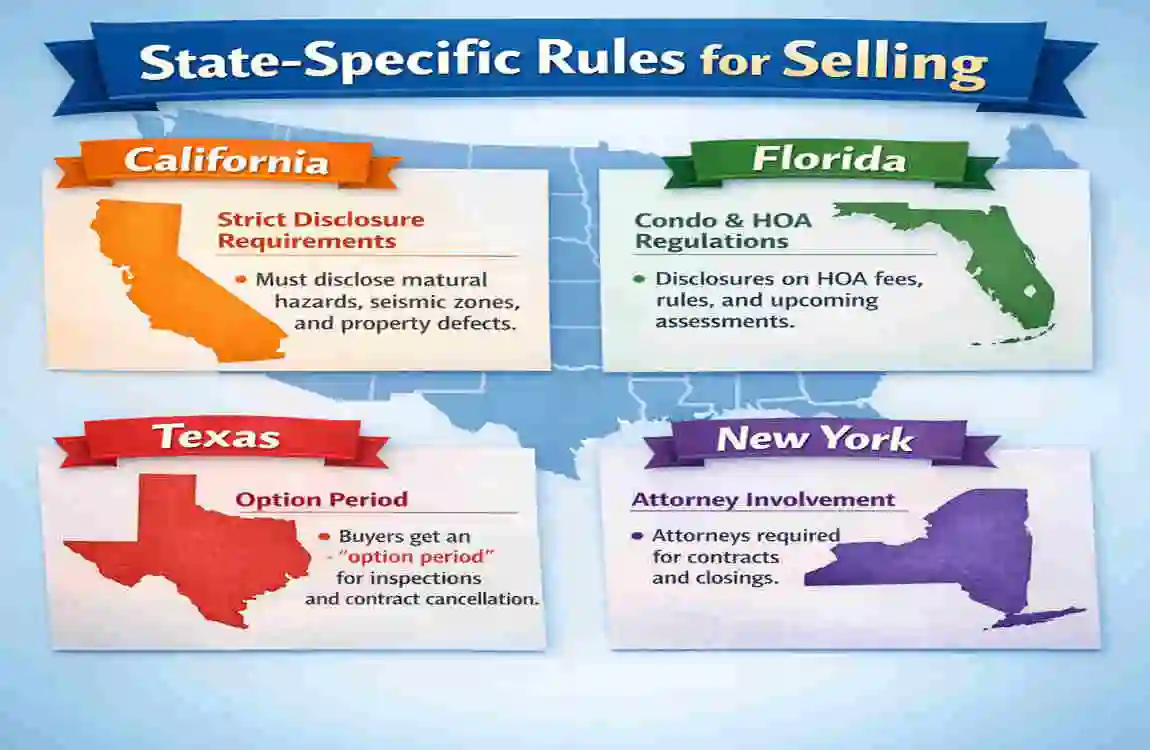
State-Specific Rules for Selling
Real estate laws are like the weather—they change depending on where you are. While the general rules above apply federally, your state might have specific quirks.
The Certification of Trust
Some states, like California, are very specific about the “Certification of Trust.” They have a statutory form that must be used. If you try to use a generic form you found online, the title company might reject it, delaying your sale.
Probate Avoidance
The beauty of the trust is that you generally do not need court approval to sell. If this house were just in a will, you would likely be stuck in probate court for months asking a judge for permission to sell. In a trust, you bypass the state courts entirely, provided the trust is properly funded.
Mistakes to Avoid
Even smart people make mistakes when selling trust property. These pitfalls can lead to family feuds or lawsuits.
Ignoring Beneficiary Rights
Just because you can sell the house doesn’t mean you can ignore the people who will inherit the money. If you sell the family lake house that your sister wanted to keep, and you didn’t tell her, she might sue you for breaching your fiduciary duty. Communication is your best defense.
The “Sweetheart Deal”
Do not sell the house to your friend or child for less than it is worth. This is the fastest way to get sued. If the house is worth $400,000 and you sell it to your son for $200,000, you have essentially stolen $200,000 from the other beneficiaries. Always sell for fair market value.
Skipping the Bank Account Setup
Do not mix trust money with your own money. This is called “commingling,” and it is a big legal no-no. Open a dedicated checking account in the trust’s name before you close the sale. The proceeds must go there first.
FAQs
Can I sell my house if its in a trust without a lawyer? Technically, yes, if it is a simple revocable trust. However, given the liability involved, paying for a few hours of legal advice to review the deed and title work is highly recommended.
How long does it take to sell a house in a trust? It takes the same amount of time as a regular sale—typically 30 to 90 days. The trust paperwork might add a few days to the title search, but it shouldn’t cause a significant delay.
Does the trust end after I sell the house? Not necessarily. The trust is just a bucket. You sold the house (the content), but the bucket (the trust) remains. You now hold cash in the bucket instead of real estate. You can keep the trust open to hold that cash or dissolve it and distribute the money.