

If you are searching for a real estate listing in Canada, you already know one thing: the market can move fast, and the right site can save you a lot of time and stress. In 2026, that matters even more. Sales jumped 27.4% month over month in March, and inventory stayed tight in several provinces, with supply sitting around 2.8 to 5 months in key markets. That means good homes can disappear quickly, especially in areas where demand remains strong.
At the same time, Canada is not one single market. Some provinces are more balanced, while others still lean toward sellers. The national sales-to-new-listings ratio sits around 48%, suggesting a more even market overall, but local conditions can still vary widely from city to city. That is why your search strategy matters just as much as your budget.
The good news is that online real estate platforms make the process much easier. You can browse MLS listings, compare neighbourhoods, check price trends, and even take virtual tours before booking a showing. You can also narrow your search by home type, number of bedrooms, price range, lot size, and more. In other words, the internet gives you a faster, smarter way to shop for a home.
Why Use Online Platforms?

Searching for a luxury home used to mean scanning newspaper ads, calling agents, and driving around neighbourhoods for hours. That process still exists in some form, but most buyers now begin online. In fact, for many people, the digital search is the real starting point of the home-buying journey.
MLS Listings Give You Better Accuracy
One big reason online platforms matter is the strength of MLS listings in Canada. The Multiple Listing Service is the backbone of the Canadian home search experience. It helps keep listings organised, updated, and easier to compare. For buyers, that means more reliable property details, cleaner search results, and a better view of what is actually available.
When you are looking for a real estate listing in Canada, MLS-based sites often give you the most complete picture. You can see whether a property is newly listed, recently reduced, or already conditionally sold. That kind of information helps you avoid wasted time and focus on homes that fit your needs.
Search Filters Save Time
Online platforms also let you search the way you actually think. You can filter by:
- Price
- Bedrooms and bathrooms
- Property type
- Neighborhood
- School district
- Square footage
- Parking
- Walkability
- Waterfront access
- Virtual tour availability
That matters because no one wants to scroll through hundreds of homes that do not fit their budget or lifestyle. The right filters help you stay focused and move faster.
Real-Time Updates Give You an Edge
Another major advantage is speed. Many platforms update quickly when a home gets listed, changed, or removed. In a market where inventory can tighten fast, that is a real advantage. If you are serious about buying, even a few hours can make a difference.
This is especially useful when price growth is still a factor. Market forecasts have pointed to continued modest growth in some regions, which means buyers still need to act with care and move quickly when they find the right place.
Most Buyers Start Online
A large share of buyers begin their search online, which is no surprise. People want convenience, control, and a chance to compare options before contacting an agent. Mobile use is also very high, so many buyers browse listings on their phones during commutes, lunch breaks, or evenings at home.
That means your home search is no longer something you do once a week. It can happen anytime, anywhere. And if you use the right platforms, that flexibility can work in your favour.
Top Real Estate Websites Ranked
Before we dive into the details, here is a quick comparison of the top platforms Canadians use when searching for homes, rentals, and luxury properties.
RankSiteMonthly Visits (Mar 2026)Key FeaturesBest ForBounce Rate
1 Realtor.ca 16.8M MLS listings, agent connect Nationwide searches 47.61%
2 Centris.ca 10.4M Quebec-focused filters Eastern Canada 41.38%
3 Airbnb.ca 6.9M Short-term rentals Temporary housing 38.14%
4 Craigslist.org 2.9M Free classifieds Budget deals 31.04%
5 TheCanadianHome.com N/A AI valuation, personalised feeds Ontario hotspots N/A
6 SothebysRealty.com/can Luxury focus High-end homes Premium buyers N/A
7 JamesEdition.com Villas/penthouses Global luxury Elite properties N/A
8 Zolo.ca High traffic, broad search tools , Market data and listings , Fast comparison shoppers N/A
9 Point2Homes.com Wide property coverage , Filters and map views , Research-heavy buyers, N/A
10 DuProprio.com For-sale-by-owner listings Direct seller contact Quebec and private-sale buyers N/A
Realtor.ca: The National Leader
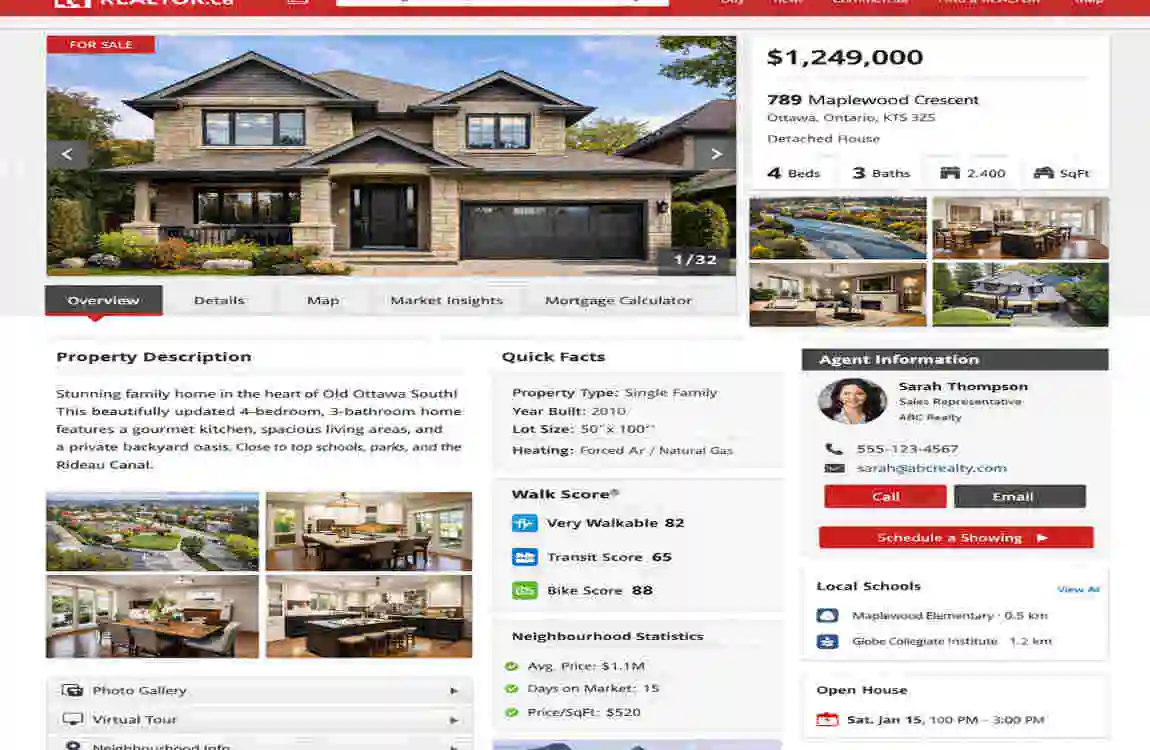
If you are looking for the most widely used real estate listing in Canada, Realtor.ca sits at the top of the list. It is the official consumer-facing site for Canadian real estate data and remains the first stop for many buyers across the country.
Why Realtor.ca Stands Out
The biggest strength of Realtor.ca is simple: coverage. It gives you broad access to homes across Canada, from major urban centres to smaller regional markets. That makes it ideal if you are not yet sure where you want to live, or if you want to compare multiple cities at once.
It also offers the kind of search tools buyers need most. You can sort by price, property type, location, and home features. If you are serious about narrowing your options, this is where you should begin.
What Makes It Useful for Buyers
Realtor.ca is especially helpful because it gives you a clean, familiar way to scan the market. You can quickly spot:
- New listings
- Price changes
- Sold properties
- Nearby homes
- Agent contact information
That last point matters. If you want to move fast, being able to connect with a listing agent right away can save time.
Best Use Case
Use Realtor.ca when you want a nationwide search, when you need reliable MLS-style coverage, or when you want to compare several regions before deciding where to focus.
Centris.ca: Quebec’s Powerhouse
Centris.ca is one of the strongest platforms for buyers searching in Quebec and parts of Eastern Canada. If your home search is centred in Montreal, Laval, Quebec City, or the surrounding areas, this site should be high on your list.
Why Quebec Buyers Love It
Centris stands out because it is built with the Quebec market in mind. That means it often feels more tailored than a national site when you are searching in French-speaking or bilingual regions. The filters are especially useful for people who want to compare neighbourhoods, home styles, and pricing patterns in a more localised way.
Strong Engagement and Mobile Use
Centris also sees strong user engagement, suggesting people spend time exploring listings there. It is especially practical if you like browsing on your phone, since mobile usage is high in that segment.
Best Use Case
Choose Centris if you are focused on Quebec real estate, want more localised search tools, or prefer a platform that reflects the region’s specific market style.
Airbnb.ca: A Smart Option for Temporary Housing
Airbnb is not a traditional home-buying portal, but it still belongs on a list of useful property platforms in Canada. Why? Many people use it for short-term housing during relocations, renovations, school transitions, or job changes.
More Than a Vacation Site
Many buyers and renters forget that housing searches are not always about long-term ownership. Sometimes you need a place to stay for one month, three months, or half a year while you figure things out. Airbnb fills that gap.
How It Helps in a Home Search
If you are relocating to a new city and want to test the neighbourhood before committing, short-term rentals can offer flexibility. You can live in the area, check the commute, explore schools, and get a feel for the community before deciding whether to buy there.
Best Use Case
Use Airbnb when you need temporary housing, a trial stay in a new area, or a flexible bridge between moves.
Craigslist.org: Simple, Budget-Friendly, and Sometimes Uneven
Craigslist is one of the oldest classified platforms, but it still attracts buyers and renters seeking direct listings and lower-cost options.
Why People Still Use It
The appeal is mostly about simplicity and access. You can find rentals, shared housing, and direct-from-owner listings without much friction. For someone working with a tight budget, that can be useful.
What to Watch Out For
The tradeoff is quality control. Unlike major MLS-based sites, Craigslist listings can vary a lot in detail and reliability. That means you need to be careful. Always verify the property, confirm the address, and avoid sending money until you have checked the listing’s legitimacy.
Best Use Case
Craigslist works best for budget hunters, people looking for flexible rentals, or buyers exploring off-market possibilities. Just use caution and double-check everything.
TheCanadianHome.com: A Growing Smart Search Tool
TheCanadianHome.com has become an interesting option for buyers seeking a more personalised browsing experience. It offers AI-based valuation tools and custom listing feeds that help match properties to your preferences.
Why It Feels Different
Instead of showing you a broad, generic feed, this kind of platform aims to tailor the experience to you. That can help you discover homes you might otherwise miss. If you are overwhelmed by endless listings, personalisation can make a real difference.
Best for Ontario Buyers
This platform is especially useful for buyers looking in Ontario hotspots, where competition can be intense and speed matters. If you want to stay on top of new homes without checking multiple sites all day, a smarter feed can help.
Best Use Case
Use TheCanadianHome.com for personalised property suggestions, easy-to-read search results, and a more modern browsing experience.
Sotheby’s Realty Canada: Luxury with a Refined Touch
If you are shopping for an upscale property, Sotheby’s Realty Canada is one of the best-known luxury-focused platforms in the country.
What It Offers
This site specialises in high-end homes, including waterfront estates, elegant condos, designer townhomes, and premium rural properties. The presentation is polished, and the listings usually feel more curated than mass-market platforms.
Who Should Use It
Sotheby’s is a strong choice for buyers who care about design, privacy, unique architecture, and premium locations. If you are in the luxury segment, the browsing experience matters, and this platform delivers that.
Best Use Case
Choose Sotheby’s when you want luxury homes, high-value property options, and a refined search experience.
JamesEdition.com: Global Luxury with Canadian Listings
JamesEdition is another strong luxury platform, especially if you are searching for high-end homes with an international feel.
Why It Appeals to Elite Buyers
The site includes villas, penthouses, and premium homes from around the world, including Canada. It is particularly useful if you are interested in a high-profile property that stands out from typical listings.
More Than Just Local Search
JamesEdition has a global brand identity, which makes it attractive to international buyers, investors, and people relocating from abroad. It is not where most first-time buyers will start, but it is excellent for discovering premium property.
Best Use Case
Use JamesEdition if you want global luxury listings, exclusive homes, and a more international property search.
Zolo.ca: Good for Fast Market Comparison
Zolo is a popular Canadian real estate platform with strong search tools and market insights. It is a good fit if you like comparing homes quickly and want a more data-friendly experience.
What Buyers Like About It
Zolo combines listings with practical information that helps you understand the market. That makes it useful not just for browsing, but also for thinking through value, competition, and timing.
Best Use Case
Use Zolo if you want broad coverage, clean search features, and a smarter way to compare properties side by side.
Point2Homes: Broad Search and Easy Filtering
Point2Homes is another platform that helps buyers browse a wide mix of properties across Canada.
Why It Is Helpful
Its map-based search tools and filters make it easy to narrow down homes by area and feature. If you are still exploring neighbourhoods and do not want to jump between several websites, this can be a nice option.
Best Use Case
Use Point2Homes when you want a wide search range and a simple way to compare local listings.
10. DuProprio: Direct-from-Seller Opportunities
DuProprio is especially important in Quebec and among buyers who want to explore for-sale-by-owner options.
Why It Matters
Not every sale goes through the traditional agent route. Some sellers prefer a more direct process, and DuProprio gives buyers access to those listings. That can sometimes lead to better negotiating flexibility.
Best Use Case
Choose DuProprio if you want private-sale listings, direct communication with sellers, and strong coverage across Quebec.
Deep Dive: Which Sites Work Best for Different Buyers?
Best for Nationwide Searches: Realtor.ca
If you want one place to start, this is it. Realtor.ca gives you the broadest overview of the Canadian market and remains the safest choice for a first search.
Best for Quebec: Centris.ca and DuProprio
For Quebec buyers, these two sites can be especially useful. Centris is ideal for broad coverage, while DuProprio is helpful if you want private-sale opportunities.
Best for Temporary Housing: Airbnb
If your move is not immediate, short-term rentals can help you buy time while you decide where to live permanently.
Best for Luxury Buyers: Sotheby’s and JamesEdition
If your budget is higher and you want premium homes, both platforms offer a more curated experience.
Best for Price-Conscious Searchers: Craigslist and Zolo
If you want value and flexibility, these sites can help you uncover lower-cost or less obvious opportunities.
How to Search Effectively
Finding the right home is not just about visiting the right site. It is also about using the site properly. If you do your research, you save time, reduce stress, and improve your chances of finding a property that truly fits your life.
Set Clear Filters First
Start by defining your budget, location, home type, and must-have features. If you are looking for a real estate listing in Canada, the more specific you are, the better your results will be.
A vague search gives you too much noise. A focused search gives you useful options.
For example, instead of searching for “homes in Toronto,” try something more specific, like:
- Condo under a certain price
- Detached home near transit
- Two-bedroom home with parking
- Family house in a specific school zone
That kind of focus makes the search much more manageable.
Use Maps and Virtual Tours
Maps help you understand where a home sits in relation to schools, parks, transit, stores, and busy roads. Virtual tours can also save you from booking showings for properties that do not fit your expectations.
This is especially helpful in a market where local conditions vary by region. A home can look great on paper, but feel very different once you see the neighbourhood pattern around it.
Create Alerts for New Listings
This is one of the smartest things you can do. Set up alerts so you hear about new homes as soon as they appear. In tighter markets, even a day’s delay can matter.
If a region is moving quickly, alerts help you stay competitive without refreshing listings all day. You can let the platform do the work for you.
Check More Than One Site
No single platform is perfect. One site may have better photos, another may update more frequently, and another may feature special listings you would not find elsewhere. That is why cross-checking is so valuable.
If a home catches your attention on one site, look for it on another. You may find:
- Better listing details
- Different photos
- More accurate pricing notes
- Additional agent information
This simple habit can significantly improve your search results.
Use Mobile, But Do Not Rush
A lot of people browse homes on their phones, and that is fine. Mobile search is convenient, fast, and useful when you are on the move. But do not let speed replace judgment.
Take your time to read the details. Open the map. Look at the photos carefully. If something feels off, pause and investigate further.
Watch for Red Flags
Scams and misleading listings do exist. If a listing seems too cheap, too vague, or too urgent, be careful. Always verify the address, confirm the agent, and avoid sending money without proper checks.
A few simple habits can protect you:
- Compare the listing on more than one site
- Look for missing or inconsistent details
- Ask direct questions
- Never ignore your instincts
Keep Notes as You Browse
It may sound old-fashioned, but notes really help. Write down the listings you like, what you liked about them, and what concerns you had. After a few days, the patterns become clearer.
You will start to notice what matters most to you. Maybe you care more about commute time than square footage. Maybe you want a yard more than a second bathroom. Notes help you see the real priorities behind the search.
Market Trends You Should Know
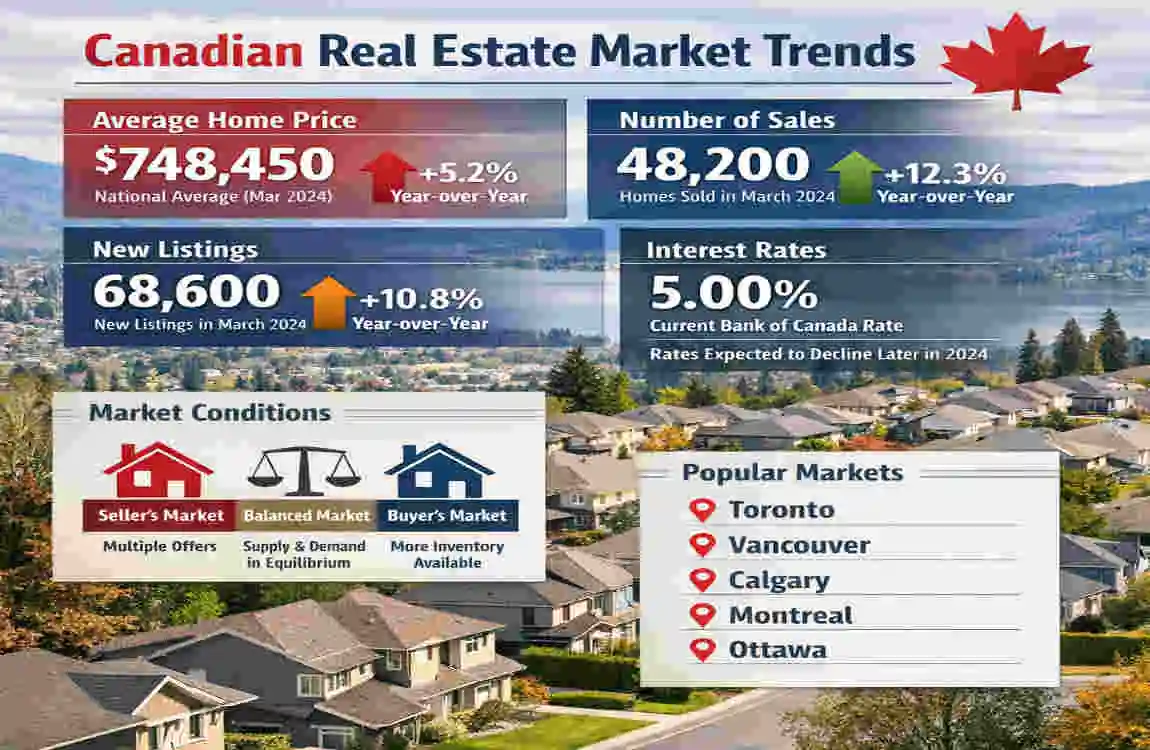
The real estate search in Canada is not happening in a vacuum. Market conditions affect your options, your timing, and your bargaining power. In 2026, buyers need to pay attention to the bigger picture.
Sales Are Improving, But Inventory Is Still Tight
Recent market outlooks point to a modest rise in sales, with some forecasts suggesting around 1% growth overall. That is not a dramatic jump, but it does suggest the market is active.
At the same time, inventory remains tight in many places. That means good homes can still attract attention quickly. If you see a property that matches your needs, you should be ready to act.
Regional Differences Matter a Lot
Canada is not one market. Local trends matter, and they matter a lot.
Some regions are more competitive than others. For example:
- Alberta can lean toward sellers in certain areas, with a sales-to-new-listings ratio around 56%
- Newfoundland may remain more balanced
- Other provinces can move between these conditions depending on the season and demand
That is why it helps to study local data rather than relying solely on national averages. A broad forecast tells you the direction of the market, but local details tell you how to buy smart.
Balanced Markets Still Require Speed
A balanced market does not mean an easy market. It simply means buyers and sellers have more room to negotiate than in a hard seller’s market. But the good homes still move quickly.
So even if the market looks calmer than before, do not assume you can wait too long. A balanced market still rewards preparation.
Use Market Data Alongside Listings
The best buyers do not just browse homes. They also watch local trends. That means checking:
- Sales activity
- New listings
- Days on market
- Price reductions
- Seasonal patterns
This combination helps you understand whether a listing is fairly priced or whether you have room to negotiate.
Quick Strategy Tips for Buyers
Here are a few practical habits that can make your luxury home search easier:
- Decide your must-haves before browsing
- Set alerts on at least two sites
- Compare listing details across platforms
- Look at neighbourhood trends, not just house photos
- Move quickly when you find a strong match
These are small steps, but they can make a real difference in a market where timing matters.
FAQs
What is the #1 site for a real estate listing in Canada?
Realtor.ca is generally the top choice for most buyers because it has the widest reach and strong MLS-based coverage.
What is the best site for luxury homes?
If you want premium properties, Sotheby’s Realty Canada and JamesEdition are both excellent options. They are especially useful for buyers looking for high-end, unique homes.
Which site is best for Quebec buyers?
Centris.ca is the strongest choice for Quebec-focused searches. If you want private-sale listings, DuProprio is worth checking as well.
Are online listing sites enough on their own?
Market Trends You Should Know
They are a great start, but not always enough on their own. It helps to combine online browsing with local market research, agent support, and neighbourhood visits.
How do I avoid fake or misleading listings?
Always verify the address, compare listings across multiple sites, and be cautious about unusually low prices or rushed payment requests. Trust your instincts and double-check details before moving forward.
Can I find rentals and temporary housing on these platforms, too?
Yes. Sites like Airbnb and even some classified platforms can help you find temporary housing while you plan a longer move.
Should I use only one site or several?
Use several. That gives you a fuller view of the market and helps you spot differences in price, photos, and listing quality.
| Rank | Website | Monthly Visits (Mar 2026) | Key Strength | Best For |
|---|---|---|---|---|
| 1 | Realtor.ca | 16.8M | MLS listings nationwide | All Canadian real estate listing in Canada searches |
| 2 | Centris.ca | 10.4M | Quebec-focused filters | Eastern provinces |
| 3 | Airbnb.ca | 6.9M | Short-term rentals | Temporary dream homes |
| 4 | Craigslist.org | 2.9M | Budget classifieds | Affordable deals |
| 5 | TheCanadianHome.com | N/A | AI valuations & MLS feeds | Ontario hotspots |