Gas is a vital energy source in many homes, powering a variety of appliances that make daily life more comfortable and convenient. From heating your home during chilly winters to cooking delicious meals, gas plays a significant role in modern households. But have you ever wondered exactly what uses gas in a house? This guide will walk you through the most common gas-powered appliances, their benefits, and safety considerations, helping you better understand how gas is used in your home.
What Does Gas Power in a Home Do?
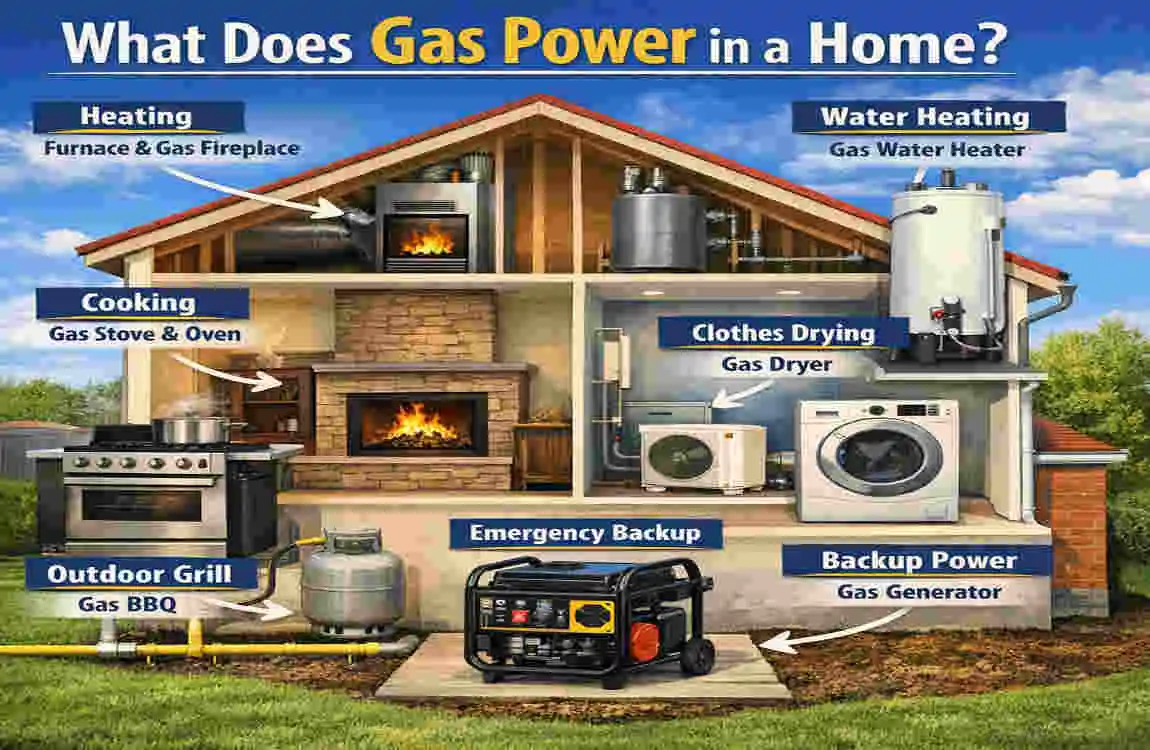
Gas, whether natural gas or propane, is a versatile energy source that powers numerous household appliances. Let’s break it down:
Natural Gas vs Propane
Natural gas is delivered to homes through underground utility lines, while propane is typically stored in tanks on the property. Both are efficient and widely used, but the choice often depends on your location and the availability of utility services.
How Gas is Delivered
- Natural Gas: Comes directly to your home via pipelines.
- Propane: Delivered in tanks and stored on-site, often in rural areas without access to natural gas lines.
Homes Without Gas Service
Not every home has access to gas. However, many appliances are designed to run on either gas or electricity, giving homeowners flexibility in their energy choices.
The Most Common Gas Appliances in a House
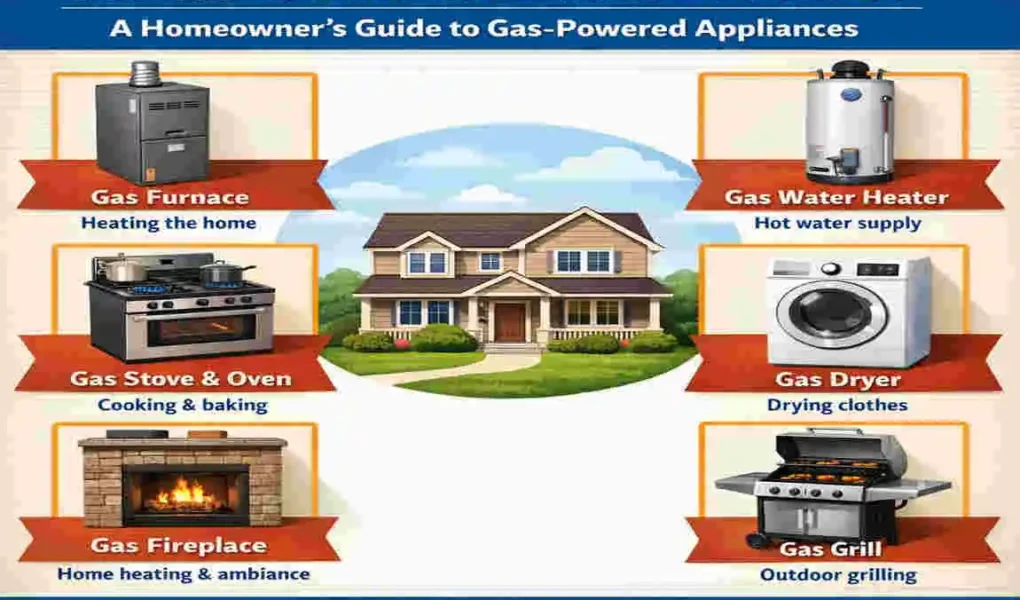
Gas is used in a variety of appliances, each serving a specific purpose. Let’s explore the most common ones:
Gas Furnaces and Home Heating Systems
Gas furnaces are the backbone of home heating in many regions. They work by burning gas to heat air, which is then circulated throughout the home.
- Why They’re Popular: Gas furnaces are efficient and provide consistent warmth, making them a top choice for homeowners.
- Energy Use: Heating is often the largest consumer of gas in a home, especially during the winter months.
- Maintenance Tip: Regularly clean or replace filters and schedule annual inspections to keep your furnace running efficiently.
Gas Water Heaters
Gas water heaters are essential for providing hot water for showers, sinks, and laundry.
-
- Types: Tank Water Heaters: Store and heat a large volume of water.
- Tankless Water Heaters: Heat water on demand, offering energy savings.
- Efficiency: Gas water heaters heat water faster than electric models, making them a popular choice.
- Homeowner Tip: Flush the tank annually to remove sediment and check the pilot light if the water isn’t heating properly.
Gas Stoves, Cooktops, and Ovens
Cooking with gas is a favourite among chefs and home cooks alike.
- Why Homeowners Love Them: Gas stoves offer precise heat control and instant temperature adjustments.
- Examples: Burners, ranges, wall ovens, and cooktops.
- Safety Note: Ensure proper ventilation and check burners regularly to prevent gas leaks.
Gas Clothes Dryers
Gas dryers are less common than electric ones but offer several advantages.
- How They Work: Gas dryers use a flame to generate heat, drying clothes faster than electric models.
- Benefits: Lower energy costs and quicker drying times.
- Maintenance Tip: Clean the lint trap after every use and inspect the vent for blockages.
Other Household Items That May Use Gas
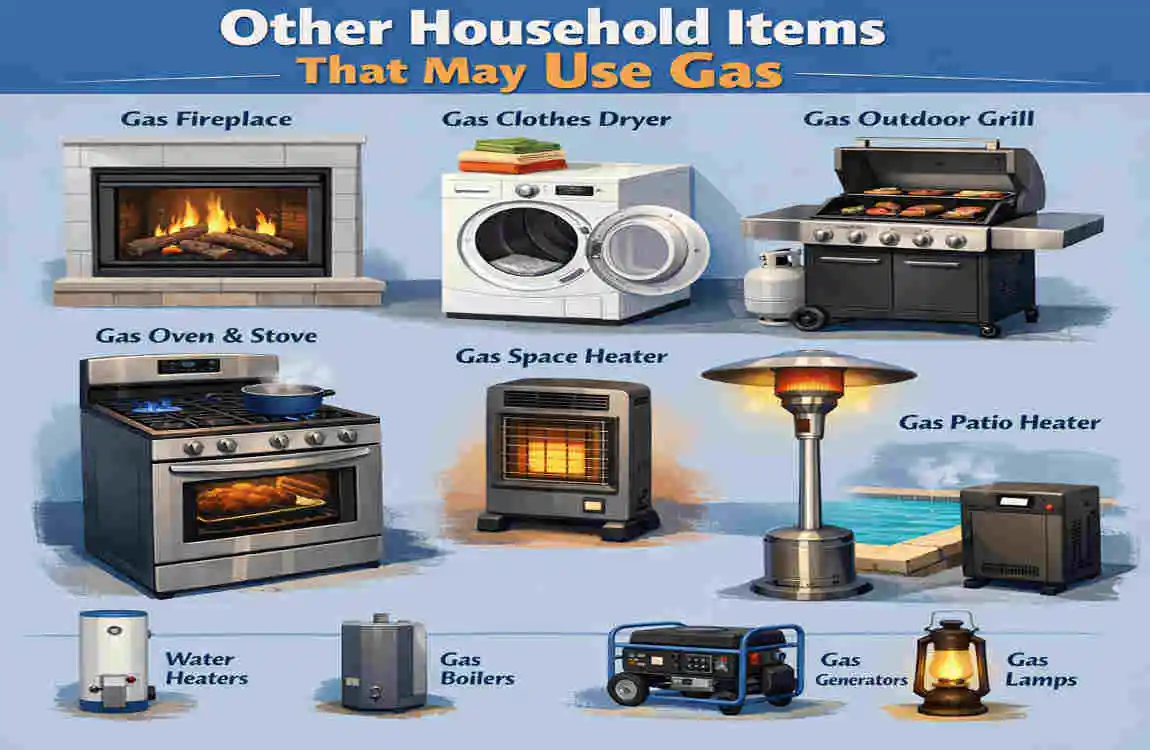
Beyond the essentials, gas powers several other appliances that enhance home comfort and convenience:
- Fireplaces and Hearths: Gas fireplaces provide warmth and ambience without the mess of wood-burning models.
- Space Heaters: Portable or built-in gas heaters are great for supplemental heating.
- Boilers: Used in homes with hydronic heating systems to heat water for radiators or underfloor heating.
- Outdoor Appliances: Gas grills, fire pits, and patio heaters make outdoor living spaces more enjoyable.
What Uses the Most Gas in a House?
Heating systems are typically the largest consumers of gas in a home. Here’s a breakdown of major gas users:
Appliance Gas Usage Notes
Furnaces are the largest gas consumers, especially in winter.
Water Heaters Moderate to High, depending on household size and usage.
Stoves and Ovens Moderate Usage varies based on cooking habits.
Clothes Dryers: Low to Moderate. Less frequent use compared to heating.
How to Tell Which Appliances in Your Home Use Gas
Not sure which appliances in your home use gas? Here’s how to find out:
- Check Utility Bills: Look for charges related to natural gas or propane.
- Inspect Appliances: Gas appliances often have visible gas lines or pilot lights.
- Read Labels: Many appliances have labels indicating their energy source.
- Do a Walkthrough: Take a tour of your home to identify gas-powered equipment.
Benefits of Gas-Powered Appliances
Gas appliances offer several advantages that make them a popular choice for homeowners:
- Efficiency: Gas heats faster than electricity, saving time and energy.
- Cost-Effectiveness: In many regions, gas is cheaper than electricity.
- Reliability: Gas appliances can operate during power outages (e.g., gas stoves).
- Performance: Precise heat control for cooking and consistent warmth for heating.
Downsides and Safety Concerns
While gas appliances are efficient, they come with some risks:
- Combustion Risks: Proper ventilation is essential to prevent carbon monoxide buildup.
- Gas Leaks: Leaks can be dangerous and require immediate attention.
- Maintenance Needs: Regular inspections are crucial to ensure safety and efficiency.
Gas vs Electric Appliances
Choosing between gas and electric appliances depends on your priorities. Here’s a quick comparison:
Feature Gas Electric
Heating Speed Faster Slower
Energy Cost Lower (in many areas) Higher
Maintenance Moderate Lower
Installation requires gas lines. Easier in most homes
Safety Tips for Homes With Gas Appliances
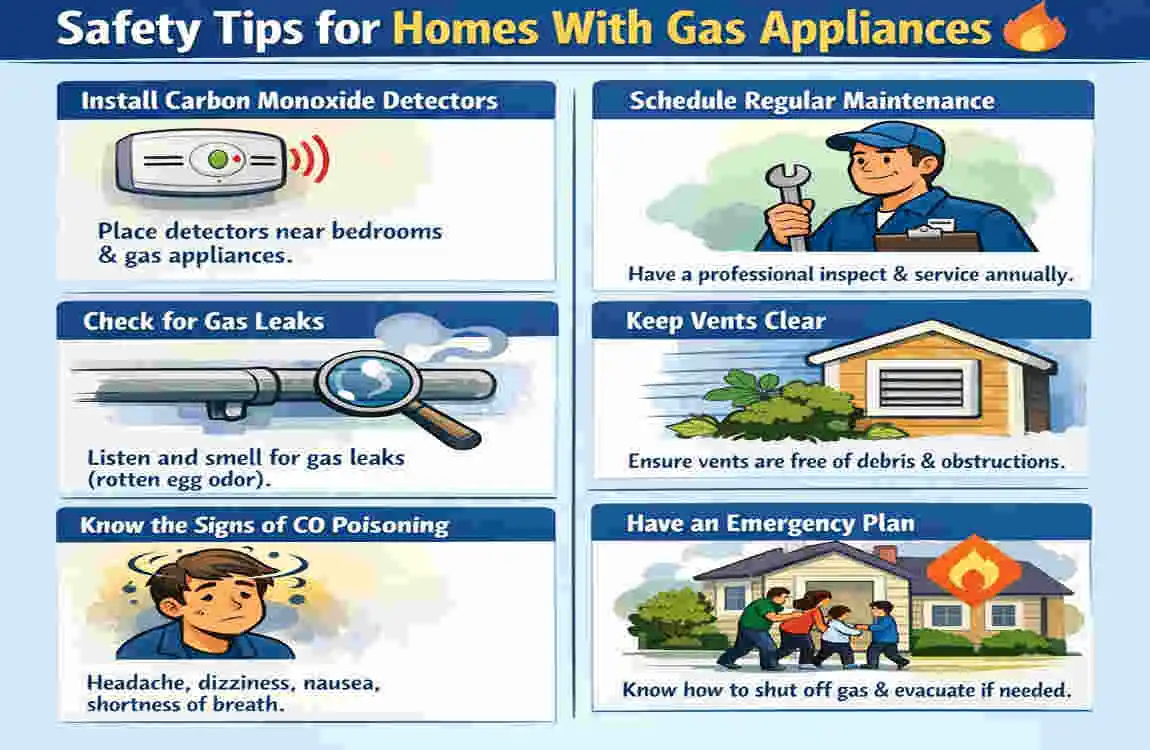
Safety should always be a priority when using gas appliances. Follow these tips:
- Install carbon monoxide detectors near sleeping areas.
- Keep vents and exhaust openings clear.
- Schedule regular maintenance for all gas appliances.
- Know how to shut off the gas supply in an emergency.
- Call a professional if you suspect a gas leak.
When to Call a Professional
Certain situations require expert help. Contact a licensed technician if:
- You smell gas or suspect a leak.
- A burner won’t stay lit.
- The furnace or water heater isn’t working properly.
- You’re installing or replacing a gas appliance.
Frequently Asked Questions
What are the most common things that use gas in a house?
The most common gas-powered appliances include furnaces, water heaters, stoves, and dryers.
Does every home have gas appliances?
No, not all homes have gas service. Some rely entirely on electricity.
What uses the most gas in a house?
Heating systems typically consume the most gas, especially during colder months.
Is a gas stove cheaper to run than an electric one?
Yes, in many areas, gas stoves are more cost-effective than electric ones.
Are gas appliances safe?
Yes, when properly maintained and used with safety precautions, gas appliances are safe.