
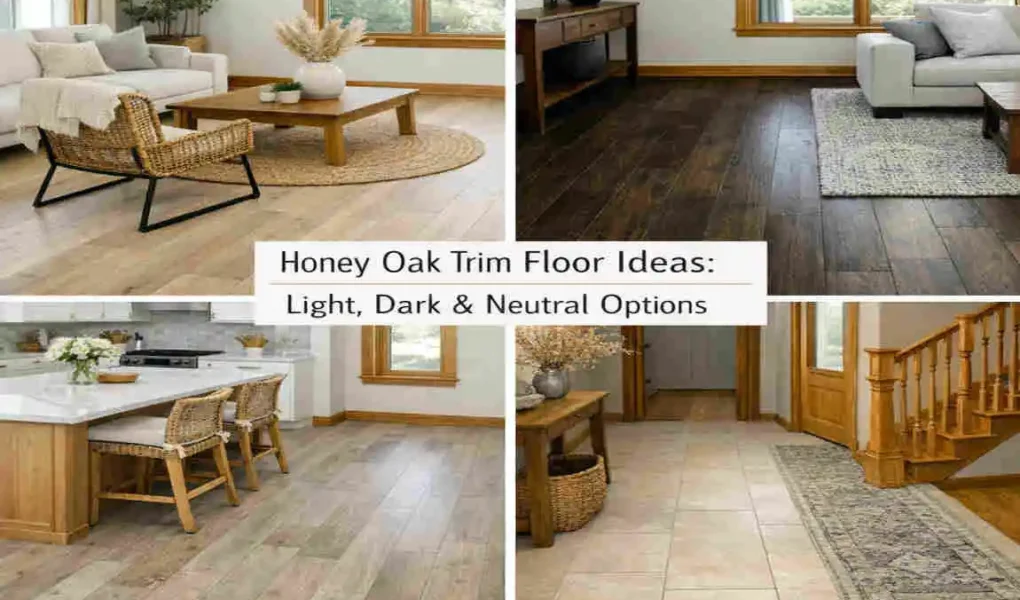
Are you feeling stuck with dated honey oak trim but dreaming of fresh, modernized floors? You are definitely not alone. If you own a home built in the 1980s or 1990s, you likely have honey oak everywhere—from the baseboards and window casings to the doors and kitchen cabinets. While this wood brings a nostalgic, undeniable warmth to a home, it can also feel incredibly challenging to decorate around.
When you start planning a home renovation, the very first question that pops into your mind is likely: what flooring goes with honey oak trim? It is a fantastic question because picking the wrong floor can make your home feel heavy, dated, or visually chaotic. The secret to modernizing honey oak is understanding its warm, golden, and slightly reddish hues. You cannot just ignore these tones; you have to work with them. To bring your home into 2026, your trim needs intentional contrast or careful harmony.
Light flooring for an airy, bright feel, dark flooring for high-contrast drama, and neutral flooring for a perfectly balanced, calming atmosphere. You do not have to rip out all your expensive wood trim to get a gorgeous, updated home. By simply changing what sits beneath your feet, you can completely transform your space.
Understanding Honey Oak Trim
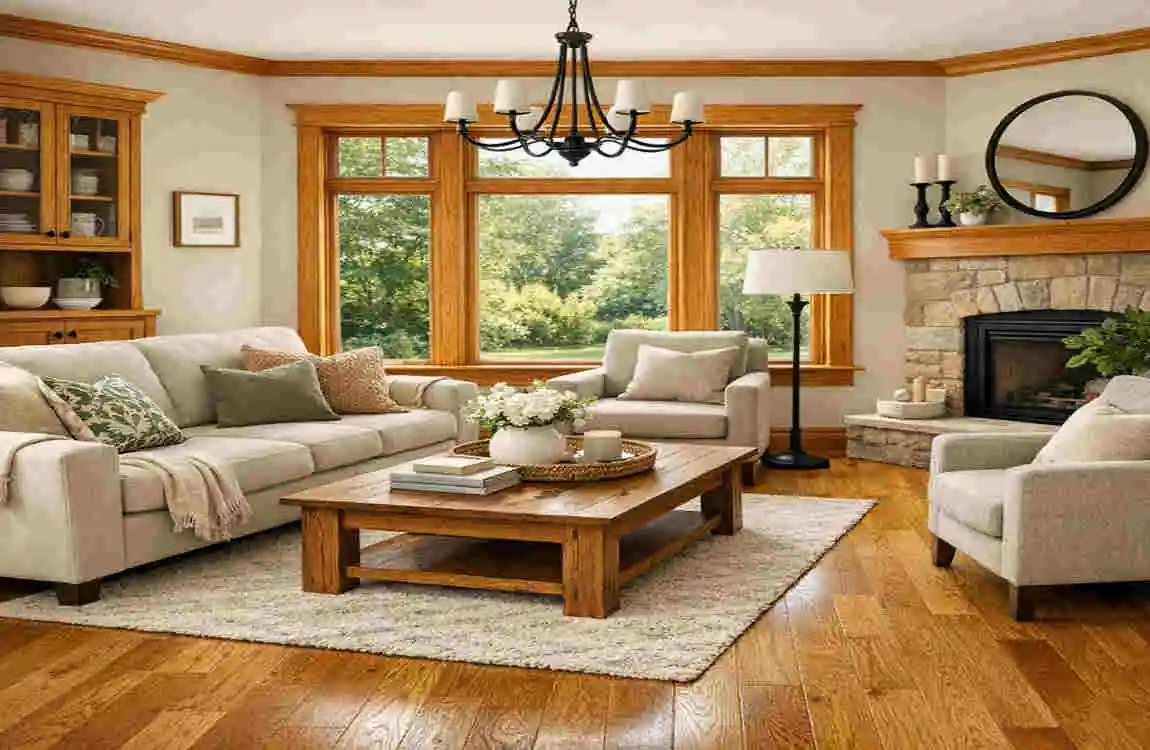
Before we dive into our favorite honey oak trim floor ideas, let’s take a moment to understand the wood we are working with truly. What exactly makes honey oak, well, honey oak?
Honey oak is famous for its distinct reddish-gold tones and its very prominent, sweeping grain patterns. It is a visually “busy” wood, meaning it catches the eye and demands attention. Because it is so intensely warm, it often clashes terribly with cool-toned colors. For example, if you pair honey oak with a stark, icy gray floor, the wood’s yellow and orange undertones will clash, making the trim look unexpectedly orange and dated.
Instead, honey oak shines brilliantly when paired with colors that either share its warm undertones or provide a deliberate, complementary contrast.
When testing hardwood floors that match honey oak or any other material, always remember this golden rule: test your samples in natural light. The way a floor looks in a fluorescent-lit showroom is completely different from how it will look next to your baseboards on a sunny afternoon. You should also consider your room’s size and orientation. Rooms that face north get cooler light, which can dull down warm tones, while south-facing rooms get bright, warm light that enhances golden hues.
Light Flooring Options
If you want to make your home feel expansive, clean, and incredibly modern, light flooring is one of the best options. Light floors reflect natural sunlight beautifully, instantly brightening up your space and softening the intense warmth of the oak. Let’s explore some of the best light floors for honey oak.
Best Light Woods
When looking at real or engineered wood options, focus on species that are naturally pale but carry a subtle warmth. Blonde oak, ash, or maple hardwoods are exceptional choices. These woods have a very light, almost creamy appearance that provides a gentle, pleasing contrast to the darker, richer tones of honey oak trim.
Because light woods are less visually heavy, they allow your trim to act as a grounding frame for the room rather than overwhelming it. For example, imagine a beautifully wide-plank white oak floor in a kitchen. The pale, matte finish of the white oak immediately updates the space, while the honey oak cabinets and trim add a touch of traditional warmth. It is a stunning, high-end look that works perfectly for modern, budget-friendly kitchen remodels.
When choosing hardwood floors that harmonize with honey oak trim, always look for an ultra-matte or satin finish. Glossy light floors can look cheap and will compete with the natural sheen of your trim.
Light Tile & Stone
If you are renovating a bathroom, entryway, or a busy kitchen, wood might not be your first choice. This is where light tile and stone step in as absolute heroes. Cream porcelain, light travertine, or soft beige limestone are phenomenal choices that immediately brighten any space.
These materials introduce an elegant, earthy texture that pairs wonderfully with the natural grain of oak. A large-format cream porcelain tile can make a small bathroom feel twice its size. If you want to add a touch of rustic luxury, a tumbled travertine floor offers subtle color variations that perfectly pick up the golden hues of the oak.
When installing light tile, pay close attention to your grout color. Instead of a stark, clinical white grout, opt for a warm taupe or soft sand color. This creates a softer transition between the tiles and ties in beautifully with the warm, golden baseboards.
Light Vinyl & Laminate
For busy households, homes with pets, or anyone on a stricter budget, light vinyl and laminate floors are a dream come true. You can easily find the best luxury vinyl plank for honey oak trim by looking for wood-look LVP in soft hickory or sun-bleached oak tones.
The major pros of going with LVP are its durability and affordability. Modern luxury vinyl is entirely waterproof, making it a stress-free option for kitchens and bathrooms. It is also highly scratch-resistant, meaning your dog’s claws or your children’s toys will not ruin your investment.
The only potential con? Some homeowners feel that, despite massive advancements in printing technology, vinyl can still lack the completely authentic, warm feel of true hardwood underfoot. However, for the price and the durability, light LVP remains one of the smartest and most popular choices on the market today.
Dark Flooring Options
If light and airy is not your style, why not lean into bold, sophisticated drama? Dark floors paired with honey oak trim can create an incredibly striking, elegant look. This pairing relies on high contrast to make both the floor and the trim pop. Let’s look at the best dark flooring honey oak combinations.
Rich Hardwoods
To truly ground a space and create a luxurious feel, look toward deep, rich hardwoods. Walnut, espresso-stained oak, or even ebony floors create a striking, undeniable contrast against the golden warmth of honey oak trim.
Walnut is particularly beautiful because, although it is dark, it naturally possesses warm, purplish-brown undertones that complement the golden hues of the trim without clashing. Espresso and ebony floors offer a more dramatic, almost graphic contrast that works incredibly well in open-concept homes.
When you use dark hardwood, the honey oak trim acts like a ribbon of golden light, wrapping around the room and highlighting your home’s architectural features. It is a fantastic way to make traditional trim look intentionally modern and highly sophisticated.
Dark Tile Choices
For areas prone to moisture or heavy foot traffic, dark tile is a spectacular choice that adds a distinctly modern edge to your home. Consider materials like charcoal slate, black porcelain hexagon tiles, or deep, dark gray ceramic.
A charcoal slate floor in an entryway or mudroom is not only practically indestructible, but it also creates a moody, organic contrast against honey oak doors and baseboards. Black porcelain hex tiles in a bathroom can take a space from “1990s builder-grade” to “2026 boutique hotel” in an instant.
The key to making dark tile work with your trim is to ensure the tile has a matte finish. Glossy black tile can look a bit harsh and reflective. At the same time, a matte finish absorbs light, creating a velvety, rich foundation that lets your honey oak trim shine.
Dark LVP & Engineered
You do not have to spend a fortune on solid walnut to get a luxurious dark floor. Matte ebony vinyl plank or dark-stained engineered wood mimics the look of high-end luxury wood at a fraction of the cost.
This is an excellent option if you are looking for honey oak trim floor ideas that combine high drama with maximum durability. Dark floors are notoriously good at hiding scuff marks (though they can show dust, which we will discuss later). Putting a dark, waterproof LVP in a high-traffic area like a family room or a kitchen provides a durable, worry-free surface that still looks incredibly chic and intentional next to your warm trim.
Neutral Flooring Options
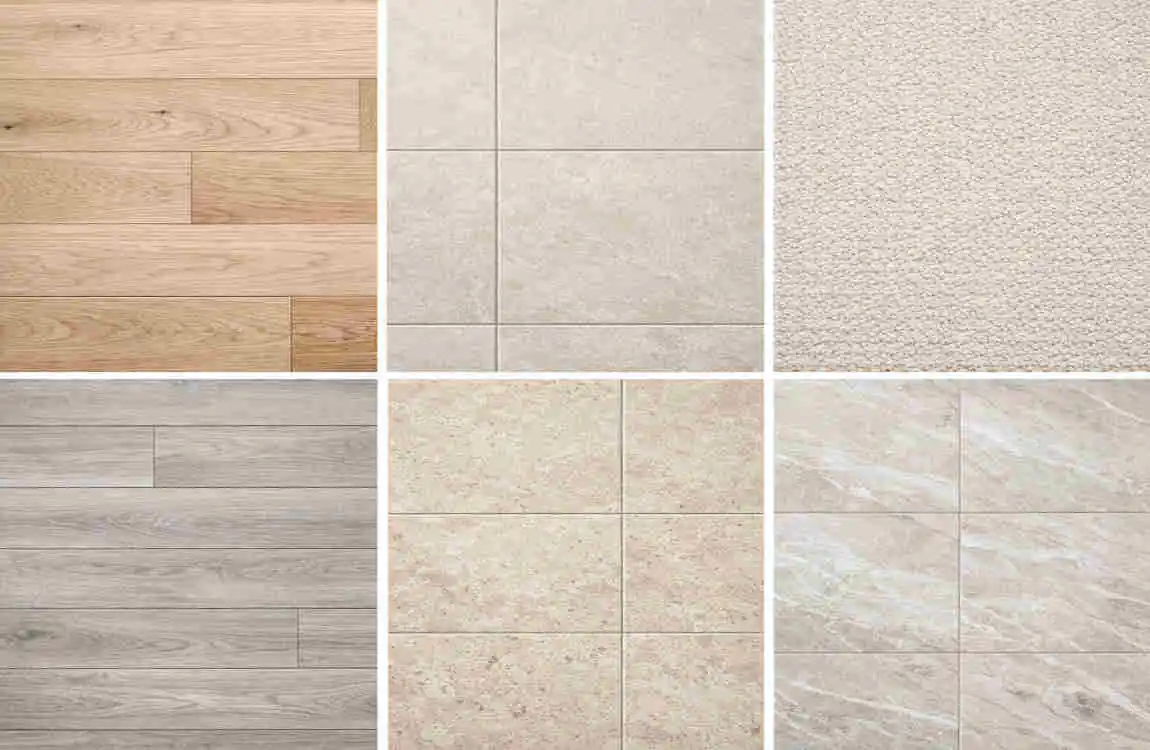
You may find light floors too pale and dark floors too intense. If you are looking for the perfect “Goldilocks” solution, neutral flooring is the way to go. Neutral floors blend seamlessly into the background, providing a calming, cohesive foundation that allows your furniture and décor to take center stage. Let’s explore the best neutral floors honey oak trim pairings.
Warm Greige & Taupe
You have probably heard the term “greige” tossed around on home improvement shows, and for good reason! Greige is the perfect blend of cool gray and warm beige. A greige LVP or laminate floor is arguably one of the safest and most beautiful choices you can make for honey oak.
Why? Because pure gray is too cool and clashes with the oak’s yellow, while pure beige can look too yellow, causing the room to feel overly warm and dated. Greige walks the perfect middle line. It softens the visual impact of the honey oak trim without completely overwhelming it or fighting it for attention. It is a subtle, sophisticated choice that feels highly modernized.
Mid-Tone Woods
If you love the look of wood-on-wood but want a seamless flow, mid-tone woods are a fantastic option. Look for hardwood floors that subtly match honey oak, such as pecan, subtly distressed hickory, or warm, weathered gray oak.
The goal here is not to match the honey oak trim exactly—that is a common mistake that leads to a flat, monotonous room. Instead, you want a floor that shares the same depth of color but features a slightly different undertone or grain pattern. Pecan, for instance, has a beautiful, rich mid-tone color that feels right at home next to honey oak. This seamless flow is highly versatile, making it an ideal choice for whole-home updates where you want the same flooring running from the front door to the bedrooms.
Neutral Stone & Porcelain
For a timeless, low-maintenance option that will never go out of style, look to neutral stone and porcelain. Warm beige marble-look porcelain tile or natural limestone are both phenomenal choices.
Marble-look tile that features warm, subtle gold or taupe veining is a brilliant way to tie in your honey oak trim without being overly obvious. It elevates the space, making it feel custom and expensive. Limestone offers a slightly more rustic, matte texture that feels incredible underfoot and brings a soft, earthy neutrality to bathrooms, laundry rooms, or kitchens.
Comparison Table
To help you make the best decision for your home, we have put together this handy comparison table. It breaks down the key differences between our top flooring categories, giving you a quick snapshot of what to expect.
Flooring Type Best for Honey Oak Trim Pros Cons Est. Cost/sq ft Example Rooms
Light Wood Brightening small spaces, adding modern airiness Feels expansive, airy, warm Can show dirt more easily $4 – $8 Kitchens, Living Rooms
Dark Tile High-contrast drama, grounding a space Highly durable, distinctly modern Can be slippery when wet, shows dust $3 – $7 Entries, Mudrooms, Baths
Neutral LVP Budget balance, creating a calming atmosphere Very affordable, 100% waterproof May fade over time in direct sun $2 – $5 Family rooms, Basements
Pros & Cons of Each
Choosing the right floor is all about balancing aesthetics with your lifestyle. Let’s break down the deeper pros and cons of each direction so you can make an informed choice for your honey oak trim floor ideas.
Light Flooring
- Pros: Light floors instantly give your home an expansive, open feel. They reflect natural light, making small or dark rooms feel much larger and more inviting. They also do a brilliant job of modernizing the space.
- Cons: Because they are so bright, they can sometimes make your honey oak trim look a bit faded or washed out if the tones are too similar. Additionally, light floors are notorious for showing dark pet hair and dirt, requiring more frequent sweeping.
- Maintenance Tip: Invest in a high-quality dry dust mop and use it daily to keep dirt from scratching the finish.
Dark Flooring
- Pros: Dark floors are the ultimate choice for elegance and sophistication. They provide a gorgeous, high-end contrast that makes golden trim pop and look intentional. They also hide dark scuff marks and deep scratches better than light floors.
- Cons: They can significantly darken a room, making small spaces feel slightly closed in. Furthermore, dark floors are famous for showing every speck of light-colored dust and white pet hair.
- Maintenance Tip: A robot vacuum is a dark-floor owner’s best friend. Run it daily to keep dust bunnies at bay!
Neutral Flooring
- Pros: Neutral floors are incredibly flexible. They allow you to change your paint colors and furniture styles over the years without ever clashing with your floor. They bridge the gap perfectly between modern style and traditional trim.
- Cons: If you do not incorporate enough texture into your room’s décor (like rugs, throws, and textured fabrics), neutral floors can sometimes feel a bit bland or “safe.”
- Maintenance Tip: Neutral floors are the easiest to keep looking clean! Standard weekly vacuuming and occasional damp mopping with a pH-neutral cleaner are all you need.
Room-Specific Ideas
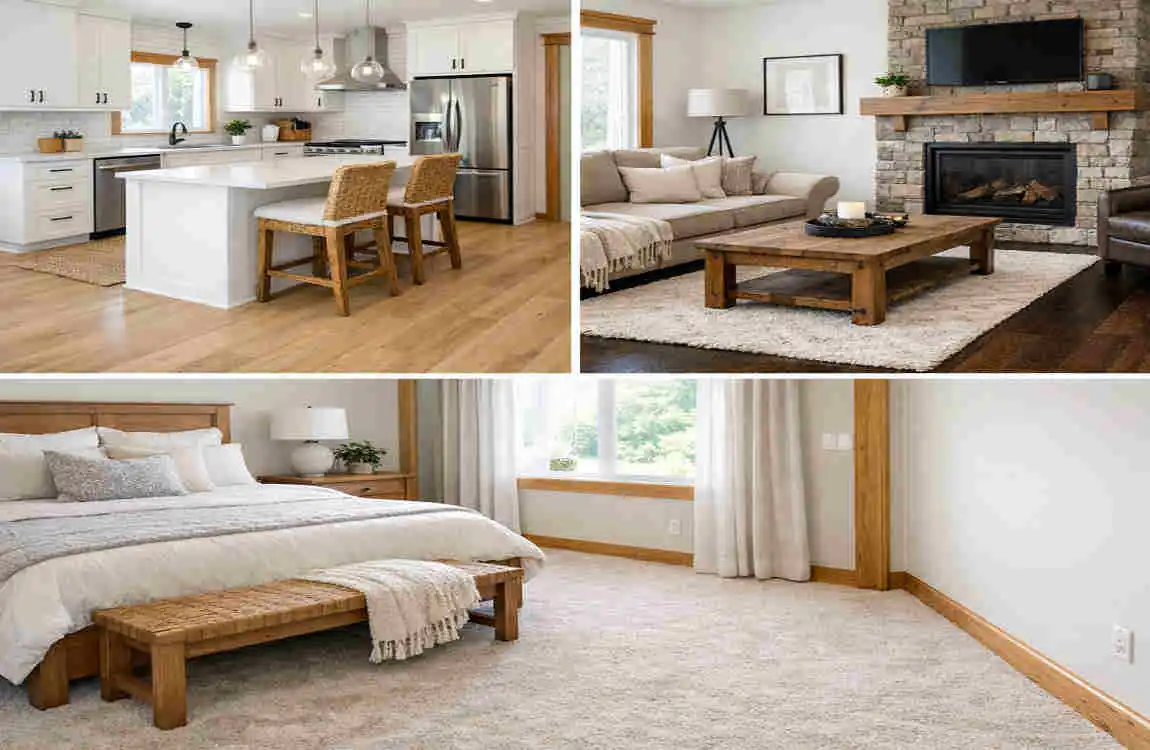
Sometimes, you do not need to use the same flooring throughout your entire house. Different rooms serve different purposes, and your flooring can reflect that.
- Kitchens: The heart of the home. We highly recommend neutral greige LVP or light tile here. A neutral greige effortlessly balances out the heavy warmth of honey oak kitchen cabinets, giving you a clean, modern cooking space that is highly durable.
- Bedrooms: Bedrooms should be your sanctuary. Light ash wood or pale hickory LVP creates a deeply calm, serene environment. The light flooring paired with oak trim makes the room feel like a tranquil, airy retreat.
- Living Rooms: For spaces where you want to gather and feel cozy, lean into darker tones. A dark walnut hardwood or espresso engineered wood creates an intimate, warm, and highly sophisticated coziness perfect for curling up next to the fireplace.
Budget & Installation Tips
Renovating your floors is a significant investment, but there are smart ways to maximize your budget. If you are handy, choosing a DIY-friendly luxury vinyl plank (LVP) can save you thousands of dollars in installation costs. Modern click-and-lock LVP systems from reputable 2026 brands like Mohawk or Shaw are designed specifically for easy home installation.
On the other hand, if you are opting for solid hardwood or intricate tile patterns, we strongly advise hiring a professional. Hardwood requires acclimation, precise cutting, and nailing, while tile requires perfectly level subfloors to prevent cracking.
As of 2026, you can expect to pay anywhere from $2 to $5 per square foot for quality LVP, whereas professional hardwood installation can run upwards of $8 to $12 per square foot, material included. Always buy 10% more material than your square footage dictates to account for cuts and waste!
Common Mistakes to Avoid
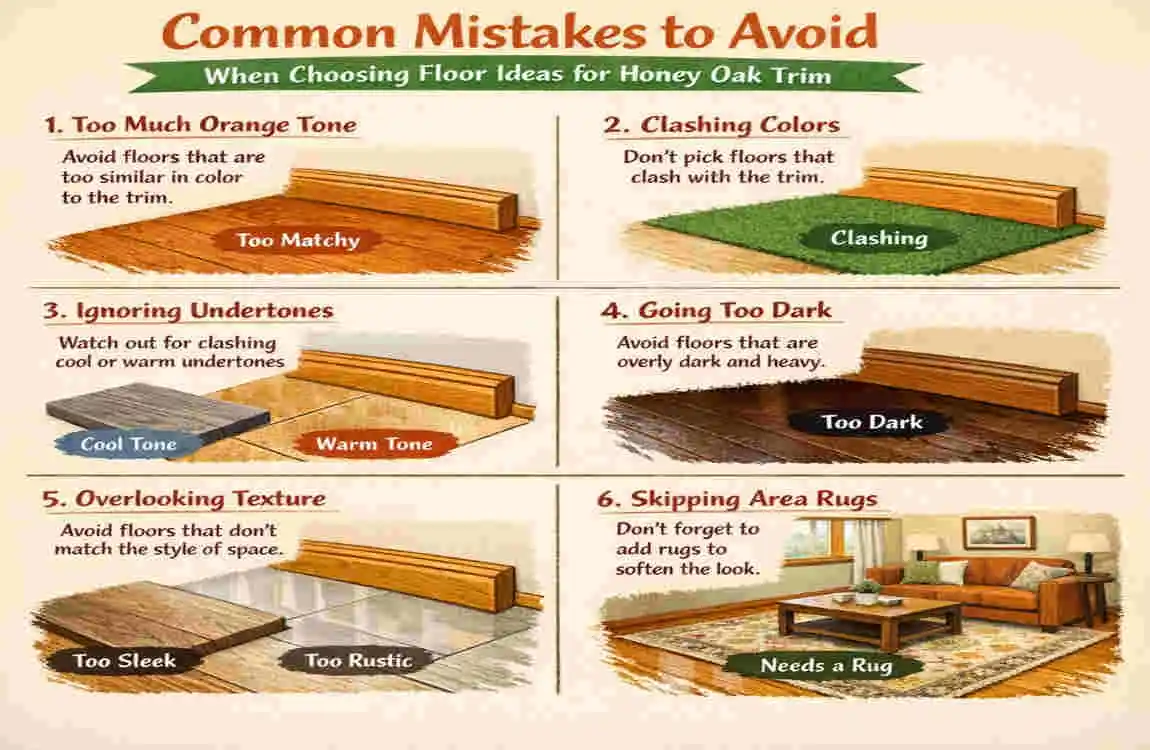
When choosing flooring for honey oak trim, there are a few major pitfalls you must avoid to ensure your renovation is a success.
First, do not try to match your trim exactly. Finding a floor that matches your honey oak trim exactly will result in a room that looks like a giant wooden box. It is visually overwhelming and looks instantly dated. Always aim for contrast or a complementary neutral.
Second, never ignore your lighting. Buying flooring without looking at a sample in your actual home, under your specific lighting conditions, is a recipe for disaster.
Finally, do not skimp on your underlayment. A cheap underlayment will make your new floors sound hollow and loud. Invest in a quality moisture-barrier underlayment for a solid, quiet feel underfoot.
FAQs
What flooring goes with honey oak trim? To quickly recap, the best options are:
- Light, blonde woods (like ash or white oak)
- Neutral greige luxury vinyl plank
- Dark, rich hardwoods (like walnut or espresso)
- Warm beige or creamy porcelain tiles
- Dark, moody slate or charcoal tiles.
Can I mix light and dark flooring in open floor plans? It is best to keep flooring consistent in an open floor plan to maintain a seamless visual flow. However, you can absolutely use a light wood throughout the main living areas and use a dark, contrasting tile in a specific zone, like an entryway or an open kitchen, to define the space.
What is the best flooring for Lahore climates? If you live in a climate with intense heat and high humidity, like Lahore, solid hardwood can be risky because it expands and contracts. Your absolute best bet is a high-quality, 100% waterproof Luxury Vinyl Plank (LVP) or porcelain tile. These materials are incredibly durable, resist humidity completely, and stay comfortably cool underfoot during the hot summer months.