
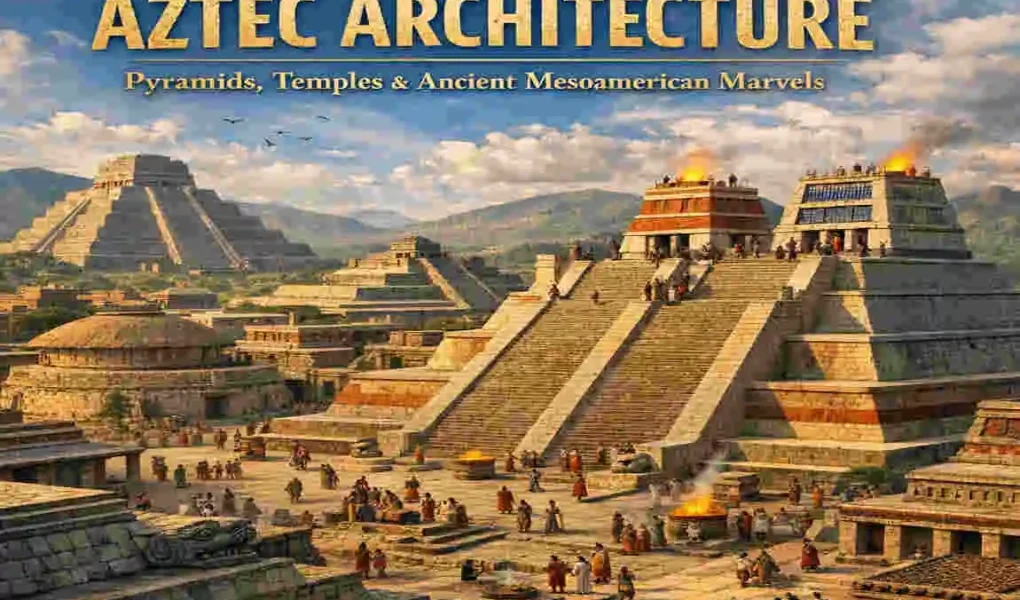
A sprawling city rising from the waters of a lake, its skyline dominated by towering pyramids adorned with intricate carvings of serpents and gods. This is the world of Aztec architecture, a testament to the ingenuity and artistry of the Mexica people who thrived in central Mexico from 1325 to 1521 CE. Their architectural achievements were not just feats of engineering but also profound expressions of their religious beliefs, social structure, and connection to the cosmos.
| Feature | Description | Iconic Examples |
|---|---|---|
| Talud-Tablero Panels | Alternating slopes and verticals for pyramid stability and layered platforms | Templo Mayor, Tenayuca Pyramid |
| Step Pyramids & Temples | Multi-level with steep stairs, often twin shrines for deities like Huitzilopochtli and Tlaloc | Great Pyramid of Cholula |
| Urban Planning | Vast plazas, ball courts, and causeways in grid layouts like Tenochtitlán | Tenochtitlán island city |
| Symbolic Sculptures | Bas-reliefs, carvings of warriors, gods, and cosmology on exteriors | Warrior statues, mythic murals |
| Materials & Techniques | Tezontle stone, adobe, precise geometry for public ceremonial spaces | Chinampas, aqueducts |
Core Features of Aztec Architecture
Defining What Is Aztec Architecture
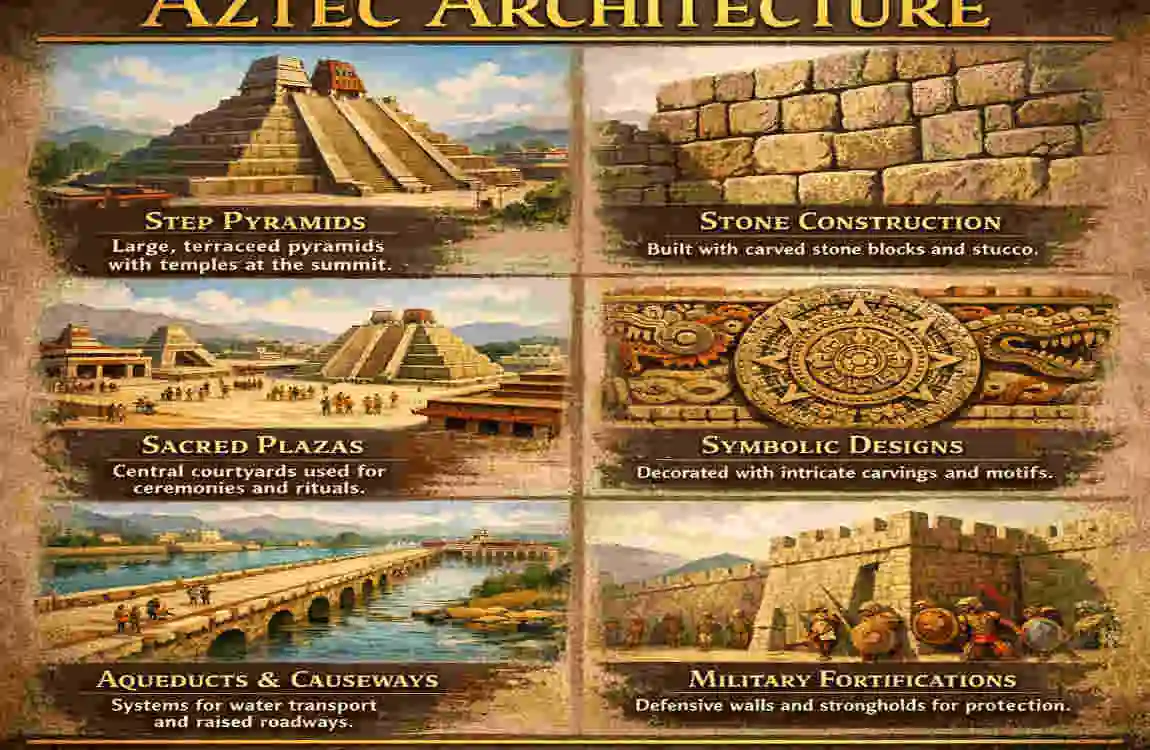
At its core, Aztec architecture is characterized by its monumental scale, intricate designs, and deep symbolic meaning. The Aztecs built their structures primarily from tezontle, a red volcanic rock, along with lime plaster and hand-cut stones. Despite lacking metal tools or the wheel, they achieved remarkable precision in their constructions.
One of the most distinctive features of Aztec architecture is the talud-tablero style, a design borrowed from earlier Mesoamerican cultures, such as Teotihuacan. This style combines a sloping base (talud) with a vertical panel (tablero), often adorned with carvings of deities, serpents, or geometric patterns.
Talud-Tablero Style
The talud-tablero style is a hallmark of Aztec pyramids and temples. The sloping base provided structural stability, while the vertical panels served as canvases for intricate carvings. For example, the Temple of the Feathered Serpent at Teotihuacan, though predating the Aztecs, heavily influenced their architectural style.
Symbolism and Orientation
Aztec structures were meticulously aligned with celestial events and cardinal directions. Pyramids often featured four levels, symbolizing the four cardinal directions and the Aztec cosmological belief in the universe’s layered structure. Shrines atop these pyramids were dedicated to gods such as Huitzilopochtli (the sun god) and Tlaloc (the rain god), underscoring the connection between architecture and religion.
Feature Description Example
Talud-Tablero Sloping base + carved panels Temple of the Feathered Serpent
Stepped Pyramids , Multi-tiered with summit temples , Templo Mayor
Materials : Tezontle stone, stucco finishes , Urban causeways
Iconic Pyramids: Engineering Marvels
Aztec Pyramids: Engineering Marvels
Aztec pyramids are among the most iconic symbols of their civilization. These stepped structures were built using an additive construction method, where new layers were added over time to expand and renovate existing pyramids. This technique allowed the Aztecs to adapt their structures to changing needs and religious practices.
Templo Mayor
The Templo Mayor, located in the heart of Tenochtitlan (modern-day Mexico city), was the spiritual and political center of the Aztec Empire. This pyramid featured twin shrines at its summit, dedicated to Huitzilopochtli and Tlaloc. The duality of these shrines symbolized the balance between war and agriculture, two pillars of Aztec society.
The Templo Mayor underwent seven construction phases, each adding new layers and embellishments. Its base measured approximately 100 meters, and its steep stairs led to the shrines where rituals, including human sacrifices, were performed.
Great Pyramid of Cholula
While not exclusively Aztec, the Great Pyramid of Cholula is a testament to Mesoamerican architectural ingenuity. It is the largest pyramid by volume in the world, standing 177 feet tall and spanning 45 acres. Dedicated to the god Quetzalcoatl, this pyramid features an earth core faced with stone, showcasing the Aztecs’ resourcefulness in using available materials.
Temples and Ceremonial Sites
Temples in Aztec Architecture
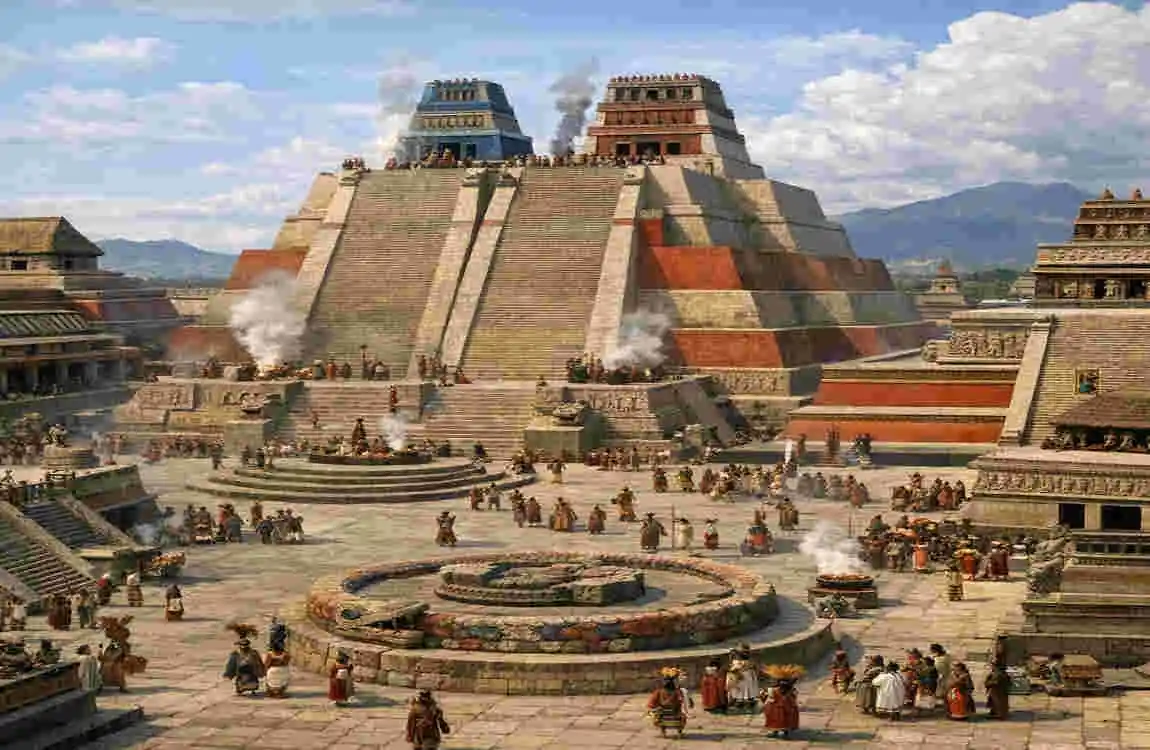
Aztec temples were more than just places of worship; they were platforms for elite rituals and community gatherings. These structures were often integrated into larger ceremonial precincts, which included plazas, ball courts, and altars.
Temple of the Feathered Serpent
The Temple of the Feathered Serpent, located in Teotihuacan, is a prime example of the talud-tablero style. Its tableros are adorned with serpent heads, symbolizing Quetzalcoatl, the feathered serpent deity. This temple’s design and symbolism heavily influenced later Aztec architecture.
Urban Context
Aztec cities like Tenochtitlan were meticulously planned, with ceremonial precincts at their core. These precincts were surrounded by canals and chinampas, or floating gardens, which provided a sustainable source of food for the city’s inhabitants. This integration of urban planning and agriculture highlights the Aztecs’ innovative approach to city-building.
Structure Location Key Traits
Templo Mayor, Tenochtitlan, Twin gods, 7 layers
Feathered Serpent Teotihuacan Murals, serpent carvings
Cholula Pyramid : The largest pyramid by volume
Mesoamerican Marvels: Broader Influences
Broader Mesoamerican Influences
Aztec architecture did not exist in isolation. It was the culmination of centuries of Mesoamerican architectural traditions, drawing on elements from cultures such as the Maya and Teotihuacan. For instance, the Maya’s use of corbeled arches and stelae influenced Aztec designs.
Ball Courts and Palaces
Ball courts, or tlachtli, were central to Aztec cities. These raised platforms were used for a ritualistic ball game tied to fertility rites and cosmic symbolism. Palaces, on the other hand, were sprawling complexes that housed the elite and served as administrative centers.
Chinampas and Causeways
The Aztecs’ use of chinampas and causeways demonstrates their mastery of engineering and sustainable design. Chinampas were artificial islands used for agriculture, while causeways connected Tenochtitlan to the mainland, facilitating trade and communication.
Construction Techniques: How Aztecs Built Without Modern Tools
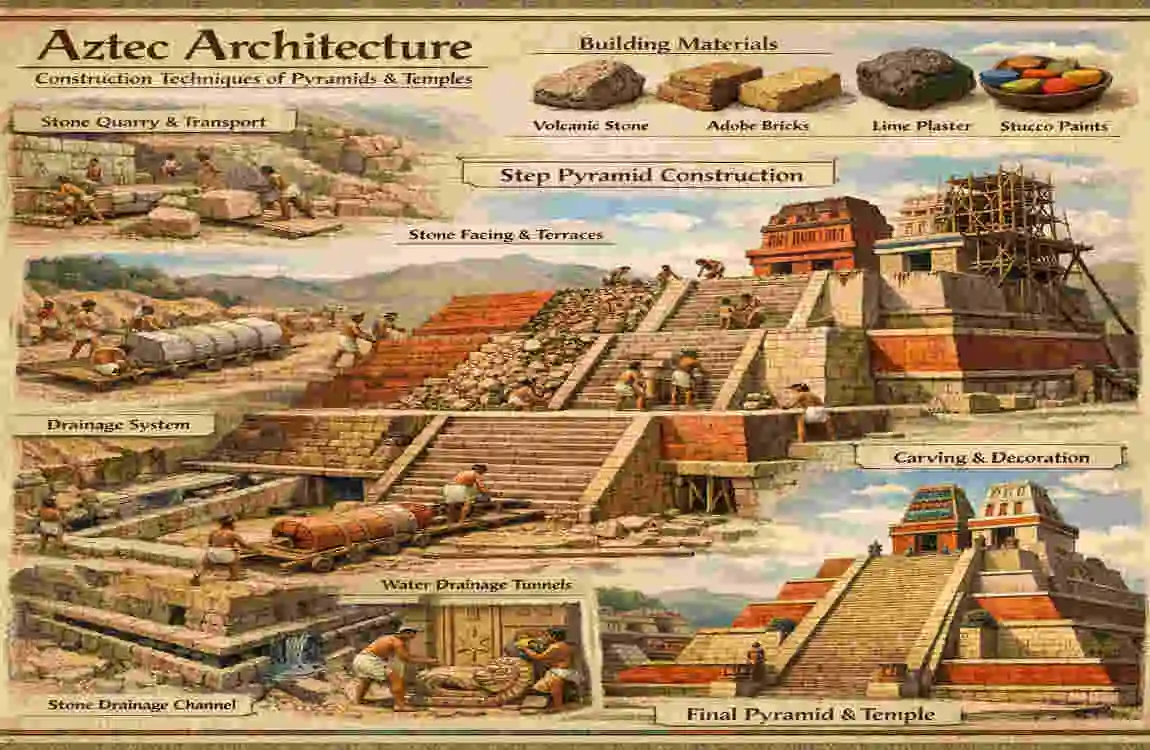
The Aztecs achieved architectural feats without modern tools or machinery. They relied on hand-stacked stones, adobe fill, and stucco finishes to create their structures. Workers used obsidian tools to shape stones and fit them together with remarkable precision, eliminating the need for mortar.
Labor was provided by conscripted workers, who toiled under the supervision of skilled architects and engineers. The Aztecs’ ability to organize large-scale labor projects is a testament to their advanced social and political systems.
Modern Legacy of Aztec Architecture
Aztec architecture continues to inspire modern designs, particularly in the form of ziggurat-like buildings and sustainable urban planning concepts. Tourist sites like the Templo Mayor Museum in Mexico city attract millions of visitors each year, preserving the legacy of this remarkable civilization.
FAQs: Aztec Architecture
What is the Aztec architectural style?
Aztec architecture is characterized by stepped pyramids, talud-tablero designs, and structures aligned with celestial events.
What are the famous Aztec pyramids?
The Templo Mayor in Tenochtitlan and the Great Pyramid of Cholula are two iconic examples.
How did the Aztecs build temples?
They used hand-cut stones, adobe fill, and stucco finishes, relying on precise fitting rather than mortar.
Aztec vs. Maya architecture?
Aztec architecture features talud-tablero designs, while Maya architecture is known for corbeled arches and intricate stelae.
Can I visit Aztec sites?
Yes, many Aztec sites, including the Templo Mayor Museum in Mexico city, are open to visitors.