Have you ever dreamed of building your own home? If you’re in Virginia, you might be wondering, “Can I build my own house in Virginia?” The answer is a resounding yes! Virginia’s owner-builder laws allow individuals to construct their own homes, provided they meet specific requirements. In fact, over 5,000 owner-builder permits are issued annually across Virginia counties, showcasing the popularity of this option.
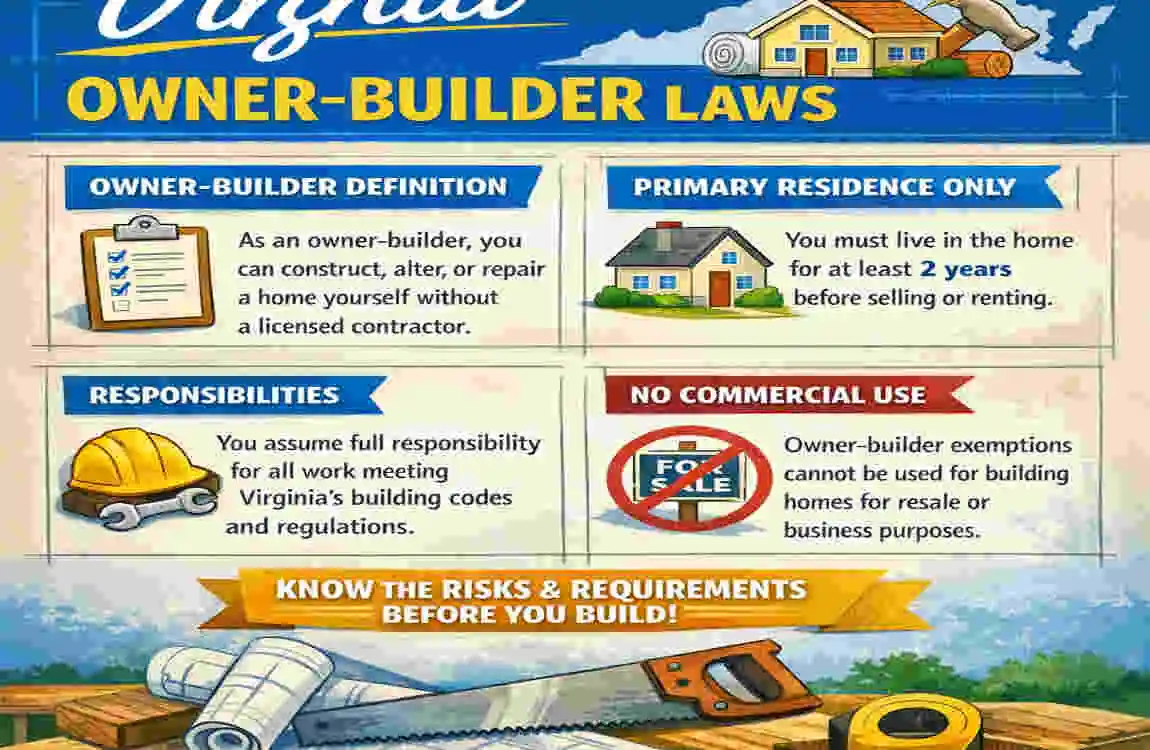
Under Virginia Code § 54.1-1101, homeowners may act as their own general contractors without a professional license, provided the home is intended for personal use and not for resale or rental. This exemption is a game-changer for those who want to save money, customise their living space, and take pride in building their dream home.
Virginia Owner-Builder Laws
Eligibility Basics
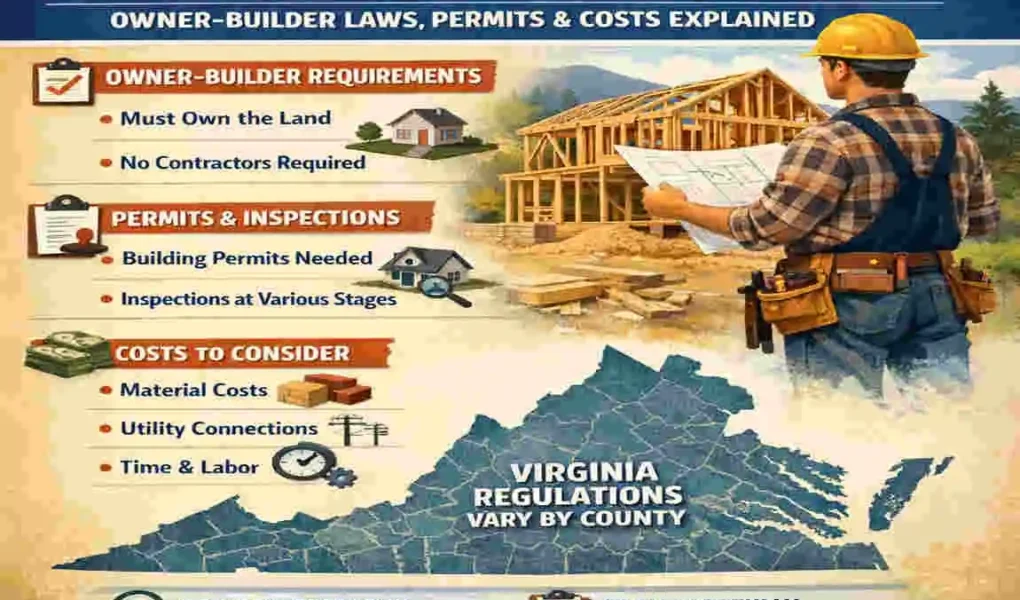
Virginia’s owner-builder laws are designed to empower homeowners while ensuring safety and compliance. To qualify as an owner-builder, you must:
- Own the land where the house will be built.
- Intend to use the house as your primary residence.
- Agree not to build homes for resale or rental purposes.
- Limit yourself to one exemption per year.
These rules ensure that the owner-builder exemption is used for personal projects, not commercial ventures.
Key Restrictions
While the owner-builder exemption offers significant flexibility, there are important restrictions to keep in mind:
Restriction Details
Licensed professionals must perform licensed Trades Electrical, plumbing, HVAC, and gas workls. However, there are limited exceptions for homeowners performing minor electrical work.
Disclosure : : You must file an owner-builder affidavit acknowledging your responsibilities and compliance with state laws.
Sale Limit : Homes built under this exemption cannot be sold within one year of completion without incurring penalties.
Comparison to Neighbouring States
Virginia’s owner-builder laws are relatively lenient compared to neighbouring states like Maryland, where stricter regulations often require professional oversight for most construction activities. This makes Virginia an attractive option for DIY enthusiasts.
Permits and Approval Process
Building your own house in Virginia requires careful planning and adherence to local regulations. Here’s a step-by-step guide to obtaining the necessary permits and approvals.
Zoning and Site Approval
Before you start construction, you’ll need to ensure that your land is zoned for residential use. This involves:
- Checking Zoning Laws: Contact your county’s zoning office to confirm that your property is suitable for residential construction.
- Conducting Soil Tests: These tests determine if the land can support a foundation and septic system.
- Meeting Setback Requirements: Ensure your home complies with distance requirements from property lines, roads, and other structures.
Building Permit Steps
Once your site is approved, follow these steps to obtain a building permit:
- Submit Construction Plans: Your plans must comply with the Virginia Uniform Statewide Building Code (VUSBC).
- File an Owner-Builder Affidavit: This document confirms that you understand and accept the responsibilities of acting as your own contractor.
- Schedule Inspections: Inspections are required at various stages, including foundation, framing, electrical, and completion.
County Variations
Permit fees and requirements can vary significantly from county to county. For example:
- In Fairfax County, fees are generally higher due to stricter regulations and higher property values.
- In Roanoke County, permit fees start at $40, plus $6 per $1,000 of estimated construction costs.
Timeline
The permit approval process typically takes 2-6 months, depending on the complexity of your project and the completeness of your application. Delays are common if plans are incomplete or fail to meet code requirements.
Estimating Total Costs
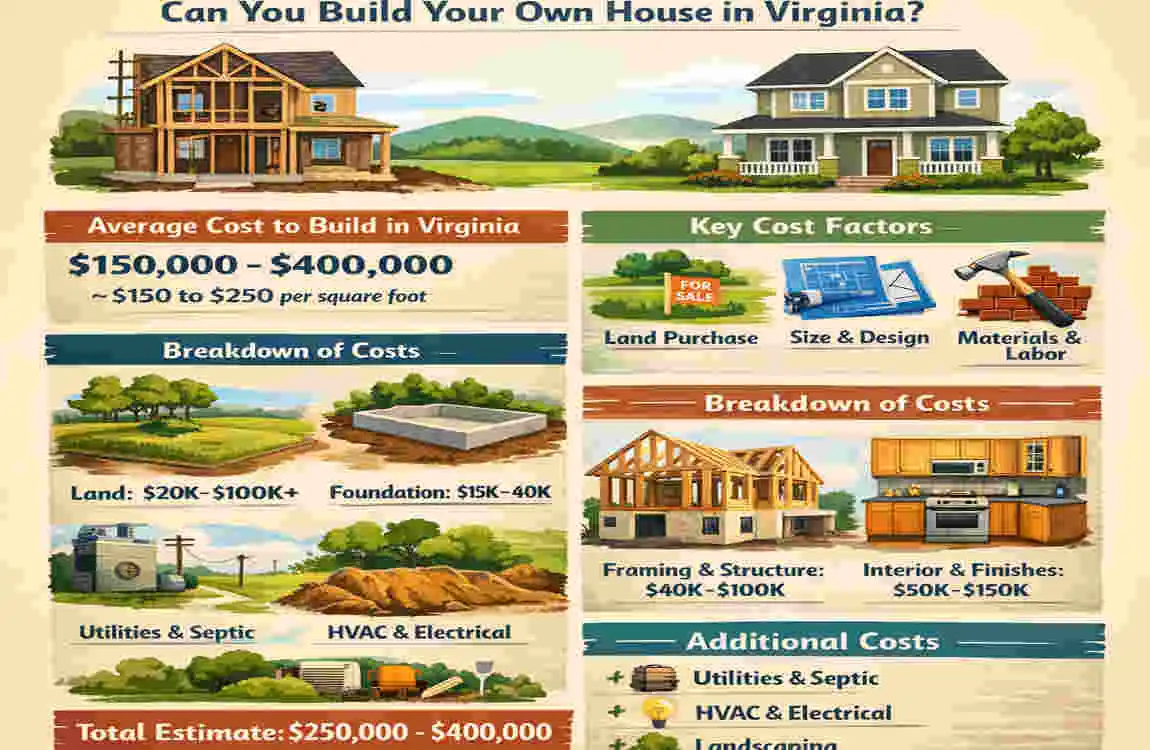
Building your own house can be a cost-effective alternative to hiring a contractor, but it’s essential to budget carefully. Here’s a breakdown of typical expenses for a 2,000-square-foot home in Virginia:
Cost Category Average Range Notes
Land Prep/Site Work $20,000 – $50,000 Includes clearing, grading, and soil testing.
Foundation : $15,000 – $30,000 . Costs vary based on foundation type.
Framing/Materials $80,000 – $120,000 DIY efforts can significantly reduce costs.
Trades (Required) $40,000 – $70,000 Covers plumbing, HVAC, and electrical work.
Permits/Fees $2,000 – $10,000 Based on county-specific rates.
Total $200,000 – $350,000 Represents a 20-30% savings compared to hiring a contractor.
Inflation and Financing
Keep in mind that construction costs are subject to inflation. In 2026, expect a 5-7% increase in material and labour costs. Financing options for owner-builders are limited, so you may need to rely on personal savings or specialised construction loans.
Pros, Cons, and Risks
Pros of Building Your Own House
- Cost Savings: Save 20-40% compared to hiring a contractor.
- Customisation: Design every detail to suit your preferences.
- Satisfaction: Enjoy the pride of building your dream home.
Cons and Risks
- Code Violations: Mistakes can result in fines up to 100% of the permit fee.
- Insurance Challenges: Securing adequate coverage can be difficult.
- Time Commitment: DIY projects often take 12-24 months, compared to 6-9 months for professional builds.
Step-by-Step Construction Guide
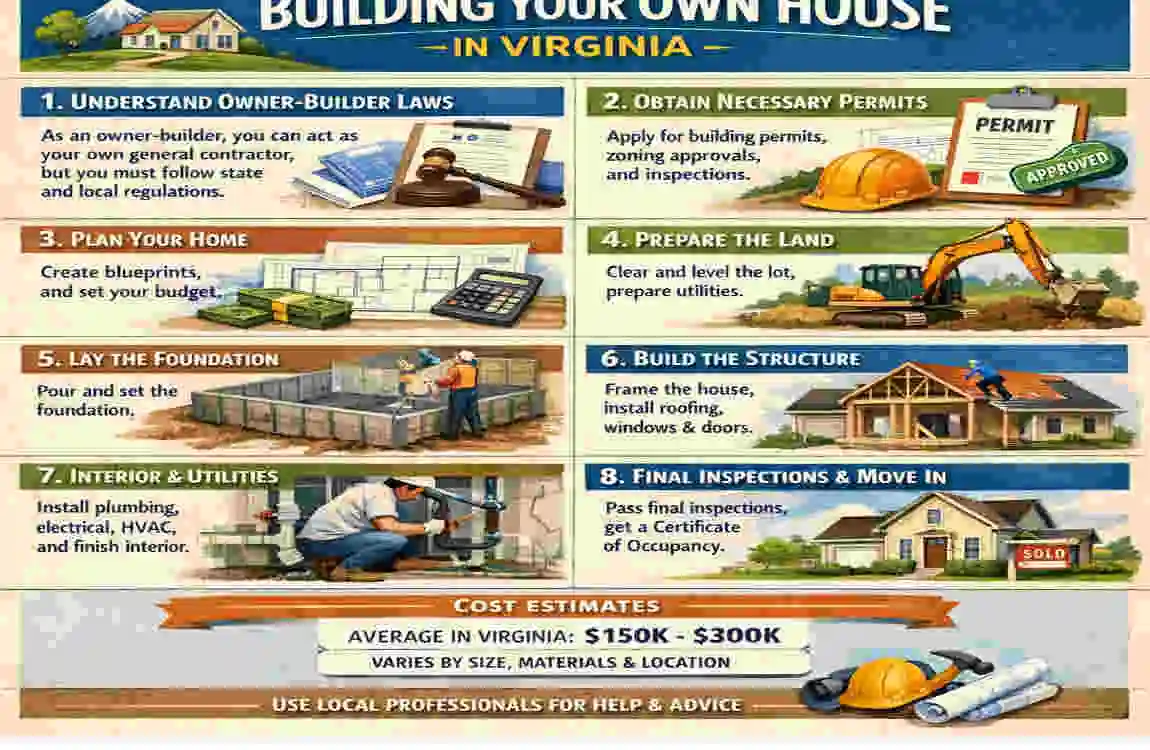
- Design Plans: Hire an architect to create detailed blueprints ($5,000-$15,000).
- Secure Financing: Obtain a construction loan or self-fund the project.
- Prepare the Site: Clear the land and pour the foundation.
- Build the Structure: Frame the house, install the roof, and complete the exterior.
- Install Systems: Hire licensed professionals for plumbing, electrical, and HVAC work.
- Finish Interiors: Complete drywall and flooring, and conduct final inspections.
Tips for Success and Common Mistakes
- Budget Wisely: Set aside a 10-20% contingency fund for unexpected expenses.
- Avoid Common Pitfalls: Skipping zoning checks or attempting DIY electrical work can lead to costly delays and fines.
- Leverage Resources: Use tools such as the Virginia Department of Housing and Community Development (DHCD) website for guidance.
FAQ
Can you build your own house in Virginia without a license?
Yes, as long as you meet the owner-builder requirements.
How much does an owner-builder permit cost in Virginia?
Permit fees range from $0.06 to $0.12 per square foot, depending on the county.