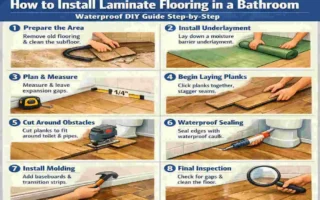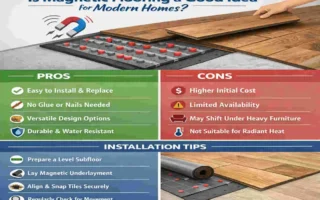
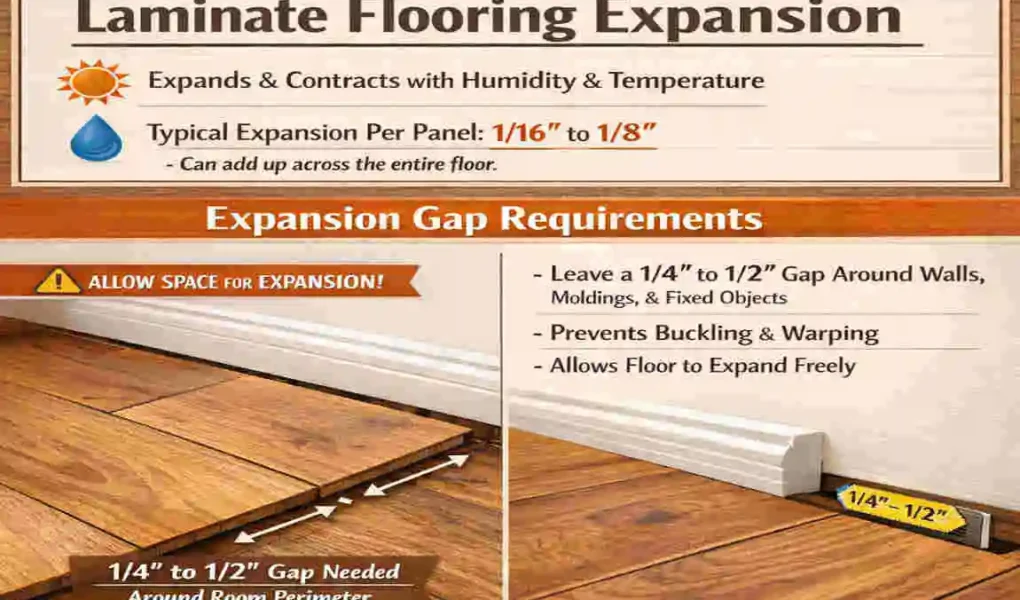
Laminate flooring is a popular choice because it looks good, costs less than many other floors, and is easy to maintain. But like most flooring materials, it does not stay the same size all the time. It can expand and contract when the temperature or moisture levels in your home change.
That is why many homeowners ask how much laminate flooring expands and whether it can cause problems later. The simple answer is this: laminate flooring expands slightly, but that small movement can matter a lot during installation. If the floor has no room to move, it may buckle, warp, or lift at the edges.
What Causes Laminate Flooring to Expand?
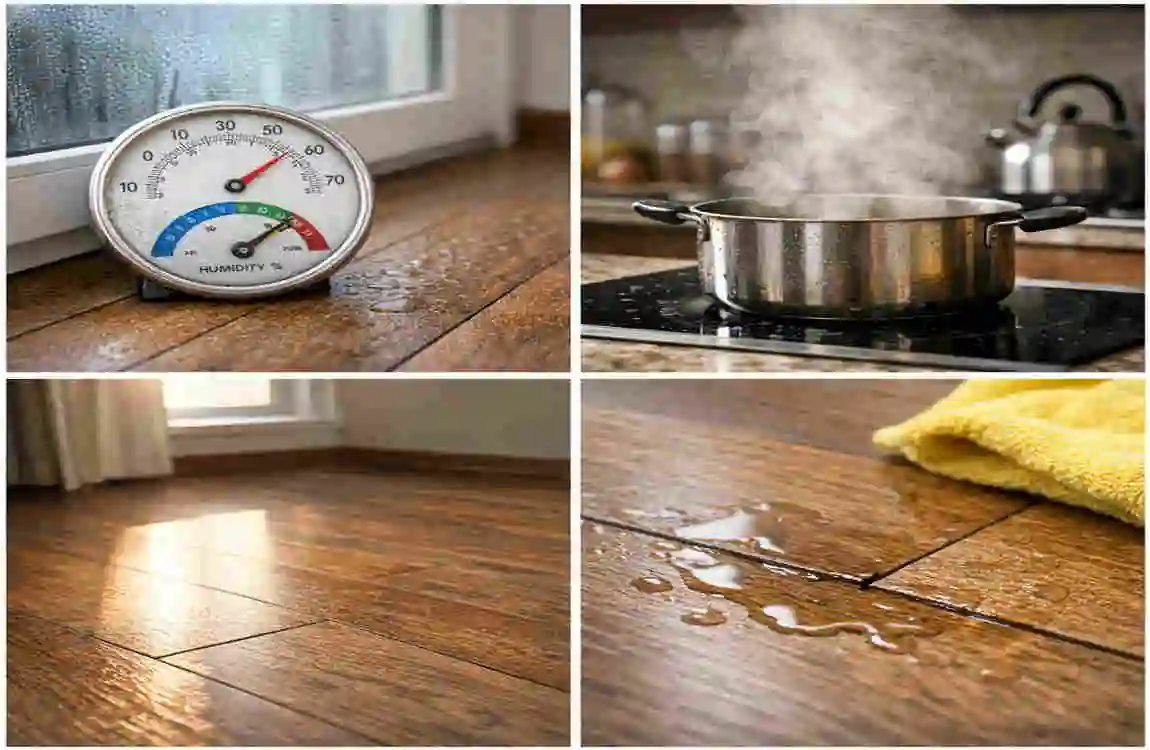
Laminate flooring expands primarily in response to changes in moisture and temperature. The core layer in the laminate is usually made of fiberboard, which is more sensitive to water and humidity than solid wood or tile.
Changes in Humidity Levels
When the air in your home becomes more humid, the floor can absorb some of that moisture. As a result, the boards may swell slightly. This is very common during rainy seasons, in bathrooms, or in homes with poor ventilation.
Even if the change looks small, it can build up over time. That is why humidity control is such an important part of floor care.
Temperature Fluctuations
Laminate also reacts to changing temperatures. In warmer months, the material can expand a little. In cooler months, it may shrink back. This natural movement is normal, but it needs space to happen.
If the floor is installed too tightly, it cannot move properly. That is when problems start.
Poor Indoor Ventilation
Rooms with little airflow often trap moisture. This can make laminate flooring more likely to expand. Kitchens, bathrooms, basements, and laundry rooms are common trouble spots.
Good ventilation helps keep moisture levels stable and reduces the chance of swelling.
Water Exposure and Spills
Spills, leaks, and standing water can cause much faster expansion than normal humidity changes. If water sits on laminate for too long, the boards can swell at the seams, rise at the edges, or become permanently damaged.
That is why quick cleanup matters so much.
How Much Does Laminate Flooring Expand?
The amount of expansion depends on the product, the room, and the environment. Most laminate flooring does not expand much, but even a small change can matter across an entire room.
Average Expansion Rate
In general, laminate flooring may expand only a small fraction of an inch per plank. However, across a full room, those small changes can add up. That is why manufacturers always recommend leaving expansion space around the edges.
The exact amount depends on the brand and product design. Some floors are designed to handle movement better than others, but no laminate floor should be installed tightly wall-to-wall.
Expansion by Room Size
Here is a simple look at how expansion can affect different spaces:
Room SizeExpansion ImpactWhat to Watch For
Small rooms Low to moderate Edge pressure near walls
Medium rooms Moderate Gaps, slight lifting, tight seams
Large open spaces Higher More visible movement and buckling risk
In smaller rooms, expansion problems may stay hidden for a while. In larger spaces, movement can become more noticeable because more of the floor surface is involved.
Factors That Affect Expansion Amount
Several things influence how much laminate flooring expands:
- Climate conditions in your area
- Indoor humidity levels in your home
- Flooring thickness and quality
- Installation method
- Moisture exposure from spills or leaks
Better-quality laminate often handles changes more effectively, but it still needs proper installation and care.
Why Expansion Gaps Are Important
Expansion gaps are small spaces left around the edges of the floor. They give the laminate room to move when it expands. Without them, the floor has nowhere to go.
Preventing Buckling and Warping
The biggest reason for expansion gaps is to stop the floor from pushing against itself. If laminate expands and hits a wall or fixed object, it can lift in the middle or buckle at the seams.
This is one of the most common problems in poorly installed floors.
Protecting Walls and Door Frames
Expansion is not only about the floor. When laminate pushes outward, it can also press against baseboards, door frames, and cabinets. Over time, this pressure can damage both the floor and the surrounding structures.
A small gap helps prevent that pressure from building up.
Improving Floor Longevity
A floor that can move naturally is more likely to last longer. Expansion gaps support the floor’s structure and reduce stress on the locking system.
That means fewer repairs and a better-looking floor over time.
Common Expansion Gap Sizes
Most manufacturers recommend leaving about 1/4 inch to 3/8 inch of expansion space around the edges of the room. Some larger rooms or certain products may need more.
Always check the product instructions before installation, because the right gap can vary by brand.
Signs Your Laminate Floor Has Expanded Too Much
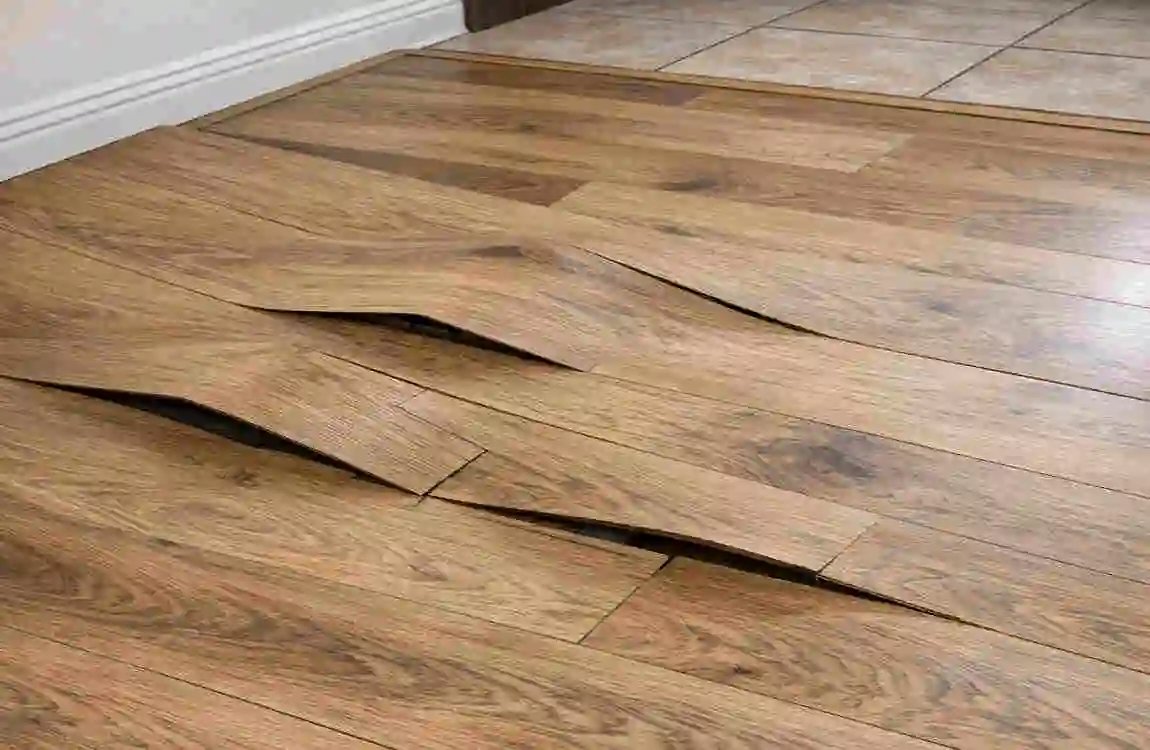
If laminate flooring expands too much, it usually sends clear warning signs. Catching these early can help you fix the issue before it gets worse.
Raised or Buckled Planks
One of the most obvious signs is when boards start lifting or forming a wave-like shape. This often means the floor is being squeezed with no room to expand.
Gaps Appearing Between Boards
Sometimes expansion or contraction can make joints shift. You may notice gaps between planks, especially if moisture levels have changed suddenly.
Squeaking or Uneven Flooring
If the floor feels uneven or makes new sounds when you walk on it, that may indicate movement beneath it. Expansion can cause the planks to press against each other in the wrong way.
Difficulty Opening Doors
When laminate expands, it can raise the floor slightly. This may make doors harder to open or close, especially in smaller rooms.
How to Prevent Laminate Flooring Expansion Problems
The good news is that most expansion problems can be prevented with careful planning and simple maintenance.
Acclimate Flooring Before Installation
Before installation, let the laminate sit inside your home for the time recommended by the manufacturer. This helps the planks adjust to your home’s temperature and humidity.
If you skip this step, the flooring may expand or contract after installation, which can cause problems later.
Leave Proper Expansion Gaps
Always leave the correct space around the edges of the room. This includes walls, columns, doorways, and built-in cabinets.
Do not place the laminate too tightly against anything fixed. That small gap is what allows the floor to move safely.
Maintain Stable Indoor Humidity
Try to keep indoor humidity within a steady range. A home that is too damp or too dry can cause flooring movement.
Using a dehumidifier in humid months or a humidifier in dry months can help keep conditions balanced.
Clean Spills Immediately
Do not let water sit on laminate flooring. Wipe up spills as soon as they happen. If a leak occurs, fix it quickly and dry the area well.
Fast action can prevent swelling and long-term damage.
Use Moisture Barriers in Damp Areas
If you are installing laminate in a basement or another area with possible moisture, use the right moisture barrier. This extra layer helps protect the floor from damp conditions underneath.
It is a simple step, but it can make a big difference.
Quick prevention tips:
- Acclimate the flooring before installation
- Leave proper expansion gaps
- Keep humidity stable
- Clean spills right away
- Use moisture barriers where needed
Can Expanded Laminate Flooring Be Fixed?
Yes, in many cases it can. The right fix depends on how serious the expansion is.
Minor Expansion Issues
Small swelling or slight edge pressure may improve if room conditions stabilize. Sometimes the floor settles once humidity drops.
Trimming Around Edges
If the floor is too tight, a professional may trim the edges so the laminate has more room to move. This can solve buckling caused by missing expansion space.
Replacing Damaged Planks
If boards have swollen badly or warped from water damage, they may need to be replaced. This is more common when a leak has sat for too long.
When to Call a Flooring Professional
You should call a professional if:
- The floor is heavily buckled
- Water damage has spread across a large area
- You are not sure where the pressure is coming from
- The problem keeps returning
A flooring expert can tell you whether the issue is minor or serious.
Maintenance Tips for Long-Lasting Laminate Floors
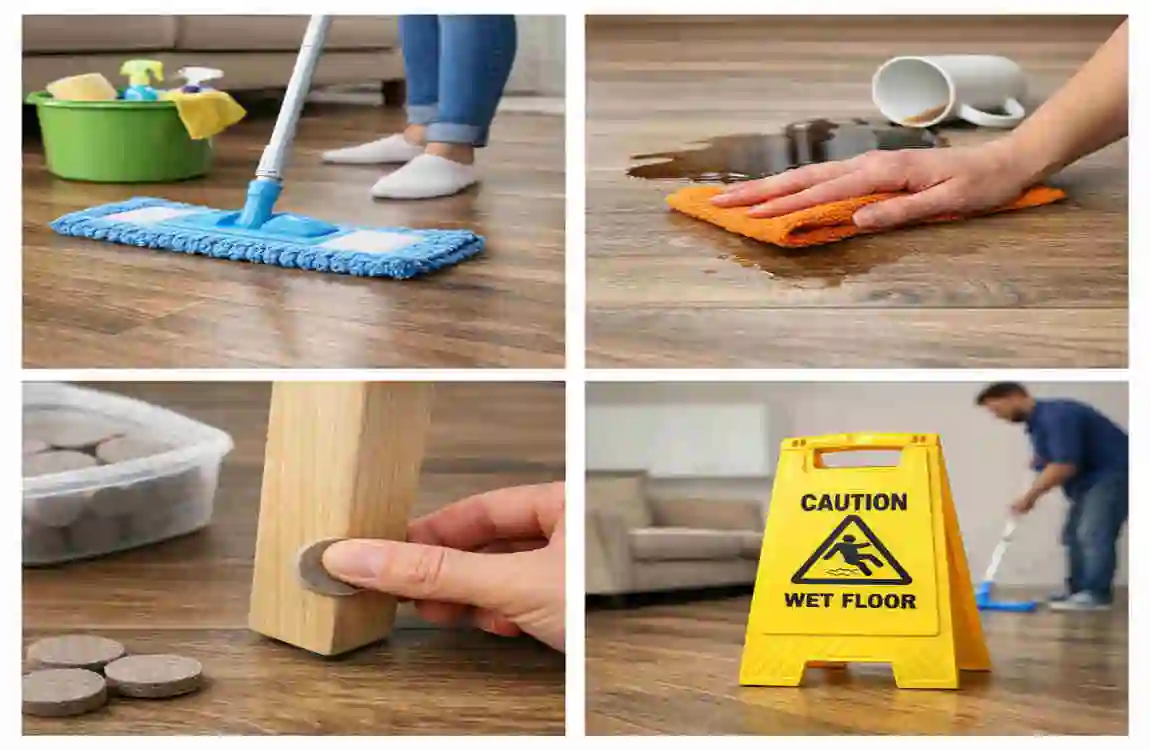
A little care goes a long way with laminate flooring. If you want it to stay in good shape, keep these habits in mind.
- Keep humidity balanced in your home
- Use mats and rugs near entryways
- Avoid too much water when cleaning
- Check for leaks under sinks and appliances
- Follow the manufacturer’s care instructions
These simple steps help reduce the risk of expansion and keep your floor looking clean and smooth.
Frequently Asked Questions
How much does laminate flooring expand?
Most laminate floors expand slightly with changes in moisture and temperature, which is why expansion gaps are essential.
What size expansion gap should laminate flooring have?
Most manufacturers recommend leaving about 1/4 to 3/8 inch around room edges.
Does humidity make laminate flooring expand?
Yes. High humidity causes laminate planks to absorb moisture and swell.
Can laminate flooring buckle from expansion?
Yes. If there is not enough expansion space, the floor can buckle, lift, or warp.
How can I prevent laminate flooring from expanding too much?
Acclimate the flooring, keep indoor humidity stable, leave proper expansion gaps, and clean spills quickly.
| Factor | Expansion Amount |
|---|---|
| General rate | 0.1% – 0.3% of total length |
| Per 10 feet | 0.12 – 0.36 inches |
| Per 10 feet (alternative) | 1/8 – 1/4 inch |
| Per 1 meter | ~1 mm (up to 1/4 inch) |
| Per 20 feet | Up to 1/2 inch |
| Required expansion gap | 1/4 – 3/8 inch (6–10 mm) |