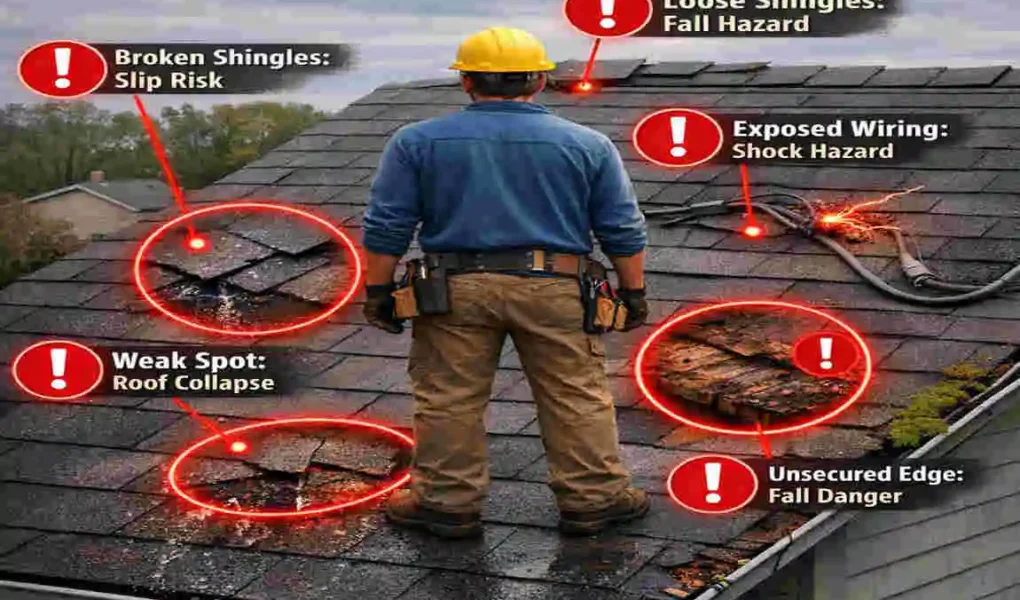
A worker stands still on a roof sloped steeply at nearly 40 degrees, taking a moment during a routine repair. At first glance, it seems harmless — just a pause in a physically demanding job. But what if that stillness is far more dangerous than it looks?
When a worker stands still on a sloped roof, they’re putting themselves at serious risk. Roofing is already ranked among the most hazardous construction tasks, with OSHA reporting that 1 in 10 construction deaths result from falls, many from roofs. Standing still on an angled surface might seem like a safe choice to avoid slipping — but ironically, it can increase the chance of a deadly fall.
Understanding Sloped Roofs: Why the Slope Makes Standing Still Deadly
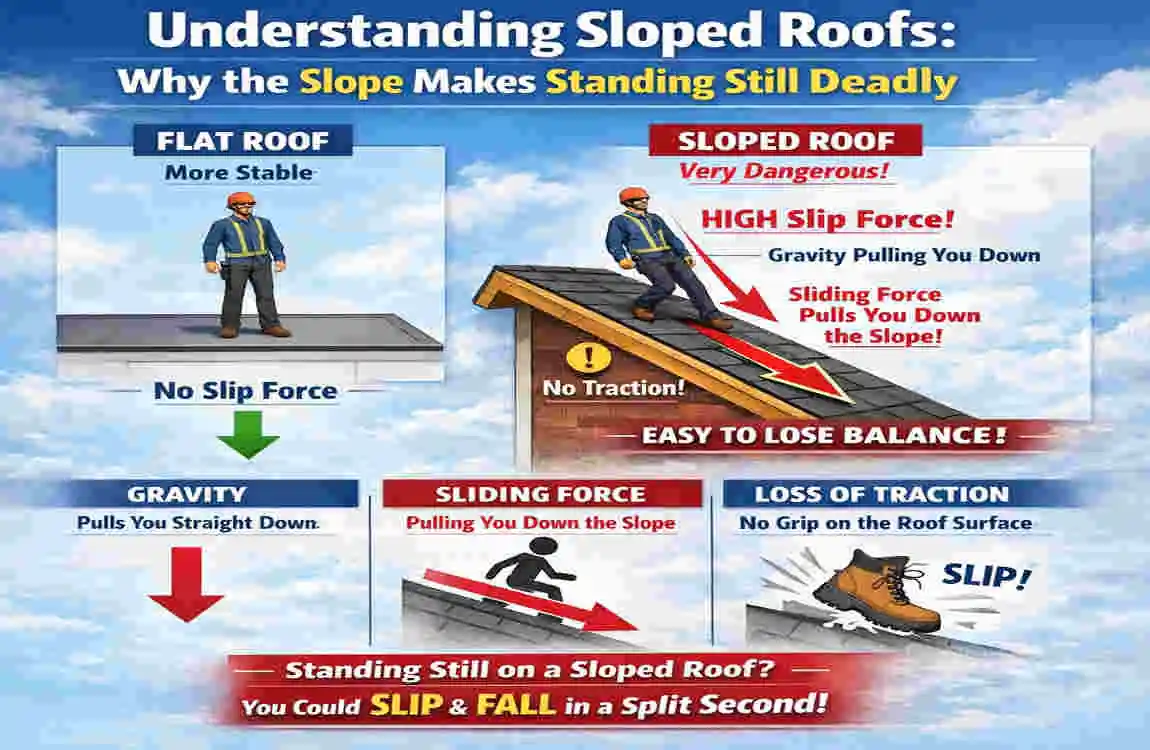
Before diving deeper, let’s understand what makes sloped roofs so uniquely dangerous.
Types and Angles of Sloped Roofs
Sloped roofs come in various styles:
- Gable roofs: Two sloping sides meeting at a ridge.
- Hip roofs: Slopes on all four sides.
Common pitches range from 4:12 (about 18°) to 9:12 (around 37°), sometimes even steeper. Materials vary too — from asphalt shingles to metal panels — each influencing traction differently.
The Physics Behind the Danger
The core issue is gravity and friction. When standing on a slope, your body resists sliding down due to the friction between your boots and the surface.
The friction force (( F_f )) depends on the normal force (( F_n )) — the force perpendicular to the surface — and the coefficient of friction (( \mu )) between your footwear and the roof:
[ \mu = \frac{F_f}{F_n} ]
When moving, your muscles constantly adjust, increasing effective friction and balance. But when standing still:
- Micro-adjustments stop.
- Your body’s center of gravity remains fixed.
- The risk of losing grip increases, especially on slick or weathered surfaces.
Imagine walking on a wet incline covered with leaves — moving forward, you adjust your footing, but if you stop, you’re more likely to slip. The same principle applies to roofing.
Additional Risk Factors
- Weather: Rain, dew, or frost drastically reduces friction.
- Wind: Gusts can unbalance a still worker.
- Roof age: Worn shingles may crumble under static weight.
- Fatigue: Tired muscles reduce the ability to correct balance.
Top 7 Hidden Dangers of a Worker Standing Still on a Sloped Roof
Understanding the hidden risks helps workers and supervisors stay alert. Here are the top seven dangers:
Sudden Loss of Balance
When a worker stands still, their body loses the ability to make tiny balance corrections. These micro-movements are essential on a slope to stay upright. Without them, even small shifts cause instability. Studies show balance-related falls spike sharply when movement ceases.
Material Displacement
Standing still concentrates weight on one spot, causing loose shingles, gravel, or debris to shift or slide beneath the feet. This sudden movement can trigger a fall, especially on older roofs with brittle materials.
Wind Gusts and Momentum
A moving worker can lean into or against the wind, counteracting gusts. A still worker has no momentum to resist sudden wind forces, making them more vulnerable to being pushed off balance.
Heat and Fatigue Buildup
Pausing on a hot roof can cause heat exhaustion or dizziness. Standing still means less blood circulation and increased fatigue, which impairs focus and balance.
Tool/Equipment Interference
When standing still, workers tend to have tools and equipment nearby. These can become trip hazards, especially if the worker shifts unexpectedly or tries to regain balance.
Structural Weak Points
Roofs may have unseen damage, such as rot or cracks. Standing still applies static pressure that can cause these weak spots to give way suddenly.
Psychological Freeze
In some cases, workers panic and freeze when they feel unstable. This “psychological freeze” prevents corrective movement, worsening the risk of a slip or fall.
Static vs. Moving Risk Comparison Table
Danger Static Stance Risk Moving Stance Mitigation
Balance Loss High (no micro-adjustments) Low (constant small shifts)
Wind Impact Severe (no counterforce) Moderate (body leans into wind)
Material Shift High (weight concentrated) Low (weight distributed)
Fatigue Effects Elevated (heat buildup) , Lower (circulation maintained)
Real-Life Case Studies: Workers Who Stood Still on Sloped Roofs and Paid the Price
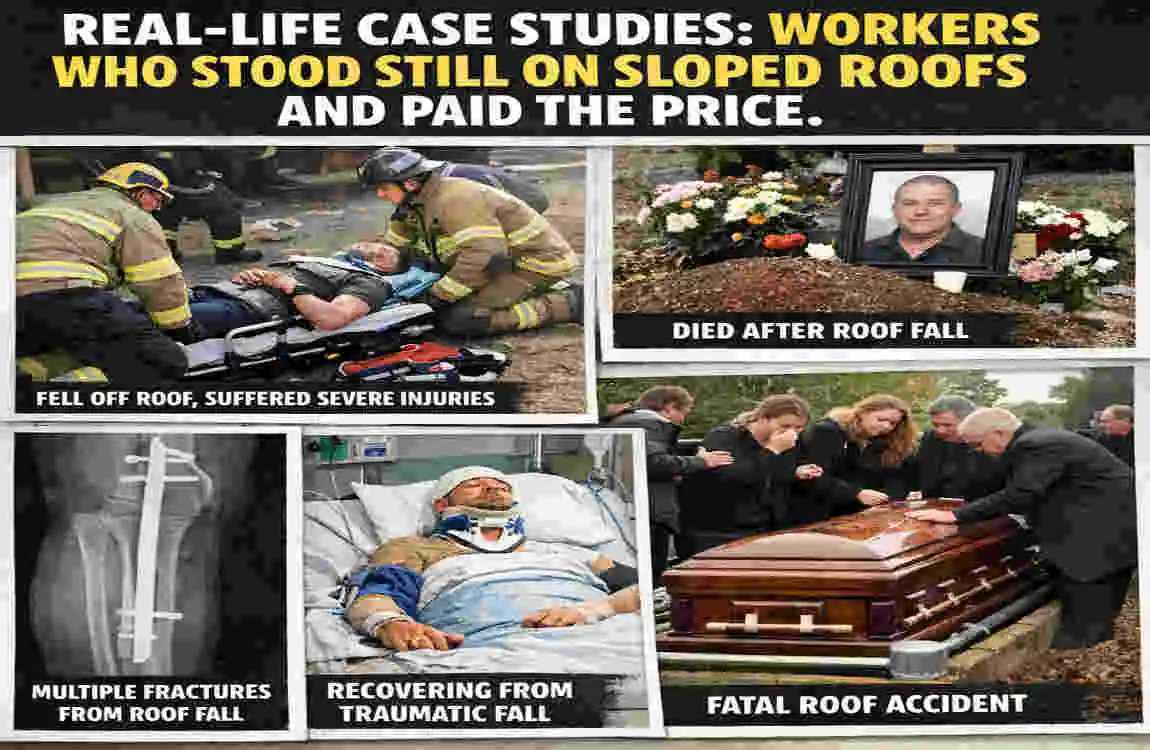
Viral Incident Analysis
In 2025, a video showed a roofer in Texas pausing mid-roof at a 40° pitch. A sudden gust caused a slip, leading to a serious injury. The worker lacked proper harness support, highlighting the dangers of standing still without safety gear.
2024 OSHA Violation Example
An OSHA report detailed a 2024 incident where a worker standing still on an aged shingle roof fell through a weak section. The company was fined for inadequate roof inspections and for failing to provide safety training.
Near-Miss in Pakistan
In Karachi, a roofing worker paused on a sloped roof without a safety harness. A near-fall incident prompted local contractors to adopt stricter no-stillness policies, resulting in a 30% reduction in accidents over six months.
These stories underscore the harsh lessons learned when workers stand still on sloped roofs.
Essential Safety Measures to Prevent Sloped Roof Stasis Risks
Safety should always come first. Here’s how to prevent dangers related to standing still on sloped roofs:
Step-by-Step Gear List
- Harness Systems
- Use Personal Fall Arrest Systems (PFAS) compliant with OSHA standards to catch falls.
- Non-Slip Boots and Traction Aids
- Proper footwear increases friction and grip on slick surfaces.
- Warning Signs and Policies
- Mark “no standing still zones” and trains workers to keep moving with purpose.
Best Practices
- Encourage workers to move deliberately rather than freeze on slopes.
- Conduct regular toolbox talks on the dangers of standing still.
- Use simulations and drills to train balance recovery.
Tech Solutions
- Drones can inspect roofs before workers climb, identifying hazards.
- Wearables with balance sensors alert workers when they stay immobile for too long.
Business Safety Policy Example
Our company enforces a zero-stillness rule on roofs. Every worker is trained and equipped to keep moving safely, supported by the latest safety tech. This reduces incidents and insurance costs.
Expert Tips for Roofing Businesses: Turning Awareness into Action
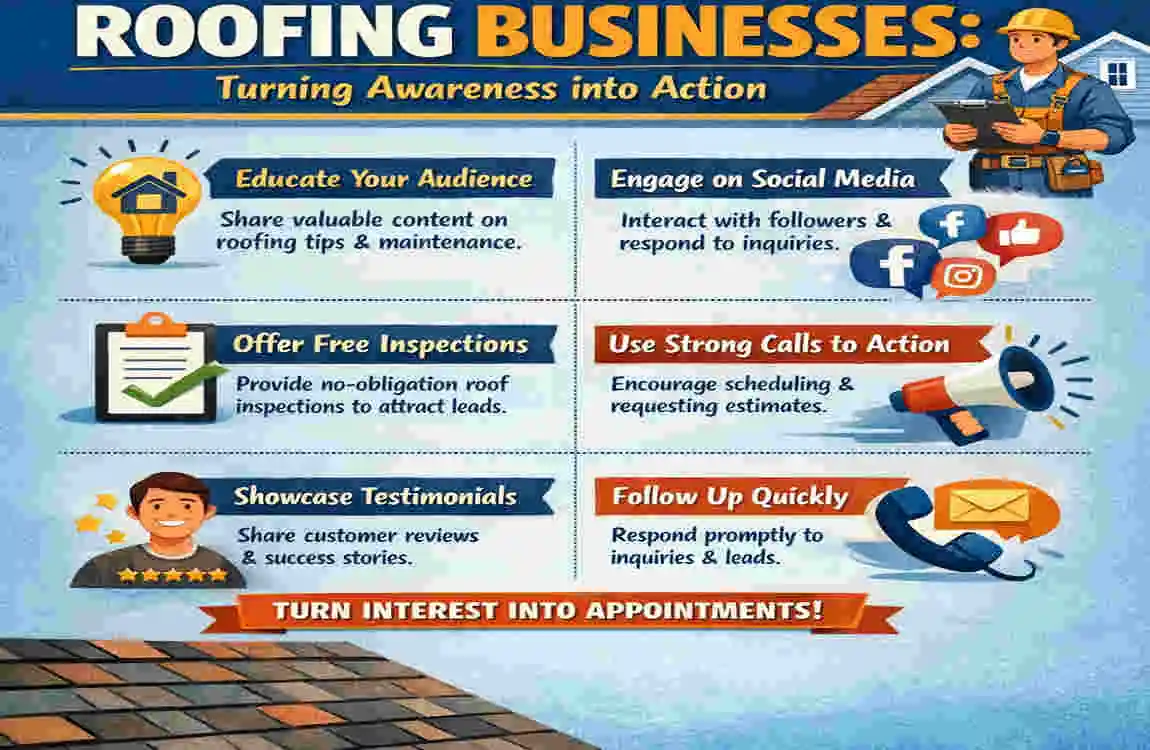
- Perform daily safety audits focusing on worker movement patterns.
- Integrate stillness drills into training sessions.
- Ensure compliance with OSHA and local fall-prevention regulations.
- Download our free “Sloped Roof Safety Checklist“ to implement best practices today.
FAQ: A Worker Stands Still on a Roof Sloped
Q: Why is it dangerous for a worker to stand still on a sloped roof?
Standing still reduces the body’s ability to make tiny balance adjustments, increasing the risk of slipping and falling on the inclined surface.
Q: What are the main risks when a worker stands still on a sloped roof?
Risks include sudden loss of balance, material shifting beneath their feet, wind gusts causing instability, heat-related fatigue, and hidden structural weaknesses.
Q: How steep can a roof be to pose serious danger when standing still?
Roofs pitched between 30° and 45° are especially risky because the slope significantly reduces friction and balance stability.
Q: What safety gear helps prevent accidents from standing still on roofs?
Using harness systems, non-slip boots, and traction aids greatly reduces fall risk. Constant movement and safety training are also crucial.
Q: Can weather affect the danger of standing still on a sloped roof?
Yes, rain, wind, frost, or heat can all increase slip risk or fatigue, making stillness even more hazardous.
Q: What should workers do instead of standing still?
Workers should move deliberately and maintain constant, controlled motion to keep balance and reduce slip chances.