Spot a spider scurrying across your kitchen floor? You’re not alone—millions wonder, “Why do spiders come inside the house?” Whether you find them creepy or fascinating, understanding why spiders invade our homes can help us keep them at bay without panic.
Spiders are mostly harmless creatures that play a vital role in controlling other pesky insects. While some species are venomous, the majority of spiders you see indoors are just harmless visitors looking for shelter or food. In fact, spiders invade about 80% of U.S. homes seasonally, according to pest control experts. That’s a lot of eight-legged friends showing up uninvited!
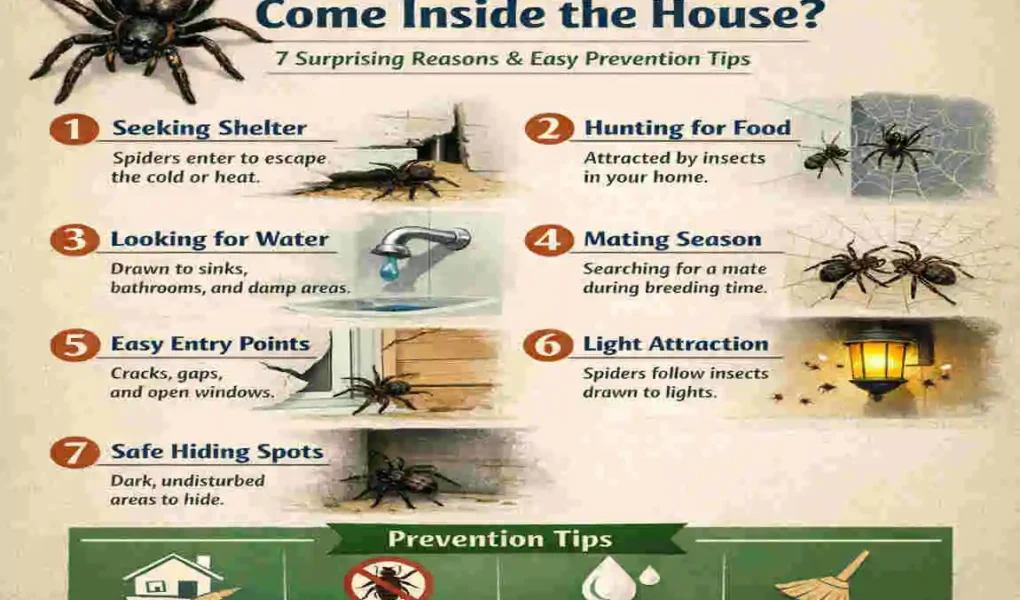
7 Surprising Reasons Why Spiders Come Inside the House
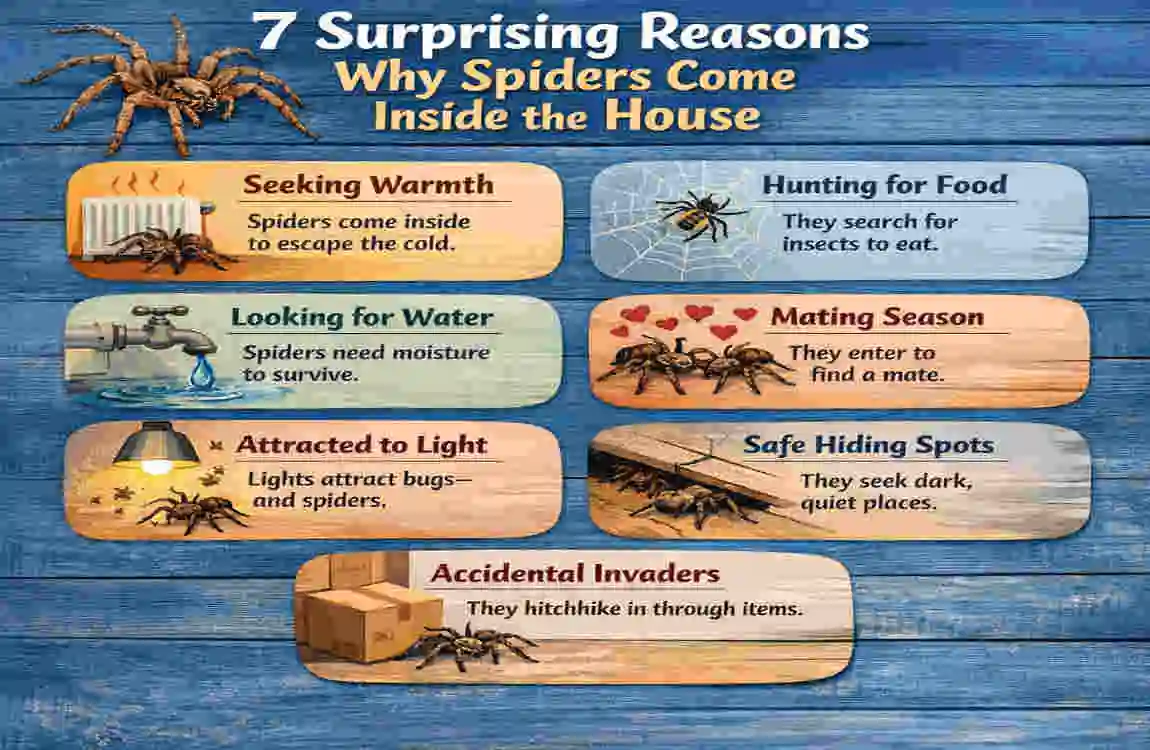
Seeking Shelter from Extreme Weather
How Rain, Cold, and Heat Drive Spiders Indoors
Spiders are highly sensitive to weather changes. When storms roll in or temperatures drop, spiders instinctively seek safe shelter. This is especially true during heavy rain, cold autumn nights, or intense summer heat.
A drop in barometric pressure, which often signals an approaching storm, can prompt spiders to invade homes. They feel the change up to 24 hours ahead and look for places where they can stay dry and warm.
Following Their Favourite Food—Other Bugs
Your Home’s Insect Buffet Attracts Spiders
Spiders don’t come inside for no reason—they’re hunting for food. And your home can be a buffet for them if you have other insects like flies, ants, or mosquitoes roaming around.
Open windows and doors, especially in warmer months, invite these bugs indoors. Poor pest control can lead to a 3 times higher spider presence because spiders follow their prey.
Diagram: Simple Food Chain Inside Your Home
Insect Type: Attracts Spiders? Common Entry Points
Flies , yes, open windows, trash
Ants , yes, cracks, food crumbs
Mosquitoes , yes, standing water, vents
Accidental Hitchhikers on Boxes and Plants
Hidden Spiders in Clutter and Outdoor Items
Sometimes, spiders don’t even mean to come inside—they hitch a ride on objects you bring in. Boxes, potted plants, firewood, and outdoor gear can unknowingly carry spiders indoors.
Garages and attics are common places where spiders live and multiply. When you bring clutter or firewood inside without checking, you might be inviting spiders in.
Attracted to Bright Indoor Lights at Night
Why Spiders Swarm Windows and Porch Lights
Bright lights, especially UV or white lights, attract many flying insects. Because spiders prey on these insects, they tend to hang around windows, porch lights, and lamps.
Interestingly, UV light mimics moonlight, which insects use for navigation. This causes more bugs to gather near your home’s lights, and spiders follow the feast.
This phenomenon is often worse in summer when insects are more active after dark.
Cracks, Gaps, and Poor Sealing Let Them Slip In
Common Entry Points Spiders Exploit
Spiders are masters at squeezing through tight spaces. Even a tiny crack or gap under a door or around windows can serve as a highway indoors.
Here are some of the most common entry points:
- Gaps under doors and windows
- Vents and ductwork
- Foundation cracks
- Spaces around pipes and cables
A simple but effective pro tip is to seal any gaps larger than 1/4 inch with caulk or silicone. This blocks access and drastically cuts down spider intrusions.
Mating Season and Overcrowded Outdoor Colonies
Fall Breeding Drives Spiders to Invade Homes
During the fall, many spider species enter their mating season. Male spiders often roam widely in search of females, sometimes ending up inside houses.
In addition, overcrowded outdoor colonies can push spiders to seek new territory indoors. Female spiders look for warm spots to lay their egg sacs, making homes an attractive option.
This behaviour is particularly common in regions with humid monsoons, such as Lahore, where outdoor conditions become less hospitable.
Human Habits Like Leaving Doors Open
Everyday Mistakes Inviting Spiders Inside
Sometimes, the simplest human habits invite spiders in. Leaving doors open, especially unscreened ones, gives spiders easy access.
Other common habits include:
- Piles of laundry or clutter near entryways
- Leaving pet food out overnight
- Not cleaning up crumbs or spills promptly
During monsoon seasons, when humidity rises and insects multiply, these habits can significantly increase spider visits.
7 Proven Ways to Prevent Spiders from Entering Your Home
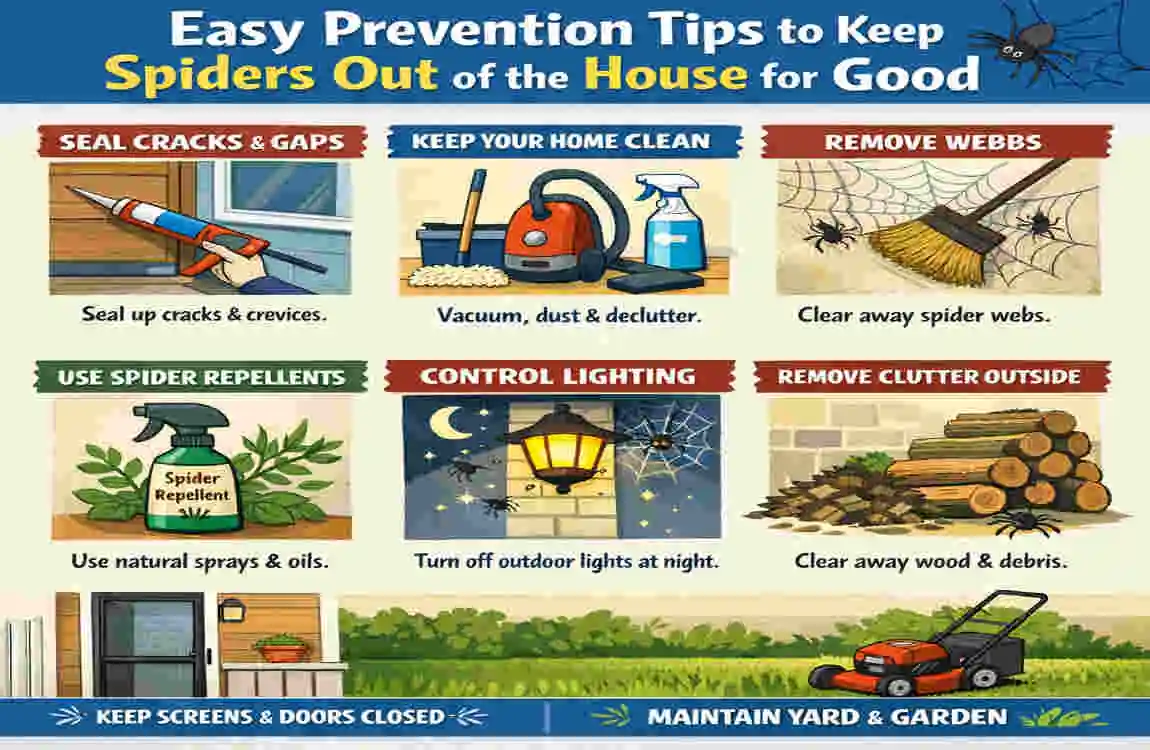
Keeping spiders outside where they belong is easier than you think! Here are 7 practical tips to help you prevent spiders indoors:
- Seal Cracks with Caulk or Silicone
- Block all gaps under doors, windows, and around pipes.
- Use Yellow Bug Lights Outdoors
- These lights attract fewer insects, reducing the food supply for spiders.
- Reduce Clutter and Vacuum Weekly
- Spiders love hiding spots; keeping your spaces tidy cuts their shelter options.
- Natural Repellents: Peppermint Oil, Diatomaceous Earth
- Spiders dislike peppermint scent and the abrasive nature of diatomaceous earth.
- Install Door Sweeps and Screens
- This creates physical barriers against spider entry.
- Control Insects First (e.g., Traps)
- Fewer bugs mean fewer spiders.
- Professional Pest Control for Infestations
- When the problem is severe, experts can help safely manage it.
Quick DIY Spider Spray Recipe
Try mixing equal parts water and white vinegar, then add a few drops of peppermint oil, and spray it into the air. Spray along windowsills, door frames, and corners to deter spiders naturally.
Tip Effort Level Effectiveness
Seal Cracks Low High
Peppermint Oil Spray Low Medium
Yellow Bug Lights Medium Medium
Professional Help High Very High
Try these today and enjoy a spider-free home with minimal hassle!
Frequently Asked Questions
Why do spiders come inside the house in winter?
They seek warmth and shelter to survive cold outdoor temperatures.
Are house spiders dangerous?
Most house spiders are harmless and actually help by eating other bugs.
How to get rid of spiders naturally?
Use peppermint oil sprays, keep your home clean, seal entry points, and reduce insect populations.