Roll roofing is one of the simplest roofing options on the market, which is a big reason many people choose it for sheds, garages, workshops, and other low-slope buildings. It is easy to handle, quick to install, and usually far less expensive than many other roofing materials. If you are trying to protect a small structure without spending too much, roll roofing can look like a smart choice.
| Item | Typical price (per sq ft) | Notes |
|---|---|---|
| Material (basic MSR rolled roofing) | $0.50–$1.50 | Cheapest option, sold in 100 sq ft rolls; best for temporary or low‑traffic roofs. |
| Material (higher‑grade/modified) | $1.50–$3.00 | Modified bitumen or heavier asphalt rolls last longer and resist weather better. |
| Installation (labor) | $1.50–$3.00 | Simple, fast installs; labor varies by roof steepness, location, and prep work. |
| Installed total (typical range) | $2.00–$7.50 | Lower end for DIY or minimal labor, higher for professional install and premium rolls. |
| Typical lifespan | 5–15 years | Shorter than shingles or membranes; lifespan depends on climate and material grade. |
| Best uses | Outbuildings, garages, porches, temporary fixes | Not recommended for high‑slope primary residences where longer lifespan is needed. |
But before you buy, it helps to understand the full price picture. The question how much does roll roofing cost is not just about the price on the shelf. You also need to think about labor, tools, underlayment, fasteners, disposal fees, and even the shape of your roof. Two roofs that look similar can have very different final costs.
That is why a careful cost breakdown matters. When you know what affects pricing, you can avoid surprise expenses and make a better choice for your project. You can also compare roll roofing with other budget-friendly options and decide whether it truly fits your needs.
What Is Roll Roofing?
Definition of Roll Roofing
Roll roofing is a roofing material sold in large rolls rather than separate shingles. It is usually made from asphalt-based material with a mineral surface or protective coating on top. That design makes it useful for quickly covering wide areas.
Most roll roofing is thinner and lighter than standard shingles. Because of that, it is often used where the roof does not need a high-end finish. It gives basic protection from rain and weather, and it works well when the goal is function over appearance.
You will often see roll roofing used on low-slope roofs, where water drains slowly but steadily. It is not meant for every roof type, but for the right structure, it can do a solid job.
Where Is Roll Roofing Commonly Used?
Roll roofing is popular on buildings where budget and speed matter most. Common places include:
- Garages
- Sheds
- Workshops
- Porches
- Low-slope roofs
- Temporary structures
It is also useful for utility buildings and small outbuildings that do not need a premium roof system. If you are roofing a mostly practical space, roll roofing can be a simple solution.
Types of Roll Roofing
Not all roll roofing is the same. The type you choose will affect the price, appearance, and lifespan.
Smooth Surface Roll Roofing
This is a basic style with a plain look. It is usually the cheapest option, but it may not last as long as upgraded types.
Mineral Surfaced Roll Roofing
This version has a rough, gritty top layer that adds protection and improves durability. It is one of the most common choices for small buildings.
Rubber Roll Roofing
Rubber-based rolls are often chosen for better flexibility and water resistance. They usually cost more than standard asphalt rolls.
Modified Bitumen Rolls
These are more advanced rolls made for stronger performance. They tend to offer better durability and weather resistance, but they also cost more.
How Much Does Roll Roofing Cost?
Average Roll Roofing Cost Per Roll
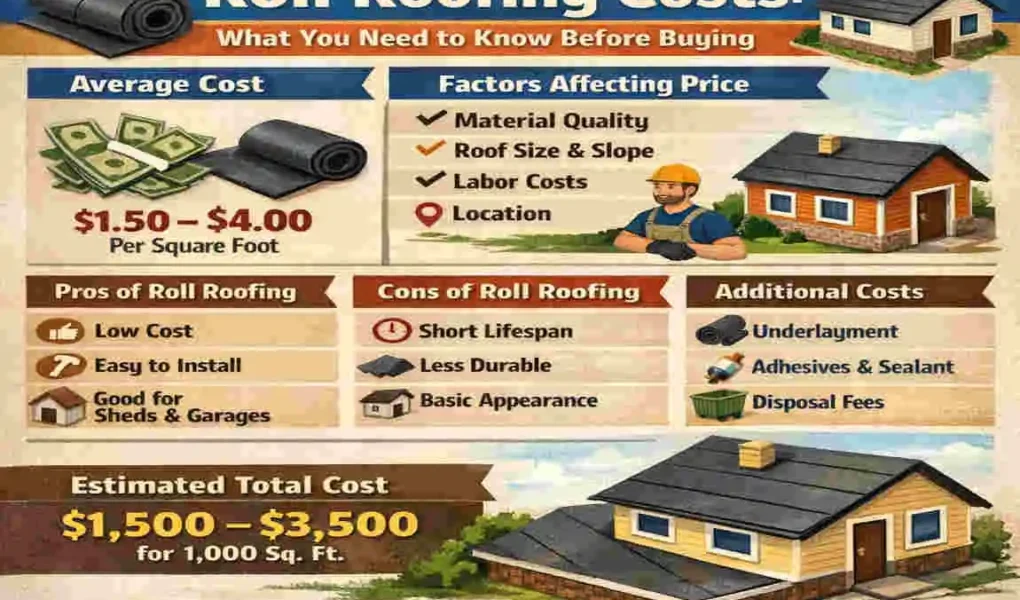
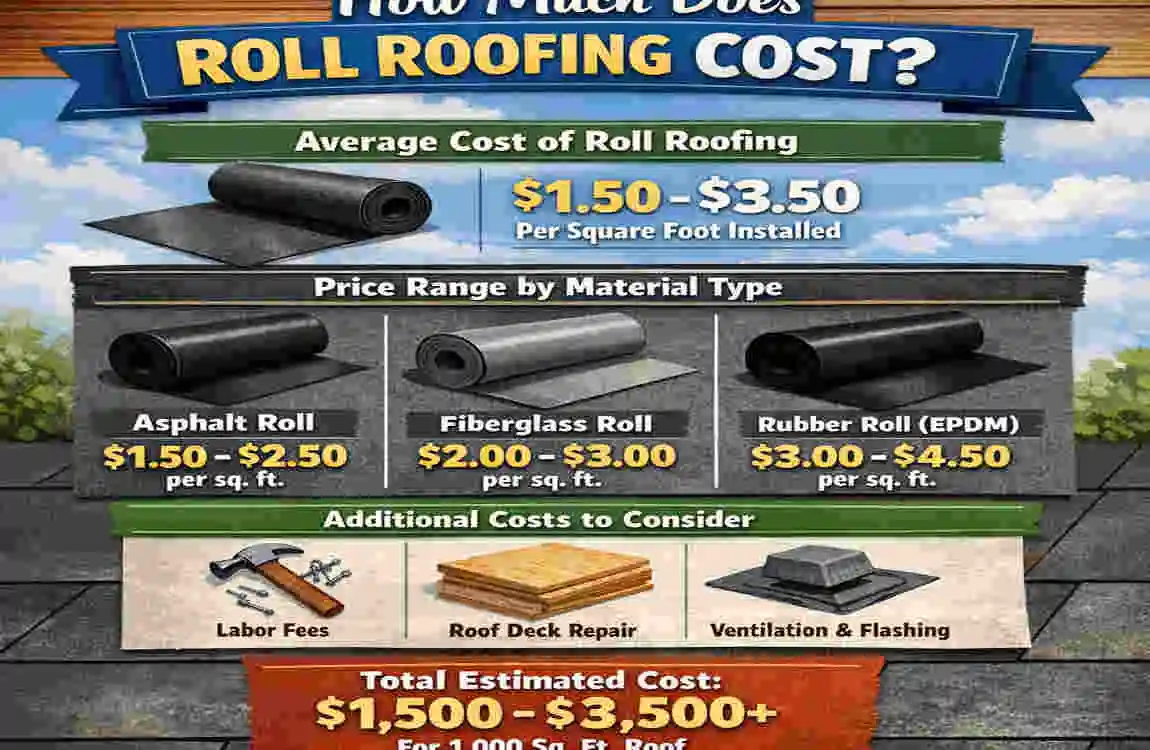
So, how much does roll roofing cost per roll? In general, basic roll roofing costs $20 to $100 per roll, depending on the material type and quality. Cheaper rolls usually cover smaller areas and offer shorter service life. Better quality rolls often cost more but may save you money later by lasting longer.
If you are buying for a small shed or garage, a low-cost roll may be enough. But if you want stronger protection or better weather resistance, it can make sense to spend more upfront.
Roll Roofing Cost Per Square Foot
When people compare roofing prices, square foot cost is one of the most useful numbers.
- Material-only cost: usually around $0.75 to $2.50 per square foot
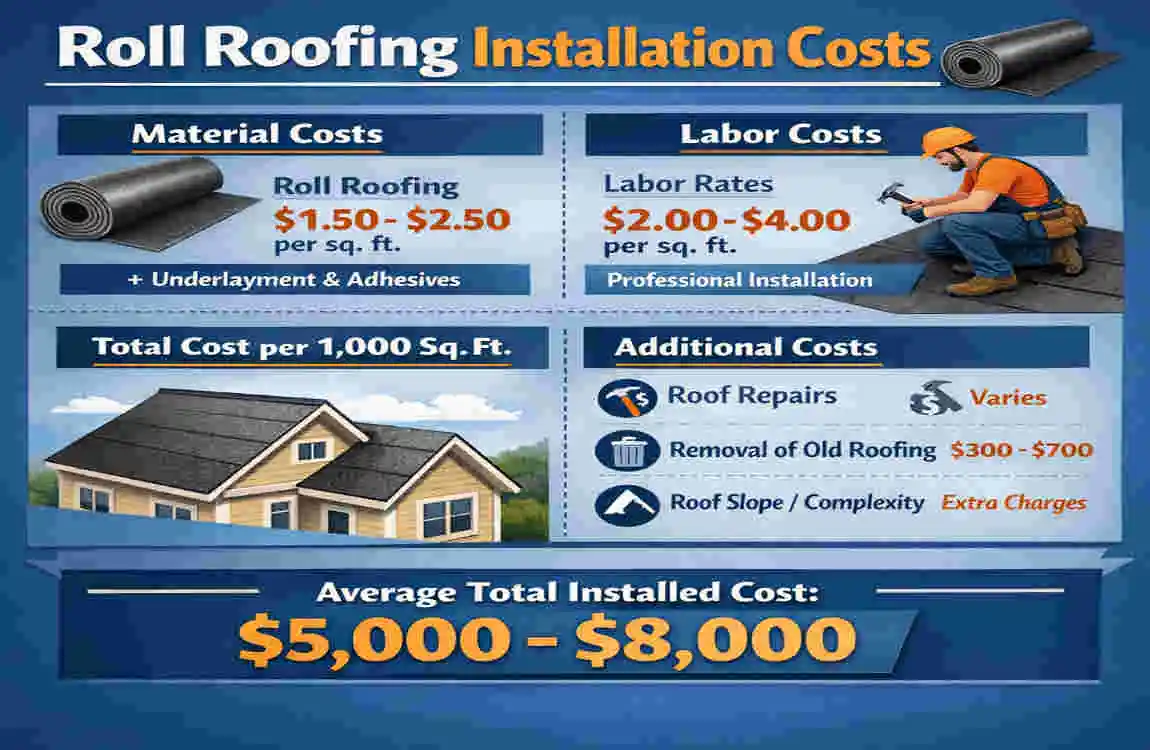
- Installed cost: often around $2.00 to $5.00 per square foot
The installed price includes labor, supplies, and sometimes disposal. If you install it yourself, you can keep the cost closer to the material-only range.
Cost Based on Roof Size
Roof size changes the total quickly. A small roof may be inexpensive, while a larger roof can add up fast even if the per-square-foot cost stays the same.
Roof SizeApprox. Material CostApprox. Installed Cost
100 sq. ft. $75–$250 $200–$500
500 sq. ft. $375–$1,250 $1,000–$2,500
1,000+ sq. ft. $750–$2,500+ $2,000–$5,000+
These are rough estimates, but they give you a practical starting point. If your roof has extra corners, edges, or repairs, the final bill may be higher.
Regional Price Differences
Location also matters. Labor rates vary by location, and shipping materials can affect prices, too. In areas with higher living costs, contractor fees may be higher. In remote areas, materials may cost more because they are harder to deliver.
So if you are comparing prices, make sure you are looking at local costs, not just general averages. A quote from your own area is always more useful than a broad internet estimate.
Factors That Affect Roll Roofing Cost
Material Type
The biggest price difference often comes from the material itself.
Asphalt
Asphalt roll roofing is usually the cheapest. It works well for basic jobs and is common for sheds and small structures.
Rubber
Rubber roll roofing costs more, but it often offers better flexibility and moisture resistance.
Modified Bitumen
This is usually one of the more expensive roll roofing choices. It is built for stronger performance and longer use.
Roof Size
This one is simple: bigger roof = more material = higher cost. Even a modest increase in roof area can make a noticeable difference in the final price.
Roof Pitch and Complexity
A flat or low-slope roof is easier to cover. A roof with odd angles, corners, or changes in height takes more time and more care. That means more labor and sometimes more waste.
If your roof is straightforward, you will usually pay less. If it is tricky, expect the cost to rise.
Installation Method
You can either install roll roofing yourself or hire a professional.
- DIY roll roofing cost is lower because you are not paying labor
- Professional installation costs more, but it may give you better results
If you already have tools and know-how, DIY can be a big money saver. If not, hiring a contractor may be worth the extra cost.
Underlayment and Accessories
The roll itself is only part of the project. You may also need:
- Roofing cement
- Nails
- Flashing
- Adhesives
- Sealant
- Underlayment
These items can seem small, but they add up. If you forget them when planning, your budget may come up short.
Removal of Old Roofing
If you are replacing an old roof, you may need tear-off and disposal services. That can include labor, dumpster fees, and cleanup. This is one of the most common hidden costs.
If the old roof is damaged or the deck below needs repair, the total cost can rise further.
Roll Roofing Installation Costs
DIY Roll Roofing Cost
DIY is usually the cheapest route. Your main costs are the roll roofing itself and basic tools. If you already own a knife, hammer, measuring tape, and ladder, your spending stays lower.
That said, DIY is only a good idea if you are comfortable working on a roof. Mistakes can lead to leaks, wasted materials, or repairs later. A low upfront cost is only helpful if the roof performs well afterward.
Professional Installation Costs
Hiring a contractor increases the price, but it also gives you labor expertise. Professionals usually charge based on roof size, difficulty, and local labor rates. They may also include cleanup and disposal in the quote.
For many people, this is worth it because it saves time and reduces the chance of installation errors. If you want a clean finish and less stress, professional installation may be the better choice.
Hidden Costs to Expect
A few extra charges can show up when you least expect them:
- Roof deck repairs
- Waterproofing materials
- Old material disposal
- Extra sealant or flashing
- Emergency labor if the job grows larger
These hidden costs are why it is smart to ask for a detailed estimate before work begins.
Roll Roofing vs Other Roofing Materials
Roll Roofing vs Asphalt Shingles
Roll roofing is usually cheaper than shingles, especially when you compare material cost and installation speed. That makes it attractive for budget projects.
However, shingles often last longer and look better. If you are roofing a home or a visible structure, shingles may be the better long-term choice. Roll roofing is more about saving money and covering a simple surface quickly.
Roll Roofing vs Metal Roofing
Metal roofing is stronger and lasts much longer, but it costs far more upfront. It also usually needs more skill to install.
Roll roofing wins on initial cost. Metal wins on durability and long-term value. If your goal is short-term affordability, roll roofing is a budget-friendly option. If your goal is decades of service, metal may be worth the higher price.
Roll Roofing vs EPDM Rubber Roofing
EPDM is a rubber roofing system often used on flat roofs. It tends to offer strong waterproofing and better long-term performance than standard roll roofing.
Still, EPDM usually costs more. Roll roofing may be the cheaper option if you just need basic coverage for a shed, garage, or temporary structure. EPDM makes more sense when you want a longer-lasting flat roof solution.
Pros and Cons of Roll Roofing
Advantages
Roll roofing has several clear benefits:
- Affordable
- Easy to install
- Lightweight
- Quick to cover large areas
These advantages make it especially appealing for budget-conscious projects. If speed and savings matter most, roll roofing can be a very practical choice.
Disadvantages
It also has limits:
- Shorter lifespan
- Less attractive appearance
- Limited durability
- Not ideal for steep roofs
While roll roofing is useful, it is not the best solution for every building. You should think about how long you need the roof to last and how visible it will be.
Is Roll Roofing Worth the Cost?
Best Situations for Roll Roofing
Roll roofing is usually worth the cost when you need a low-cost solution for a simple building. It works well for:
- Budget-friendly roofing projects
- Temporary buildings
- Utility sheds
- Garages
If your main goal is to protect a structure without spending too much, roll roofing can be a cost-effective option.
When It May Not Be the Best Option
It may not be the right pick for:
- Residential homes
- High-end roofing needs
- Long-term investments
If you want better curb appeal, stronger durability, or a roof that will last for many years, another material may be a better fit.
Tips to Save Money When Buying Roll Roofing
If you want to keep costs down, a little planning goes a long way. Here are a few simple ways to save:
- Compare suppliers before buying
- Buy in bulk if you need a larger amount
- Choose durable materials so you do not replace them too soon
- Schedule installation during the off-season if possible
- Get multiple contractor quotes
- Avoid very cheap roofing that could fail early
Saving money is not just about getting the lowest price. It is also about getting the best value for your money.
Maintenance Costs of Roll Roofing
Roll roofing requires less care than some roofing systems, but it still needs attention. A few basic tasks can help it last longer.
You should plan for:
- Routine inspections
- Sealant repairs
- Cleaning debris
- Replacing damaged sections
- Checking seams and edges
These small upkeep costs are usually manageable. Still, if you ignore them, minor problems can turn into bigger repairs later.
Common Mistakes Buyers Make
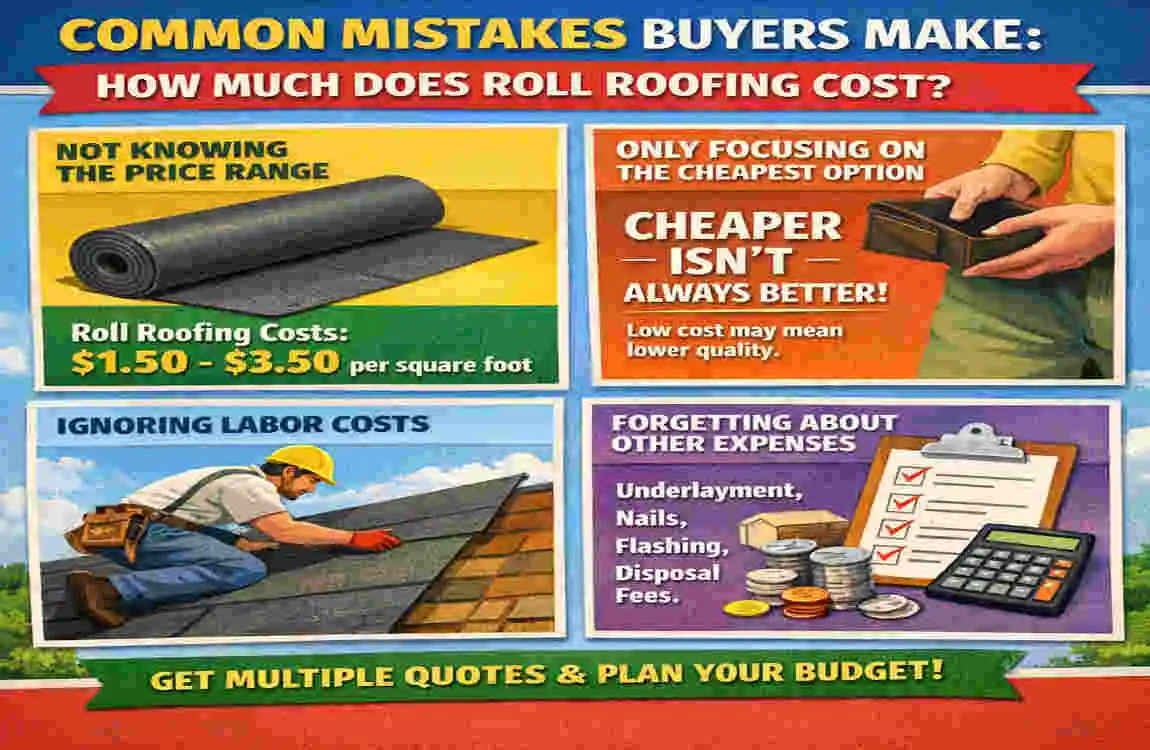
Many buyers focus only on the lowest price and miss important details. That can lead to bigger costs later. Common mistakes include:
- Choosing the cheapest option without checking quality
- Ignoring installation quality
- Forgetting underlayment and accessory costs
- Measuring the roof incorrectly
- Not checking warranty coverage
If you avoid these mistakes, you are much more likely to stay within budget and get a roof that does its job.
Frequently Asked Questions
How much does roll roofing cost per square foot?
Material-only prices typically range from $0.75 to $2.50 per square foot. If you hire a professional, installed pricing is often around $2.00 to $5.00 per square foot. The final price depends on roof size, material type, labor rates, and any extra prep work.
Is roll roofing cheaper than shingles?
Yes, roll roofing is usually cheaper than asphalt shingles at first. It costs less to buy and often costs less to install. However, shingles usually last longer and may look better, so they can offer better long-term value in some cases.
How long does roll roofing last?
Lifespan depends on the material quality and installation. Basic roll roofing may last around 5 to 10 years, while better products can last longer with proper care. Weather, roof slope, and maintenance all play a role.
Can I install roll roofing myself?
Yes, many homeowners can install it themselves if the roof is small and simple. That is why DIY roll roofing cost is often lower than professional installation. Still, you should only do it if you feel safe and confident working on a roof.
Is roll roofing waterproof?
Roll roofing is designed to help keep water out, but it works best when installed correctly with proper sealing and overlap. It can protect against moisture, but it is not always as durable as more advanced roofing systems.
Does roll roofing require maintenance?
Yes, but usually not a lot. You should check it regularly for cracks, loose edges, or damaged spots. Cleaning off leaves and debris also helps prevent problems.