

Roofs are one of the most critical structural components of any home. They protect us from the elements, insulate our spaces, and add to the overall beauty of a property. When it comes to roofing materials, rosemary clay tiles have been a popular choice for homeowners due to their durability, aesthetic charm, and low maintenance.
What Are Rosemary Clay Tiles?

Defining Rosemary Clay Tiles
Rosemary clay tiles are a type of high-quality roofing material made from natural clay. They are either flat or interlocking tiles that have been fired at high temperatures for added strength. Known for their durability, weather resistance, and classic appearance, rosemary tiles have been used for generations across homes in various climates.
Key Features of Rosemary Tiles
- Natural Beauty: Rosemary tiles offer a timeless, rustic appearance, often enhancing a home’s curb appeal.
- Durability: These tiles are resistant to harsh weather conditions, including heavy rains, strong winds, and even fire.
- Thermal Insulation: Clay tiles naturally regulate the temperature inside your home, keeping it cool in summer and warm in winter.
- Eco-Friendly: Made from natural materials, rosemary tiles are recyclable and sustainable.
Comparison with Concrete Tiles
Unlike concrete tiles, which are heavier and may degrade over time, rosemary tiles are lighter and have a longer lifespan. While concrete may be cheaper initially, rosemary clay tiles often provide better value in the long term due to their lower maintenance requirements and superior aesthetics.
Benefits of Tiling Your Roof with Rosemary Clay Tiles
Choosing rosemary clay tiles for your roof comes with several advantages, making them an excellent investment for your home.
Longevity and Protection
Rosemary tiles are known to last over 50 years when installed correctly. Their resistance to moss growth, UV rays, and extreme weather conditions ensures your roof remains intact and functional for decades.
Aesthetic Appeal
The rustic charm of rosemary tiles adds character to any home, making it stand out in the neighborhood. Their natural terracotta hues and smooth finishes blend beautifully with different architectural styles.
Cost Savings
Although the upfront cost of clay tiles may be higher than that of other materials, their low maintenance requirements and durability eliminate the need for frequent repairs or replacements. Plus, DIY installation can save you thousands on labor costs.
Sustainability
Rosemary tiles are crafted from natural materials, making them an environmentally friendly option. They are also energy-efficient, helping reduce heating and cooling costs by providing natural insulation.
Pro Tip: Investing in rosemary tiles not only protects your home but also boosts its resale value—a win-win for homeowners!
Tools and Materials Needed for Tiling Your Roof

Before you begin tiling, gather the right tools and materials. Here’s a handy table to help you organize everything:
Category Items Purpose
Tools: Tile cutter, hammer, nail gun, spirit level, chalk line. For cutting, securing, and maintaining alignment
Materials: Rosemary clay tiles, underlay felt/breathable membrane, galvanized nails, battens, roofing buttons. Base layer, fixing, and structural support
Safety Gear: Gloves, goggles, harness, ladder. To prevent accidents during installation
Estimating Quantities
- Calculate the total roof area (length × width) and account for overlaps. On average, you’ll need 10-15 tiles per square meter.
- Always buy 10-15% extra materials to account for breakage or future repairs.
Preparation Steps Before Tiling
Proper preparation is crucial for a smooth and successful DIY roof tiling project. Follow these steps to get your roof ready:
Inspect the Roof Structure
Before tiling, ensure your roof’s rafters and trusses are in good condition. Remove any debris, old nails, or damaged materials that could interfere with the new tiles.
Calculate Materials
Measure your roof’s pitch and area to determine the number of tiles, battens, and underlay needed. Rosemary tiles typically require an overlap of 75–100mm, depending on the pitch.
Safety Setup
- Erect scaffolding around your home to ensure a safe working environment.
- Check the weather forecast and avoid tiling on rainy or windy days.
- Wear safety gear, including gloves, goggles, and a harness.
Clean the Surface
Clear away any dirt, moss, or debris from the roof’s surface. This ensures a clean base for the underlay and tiles.
Check the Roof Pitch
Rosemary tiles work best on roofs with a pitch of 15–45 degrees. If your roof is outside this range, consult a professional to adjust the structure.
Step-by-Step Guide: How to Tile a Roof with Rosemary Tiles

install the Underlay
Begin by rolling out the felt or breathable membrane from the eaves (bottom edge) of the roof upwards. Overlap each layer by 150mm to ensure waterproofing. Secure the underlay with galvanized nails, keeping it taut to avoid wrinkles.
Fix Battens and Buttons
- Measure and mark the spacing for battens, ensuring they align with the gauge of your tiles (e.g., 335mm for a 75mm overlap).
- Nail the battens horizontally across the roof, keeping them straight. Use a chalk line to guide your alignment.
- Attach roofing buttons every three courses to help secure the tiles.
Lay the First Course of Tiles
Start at the bottom edge of the roof. Dry-lay the first row of tiles, ensuring an overhang of 40-50mm into the gutter. Hook each tile onto the battens and secure them with nails.
Tile Subsequent Courses
- Work upwards, overlapping each course by 75-100mm. Stagger the joints between tiles in alternating rows for added stability.
- Cut edge tiles to fit neatly against walls or chimneys using a tile cutter.
- Regularly check each row’s alignment with a spirit level.
install Ridges, Hips, and Vents
For ridges and hips, use specially designed ridge tiles. Secure them with mortar or a dry ridge system. Ensure any roof penetrations, such as vents or chimneys, are properly sealed to prevent leaks.
Final Checks and Cleaning
Once all tiles are in place, inspect your roof for gaps or uneven tiles. Sweep away any debris and ensure moss-prone areas are clean. Congratulations—you’ve now completed your DIY rosemary tile roof!
Common Mistakes to Avoid When Tiling with Rosemary Tiles
Even with the best intentions, mistakes can happen. Here are some common errors to watch out for:
- Uneven Battens: Misaligned battens can create wavy rows of tiles.
- Insufficient Overlap: Failing to overlap tiles properly can lead to water leaks.
- Ignoring Wind Zones: In areas with high winds, adjust the gauge for better tile stability.
- Skipping the Underlay: This critical layer can lead to water damage and rot.
Maintenance Tips for Long-Lasting Rosemary Tile Roofs
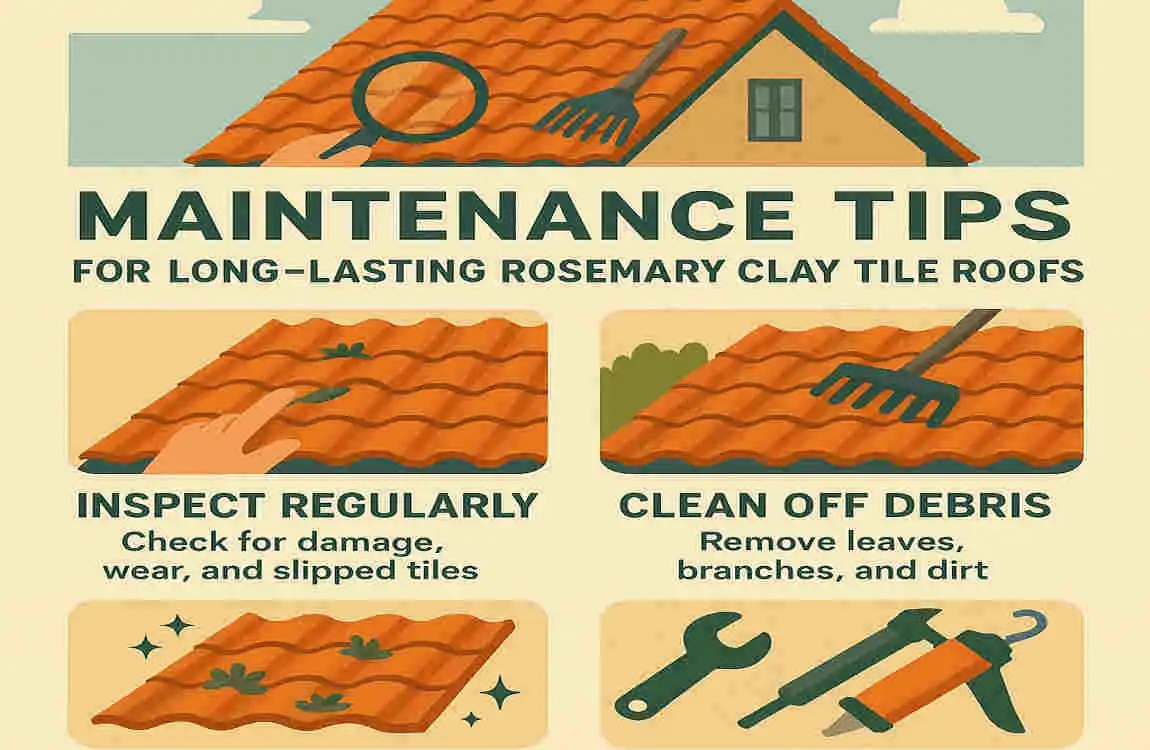
To keep your roof in excellent condition, follow these simple maintenance tips:
- Inspect your roof annually for cracks or loose tiles.
- Remove moss or algae with a gentle brush—avoid pressure washing, as it may damage the tiles.
- Replace broken tiles promptly to prevent further damage.
Cost Breakdown and ROI
Here’s an estimate of the costs involved in tiling a roof with rosemary tiles:
Item Cost Range
Rosemary Clay Tiles $5–$10 per square foot
Underlay and Battens $1,000–$2,000
Total DIY Cost (2000 sq ft roof) $8,000–$15,000
FAQs
How long does it take to tile a roof with Rosemary tiles?
On average, it takes 1-2 weeks to complete a standard roof, depending on the size and complexity.
Are Rosemary tiles DIY-friendly?
Yes! With proper preparation, rosemary tiles are an excellent option for DIY enthusiasts.
Can I use rosemary tiles on a low-pitch roof?
Rosemary tiles are ideal for roofs with a pitch of 15-45 degrees. For lower pitches, consult a professional.
How do I clean moss from rosemary tiles?
Use a gentle brush or moss remover. Avoid pressure washing, as it can damage the tiles.