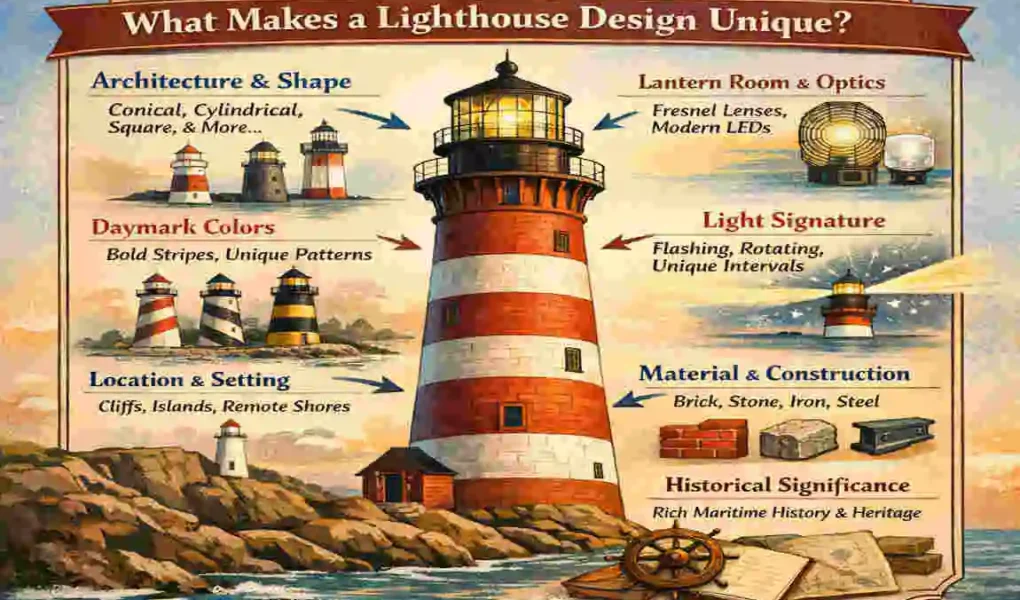
A lighthouse is more than a tall tower by the sea. It is a carefully built structure shaped by safety, weather, and sailors’ needs. Every part of a lighthouse design has a purpose, from its height to its color to the way its light shines at night.
What makes each lighthouse unique is the mix of function, location, materials, and history. Some are stone towers built to survive storms. Others are slim iron structures made for rocky shores. Together, these details turn a simple beacon into a landmark with its own story.
A Short History of Lighthouses
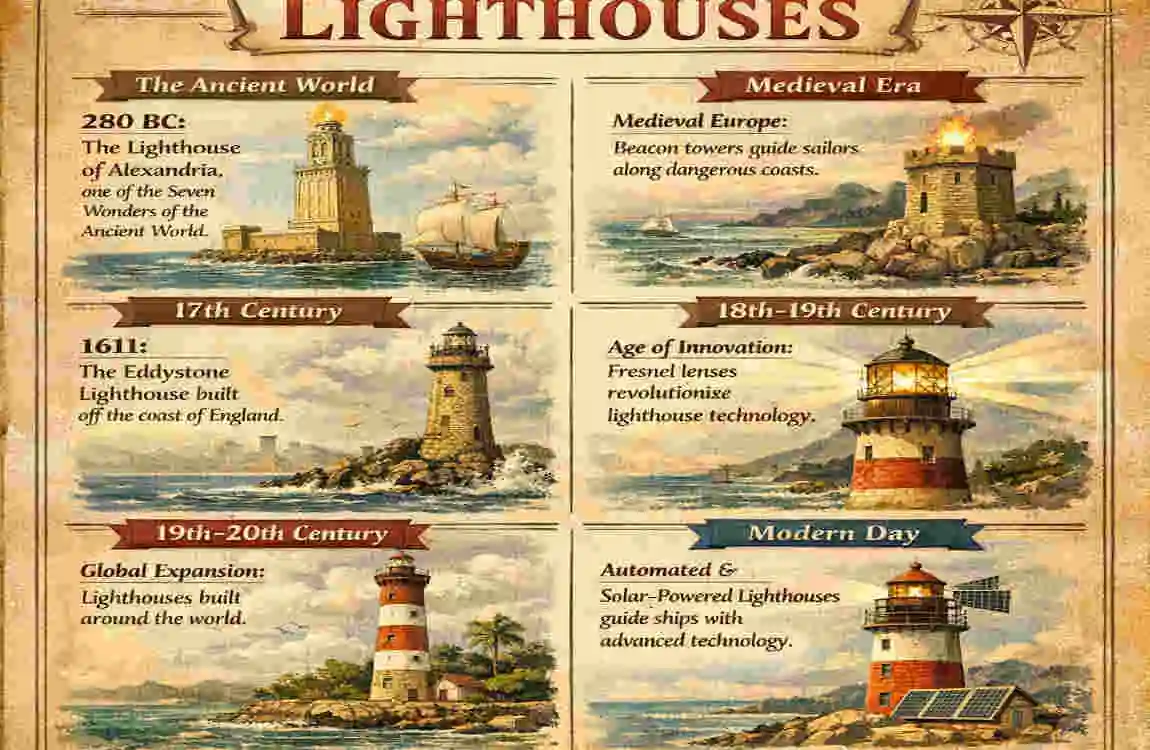
The earliest lighthouses began as basic fire beacons on hills and coastlines. Their job was simple: help ships find land and avoid danger. Over time, these early signals became taller, stronger, and more advanced.
As sea travel grew, lighthouse design changed too. Builders had to make towers that could withstand wind, waves, and salt air while still carrying a bright light over long distances. That is why the history of a lighthouse is always tied to its shape.
Function First in Lighthouse Design
The main goal of any lighthouse is visibility. It must be tall enough to be seen from the water, stable enough to survive storms, and strong enough to hold its light system safely.
That is why many towers have a tapered shape. A wider base provides strength, while a narrower top reduces wind pressure. Many also have a gallery, or walkway, near the top, which helps keepers inspect the lantern room and maintain the structure.
Light and Optics: The Heart of Design
The light is the most important part of a lighthouse. In the past, designers used Fresnel lenses to make the beam stronger and visible from farther away. Today, modern lighting does the same job more simply.
The shape of the lantern room, the height of the light, and the flash pattern all matter. These details help sailors identify one lighthouse from another, even in rough weather or low visibility.
Materials, Construction, and Coastal Engineering
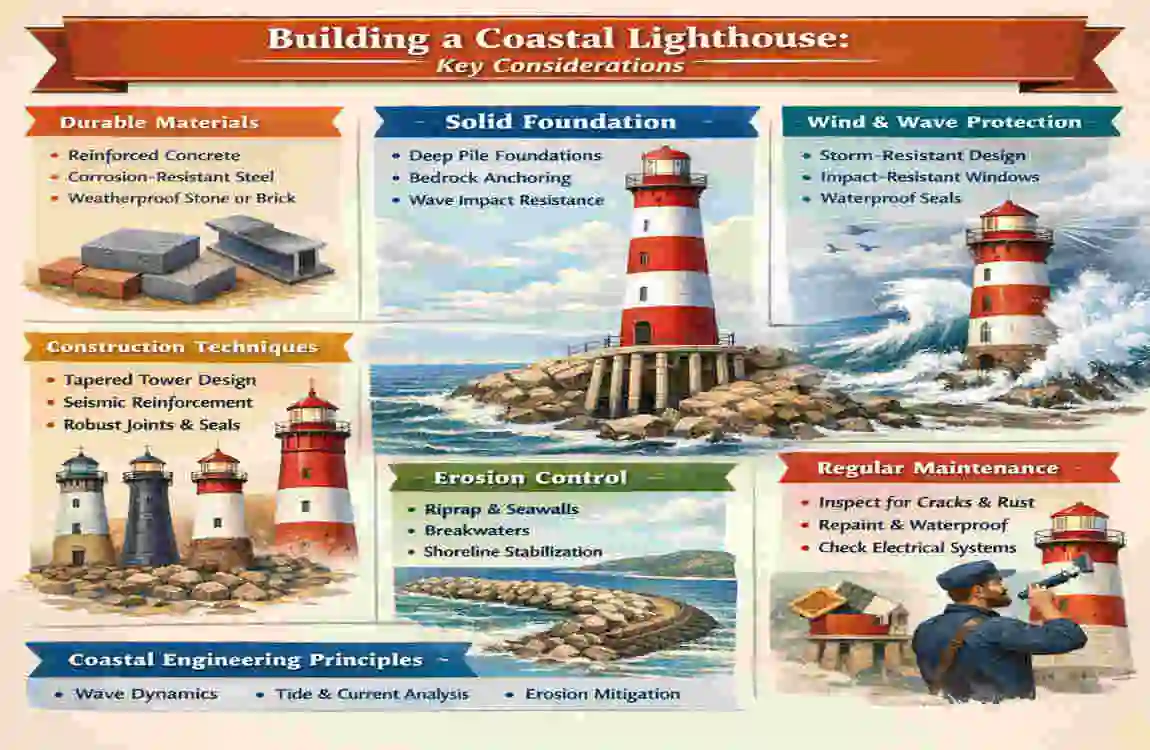
A lighthouse must fit its setting, so builders choose materials based on the coast. Stone, brick, cast iron, and concrete are common because they can handle harsh salt air and heavy storms.
Engineering also shapes the final look. A tower on a rocky cliff needs a different foundation than one near a harbor entrance. Over time, those practical choices become part of the lighthouse’s visual identity.
Location and Siting Considerations
Where a lighthouse stands changes everything. A tower on a high promontory may need less height than one placed on flat ground. A light near shoals or sandbars may need to be placed in a very exact spot to guide ships safely.
That is why no two lighthouses look exactly alike. Each one is designed for its own coast, its own danger, and its own view of the sea.
Aesthetic Signals: Paint, Shape, and Markings
A lighthouse is also a daytime marker. Many have stripes, bands, or bold colors so sailors can recognize them from a distance. These patterns, called daymarks, are both practical and memorable.
Style matters too. Some towers look plain and rugged, while others have elegant details from the era in which they were built. That mix of utility and beauty is a big part of lighthouse design.
Human Elements: Keepers and Community Role
Many historic lighthouses included keepers’ houses, storage rooms, and other service buildings. These smaller structures tell us how people lived and worked beside the tower.
Over time, the lighthouse also became a symbol of local identity. Today, many coastal towns see it as part of their heritage, and visitors often come just to see its shape against the sea.
Modern Adaptations and Preservation

Modern navigation has changed the role of the lighthouse, but it has not erased it. Many towers are now automated, solar-powered, or restored as museums and heritage sites.
Even so, the classic lighthouse design still matters. Its form remains a trusted symbol of guidance, safety, and coastal history.
Quick Checklist: What to Notice
FeatureWhy It Matters
Height and silhouette affect visibility from sea
The lantern room holds the light source
Daymarks Help identify the lighthouse in daylight
Materials : Show how the tower handles weather
Foundation Reveals how it stands on the site
Keeper’s quarters reflect human use and history
Location explains why the design is unique
Example: Portland Head Light
Portland Head Light is a strong example of why a lighthouse design stands out. Its cliffside location, stone construction, and historic character all work together. It was built to guide ships along a dangerous coast, so its form reflects both purpose and place.
This is what makes every lighthouse special: it is not just a tower. It is a blend of site, purpose, technology, and culture.
FAQ
What is the most important part of a lighthouse design?
The lighting system is the most important part because it makes the lighthouse useful to sailors.
Why are lighthouses painted with stripes or bands?
These patterns act as daymarks, helping people identify the lighthouse in daylight.
Are lighthouses still needed with GPS?
Yes. They still serve as visual backups, navigation aids, and historic landmarks.
What makes one lighthouse different from another?
Its location, materials, height, light pattern, and history all shape its design.