Have you ever closed your eyes and pictured your perfect home, only to open them and feel crushed by the current housing market? You are not alone. Millions of people share the beautiful dream of homeownership. We all want a place to call our own, a sanctuary where we can relax, build a family, and secure our financial future.
However, as we move through 2026, the traditional path to homeownership feels harder than ever. Rising material costs, skyrocketing labor rates, and high interest rates have pushed standard home construction out of reach for many hard-working people. The stress of saving for a massive down payment can feel entirely overwhelming.
Due to intense economic pressures, breakthroughs in modular building technology, and a massive surge in the DIY movement, affordable home construction is undergoing a revolution. You no longer need half a million dollars to build a beautiful, sturdy home. In fact, by using smart budgeting tips, you can build an affordable home for under $100,000.
| Step | Action | Cost-Saving Tip | Time Saved |
|---|---|---|---|
| Planning | Choose simple rectangular design | Use stock floor plans | 1-2 weeks |
| Foundation | Slab-on-grade or pier | Skip basement; flat site prep | 3-5 days |
| Walls | AAC blocks or Gablok modular | Lightweight, interlock like Lego | 2-4 days |
| Roof | Metal sheets, simple gable | Pre-cut trusses | 1-2 days |
| Finishing | DIY insulation, basic interiors | Local/recycled materials | 1 week |
Why Build Cheap and Fast?
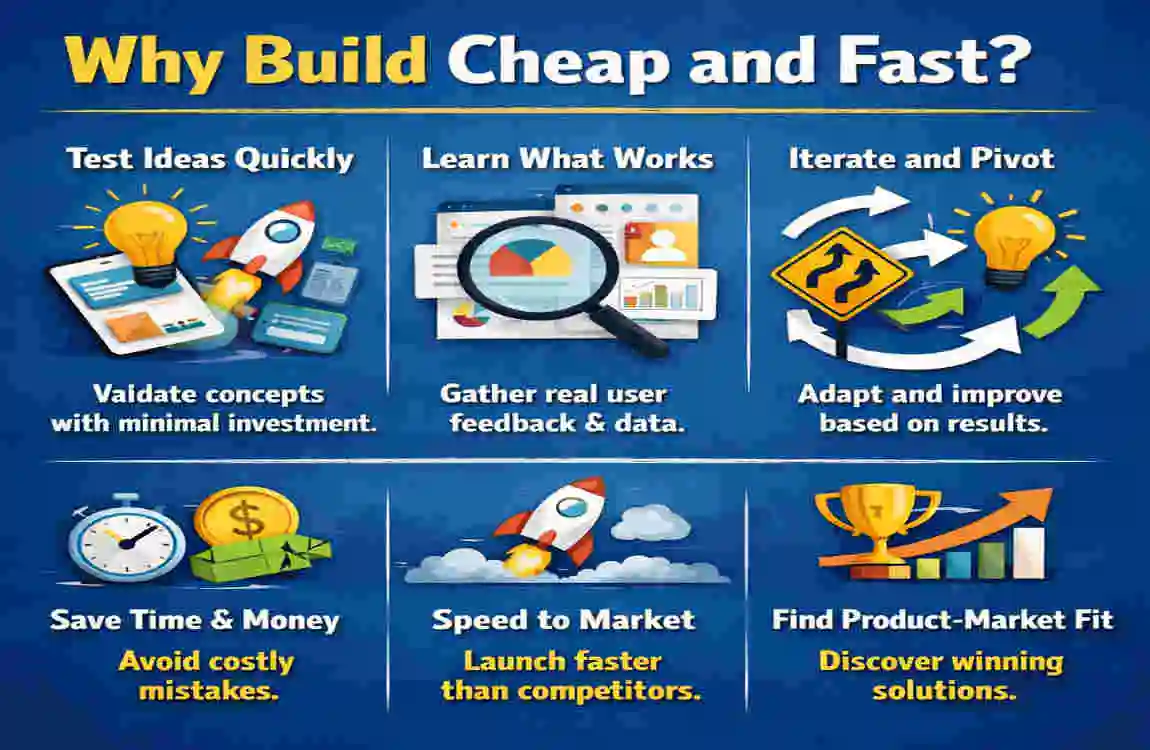
Before we dive into the specific steps, we need to look at the current market realities. Why is learning how to build a house cheap and fast so incredibly important today?
Right now, the average cost to build a standard home in the United States sits anywhere from $150 to $400 per square foot. If you want a 1,500-square-foot house, you are looking at a massive bill. However, when you use modern, low-cost construction methods, you can dramatically reduce the price to $50 to $100 per square foot. That is a life-changing difference.
The True Benefits of Speedy Construction
Building quickly and affordably offers massive benefits that go far beyond your initial bank account balance.
First, you get a much faster return on investment (ROI). Whether you are building this house to live in, rent out, or sell, getting the structure finished months ahead of schedule means you stop paying rent somewhere else or start collecting rental income much sooner.
Second, building fast heavily reduces the pain of labor inflation. Every single day a construction crew is on your property, you are paying for their time, their insurance, and their overhead. By utilizing methods that cut construction time in half, you literally cut your labor costs in half.
Finally, many of these fast-building techniques are incredibly eco-friendly. Using prefabricated materials means less waste ends up in landfills.
The Data Behind the Speed
The statistics for 2026 are truly eye-opening. Studies show that modern modular and prefabricated homes are built up to 40% quicker than traditional stick-built homes. We are also seeing a massive trend in the use of precast concrete and specially engineered building blocks. These materials slot together like giant puzzle pieces, allowing a small team to raise a home’s entire frame in a matter of days.
The key to unlocking all these benefits starts long before you pour your foundation. It all begins with a brilliant plan. Let’s look at exactly how to start.
Smart Planning Basics
If you want to know how to build a house cheaply and quickly, you must understand that your ultimate success is decided during the planning phase. Every change you make on a piece of paper costs nothing. Every change you make after the concrete is poured costs thousands of dollars.
The Power of Simple Geometry
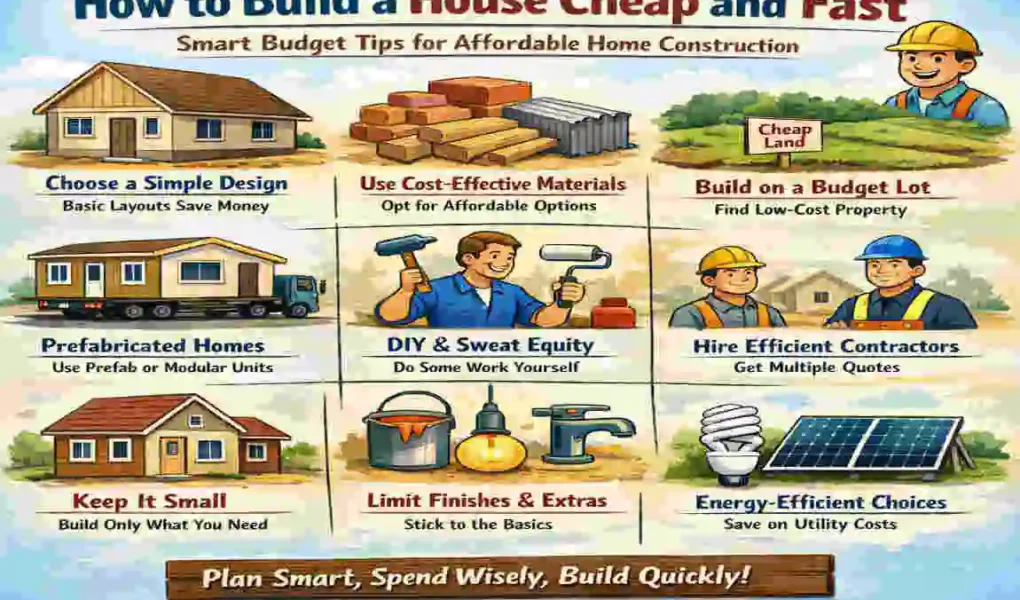
The absolute most effective way to save money on your home build is to choose a simple, straightforward design. You should heavily favor rectangular or square floor plans.
Every time your home’s foundation or roofline changes direction, it creates a “corner.” In construction, corners are expensive. They require specialized roof trusses, complex framing, extra labor, and more materials. By keeping your home a simple rectangle, you eliminate significant waste.
Furthermore, building a single-story home is generally much cheaper and faster than building a two-story home. You avoid the cost of heavy-duty structural reinforcements, staircases, and second-story scaffolding. Builders estimate that sticking to a simple, rectangular, single-story design instantly saves you 20% on overall material and labor costs.
Choosing the Perfect Plot of Land
Your site selection plays a massive role in your budget. You want to look for land that is as flat as possible.
If you buy a piece of land on a steep hill, you might get a great view, but you will pay a fortune to excavate it. You will have to build massive retaining walls and pour complex, stepped foundations. A flat piece of land means the bulldozers can quickly scrape the topsoil, and your foundation team can get to work immediately. This simple choice can shave weeks off your timeline and save you tens of thousands of dollars.
Mastering Your Budget
You cannot build a cheap home if you do not track your money. You need a strict budget that breaks down exactly where every dollar is going. Here is a general breakdown of how your budget should look, along with some quick tips to speed up each phase.
Construction Category Percentage of Total BudgetFast & Affordable Pro Tip
Land and Site Prep 10% Buy flat land to avoid costly excavation and grading.
Foundation 15% Use a slab-on-grade foundation instead of a deep basement.
Framing and Structure 25% Utilize prefabricated panels or AAC blocks for instant walls.
Major Systems (Plumbing/Electrical) 15% Group all plumbing areas (kitchen/bath) close together.
Interior Finishes 25% Embrace open, minimalist plans with polished concrete floors.
Permits and Miscellaneous 10% Buy pre-approved, standardized blueprints to skip architect fees.
If you follow these percentages, you will never find yourself running out of money right before it is time to buy your windows, and figuring out how to build a house cheap and fast starts here, with extreme financial discipline.
Low-Cost Materials Guide
The materials you choose will determine both the speed of your build and the final bill you pay. In 2026, we are moving away from traditional lumber and expensive brick. Instead, smart builders are turning to high-tech, low-cost alternatives.
The Magic of AAC Blocks
If you have never heard of Autoclaved Aerated Concrete (AAC) blocks, get ready to meet your new best friend. AAC blocks are arguably the top pick for budget builders this year.
These blocks are made of concrete injected with air bubbles. This makes them incredibly lightweight—often a fifth of the weight of standard concrete. Because they are so light, workers can lay them much faster, which significantly reduces your labor costs.
But the benefits do not stop at speed. Those tiny air bubbles act as incredible thermal insulators. An AAC block wall keeps your house warm in the winter and cool in the summer, lowering your energy bills forever. Overall, building with AAC blocks is roughly 30% cheaper than traditional framing or brickwork.
Precast Concrete Panels
Another amazing option is precast concrete panels. Instead of mixing and pouring concrete on your property (which takes a lot of time and requires perfect weather), massive concrete walls are poured in a climate-controlled factory. Once they are dry and ready, they are loaded onto a truck, driven to your land, and lifted into place with a crane. You can have a fully waterproof, incredibly strong home exterior standing in a single afternoon.
Prefabricated and Modular Systems
If you really want to speed things up, look into modular systems like the popular Gablok system. Think of these systems like giant, adult-sized Lego bricks made of insulated wood and foam.
These blocks are factory-built to exact specifications. They arrive on wooden pallets, and you stack them together following a basic numbered guide. You do not need massive cranes or a huge crew. A small team of motivated friends can assemble the entire structural frame of a home in just a few days.
Recycled and Engineered Wood
If you still prefer the look and feel of a wooden home, you do not have to buy wildly expensive fresh lumber. Look into recycled or engineered wood products (such as OSB panels and laminated beams). These materials take scrap wood, compress it with strong resins, and create building materials that are actually stronger and straighter than natural wood, all at a fraction of the price. They are incredibly durable and serve as a wonderful green alternative.
Material Cost and Speed Comparison
Let’s look at a quick comparison of traditional materials and budget alternatives.
Material Type Cost Profile Construction Speed Insulation Value
Traditional Red Brick Very High Extremely Slow Poor (Requires extra foam)
Standard Wood Frame Medium/High Average (Weeks) Average
AAC Blocks Low Fast (Days) Excellent
Prefab Modular Blocks Low/Medium Very Fast (Days) Superior
As you can see, the modern blocks win on both speed and cost every single time.
Speedy Construction Techniques
Having the right materials is only half the battle. To truly master how to build a house cheap and fast, you need to use construction techniques that prioritize rapid assembly. Traditional building methods are incredibly slow because one contractor has to wait for another to finish before they can begin. We want to bypass that bottleneck entirely.
Fast-Tracking Your Foundation
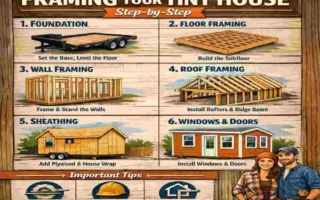
The foundation is the anchor of your home, but it does not need to be a massive, expensive underground bunker. The fastest and most affordable foundation type is the slab-on-grade foundation.
Instead of digging a deep hole for a basement—which requires heavy excavators, massive concrete forms, and weeks of curing time—a slab-on-grade foundation is simply a thick, reinforced concrete pad poured directly onto the leveled ground. The builders will run your plumbing pipes through the dirt, place a moisture barrier, lay down steel mesh, and pour the concrete.
Choosing a simple slab foundation over a full basement can easily save you 3 to 4 weeks and tens of thousands of dollars in concrete and labor costs.
Rapid Wall Assembly
Once the slab is cured, you need your walls to go up instantly. In traditional stick framing, carpenters measure, cut, and nail thousands of individual 2×4 boards. It takes forever.
Instead, utilize hollow blocks or prefabricated structural panels. Because these systems are designed to interlock or stack directly on top of each other, your walls rise at an astonishing rate. You stack the blocks, run some steel rebar through the hollow centers for strength, and fill the gaps with a minimal amount of concrete or construction adhesive. The result is a perfectly straight, incredibly strong wall built in a fraction of the time.
Quick and Durable Roofing Systems
A complicated roof with multiple peaks, dormers, and valleys is a massive money pit. It requires a master carpenter to cut complex angles, and it takes roofers weeks to seal against the rain properly.
Your rapid building strategy should always feature a simple gable roof or a single-pitch shed roof. A gable roof resembles a simple triangle resting on your walls. Because it is so simple, a crane can lift pre-made roof trusses onto your walls in a few hours.
For the roofing material, skip traditional asphalt shingles. Instead, opt for large metal roofing sheets. A crew can screw these massive, durable metal panels into place in just 1 to 2 days. Metal roofs can last 50 years or more, reflect sunlight to keep your home cool, and are installed lightning-fast.
The New Construction Timeline
When you combine a flat piece of land, a slab foundation, stackable block walls, and a simple metal roof, the traditional building timeline shatters.
A standard house built the old-fashioned way often takes roughly 6 to 8 months to complete. By using these modern, rapid techniques, you can achieve a total construction timeline of just 4 to 6 weeks.
That is the absolute core of how to build a house cheaply and fast with prefab and modular thinking. You are turning a messy construction site into a highly efficient assembly line.
Budget Labor and DIY Tips
Labor is often the single most expensive line item on any construction budget. If you hire a general contractor to manage everything, they will typically charge a 20% markup on every single worker who steps foot on your property. If you want to keep costs incredibly low, you have to rethink how labor works.
Hiring Strategically (Phased Labor)
You do not need to build the entire house by yourself, but you also do not need to hand the entire project over to an expensive company. The secret is phased hiring.
This means you only hire highly skilled, licensed specialists for the parts of the job that are dangerous or highly regulated. You should absolutely hire professionals to pour your concrete foundation, install your main electrical panel, and run your primary plumbing lines. These are critical systems where mistakes can be disastrous. Let the pros handle the high-stakes work.
The Power of DIY in Modern Building
Once the critical infrastructure is in place, it is time to roll up your sleeves. You can easily DIY up to 40% of the project if you are willing to learn.
In 2026, you have the greatest educational resource in human history right in your pocket. There are thousands of incredible, high-quality YouTube guides that will walk you step-by-step through the finishing phases of home construction.
You can absolutely learn how to install your own interior wall framing. You can easily roll out your own fiberglass insulation or spray-canned foam around your windows. Hanging drywall, painting rooms, laying laminate flooring, and installing kitchen cabinets are all tasks that an ambitious beginner can tackle. Every hour you spend doing this work yourself saves you $50 to $100.
Renting vs. Buying Tools
Do not run out to the hardware store and buy $ 10,000 worth of professional power tools that you will only use once. For the specialty tools you need, always utilize tool rental services.
Renting tools like heavy-duty tile saws, concrete mixers, or professional paint sprayers typically saves you 15% to 20% upfront on your equipment budget. You get the benefit of professional-grade gear without the massive price tag or the headache of storing it in your garage for the next 10 years.
Navigating Permits Quickly
Time spent waiting for a city building inspector is time wasted. To fast-track your building permits, always submit pre-approved modular plans or highly standardized architectural blueprints. Local permit offices love simple, easy-to-read designs that use proven materials. If you give them a simple, clear, pre-engineered plan, they will stamp your permit much faster than if you submit a wild, custom, multi-level architectural experiment.
Finishing on a Dime
Congratulations! The walls are up, the roof is on, and the house is totally waterproof. Now you need to turn the inside of the structure into a beautiful home. This phase is where many people accidentally blow their budget. They get tempted by expensive tiles, luxury countertops, and high-end fixtures. You must stay disciplined.
Minimalist and Open Interiors
The most affordable way to finish a home is to embrace a minimalist, open layout. Do not build a bunch of small, choppy rooms that require extra doors, extra light switches, and extra drywall. Let your kitchen, dining room, and living room share a single, large, beautiful open space.
For your decor, utilize multipurpose furniture. Instead of building an expensive, permanent kitchen island, buy a beautiful, movable wooden butcher-block cart. Use large rugs to define spaces rather than build partition walls. A clean, simple, minimalist design always looks highly expensive and modern. Yet, it costs a fraction of a traditional cluttered layout.
Smart Energy Savings
When you are finishing the house, you need to think about your future bills. Spending a tiny bit of extra money right now will save you thousands over the next decade.
First, install heavy insulation everywhere you can. A well-insulated house needs little heating or cooling. Second, absolutely install LED lighting in every single socket. LED lights use almost zero electricity and last for years. Finally, purchase simple, water-saving showerheads and low-flow toilets. These tiny choices keep your monthly utility bills incredibly low, keeping your home affordable long after the build is done.
Skipping the Unnecessary Luxuries
Avoid the common pitfalls of luxury design. Skip the curves. Curved walls, arched doorways, and circular windows require specialized craftsmanship and extensive time. Stick to straight, clean lines.
Furthermore, you do not need solid marble countertops at this time. High-quality butcher-block wood countertops or modern poured-concrete counters look absolutely stunning and cost thousands of dollars less. You can always upgrade certain finishes five or ten years from now when you have more money. Your goal today is to finish the house safely and beautifully.
The Ultimate Cost-Saving Checklist
To stay on track, print this quick checklist and keep it on your clipboard at the construction site. These 20 actionable items will guarantee your success.
- Opt for a square or rectangular footprint.
- Stick to a single-story design.
- Purchase flat, easy-to-build-on land.
- Buy pre-made, standardized blueprints.
- Use a slab-on-grade concrete foundation.
- Opt for AAC blocks for exterior walls.
- Consider prefab Gablok or modular systems.
- Design a simple gable or shed roof.
- Install a durable, fast metal roof.
- Source your heavy materials locally.
- Hire pros only for foundation, electrical, and plumbing.
- DIY your interior painting and flooring.
- Rent heavy tools instead of buying them.
- Embrace an open-concept living space.
- Use butcher block or concrete countertops.
- Install LED lighting exclusively.
- Maximize your wall and ceiling insulation.
- Avoid arched doorways and curved walls.
- Keep all plumbing confined to a single main wall.
- Track every single receipt in a strict budget spreadsheet.
Total Savings Calculator Example: Imagine a traditional builder quotes you $200,000 for a standard house. By using a simple rectangular design (-$20,000), opting for a slab foundation (-$15,000), using rapid AAC blocks and metal roofing (-$15,000), and DIYing your interior finishes (-$30,000), your total build cost easily drops down to just $120,000. That is the incredible power of these strategies.
Common Mistakes to Avoid
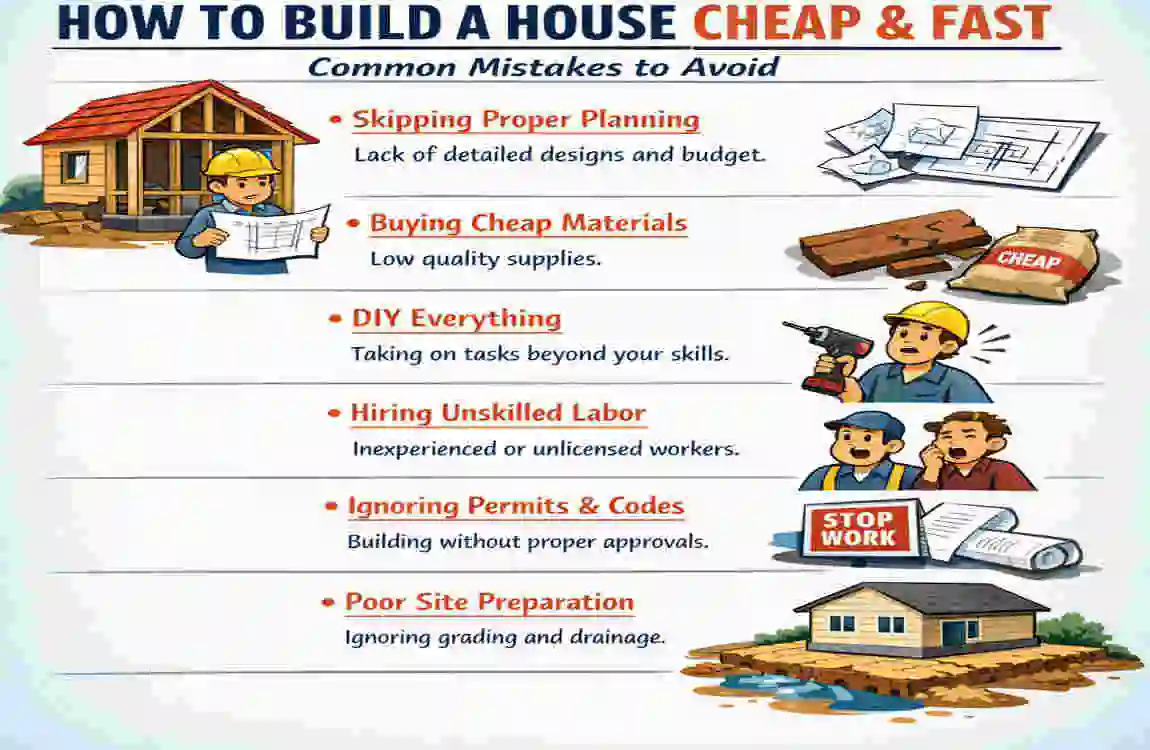
Even with the best checklist in the world, people make mistakes. If you want to know how to build a house cheaply and fast without ending up in a nightmare, you must avoid these three critical errors.
Overcomplicating the Design
The biggest mistake budget builders make is getting greedy during the design phase. They start adding bay windows, extra bathrooms, and complex wrap-around porches. Every feature you add multiplies your costs. Stick to your original, simple, budget-friendly plan.
Ignoring Site Preparation
Do not rush the bulldozer phase. If your land is not perfectly graded, water will pool around your beautiful new house, slowly destroying your foundation. Spending an extra day to ensure the dirt slopes away from your house properly will save you from a major structural disaster later.
Skimping on the Envelope (Insulation)
Never try to save money by buying cheap, thin insulation. Your home’s “envelope” (walls, roof, and windows) protects you from the elements. If you use poor insulation, you might save $1,000 today, but you will pay $5,000 in extra heating costs over the next few years.
A Real Case Success: Consider the massive success stories we are seeing in 2026. Every day, people with no construction experience use simple, insulated Gablok building blocks. Because they did not overcomplicate the design and they prepped their site perfectly, we are seeing real-world cases of families fully raising their home’s structural frame in just 6 days. It is entirely possible if you avoid the common mistakes.
FAQs for how to build a house cheap and fast
What is the cheapest way to build a house?
Use simple designs, affordable materials (like concrete blocks), and minimize custom features to reduce costs.
How can I build a house quickly?
Choose pre-designed plans, hire an experienced contractor, and use prefabricated or modular construction methods.
Is it cheaper to build or buy a house?
It can be cheaper to build if you control costs, but buying is often faster and less risky.
What materials are best for low-cost house building?
Concrete blocks, steel frames, and locally available materials are usually the most affordable.
How long does it take to build a house fast?
A simple house can be built in 3–6 months with proper planning and resources.
How can I reduce labor costs?
Do some work yourself (DIY), hire local workers, and avoid complex designs.
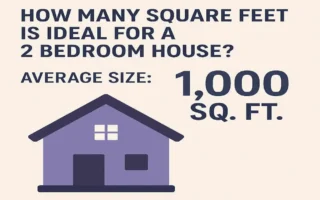
What size house is cheapest to build?
Smaller, compact homes with fewer rooms are the most cost-effective.
Are prefabricated homes cheaper?
Yes, prefab homes are often cheaper and faster due to factory-built components.
How can I save money on house design?
Use standard layouts, avoid unnecessary features, and keep the structure simple.
What is the biggest cost in building a house?
Labor, materials, and foundation work usually take up the largest portion of the budget.