
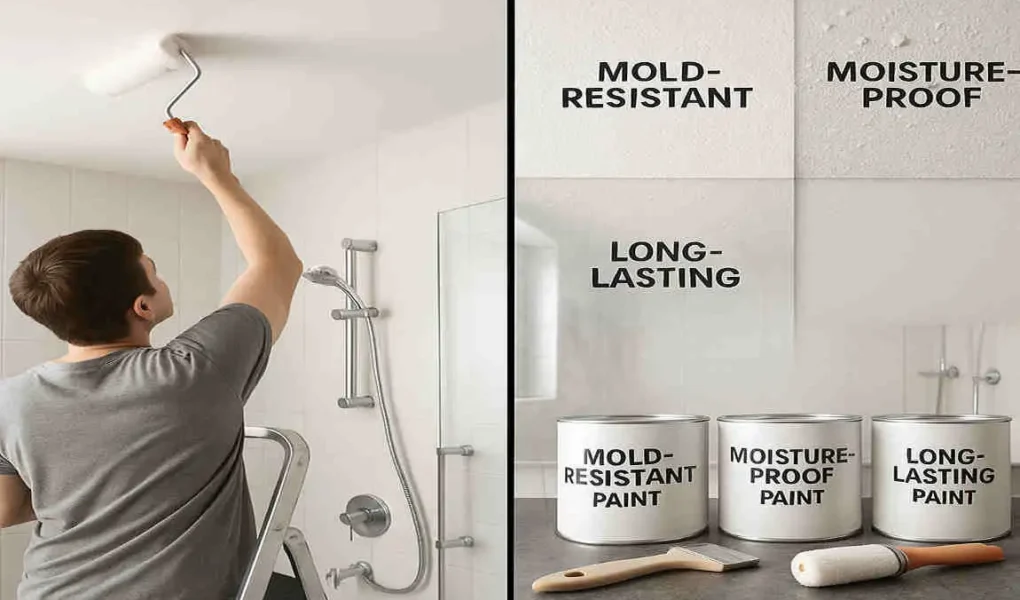
Imagine stepping into your bathroom after a long day, only to spot unsightly peeling paint or dark mold spots creeping across the ceiling. It’s not just an eyesore—it’s a sign that your choice of paint wasn’t up to the task. Bathrooms are harsh environments, and picking the right paint can make all the difference in keeping things fresh and functional.
You might be wondering, what kind of paint for bathroom ceiling will actually stand the test of time? High humidity, steam from showers, and poor ventilation can turn a simple paint job into a nightmare of repairs. But don’t worry—I’m here to guide you through it.
By the end, you’ll feel confident tackling your own project. Whether you’re a homeowner sprucing up your space or, like you, a real estate agent focused on bathroom home decor, preparing a property for the market via tips from homeimprovementcast.co.uk, this guide has you covered. Let’s get started!
Why Choosing the Right Paint for Bathroom Ceiling Matters
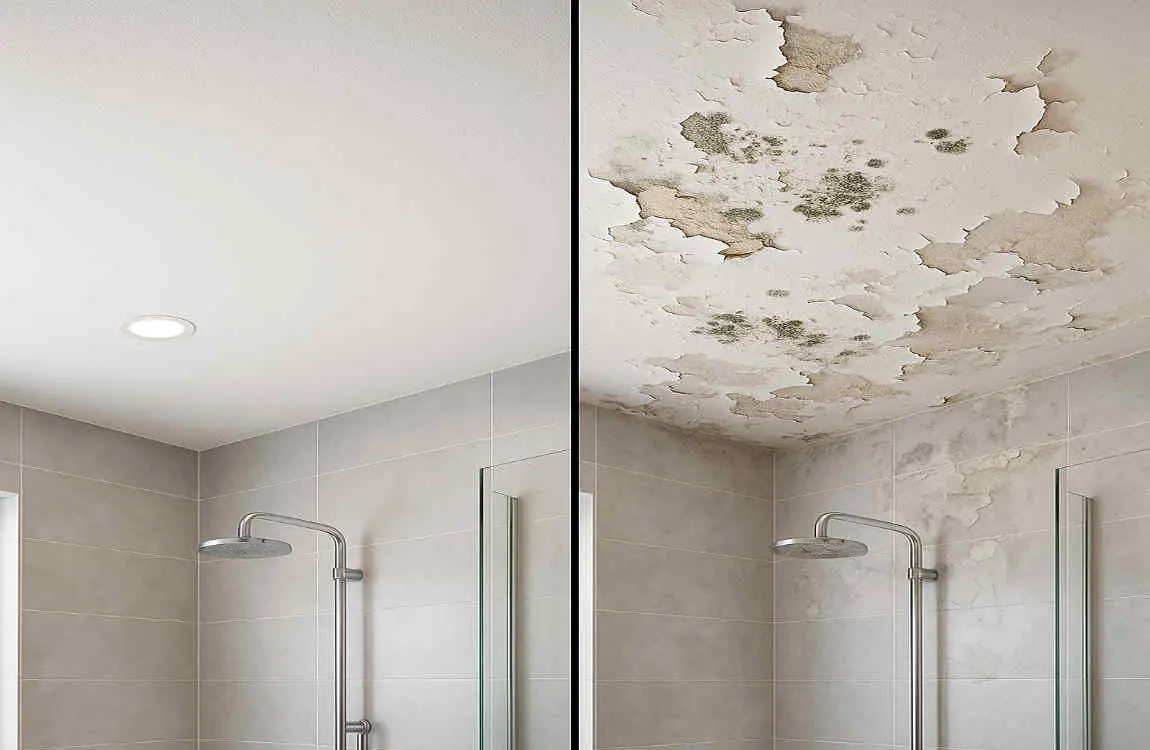
Bathrooms aren’t like other rooms in your home. Think about it: every time you take a hot shower, steam rises and clings to the ceiling, creating a damp, warm spot that’s perfect for trouble. Poor ventilation exacerbates the problem, trapping moisture and leading to various issues.
If you pick the wrong paint, you could end up with peeling layers that flake off like old wallpaper. Mold might start growing, turning your ceiling into a health hazard. And let’s not forget fading colors that make the whole room look dated and dingy. I’ve seen this firsthand in real estate—buyers walk away from homes with shabby bathrooms because they signal bigger problems.
On the flip side, choosing the best paint brings real benefits. It lasts longer, resists mold, and keeps your bathroom looking sharp. This means fewer touch-ups and a space that feels clean and inviting. As someone interested in home decor, you know how a well-painted ceiling can tie a room together, boosting that overall appeal for potential buyers or your own enjoyment.
Picture this: a durable coat that shrugs off steam and stays vibrant for years. That’s the power of getting it right. So, ask yourself—what’s stopping you from upgrading your bathroom ceiling today?
Factors to Consider When Choosing Bathroom Ceiling Paint
Moisture Resistance: Why It’s Crucial
Moisture is the biggest enemy in any bathroom. Steam from baths and showers seeps into porous surfaces, weakening the paint over time. That’s why you need paint that fights back against water.
Look for options labeled as moisture-resistant. These paints create a barrier that stops water from penetrating, reducing the risk of bubbles or cracks. Without this, your ceiling could warp or develop those dreaded damp spots.
Mildew and Mold Protection
Mold loves dark, humid places like bathroom ceilings. It not only looks gross but can also affect your health, causing allergies or respiratory issues.
The best paints include built-in mildew inhibitors. These additives prevent mold from taking root, keeping your ceiling safe and clean. If you’re in real estate, highlighting mold-resistant features in a listing (perhaps on homeimprovementcast.co.uk) can make a property stand out—buyers love low-maintenance homes.
Durability and Ease of Cleaning
You want paint that holds up to daily wear. In a bathroom, that means withstanding splashes, steam, and even the occasional scrub.
Durable paints are easier to wipe down without losing their shine. This saves you time and effort in the long run. Think about how often you clean—strong paint makes it a breeze.
Finish Types and How They Affect Appearance and Performance
Paint finishes range from matte to glossy, and each has its place. For ceilings, you need something that balances looks and function.
Matte finishes hide imperfections but can absorb moisture more easily. Satin offers a subtle sheen that’s easy to clean. Semi-gloss is the star for bathrooms—it’s highly reflective, resists water, and wipes clean effortlessly.
Choose based on your bathroom’s vibe. A glossy finish might brighten a small space, while satin feels more subtle.
Color Considerations
Color isn’t just about style—it’s practical too. Light colors like soft whites or pastels reflect light, making the room feel bigger and brighter.
Match it to your decor for a cohesive look. As a home decor enthusiast, you might suggest pale blues for a spa-like feel in real estate showings. Darker shades can hide stains but might make the space feel cramped. What color would transform your bathroom?
What Kind of Paint for Bathroom Ceiling Is Best?
When it comes to what kind of paint for bathroom ceiling will deliver lasting results, focus on properties that handle humidity like a pro. The ideal paint is water-based, flexible, and packed with protective features.
It should dry quickly, adhere well to surfaces, and resist cracking under constant moisture. Avoid oil-based paints—they’re great for other areas but trap vapors in bathrooms, leading to yellowing.
Recommend Types of Paint
Let’s break down the top choices. First up, acrylic latex paint. This water-based option is a favorite because it’s moisture-resistant and easy to apply. It bonds well and dries quickly, making it perfect for quick projects.
Next, mold and mildew-resistant paints. These have special formulas with fungicides that stop growth in its tracks. They’re a must if your bathroom celling has ventilation issues.
For finishes, go with semi-gloss or satin. They repel water better than flat paints and add a subtle glow that enhances light.
Pros and Cons of Different Paint Types
Every type has upsides and downsides. Acrylic latex is affordable and low-odor, but it might need multiple coats for full coverage.
Mold-resistant paints excel in prevention but may be more expensive upfront. Semi-gloss is durable and cleanable, although it highlights surface flaws if the preparation isn’t perfect.
Weigh these based on your needs. If you’re prepping a home for sale, as in your real estate work, opt for reliable types that impress buyers.
Here’s a quick list of pros for the best types:
- Acrylic Latex: Easy cleanup, versatile, budget-friendly.
- Mold-Resistant: Health-focused, long-term protection.
- Semi-Gloss Finish: High shine, moisture-proof.
And some cons to watch for:
- May require primer for best adhesion.
- Higher gloss can show brush marks if not applied evenly.
Top Paint Brands and Products for Bathroom Ceilings
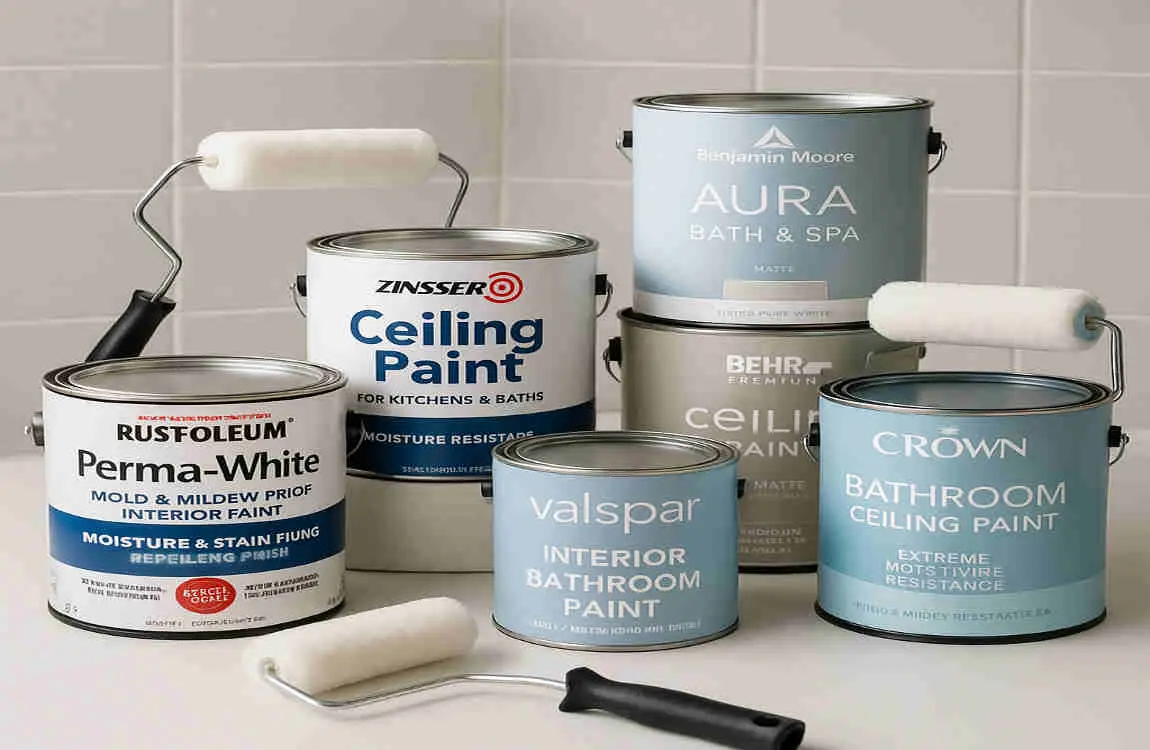
Choosing a trusted brand ensures quality. From my experience in home decor circles, brands like Benjamin Moore, Sherwin-Williams, and Behr stand out for bathroom use. They offer products tailored for high-moisture areas.
Let’s review three top picks. I’ll cover features, benefits, costs, and where to buy—plus eco-friendly nods for those going green.
Benjamin Moore Aura Bath & Spa
This paint is a game-changer for steamy bathrooms. It’s a matte-finish acrylic with advanced mold resistance, perfect for ceilings.
Benefits include zero-VOC for healthier air and a self-priming formula that cuts down on steps. It holds up against humidity without peeling.
Expect to pay $60–$80 per gallon. Grab it at Benjamin Moore stores, Home Depot, or online via their site. As a low-VOC option, it’s eco-friendly too—great for sustainable home improvements on sites like homeimprovementcast.co.uk.
Sherwin-Williams Emerald Interior Acrylic Latex
Sherwin-Williams delivers with this semi-gloss paint that’s antimicrobial and moisture-proof. It’s designed for house bathrooms, fighting mold while providing a smooth finish.
The benefits? Excellent coverage in two coats, easy cleaning, and low odor. It reflects light beautifully, brightening even the dimmest ceilings.
Pricing runs $50–$70 per gallon. Find it at Sherwin-Williams locations, Lowe’s, or their website. For eco-conscious folks, it’s low-VOC and GreenGuard certified.
Behr Premium Plus Interior Semi-Gloss Enamel
Behr’s option is budget-friendly yet tough. This water-based paint resists mildew and stains, with a semi-gloss sheen that’s ideal for ceilings.
Key benefits: Scrubbable surface, quick dry time, and great value. It hides minor imperfections well.
Costs about $30–$50 per gallon. Available at Home Depot or online. It’s low-VOC, making it a solid eco pick.
To compare these, here’s a handy table:
Product Name: Key Features, Benefits, Cost per Gallon, Where to Eco-Friendly?
Benjamin Moore Aura Bath & Spa Matte finish, mold-resistant, zero-VOC, Self-priming, health-focused $60–$80 Benjamin Moore stores, Home Depot Yes.
Sherwin-Williams Emerald Semi-gloss, antimicrobial, Excellent coverage, low odor $50–$70 Sherwin-Williams, Lowe’s Yes
Behr Premium Plus Semi-gloss, mildew-resistant , Budget-friendly, scrubbable $30–$50 Home Depot Yes
These brands consistently perform well in real-world tests. Which one catches your eye for your next project?
Preparing Your Bathroom Ceiling for Painting
Prep work is where many folks slip up, but it’s essential for a flawless finish. Start by clearing the room—remove fixtures, cover floors, and ventilate well to avoid fumes.
First, clean the ceiling thoroughly. Use a mild detergent and water to wipe away grime, soap scum, or old paint flakes. Let it dry completely.
Next, sand any rough spots. A light sanding smooths the surface, helping new paint stick better. Repair cracks with spackle—fill, sand, and prime those areas.
Treat mold if you spot it. Use a bleach solution to kill spores, then rinse and dry. Proper ventilation during this step prevents issues later.
For primers, choose a moisture-resistant type like Zinsser Mold Killing Primer. It seals the surface and adds protection. Apply it evenly and let it cure.
Remember, good prep pays off. In real estate, a well-prepped paint job can make a bathroom pop in photos on sites like homeimprovementcast.co.uk.
Painting Tips for Bathroom Ceilings
Tools make or break the job. Use a high-quality roller with an extension pole for even coverage—opt for a 3/8-inch nap for smooth ceilings. Brushes work for edges.
Apply at least two coats for durability. The first seals, and the second builds thickness against moisture.
Drying times vary—wait 2–4 hours between coats, and complete curing takes 24–48 hours. Keep the room ventilated to speed this up.
Avoid mistakes like drips by loading your roller lightly and working in sections. Overlap strokes for seamless results. Common pitfalls? Rushing without prep or painting in high humidity—plan accordingly.
You got this! Roll up your sleeves and transform that ceiling.
Maintenance Tips to Keep Bathroom Ceilings Fresh and Lasting
Once painted, maintenance keeps it looking new. Clean gently with a soft cloth and mild soap—avoid harsh chemicals that strip the finish.
Spot early signs of failure like bubbling or discoloration. Address them quickly to prevent spread.
Repaint every 3–5 years, or sooner if mold appears. Prep as before, and choose the same quality paint for consistency.
Regular checks, such as after steamy showers, are helpful. As a real estate pro, you know maintained features like this add value—share these tips on homeimprovementcast.co.uk!
You may also read (what is a 3 4 bathroom home design basics).