If your taps are slowing down, your water looks rusty, or the pressure feels weaker than usual, you may be dealing with a clogged water line. This is a common home problem, and it can be frustrating when it affects your kitchen, bathroom, or even the whole house.
| Section | Key Focus | What You Will Learn |
|---|---|---|
| Introduction | Overview of water line issues | Why clogged water lines are common in homes |
| Causes | Main reasons for blockages | Mineral buildup, rust, debris, grease, pipe damage |
| Warning Signs | Early detection tips | Low pressure, dirty water, slow flow, pipe noises |
| Tools Needed | Essential equipment | Snake, plunger, vinegar, hose, safety gear |
| DIY Methods | Step-by-step solutions | Flushing, vinegar mix, drain snake, pressure cleaning |
| Main Line Issues | Serious blockage handling | How to identify and respond safely |
| Prevention | Long-term maintenance | Filters, cleaning routines, avoiding buildup |
The good news is that many small blockages can be handled at home with simple steps. When you learn how to unclog water lines in the house, you can save time, reduce stress, and avoid bigger plumbing trouble later. In some cases, a quick DIY fix is enough. In other cases, calling a plumber is the safer choice.
Understanding Water Lines in Your Home
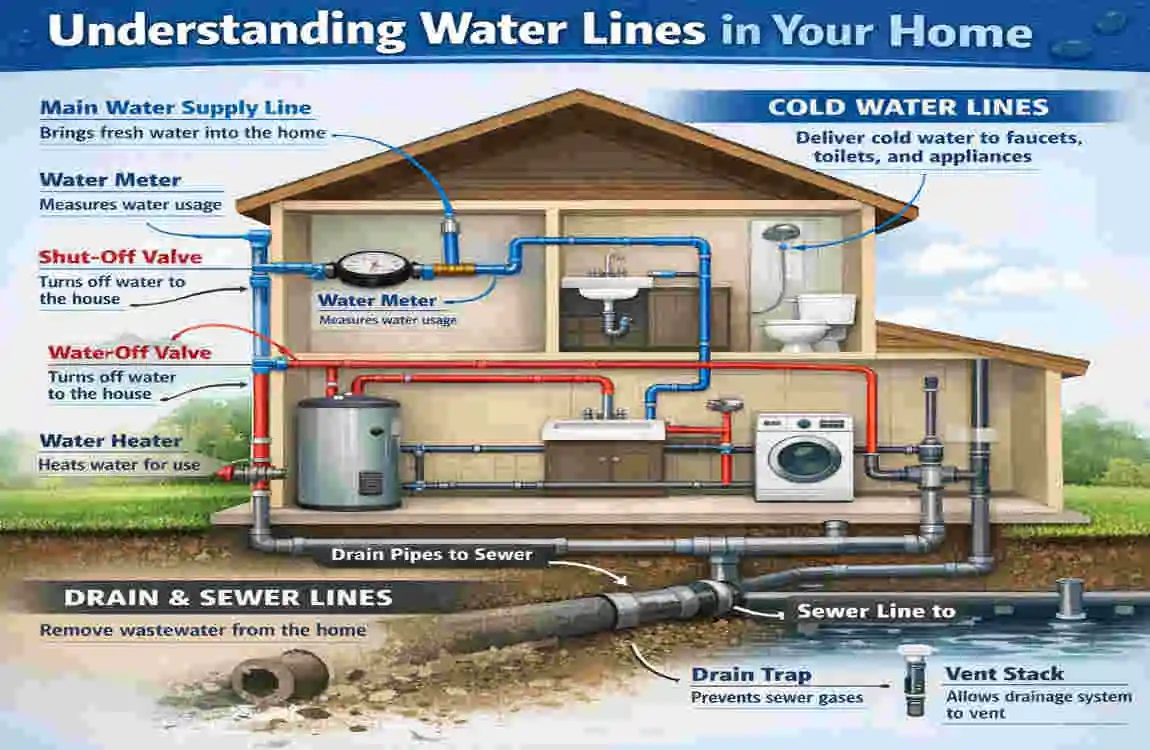
Water lines are the pipes that carry clean water into your house and to sinks, showers, toilets, and appliances. Some lines carry water from the main supply into your home, while others split off to different rooms and fixtures.
When these lines stay clean, water flows smoothly. But when debris, rust, or mineral buildup starts collecting inside the pipes, flow can slow down. The problem often begins in one area and slowly spreads to other parts of the system.
Where Clogs Usually Start
Clogs often build up in old pipes, narrow sections, or spots where minerals and dirt settle. Underground lines can also be affected by soil movement, root growth, or damage over time.
Common Causes of Water Line Blockages
Several things can lead to clogged water lines. Hard water is one of the most common causes because it leaves behind mineral deposits. Over time, those deposits can narrow the pipe and block the flow of water.
Old pipes may also rust or corrode inside, which creates another layer of buildup. Dirt, sand, and debris can also enter the system, especially if the plumbing or supply source is not well protected.
In some homes, grease or oily residue can collect in nearby plumbing parts and affect flow. Underground lines may be subject to tree root intrusion or pipe damage, making the blockage harder to remove.
Early Warning Signs of Clogged Water Lines
A clogged line usually gives you warning signs before it becomes serious. One of the first signs is low water pressure throughout the house. You may also notice that some taps run stronger than others.
Water may come out rusty, cloudy, or discolored. Pipes can also make strange knocking or gurgling sounds. In some cases, sinks, tubs, or tanks take much longer to fill than usual.
If more than one fixture is affected at the same time, the issue may be deeper in the water line rather than just one faucet or showerhead.
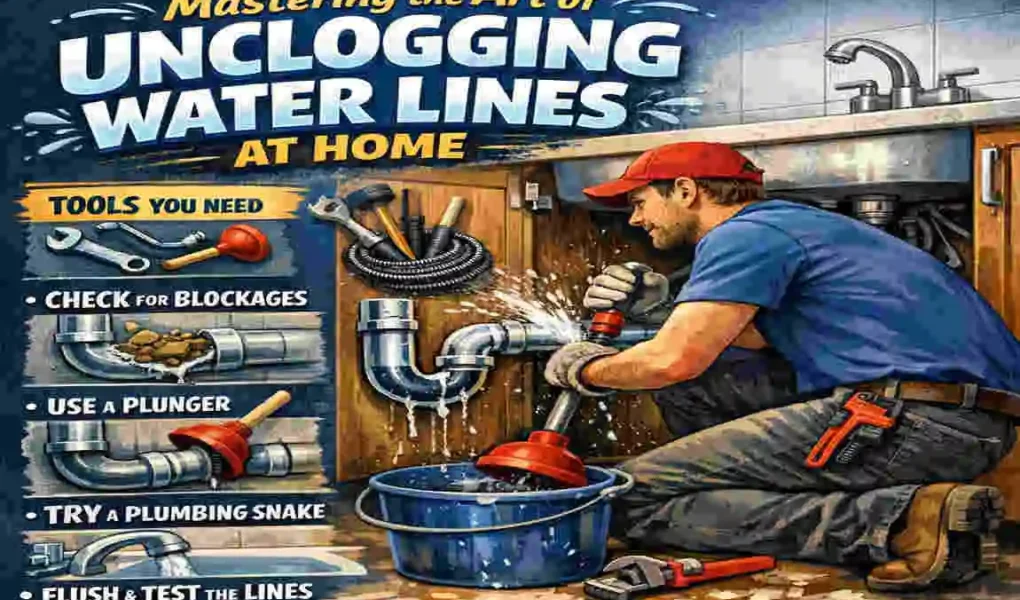
Tools and Materials Needed for Unclogging
You do not always need special equipment for a simple fix. A few basic tools can help you get started and keep the job safe.
Helpful Tools
- Plunger
- Pipe wrench
- Drain snake or auger
- Bucket and towels
- Vinegar and baking soda
- Gloves and goggles
For outdoor lines, a high-pressure hose may also help. If you use any pipe-cleaning chemical, make sure it is safe for your pipe type and follow the label instructions carefully.
Safety Precautions Before You Start
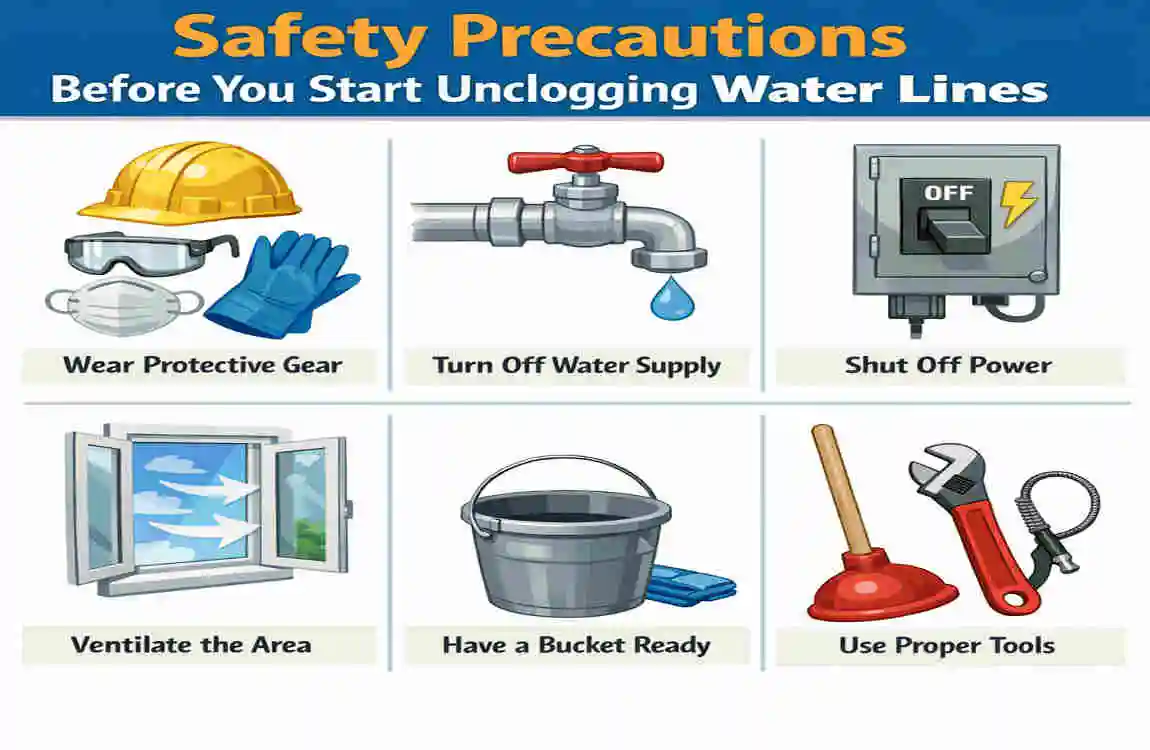
Before you try anything, turn off the main water supply if needed. This helps prevent leaks and gives you more control while working.
Wear gloves and goggles, especially when handling dirty water or cleaning products. Never mix chemicals, because that can create dangerous fumes or reactions.
It is also important to check what kind of pipes you have. Some older or softer pipe materials can be damaged by harsh cleaners or too much force. If the clog looks severe, or if you suspect pipe damage, stop and call a professional.
How to Unclog Water Lines in the House: Step-by-Step Methods
Flushing the Water Lines
For light blockages, flushing can help. Start by turning off the water supply. Then open nearby faucets so trapped water can move out. Once the system is ready, let clean water run through the line again.
This method is best when the clog is minor and caused by loose debris. It is simple, safe, and often worth trying first.
Vinegar and Baking Soda Treatment
If mineral buildup is the problem, vinegar and baking soda can help loosen it. Add baking soda to the affected line if possible, then follow with vinegar. Let the mixture sit long enough to react and break down buildup.
After that, flush the line with hot water. This method is gentle and works well for light scale and mineral deposits.
Using a Drain Snake or Auger
A drain snake can help with tougher clogs. Carefully insert the tool into the pipe and rotate it to break apart or pull out the blockage. Move slowly so you do not scratch or damage the pipe.
This is a useful option when flushing alone does not help. It gives you a more direct way to reach the clog.
High-Pressure Water Flushing
For outdoor lines, a strong water flush may help push out dirt and debris. Attach the hose to the outlet or accessible point and let water force the blockage out.
This works best when the clog is caused by loose buildup rather than hard corrosion or broken pipe material.
Chemical Pipe Cleaners
Chemical cleaners should be your last option. If you use one, choose a product made for plumbing lines and follow the directions very carefully.
Too much chemical use can damage pipes, especially older ones. That is why this method should be used only when other safer options do not work.
How to Unclog Main Water Supply Line
If the blockage seems to affect the whole house, the main supply line may be the problem. This is more serious because it can interrupt water flow everywhere at once.
Try to identify whether the issue is inside the home or deeper in the line. If the pressure remains low in every room, the blockage may be in the main supply line. In that case, it is often safer to shut off the water and call a plumber.
Main line problems can be tricky, especially if the blockage is underground or caused by pipe damage.
When to Call a Professional Plumber
Some problems are too big for DIY repair. If low pressure persists after your attempts, or if you notice leaks, bursts, or recurring clogs, it is time to get help.
A plumber can find hidden damage, clear deep blockages, and protect your pipes from further harm. This is often better than risking a bigger repair later.
Preventing Future Water Line Clogs
The best fix is prevention. You can reduce clogging by regularly checking your plumbing and monitoring pressure changes.
A water softener can help if your home has hard water. Filters at the main inlet can also catch dirt before it enters the system. Try not to pour grease down sinks, and flush your system from time to time to help keep buildup from settling.
An annual plumbing check can also catch small problems early, before they turn into major blockages.
DIY vs Professional Solutions Comparison
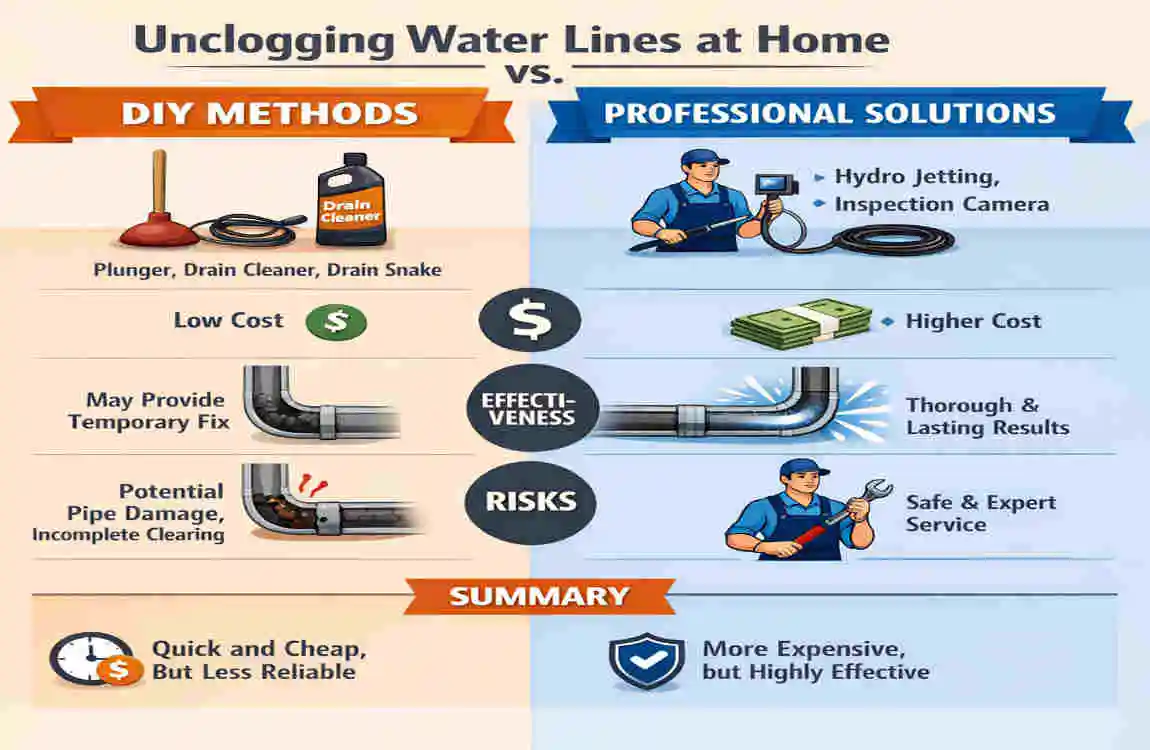
DIY methods are usually cheaper and faster for minor clogs. They work well when the problem is small and easy to reach.
Professional help costs more, but it is often more reliable for deep clogs, broken pipes, or main line issues. If the problem keeps coming back, a plumber is usually the smarter choice.
Common Mistakes to Avoid
A few simple mistakes can make the problem worse. One common mistake is using too much chemical cleaner. Another is forcing tools into pipes too aggressively.
It is also a mistake to ignore early warning signs. Small pressure changes often mean a bigger issue is starting. If you wait too long, the repair can become much more expensive.
Frequently Asked Questions
What is the fastest way to unclog water lines in the house?
Flushing the line is usually the fastest first step for a minor blockage.
Can vinegar really clean clogged pipes?
Yes, it can help break down mild mineral buildup.
How do I know if my main water line is blocked?
If low pressure affects the whole house, the main line may be the issue.
Is it safe to use chemicals for pipe cleaning?
Only if the product is safe for your pipe type and used exactly as directed.
How often should water lines be cleaned?
It depends on your water quality, but regular checks and occasional flushing help a lot.