Bathroom upgrades are becoming more popular in modern homes, and one feature getting a lot of attention is bathroom partitions. These partitions help create privacy, enhance the space’s appearance, and make the bathroom feel more organised. They are no longer just for commercial spaces. Many homeowners now use them in master bathrooms, family bathrooms, and even small apartments.
What Are Bathroom Partitions for the home?
Definition and Purpose
Bathroom partitions are dividing panels or walls used to separate one area of a bathroom from another. They can create a shower area, a toilet section, or a private changing space. In homes, they are usually designed to improve comfort and style while keeping the space functional.
Commercial partitions are often made for heavy use and simple cleaning. Residential bathroom partitions, on the other hand, often focus more on design, comfort, and matching the home’s interior style.
Why Homeowners Are Installing Bathroom Partitions
Homeowners choose residential bathroom partitions for several good reasons:
- Privacy: They help separate areas, making the bathroom feel more personal.
- Space separation makes the room look more organised.
- Modern style: It adds a clean, updated look.
- Moisture control: They help keep water in the right area.
For many people, a bathroom partition is not only practical but also a design feature. It can turn a plain bathroom into a more polished and comfortable space.
Common Areas Where They Are Used
You will often see bathroom partition materials used in:
- Master bathrooms
- Shared family bathrooms
- Studio apartments
- Luxury bathrooms
Even in smaller homes, a simple bathroom divider can make the space feel more useful and less crowded.
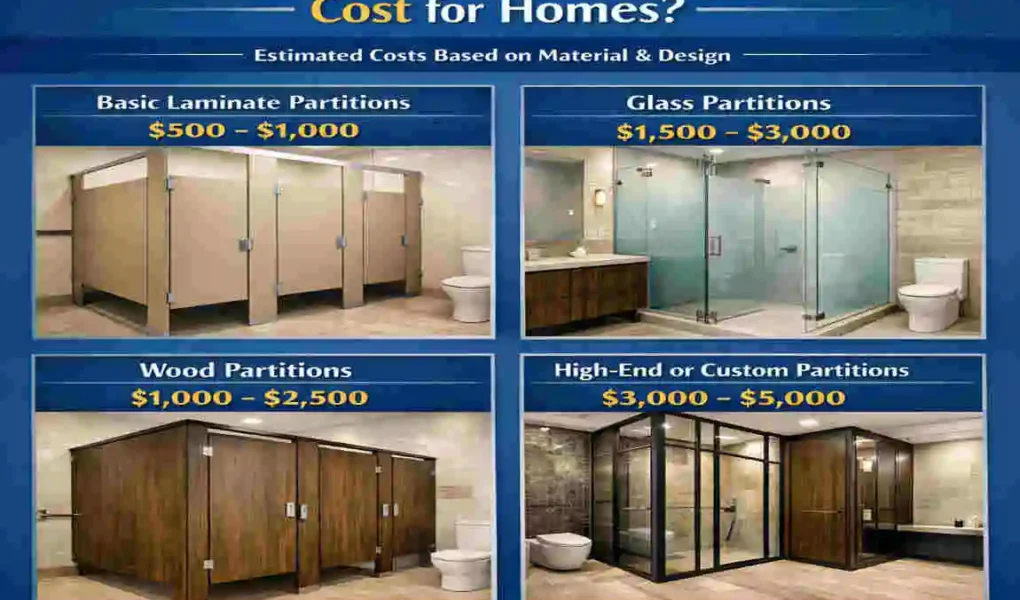
Average Cost of Bathroom Partitions for Home
National Average Cost
The cost of the bathroom partition can vary widely depending on the setup. Here is a simple price guide:
- Basic range: $200–$800
- Mid-range: $800–$2,000
- Luxury/custom options: $2,000–$5,000+
A low-cost option is usually made from PVC or laminate. Mid-range options often include better finishes, stronger hardware, or a mix of materials. High-end partitions may use glass, wood, or custom-built designs.
Cost Per Material Type
Material Estimated Cost
Glass $$$
PVC $$
Wood $$$
Laminate $$
Aluminum $$$
This table gives a general idea. The final cost depends on size, style, and installation needs.
Installation Cost Breakdown
When you pay for a bathroom partition, you are not only paying for the material. Other costs also matter:
- Labour charges: Professional installation costs extra.
- Hardware costs: Hinges, brackets, tracks, and handles add to the price.
- Waterproofing expenses: Some bathrooms need extra sealing work.
- Customisation fees: Special shapes, finishes, or glass treatment can increase the total.
If the bathroom needs wall repairs or plumbing adjustments, the cost could rise further.
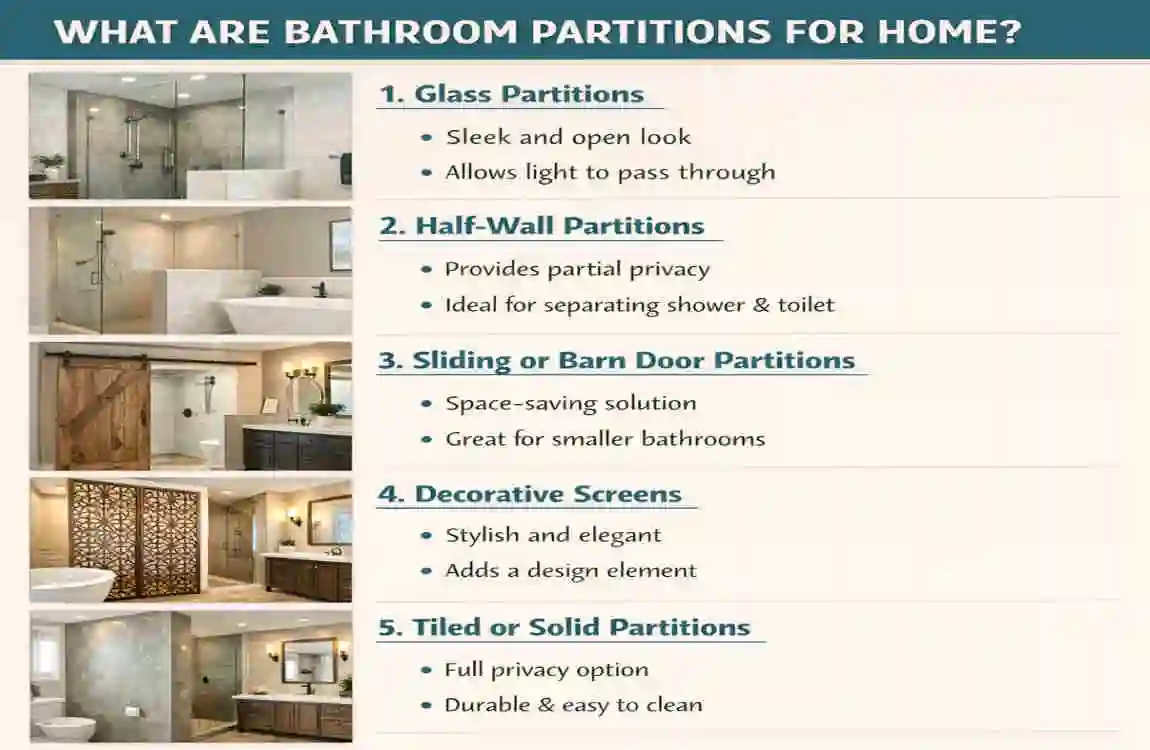
Types of Bathroom Partitions for Home
Glass Bathroom Partitions
Glass bathroom partitions are one of the most popular choices in modern homes. They create a clean, open, and stylish look.
Common types include:
- Frameless glass: Sleek and modern with minimal metal framing.
- Frosted glass: Gives more privacy while still looking elegant.
- Sliding glass systems: Great for saving space.
Pros:
- Looks Premium
- Easy to match with modern décor
- Let’s light move through the room
Cons:
- Can be expensive
- Needs regular cleaning
- Installation should be done carefully
Glass is a strong choice if you want a bright and stylish bathroom.
PVC Partitions
PVC is one of the most affordable bathroom partition options. It is lightweight, simple, and practical.
Why people like PVC:
- Budget-friendly
- Waterproof
- Easy to clean
- Good for smaller bathrooms
PVC works well in homes where cost matters most. It may not look as Premium as glass or wood, but it is very useful for everyday needs.
Wooden Bathroom Partitions
Wooden partitions add a warm, natural feel to the bathroom. They can look rustic, traditional, or luxurious depending on the finish.
Good points:
- Stylish and rich appearance
- Works well in custom interiors
- Adds character to the bathroom
Things to watch:
- Moisture can damage untreated wood
- Needs regular care
- Must be sealed properly
If you love the look of wood, choose moisture-resistant wood or a sealed finish.
Metal and Aluminum Partitions
Metal and aluminium partitions are known for their strength and clean look. They are often used in modern bathroom partitions because they offer a simple industrial style.
Benefits:
- Durable
- Long-lasting
- Good for humid spaces
- Easy to maintain
These are a smart option for people who want something sturdy and practical.
Folding or Sliding Partitions
Folding or sliding systems are great home bathroom divider ideas for tight spaces. They are especially useful in apartments or small bathrooms.
Why they work well:
- Save floor space
- Easy to open and close
- Flexible for different bathroom layouts
If your bathroom is small, this type can make the room feel less crowded.
Factors That Affect Bathroom Partition Costs
Material Quality
Not all materials are equal. Premium materials cost more because they last longer, look better, and often need less maintenance. Budget options cost less upfront but may wear out faster.
Bathroom Size
A bigger bathroom needs more material and more labour. This means the total cost goes up. Even a simple design becomes more expensive when the partition covers a large area.
Custom Design Features
Special details can raise the price. These may include:
- Etching
- Frosting
- Decorative panels
- Custom colors
- Special shapes
The more detailed the design, the more you should expect to pay.
Installation Complexity
Some bathrooms are easy to work with, while others need more preparation. If the wall needs reinforcement or plumbing adjustments, the project becomes more expensive. That is why bathroom divider installation costs can vary so much.
Geographic Location
Labour costs vary from one area to another. In some cities, installation costs are much higher than in smaller towns. Material shipping may also affect the final price.
Pros and Cons of Bathroom Partitions for Home
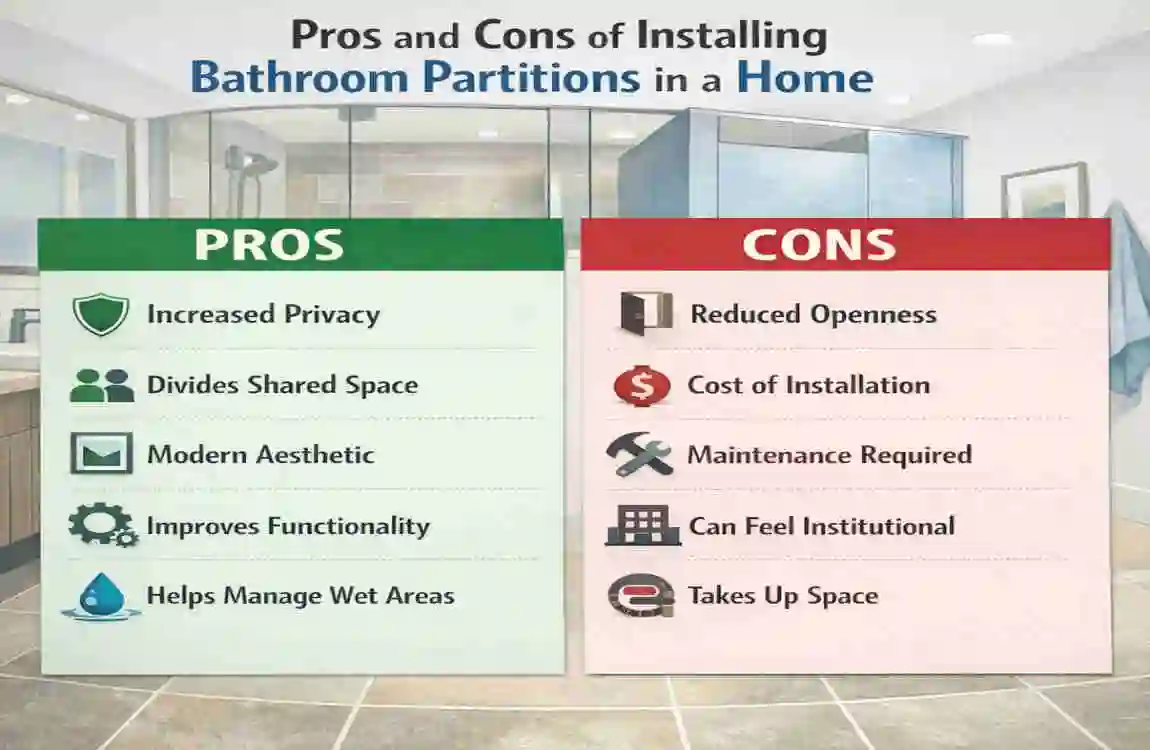
Advantages
Bathroom partitions bring several clear benefits:
- Increased privacy
- Stylish appearance
- Better organization
- Improved property value
They also help the bathroom feel more complete and comfortable. In many cases, they make daily use easier for families.
Disadvantages
There are also a few downsides to think about:
- Installation costs
- Cleaning requirements
- Space limitations
If the partition is too large or too heavy, it may make the bathroom feel smaller. That is why choosing the right size matters.
How to Choose the Best Bathroom Partition for Your Home
Consider Your Budget
Start with your budget. If you want a low-cost solution, PVC or laminate may work best. If you want a more Premium finish, glass or custom wood may be the better choice.
Match Your Bathroom Style
Your partition should fit the overall look of your bathroom.
- Modern: Glass or black metal
- Minimalist: Frameless or simple sliding panels
- Traditional: Wood or warm-toned laminate
When the partition matches the room, the whole space feels more balanced.
Think About Maintenance
Some materials are easier to clean than others. Glass tends to show water spots. Wood needs sealing. PVC and laminate are often easier to manage. If you want low effort, choose a surface that resists stains and moisture.
Evaluate Durability
A good partition should handle humidity and daily use. Bathroom partition materials that resist water damage will last longer and save money over time.
Safety Considerations
Safety matters, especially in family homes. Look for:
- Tempered glass
- Rounded edges
- Stable frames
- Non-slip surroundings
A strong, secure partition gives you peace of mind.
DIY vs Professional Installation
DIY Installation
DIY can save money at the start. It works best for simple PVC or lightweight divider setups. If you already know basic tools and measurements, this may be a good choice.
Professional Installation
For glass systems or custom designs, professional help is usually the better option. A pro can give you a cleaner finish, safer installation, and fewer mistakes.
Which Option Saves More Money?
DIY may look cheaper at first, but mistakes can lead to repairs later. Professional work costs more upfront, but it often gives better long-term value. For expensive materials, professional installation is usually the smarter choice.
Bathroom Partition Design Trends in 2026
Frameless Glass Designs
Frameless glass remains popular because it creates a clean, open look. It works well in both small and large bathrooms.
Black Metal Frames
Black frames are a strong trend in modern bathroom partitions. They add contrast and create a bold visual style.
Eco-Friendly Materials
More homeowners are choosing materials that are better for the environment. These options often use less waste and can still look stylish.
Smart Privacy Glass
Smart glass is a newer trend that can change from clear to private when needed. It is a Premium choice, but it offers a high-tech feel.
Minimalist Scandinavian Designs
Simple shapes, light colours, and clean lines are very popular in 2026. This style works well in calm, uncluttered bathrooms.
Maintenance Tips for Bathroom Partitions
Cleaning Glass Partitions
Use a soft cloth and mild cleaner. This helps prevent streaks and keeps the glass looking fresh.
Preventing Mould and Mildew
Keep the bathroom dry when possible. Good ventilation helps a lot. Wipe wet surfaces after showers to reduce mould buildup.
Waterproof Sealing
Check the sealing around the partition from time to time. A good seal keeps water where it belongs and protects nearby walls.
Routine Hardware Checks
Look at brackets, hinges, tracks, and handles regularly. Tighten anything loose before it becomes a bigger problem.
Are Bathroom Partitions Worth the Investment?
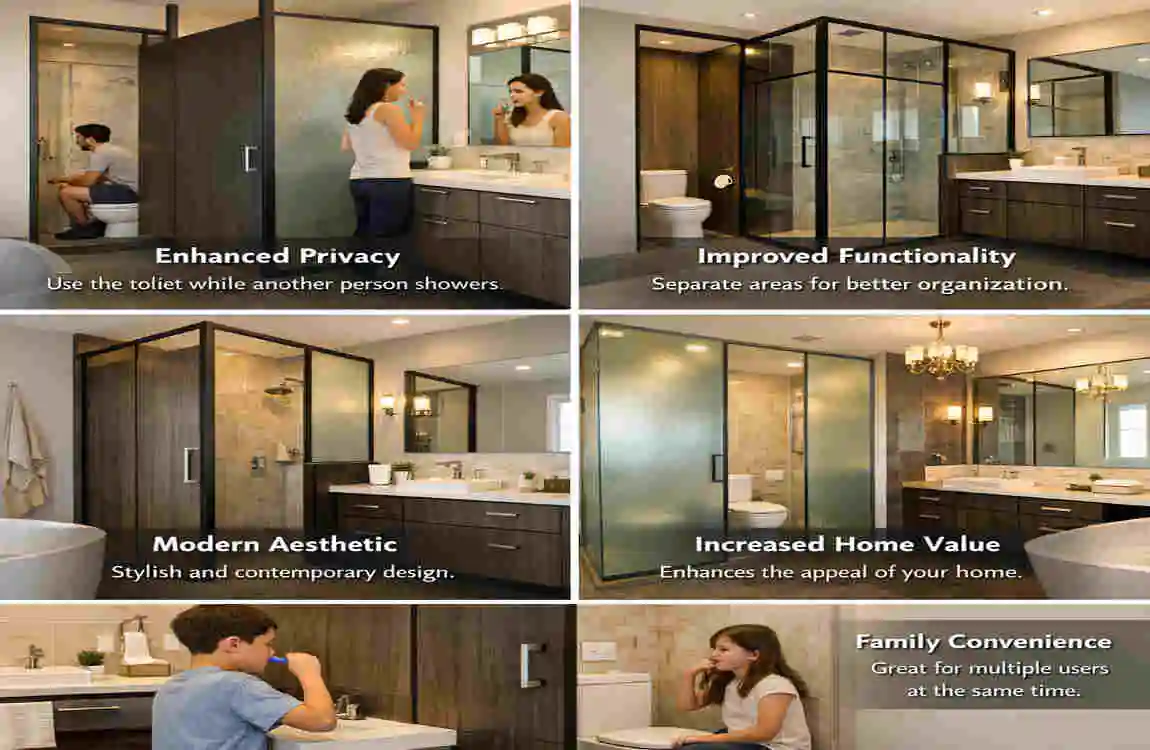
Yes, in many homes, they are worth it. A bathroom partition can improve comfort, privacy, and the overall look of the space. It can also make the bathroom feel more organised and easier to use.
From a value standpoint, the right partition can make your home look more modern and appealing. That can be useful if you plan to sell later. Strong materials like aluminium and tempered glass also last a long time, making them a better investment for many homeowners.
If you choose carefully, the upgrade can improve both function and style.
FAQ
How much do bathroom partitions for the home usually cost?
Most home bathroom partitions cost between $200 and $2,000, depending on material and installation. Custom or luxury designs can cost more.
What is the cheapest bathroom partition material?
PVC and laminate are usually the cheapest options. They are budget-friendly and easy to maintain.
Are glass bathroom partitions safe for homes?
Yes, they are safe when made with tempered safety glass. This type of glass is designed to be stronger and safer than regular glass.
Can I install bathroom partitions myself?
Yes, you can install some simple partitions yourself, especially lightweight PVC options. Glass and custom designs are better handled by professionals.
Which bathroom partition lasts the longest?
Aluminium and tempered glass are among the most durable options. They hold up well in humid bathroom spaces.
Do bathroom partitions increase home value?
They can. A well-designed partition improves appearance, privacy, and function, which may help your home feel more valuable.
What is the best partition for small bathrooms?
For small spaces, sliding glass or folding PVC systems usually work best because they save space.
How do I maintain bathroom partitions?
Clean them regularly, keep the area dry, check seals and hardware, and use materials that resist moisture and mould.
| Factor | Typical Cost Range (per stall / project) | Notes |
|---|---|---|
| Basic material (per stall) | About $350–$600 | Powder‑coated steel is usually the cheapest home‑friendly option. |
| Mid‑range materials | Roughly $500–$800 | Includes plastic laminate or solid plastic; better looks and durability. |
| High‑end materials | Around $800–$1,100+ | Stainless steel or phenolic; ideal for long‑term use and humid bathrooms. |
| Single‑stall home installation | Approx. $800–$1,500 total | Includes materials, labor, and basic setup for a small home bathroom. |
| Multi‑stall small project | About $1,200–$2,500+ | Cost per stall often drops as total units increase. |