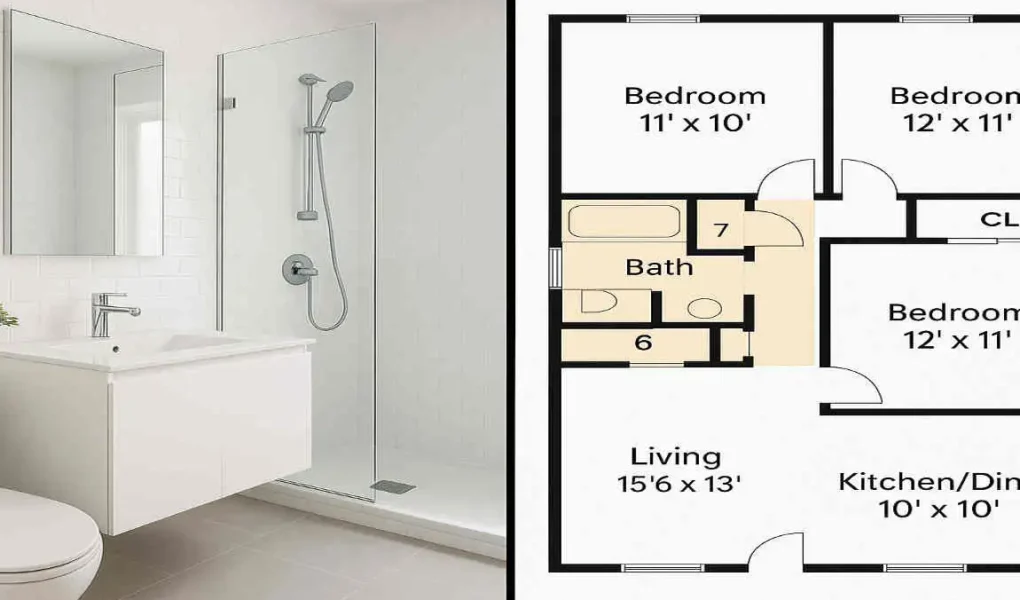
When it comes to buying, selling, or even refinancing a home, understanding square footage is a critical factor. Square footage not only determines the market value of a house property but also plays a role in property taxes, insurance premiums, and buyer appeal. Yet, one question often confuses homeowners.
This is an important question because a misunderstanding of square footage measurements can lead to inaccurate listings, disputes, or even the undervaluation of a home. Homeowners, buyers, and sellers all need clarity when it comes to what’s counted—and what’s not.
What Is Square Footage in Real Estate?
Before we can determine if bathrooms are included, we need to understand what square footage actually represents in real estate. Let’s break it down.
Defining Square Footage
Square footage refers to the total livable area within a home. It’s usually measured in square feet and includes all the spaces where people can comfortably live, work, and relax. This includes bedrooms, living rooms, kitchens, and yes, in most cases, bathrooms.
Types of Square Footage Measurements
There are several variations of square footage that you might encounter:
- Gross Living Area (GLA): This is the most commonly used metric for real estate and appraisals. It includes finished, above-ground living spaces that are fully habitable.
- Total Area: Unlike GLA, this may include all areas of the home, even unfinished spaces like basements or attics.
- Finished vs. Unfinished Areas: Finished spaces are livable and meet building codes (e.g., heating, flooring, ventilation), while unfinished areas are not typically counted in GLA.
Understanding these distinctions is vital because the inclusion of modern bathrooms often depends on which type of square footage is being calculated.
Why Square Footage Matters
Square footage plays a crucial role in:
- Determining property value: A larger home is generally worth more in the market.
- Setting property taxes: Local governments often use square footage as a basis for assessing taxes.
- Real estate listings: Accurate square footage ensures transparency and avoids buyer confusion.
Yet, misconceptions abound about what qualifies as square footage. Let’s address one of the most common questions: Do bathrooms count?
How Are Bathrooms Treated in Square Footage Calculations?
Whether bathrooms are included in square footage varies depending on real estate industry standards and the specific characteristics of the toilet. Let’s explore how this works.
Industry Standards for Square Footage
In general, bathrooms are considered part of the finished living space and are included in square footage calculations. However, this inclusion depends on:
- The bathroom’s condition: It must meet the criteria for a finished space.
- Measurement standards: Real estate professionals often follow guidelines like ANSI Z765, which specifies what’s included in square footage.
Full Bathrooms vs. Half Bathrooms
Not all bathrooms are treated equally. Here’s the distinction:
- Full Bathrooms (with a sink, toilet, shower, and/or bathtub) are generally included in square footage.
- Half Bathrooms (only a sink and toilet) are also included, as long as they are within finished, livable spaces.
- Powder Rooms (small vanity areas) may or may not be included, depending on their size and functionality.
Bathrooms in Basements or Unfinished Areas
Bathrooms located in unfinished basements or areas not considered livable (like a garage) are typically excluded from square footage. However:
- If a basement is fully finished and meets the criteria for livable space, the bathroom will likely be included.
- Bathrooms in attics or other unconventional spaces might be excluded unless the area meets building codes for living spaces.
Factors That Determine Whether Bathrooms Are Included
Several factors influence whether a square foot bathroom is counted in your square footage. Here’s what to consider:
Finished or Unfinished Condition
For a bathroom to be included, it must be fully finished. This means it should have:
- Proper flooring (e.g., tile, wood, or laminate).
- Completed walls and ceilings.
- Installed fixtures (toilet, sink, etc.).
Heating and Ventilation
Bathrooms must have working heating systems and adequate ventilation to meet the criteria for livable space. Bathrooms without these features may be excluded.
Location in the Home
- Bathrooms on the main floor or upper floors are usually included.
- Bathrooms in basements or detached structures (like a pool house) might not be included unless the spaces are finished and livable.
Local Regulations
Square footage rules vary by state and municipality. Always consult local guidelines or a professional appraiser to determine what’s included in your area.
Example: A bathroom in a finished basement in California might be included, while the same bathroom in an unfinished basement in New York might not.
The Impact of Including Bathrooms in Square Footage
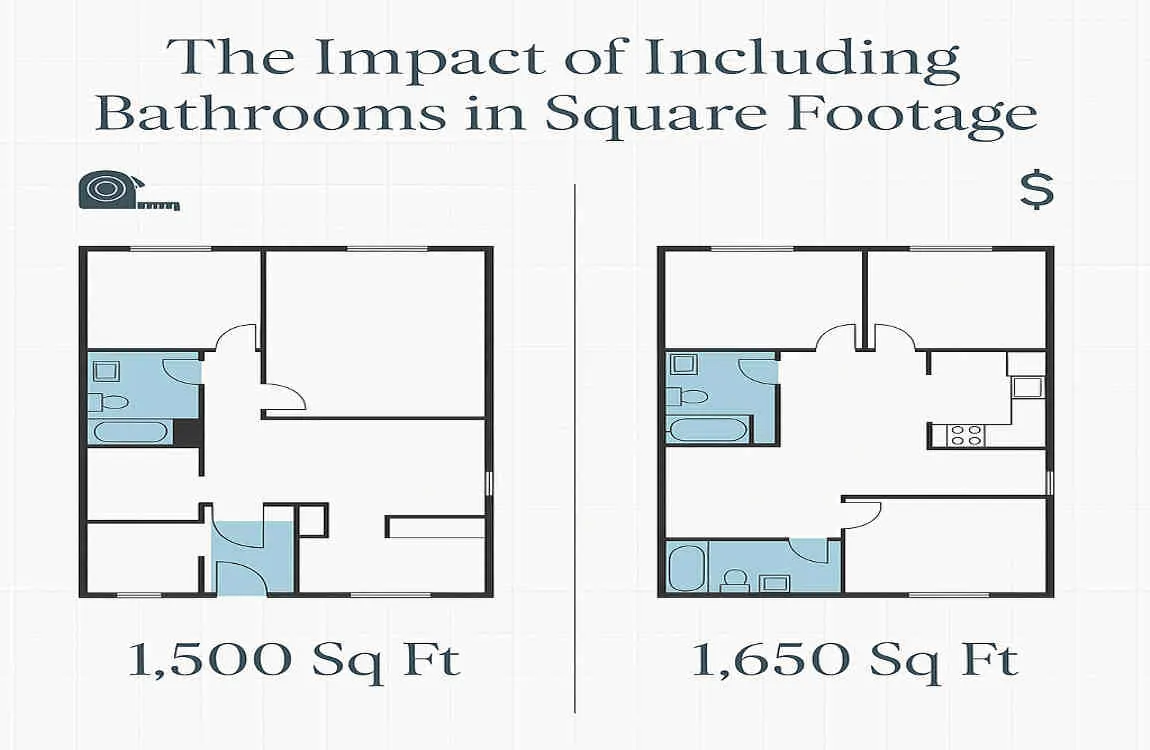
Including bathrooms in square footage can have a significant impact on several aspects of real estate.
Home Valuation and Appraisals
Since bathrooms are part of the livable area, including them can increase your home’s appraised value. This is especially true for homes with multiple bathrooms or luxurious en-suite designs.
Real Estate Listings
An accurate square footage listing is crucial for attracting buyers. Highlighting bathrooms as part of the total livable space can make your home appear more spacious and appealing.
Property Taxes and Insurance
Including bathrooms may increase property taxes since taxes are often based on total square footage. However, it can also impact your insurance premiums, as a larger livable area typically requires more coverage.
Buyer Expectations
Buyers expect transparency. If a bathroom is included in the listing’s square footage, sellers should ensure it meets the criteria for livable space.
Common Misconceptions About Bathrooms and Square Footage
Let’s debunk some myths:
“Bathrooms Are Always Included”
Not necessarily. Bathrooms in unfinished or unlivable spaces are often excluded.
“Bathrooms in Separate Structures Count”
Bathrooms in detached structures, like a guest house, are usually not included in the main house’s square footage.
“Small Vanity Areas Are Counted”
Tiny vanity areas might not meet the criteria for a finished space and are often excluded.
How to Measure Bathrooms for Square Footage
Accurate measurements are key to determining whether a bathroom qualifies as part of the home’s square footage. Here’s how to do it:
Step-by-Step Guide
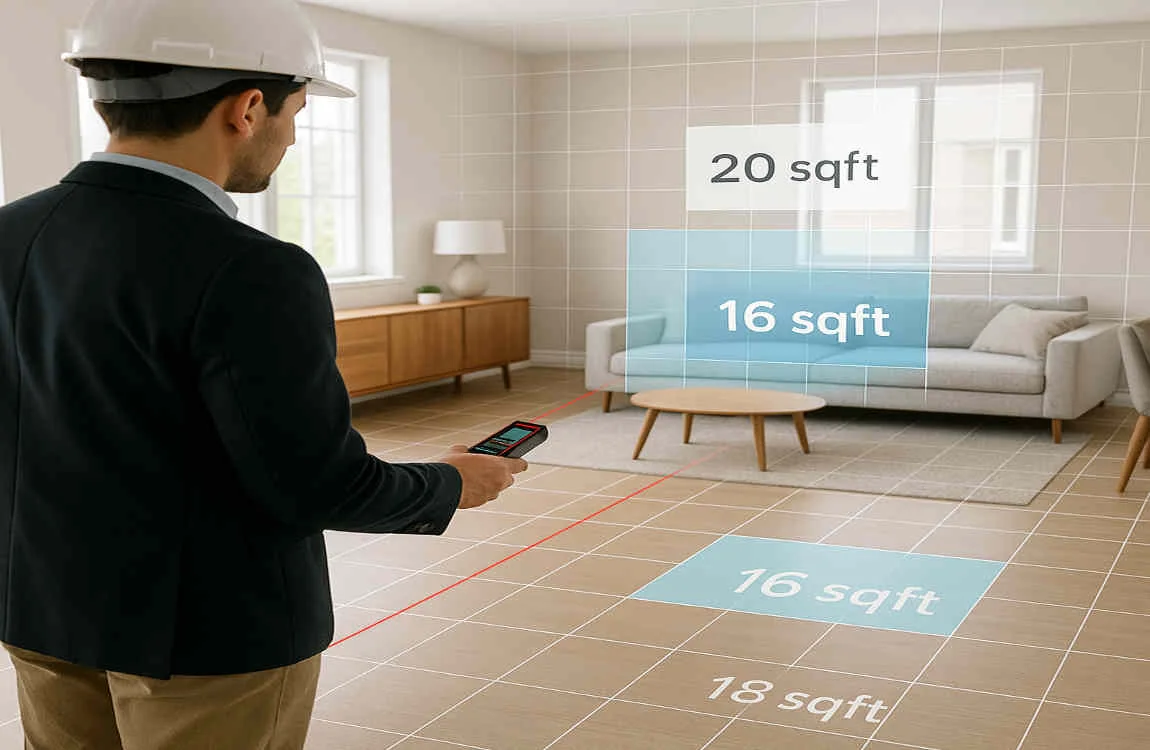
- Measure the Length and Width: Use a tape measure to determine the dimensions of the bathroom.
- Calculate the Area: Multiply the length by the width to get the square footage (e.g., 8 ft x 5 ft = 40 sq. ft).
- Exclude Fixtures: Built-in cabinets or non-usable spaces should not be counted.
Tools and Tips
- Use a laser measuring tool for precision.
- Consult with a professional appraiser for complex spaces.
Real Estate Industry Standards and Guidelines
The ANSI Z765 standard is the gold standard for measuring square footage. It specifies that bathrooms:
- Must be finished.
- Must be within the main structure.
- Must meet livable space requirements.
Always consult these standards when measuring square footage.
Case Studies: Examples of Bathrooms Included and Excluded
Bathroom Type: Included in Square Footage?Reason
Full bathroom on the main floor. Yes, Finished, livable space.
Half-bath in unfinished basement. No, it is located in an unfinished area.
Powder room in attic conversion, yes (if finished). Meets livable space requirements.
Tips for Homeowners and Sellers
- Ensure Bathrooms Are Finished: Add flooring, fixtures, and heating to count bathrooms as livable space.
- Disclose Clearly: Accurately list bathroom square footage in real estate listings.
- Hire a Professional: Appraisers and realtors can ensure accurate measurements.