
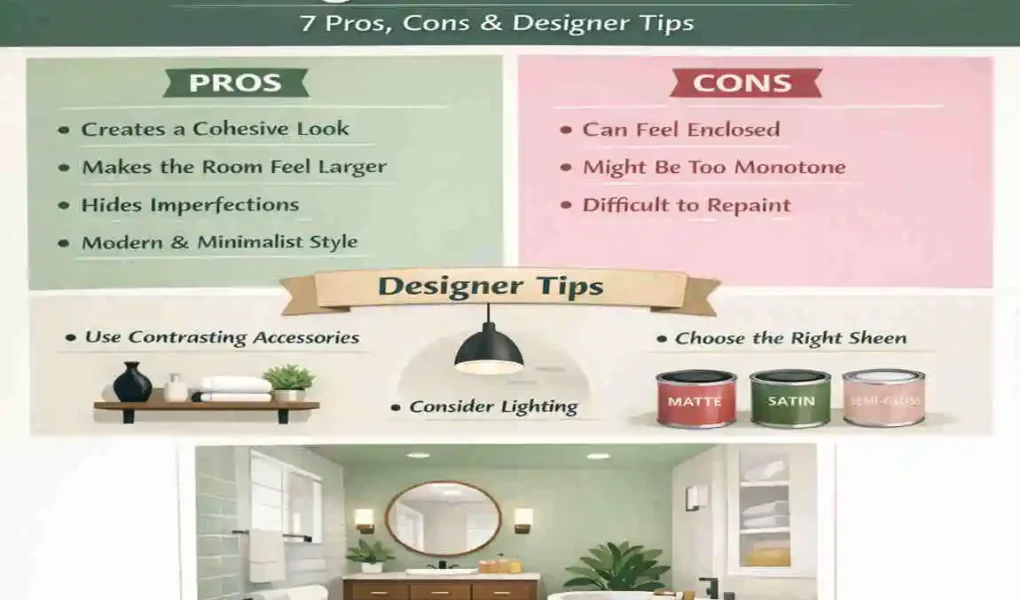
Ever stared at your bathroom wondering if matching the ceiling to the walls could completely transform the space? If you have, you are certainly not alone. Bathrooms are often the trickiest rooms in the house to design. They are full of hard surfaces, bulky fixtures, and constant moisture. Choosing the right paint strategy can make or break the room’s vibe.
The debate over whether bathrooms benefit from unified color schemes has been ongoing for years. Some homeowners swear by the classic crisp white ceiling, while others want to wrap the entire room in a single, soothing shade. Recently, there has been a massive rising trend in monochromatic bathrooms. Designers are leaning into this strategy to create spa-like serenity right in your own home. By enveloping the room in a single continuous hue, you can instantly reduce visual noise.
If you are currently asking yourself, “Should the bathroom ceiling be the same color as the walls?” you need to consider the specific details of your room. Surprisingly, around 60% of interior designers actively recommend this unified painting technique for small spaces. Why? Because it helps blur the room’s visual boundaries, making a cramped layout feel significantly larger.
Pros of Matching Colors
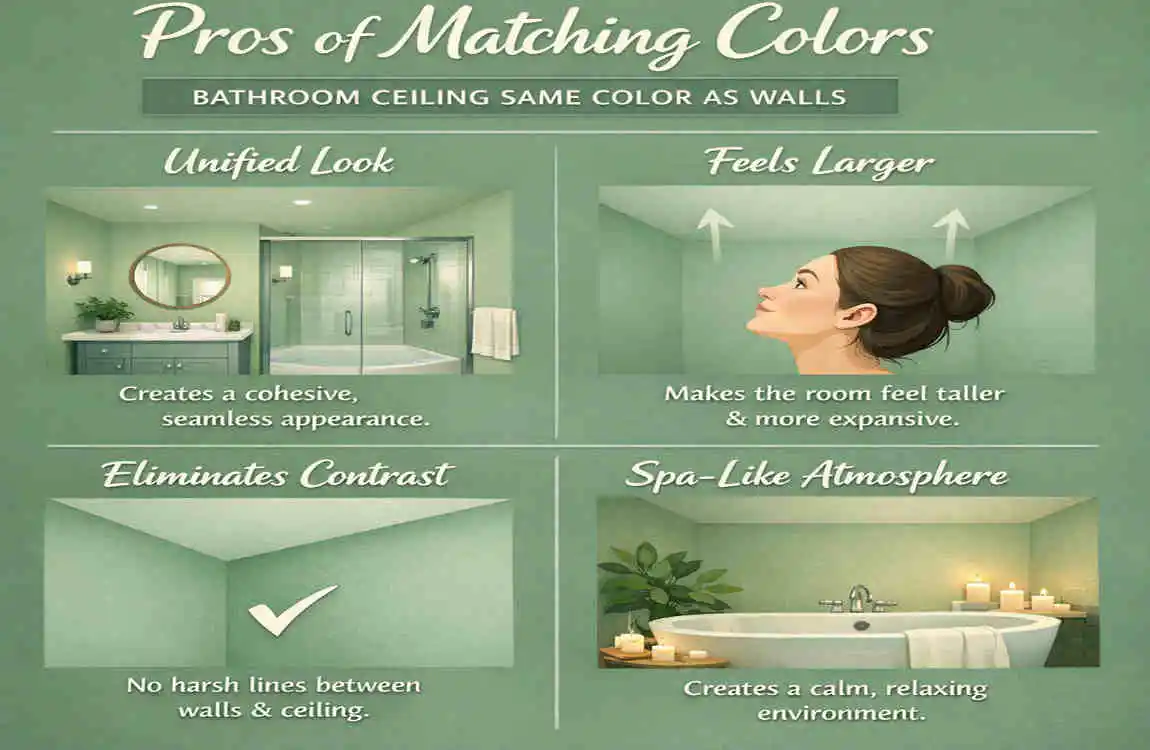
Choosing to paint your ceiling the same shade as your walls offers some fantastic benefits. Here are four key advantages that might convince you to pick up that roller and get to work.
Creates Seamless, Spacious Feel
One of the most magical things about interior design is how easily you can trick the human eye. When you paint the ceiling and the walls the same color, you completely blur the harsh wall-ceiling lines. Normally, a contrasting white ceiling creates a distinct border that stops your eye from moving upward. By removing that border, your eye travels continuously from the floor to the walls and across the ceiling.
This seamless effect makes small bathrooms appear so much larger. It is an ideal strategy for small powder rooms measuring under 50 square feet. Instead of feeling like you are standing in a tiny box, the continuous color makes the room feel expansive and open.
To maximize this height illusion, consider using lighter neutrals. Soft grays, warm taupes, and creamy off-whites are excellent choices. They naturally bounce light around the room while providing that uninterrupted flow that makes your ceilings feel feet taller than they actually are.
Modern, Cohesive Aesthetic
If you want your home to look like a professional, unified paint styled it is a great shortcut. Painting the ceiling to match the walls delivers a highly intentional designer vibe. It shows that you did not just default to builder-grade white, but rather made a deliberate choice to create the room’s atmosphere.
This technique is especially brilliant for hiding awkward angles or sloped ceilings. Many bathrooms, particularly those situated on the top floor or under staircases, feature slanted ceilings or strange architectural quirks. When you use different colors, those odd angles stand out. When you drench the room in one color, those slopes blend right in.
Imagine aiming for a relaxing coastal spa look. By choosing tonal blues for both the walls and the ceiling, you wrap yourself in a calming, watery hue. You step into the room and immediately feel a sense of modern harmony and deep relaxation.
Hides Imperfections
Let’s face it: no home is perfectly constructed. Over time, houses settle, and bathrooms take a beating from daily use. A major pro of wrapping your room in one color is that it hides a multitude of sins.
A single, continuous color minimizes the appearance of visible cracks in the drywall tape. It effortlessly hides uneven joints where the wall meets the ceiling. If your home has poor molding transitions or slightly wavy drywall, a contrasting white ceiling will highlight every single flaw by creating a jagged shadow line.
By painting everything the same color, you eliminate that high-contrast intersection. Shadows blend into the paint, and those annoying little imperfections suddenly vanish into the background. It is one of the easiest ways to make an older bathroom look brand new.
Easier Maintenance
Bathrooms are indoor rainrooms. They deal with high humidity, steam, and the occasional splash zone. Because of this, bathroom walls often require more frequent touch-ups than a standard living room or bedroom.
Using a uniform paint color massively simplifies these touch-ups in moisture-prone areas. You no longer have to carefully tape off the ceiling line to fix a scuff near the top of the wall. You do not have to worry about accidentally smudging your pristine white ceiling with wall paint.
With just one can of paint stored in the garage, you can easily touch up any spot in the room. This makes long-term maintenance incredibly straightforward, saving you time, money, and a whole lot of frustration down the road.
Cons of Matching Colors
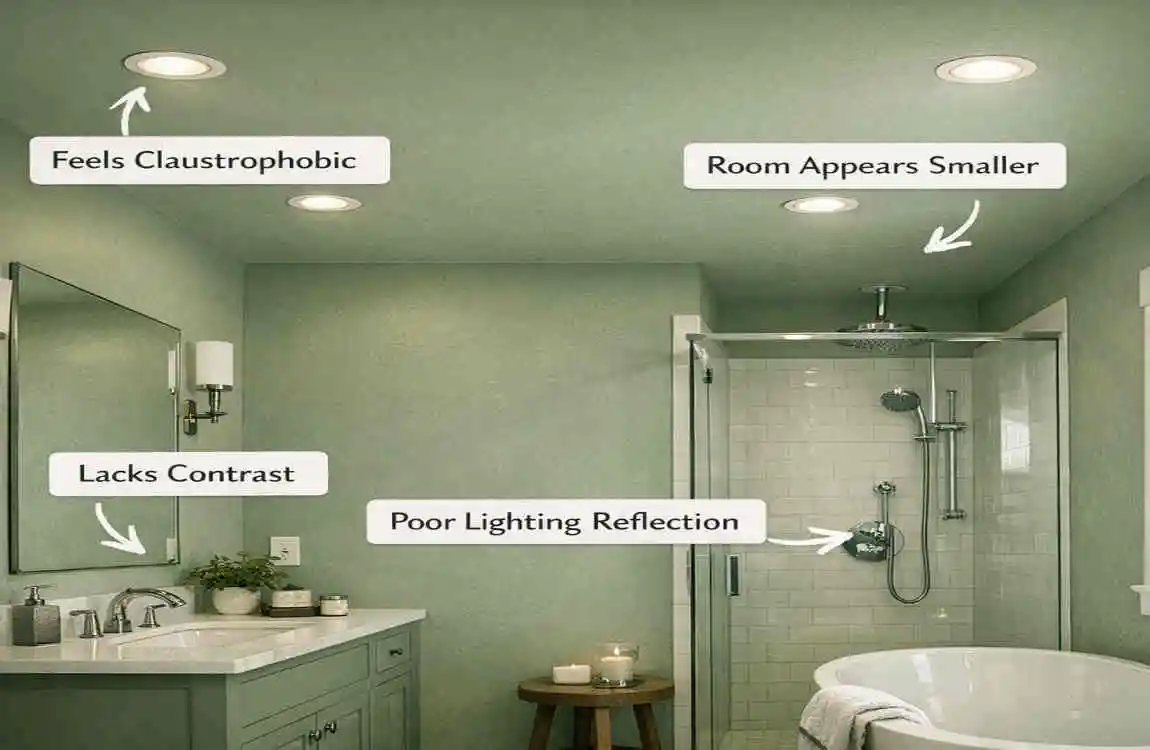
Of course, every design choice has a potential downside. While matching your ceiling to your walls can look amazing, there are a few drawbacks you need to consider before making your final decision.
Can Feel Closed-In
The biggest risk of unified paint is creating a space that feels slightly claustrophobic. If you use dark shades on low ceilings—specifically those lower than 8 feet—you can actually shrink the perception of the space. Dark colors absorb light rather than reflecting it.
This becomes a major issue in bathrooms without natural windows. Without sunlight to break up the shadows, wrapping a windowless, low-ceilinged room in a dark color runs the serious risk of creating a “cave effect.”
If you are set on a moody, dark bathroom, you can mitigate this by ensuring you have exceptional artificial lighting. Otherwise, stick to lighter tones to keep the walls from feeling like they are closing in on you.
Highlights Ceiling Flaws
Didn’t we say that unified paint hides imperfections? It does—at the corners and joints. However, on the vast flat surface of the ceiling itself, matching the paint can sometimes highlight flaws.
Standard ceiling paint is ultra-flat and highly absorbent, designed specifically to hide textures, old water spots, or uneven drywall. If you decide to bring your slightly glossy wall paint up onto the ceiling, that sheen will reflect light directly onto any bumps or ridges.
Without the bright white contrast to draw the eye away, the actual texture of your ceiling becomes much more prominent. If you have a heavily textured “popcorn” or “swirl” ceiling, painting it a solid, non-white color might accentuate the rough texture more than you would like.
Overly Monochromatic
There is a fine line between “cohesive” and “boring.” A space wrapped in a single color can sometimes lack visual depth. Without the crisp break of a white ceiling, the room can start to feel a bit flat and lifeless.
An overly monochromatic room needs help to come alive. If you do not break up the solid color with interesting accents, the bathroom might look like a plain, painted box.
To fix this, you have to be intentional with your decor. You need to introduce contrasting textures through beautiful bathroom tiles, sparkling metallic plumbing fixtures, and rich wood tones in your vanity. These elements will add the necessary depth to keep your monochromatic room feeling vibrant.
Quick Comparison: Pros vs. Cons
To help you weigh your options clearly, here is a quick breakdown of how matching your ceiling and walls impacts different aspects of your room.
Aspect Pro Example Con Example
Space Perception Enlarges tiny, cramped bathrooms by blurring visual lines. Darkens low-ceilinged rooms and can create a closed-in, cave-like effect.
Maintenance Unified touch-ups are quick and easy with only one paint can. Surface flaws, such as uneven drywall textures, become much more visible.
Style Delivers a trendy, cohesive, and intentional designer aesthetic. Can lack contrast and feel overly flat without the right decor accents.
Designer Tips for Success

If you have weighed the pros and cons and are ready to take the plunge, you want to make sure you do it right. Here are 7 actionable tips directly from design experts to guarantee a stunning result.
Choose Right Finish
In a bathroom, the finish of your paint is just as important as the color. You want to use a semi-gloss or satin finish on the walls so they wipe clean easily and resist moisture.
However, for the ceiling, consider dropping down one level of sheen to a satin or flat finish. A flatter finish on the ceiling will still give you that unified color. Still, it will tone down light reflection, helping to hide any surface flaws or bumps overhead.
Opt for Light Tones
If you are nervous about making your bathroom feel too small, play it safe with light tones. Beautiful whites, soft creams, and gentle pastels are incredible for maintaining brightness.
Always remember to test your paint samples in your actual bathroom. Paint a large square on the wall and another on the ceiling. Check how the colors look in the morning, afternoon, and evening to ensure the lighting does not drastically alter the hue.
Layer with Lighting
Lighting is the secret weapon of any monochromatic room. You cannot rely on a single, dim overhead bulb. You need to layer your lighting to bring the paint to life.
Install recessed LED lights evenly across the ceiling. Choose bulbs that mimic natural daylight (around 3000K to 4000K). These lights will bounce beautifully off your unified painted surfaces, pushing the walls outward and eliminating any gloomy shadows in the corners.
Match Tile Accents
To really elevate the cohesive look, try tying your paint color to the hard surfaces in the room. Look at the tile in your shower or around your bathtub.
Find a paint shade that echoes the dominant color in your shower tile, and carry that color up the walls and across the ceiling. This creates an incredibly satisfying flow that makes the entire bathroom feel like a custom, high-end luxury suite.
Ventilation First
We cannot stress this enough: bathrooms are wet. When you are painting the ceiling—the exact spot where hot steam naturally rises and collects—you must prioritize ventilation.
It is essential to purchase high-quality, mildew-resistant paint designed specifically for bathrooms. Furthermore, always pair your new paint job with a strong exhaust fan. Run the fan during every shower and for at least twenty minutes afterward to protect your beautifully painted ceiling from peeling.
Test Monochromatic Gradients
If painting the ceiling the same color feels a bit too intense for your taste, try a subtle designer trick: the monochromatic gradient.
Ask your paint store to mix your chosen wall color at 50% strength for the ceiling. This creates a slightly lighter ceiling shade within the same color family. You still get the seamless, cohesive feeling, but the slightly lighter top creates a gentle illusion of extra height.
Add Contrasting Floor
When the walls and ceiling share the same color, your floor needs to do some heavy lifting to keep the room grounded. If your floor is too light or matches the walls perfectly, the room will feel like it is floating.
Add a contrasting, dark floor to anchor the space. Deep charcoal tiles, rich wood-look planks, or heavily patterned geometric ceramics will ground the design scheme. This bold contrast prevents the room from feeling bland and gives your eyes a sturdy place to land.
Alternatives if Not Matching
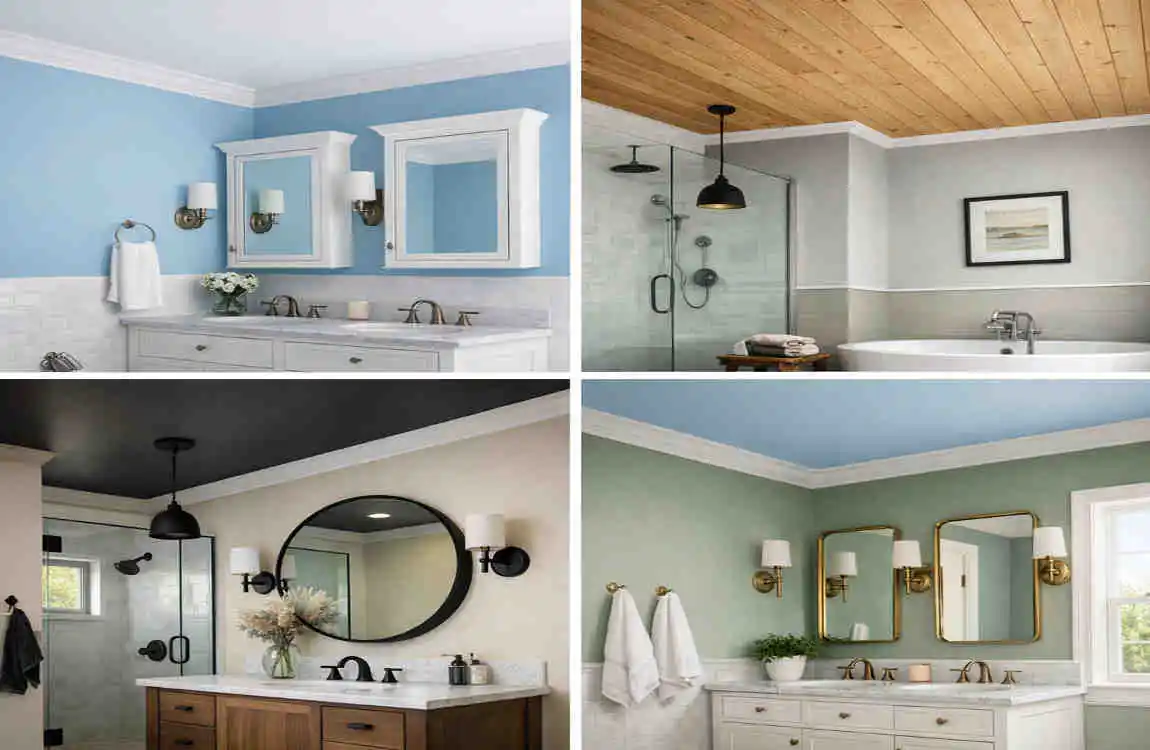
Still on the fence? If you decide that a perfectly matched ceiling isn’t right for your specific home, you have several wonderful alternatives that can still make a massive impact.
- Classic White Ceilings: You can never go wrong with tradition. A bright, ultra-flat white ceiling is the classic choice for a reason. It reflects maximum light, provides crisp contrast, and guarantees that your ceilings feel as high as structurally possible.
- Analogous Shades: Instead of matching exactly, choose neighboring colors on the color wheel. For example, you could pair deep navy-blue walls with a very pale, icy-gray ceiling. This provides a soft, unified transition without making you feel trapped in a solid-color box.
- Bold Contrasts: If you love drama, flip the script! Keep your walls bright white or light gray, and paint your ceiling a dramatic, moody color like forest green or matte black. This draws the eye upward and turns the ceiling into the ultimate statement piece.
Frequently Asked Questions
Should bathroom ceiling be same color as walls in small spaces? Yes! It visually enlarges the space by erasing the harsh boundary line between the wall and the ceiling, letting your eye travel continuously.
What is the best type of paint to use? Always opt for a high-quality, mildew-resistant paint. A semi-gloss finish is great for walls, as it makes wiping easy. In contrast, a satin finish is usually best for the ceiling, slightly hiding texture flaws while resisting moisture.