
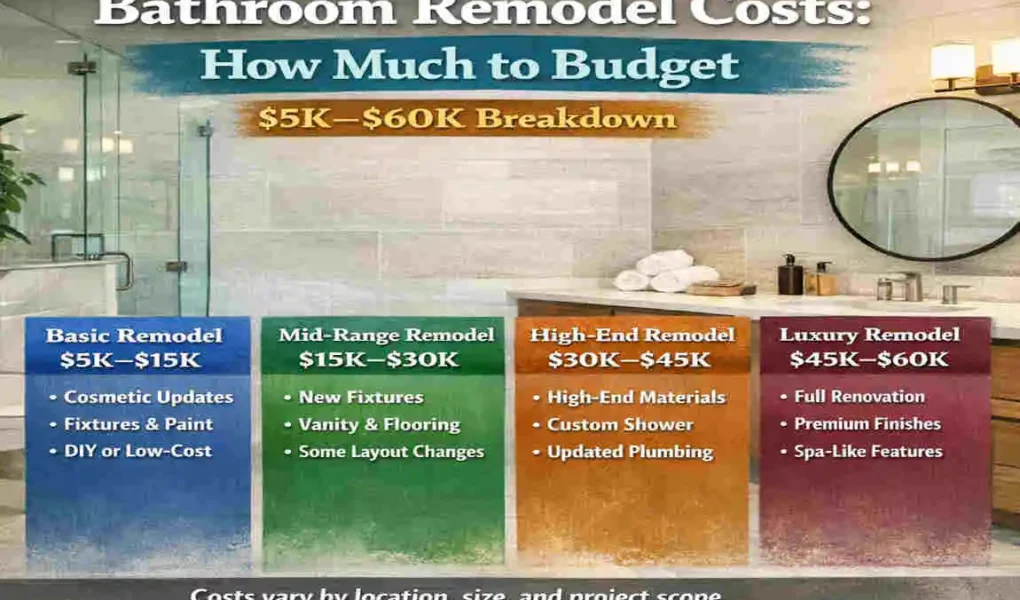
Have you been staring at your outdated bathroom, wishing for a modern, spa-like retreat, but stopping short because you are wondering, how much does it cost to do a bathroom remodel? You are certainly not alone. As we move through April 2026, creating a comfortable and functional bathroom remains a top priority for homeowners worldwide.
Whether you want to rip out that peeling linoleum, upgrade a cramped shower, or completely gut the space, understanding your potential expenses is the very first step. With inflation and material prices seeing a steady 5% to 10% increase since 2025, budgets can vary wildly. Today, seeing a $5,000 basic DIY flip is just as common as witnessing a $60,000 luxury spa transformation.
The demand for these upgrades is incredibly high. Recent statistics from the National Kitchen & Bath Association (NKBA) report that roughly 70% of homeowners plan to tackle bathroom upgrades in 2026. The primary motivation? Boosting resale value. A well-executed bathroom renovation can add up to a 60% return on investment (ROI) when it comes time to sell your property.
Factors Influencing Bathroom Remodel Costs
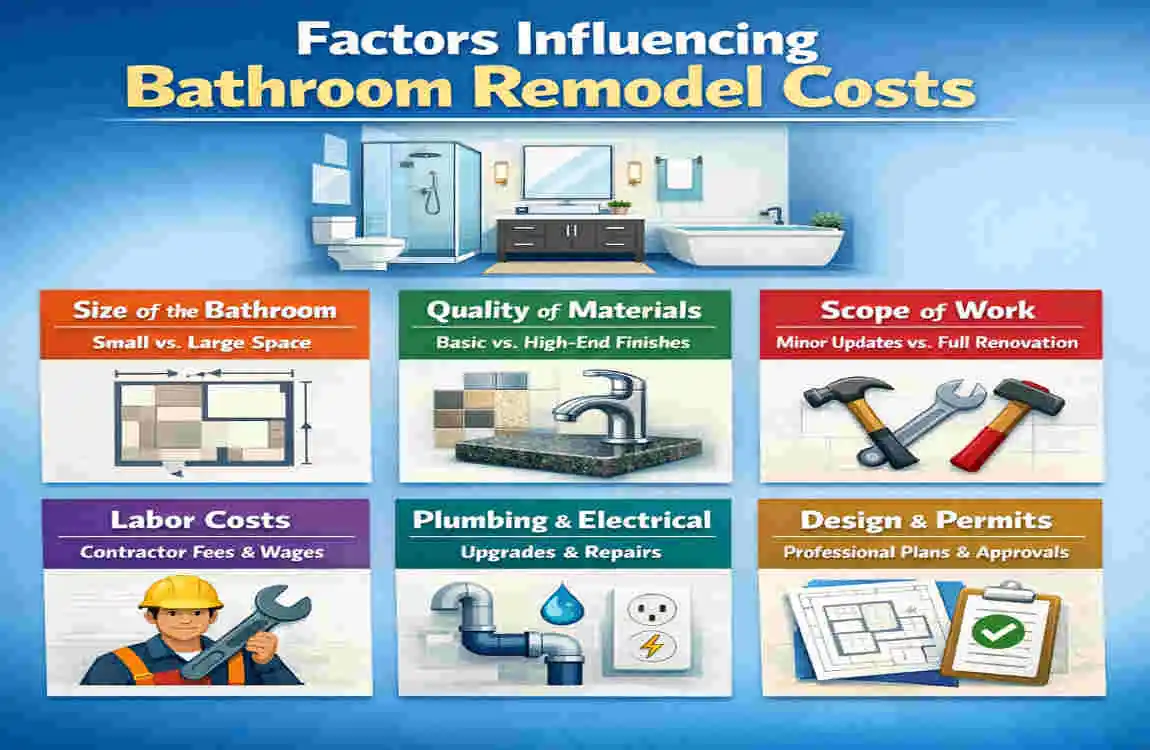
When you ask, “how much does it cost to do a bathroom remodel,” the most honest answer is always: it depends. Several key variables will push your final bill up or down. Let us break down the primary factors that affect your overall budget.
Location and Labor Rates
Where you live plays a massive role in your total project cost. Labor rates fluctuate dramatically based on your region and the local cost of living.
In the United States, you can expect to pay professional contractors, plumbers, and electricians anywhere from $150 to $300 per hour. If you live in a bustling urban center, you will pay a Premium compared to someone living in a rural area.
Conversely, if you are reading this from Pakistan, specifically in a major city like Lahore, your labor rates will look entirely different. Local experts typically charge the equivalent of $50 to $150 per day depending on their skill level and the complexity of the job. Always factor your local economy into your initial budget calculations.
Bathroom Size and Layout
It goes without saying that a larger room requires more materials and more labor. But square footage is only half the story.
If you are tackling a small powder room of about 40 square feet, your budget will likely hover between $5,000 and $15,000. However, if you are expanding a main bathroom that spans over 100 square feet, you are looking at a much wider range of $20,000 to $60,000.
The layout also heavily dictates the price. If you want to move your toilet across the room or swap the location of your shower and sink, you must relocate the plumbing and electrical lines. Changing the fundamental footprint of the room will easily add 20% to 30% to your total expenses.
Material Quality and 2026 Trends
The materials you choose will either keep your wallet happy or drain it completely. You have a massive spectrum of choices for every single surface in the room.
For instance, budget-friendly luxury vinyl plank flooring might cost just $2 to $5 per square foot. If you want high-end, imported marble, you will easily spend $20 or more per square foot.
Additionally, keeping up with 2026 trends can impact your budget. Smart home technology is fully infiltrating the bathroom space. Installing a smart toilet with a heated seat, bidet features, and self-cleaning capabilities will quickly add an extra $1,000 to $2,000 to your fixture budget.
Scope of the Project: DIY vs. Pro vs. Full Gut
How much of the work are you willing to do yourself? The scope of professional help you hire will drastically alter your final tally.
Taking a Do-It-Yourself (DIY) approach to demolition, painting, and basic fixture installation can save you 30% to 50% on labor costs. However, a full gut remodel—where you strip the room down to the wall studs and subfloor—almost always requires professional intervention.
Do not forget about the legal requirements, either. If you are doing structural work or moving plumbing and electrical, you will need permits. Depending on your municipality, inspections and permits can add an unexpected $500 to $2,000 to your bottom line.
Detailed Bathroom Remodel Cost Breakdown by Category
To truly understand a bathroom remodel cost breakdown, you need to look at the individual components. Below is a comprehensive master table that outlines what you can expect to spend across different budget tiers.
Master Cost Breakdown Table
Category Budget ($5K Total)Mid-Range ($15K Total)Luxury ($40K+ Total)Avg. Cost Range
Demo & Prep $500 $1,500 $4,000 $500 – $5,000
Plumbing $800 $3,000 $8,000 $1,000 – $10,000
Electrical $400 $1,500 $5,000 $500 – $6,000
Fixtures $1,200 $4,000 $12,000 $2,000 – $15,000
Flooring/Tiles $700 $2,000 $6,000 $1,000 – $8,000
Vanity/Cabinets $600 $1,800 $5,000 $800 – $6,000
Lighting/Mirrors $300 $800 $2,500 $400 – $3,000
Paint/Walls $500 $1,200 $3,000 $500 – $4,000
Total $5,000 $15,000 $45,500+ $5K – $60K
Let us take a closer look at each of these specific categories so you know exactly where your hard-earned money is going.
Demolition and Prep Work
Before you can build your dream bathroom, you have to tear down the old one. Demolition might seem like a simple sledgehammer job, but it requires careful execution.
You need to pay for heavy-duty tools, floor protection, and dumpster rental fees for waste disposal. Even on a tight budget, expect to spend around $500.
However, demolition often uncovers hidden nightmares. If you pull up the old shower pan and find extensive water damage, wood rot, or mold, your prep costs will skyrocket. Professional mold remediation or structural repairs can easily tack on an additional $2,000 to $3,000 before the new construction even begins.
Plumbing Overhaul
Plumbing is the invisible heart of your bathroom, and it is never an area where you should cut corners.
A basic budget of $800 might cover swapping out an old toilet and installing a new vanity sink using existing pipes. But if you are doing a mid-range or luxury remodel, you will need to pay a licensed plumber to run new PEX or copper piping, install a custom shower pan, and set up multiple showerheads.
One of the biggest plumbing trends for 2026 is switching to a tankless water heater. While the initial unit and installation might cost you between $2,000 and $5,000, these systems provide endless hot water and will save you considerable money on your energy bills over the long term.
Electrical and Lighting Needs
Proper lighting completely transforms how a bathroom feels. It changes a dark, cramped space into a bright, welcoming sanctuary.
On the lower end, spending $400 to $500 will allow you to replace a faulty exhaust fan and update the vanity light fixtures.
For a larger budget, the sky is the limit. You will need an electrician to wire new Ground Fault Circuit Interrupter (GFCI) outlets for safety. You can also install LED smart lights that change color temperature, heated towel racks, and built-in Bluetooth shower speakers. A comprehensive electrical overhaul will easily run between $1,500 and $5,000.
Fixtures and Hardware Installations
Your fixtures are the crown jewels of the room. This category includes your toilet, shower system, bathtub, and all the matching faucets.
If you are keeping it cheap, a standard, reliable toilet will cost around $200. But if you want a wall-mounted, tankless smart toilet, prepare to spend upwards of $2,000.
Showers present the biggest price variations. A basic fiberglass shower stall insert will keep you on budget. Conversely, a custom-built, walk-in shower with a frameless glass door, multiple body jets, and a rainfall showerhead can easily consume $1,000 to $10,000 of your budget. For the eco-conscious homeowner, installing high-quality, water-efficient models is a great way to save the planet and your water bill.
Flooring, Walls, and Countertops
Bathrooms are wet environments. Therefore, your material choices must be 100% waterproof to prevent future damage.
For flooring, luxury vinyl remains a fantastic budget choice. However, the dominant trend for 2026 is large-format porcelain tiles. These massive tiles mean fewer grout lines, which makes cleaning much easier and gives the room a seamless, expansive look.
Tile work requires intense labor. Depending on whether you choose standard ceramic or imported natural stone, your flooring and wall tiling costs will range heavily from $1,000 all the way to $8,000. This also includes your vanity countertop. Prefabricated quartz is a great mid-range option, while custom-cut granite or marble will push you into the luxury tier.
Vanity, Storage, and Finishing Touches
Where will you put your towels, toiletries, and cleaning supplies? A good vanity is essential for a functional room.
A stock vanity from a big-box hardware store, complete with a basic sink, can be yours for about $600. It does the job and looks clean.
But if you have an oddly shaped room or want a specific aesthetic, you will need custom cabinetry. Built-in linen closets, floating double vanities made from solid wood, and custom drawer inserts will push this category to $5,000 or more. Do not forget that finishing touches—like matching drawer pulls, robe hooks, and toilet paper holders—will quietly add an extra 5% to 10% to your overall fixture costs.
Cost Breakdown by Remodel Type and Size
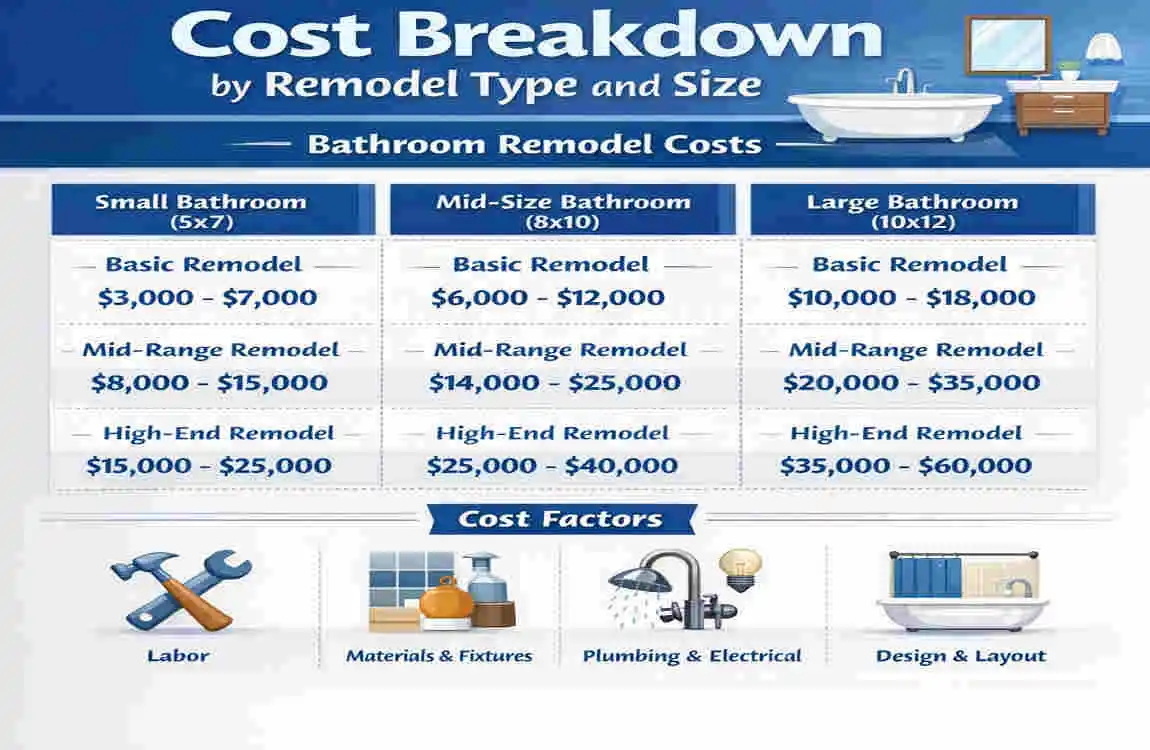
How much does a small bathroom remodel cost in 2026 versus a massive main suite? Let us paint a picture of what different project scales look like in reality.
The Basic Refresh (Powder Room or Small Bath)
Estimated Cost: $5,000 – $10,000
A basic refresh is perfect for a guest bathroom or a small half-bath (powder room). The golden rule of the basic refresh is this: you do not move the plumbing.
In this scenario, you are focusing entirely on cosmetic updates. Give the walls a fresh coat of moisture-resistant paint, install a modern stock vanity, swap out the old mirror, and lay down click-and-lock waterproof vinyl flooring over the existing floor.
Because you are not knocking down walls or hiring expensive plumbers to reroute pipes, you can keep costs incredibly low. This is also the most friendly level for DIY enthusiasts.
The Mid-Range Full Update (Standard 5×8 Bath)
Estimated Cost: $10,000 – $25,000
Most family homes feature a standard 5×8 foot full bathroom. This is the room the kids use, and it sees a lot of heavy traffic. A mid-range update usually involves a complete “rip and replace.”
You leave the layout exactly the same, but you strip everything down to the studs. You will put in a brand new acrylic tub, install a fresh tile surround for the shower, upgrade to a double vanity if space permits, and lay down durable ceramic floor tiles. You will also upgrade the lighting and ventilation fan.
A Note for Our Lahore Readers: If you are doing this exact same mid-range project in Pakistan, utilizing local materials and labor, your real-world equivalent cost will likely range from $8,000 to $15,000 (converted from PKR), depending heavily on whether you choose imported or locally manufactured fixtures.
The Luxury Main Suite (Large Bath)
Estimated Cost: $30,000 – $60,000+
This is where you pull out all the stops to create a personal, five-star resort experience in your main bedroom.
In a luxury remodel, the original layout is often completely gutted and reimagined. You might knock down a closet wall to expand the room. Features at this price point include radiant heated flooring so your feet never touch cold tiles in the winter.
You might install a massive freestanding soaking tub alongside a separate, curbless walk-in shower equipped with a steam generator and ceiling-mounted rain showerheads. Custom-built hardwood cabinetry, natural stone slabs, and designer lighting fixtures push this budget into the $40,000 to $60,000 range. While expensive, these luxury additions offer massive ROI for high-end homes on the real estate market.
Accessibility and Eco-Friendly Add-Ons
Sometimes, a remodel isn’t just about aesthetics; it is about lifestyle needs. If you are planning to age in place, accessibility upgrades are vital. Installing a specialized walk-in tub or a curbless wheelchair-accessible shower can add $5,000 or more to your project.
Eco-friendly add-ons are also incredibly popular in 2026. Installing solar-powered skylight vents to naturally remove humidity, or investing in greywater recycling systems for your toilets, can add $2,000 to $4,000 upfront, but they drastically reduce your home’s environmental footprint.
Budgeting Tips to Control Bathroom Remodel Costs
Now that you know the numbers, how do you keep them from spiraling out of control? A budget bathroom remodel is entirely possible if you use a strategic approach. Here are the best ways to protect your wallet.
Set a Realistic Budget Framework
The very first thing you must do is determine a hard number for your budget. A great rule of thumb in the real estate world is to spend 5% to 10% of your home’s total value on a bathroom remodel.
Once you have that number, immediately subtract 20%. That 20% is your contingency fund. You must set this money aside for emergencies. Whether it is a termite-damaged floor joist or an outdated electrical panel that fails code inspection, surprise expenses will happen. If you plan for them, they are just a bump in the road rather than a financial disaster.
DIY vs. Hiring Pros: When to Save
You do not have to choose between doing it all yourself or hiring a full-service firm. A hybrid approach often yields the best financial results.
Where to DIY: Take on the low-risk, labor-intensive tasks. Demolishing the old tiles, removing the old vanity, painting the walls, and installing baseboards are tasks most homeowners can learn via online tutorials. Doing this can easily save you $1,000 to $2,000 in labor fees.
Where to Hire a Pro: Never mess with water or electricity unless you are a licensed professional. A botched DIY plumbing job can lead to a slow leak that destroys your home’s foundation, resulting in a $5,000 to $10,000 repair bill. Always hire experts for plumbing rough-ins, electrical wiring, and complex tile setting.
Top 5 Cost-Saving Hacks
Want to shave thousands off your final bill? Try incorporating these practical strategies:
- 1. Keep the Layout: As mentioned earlier, leaving the toilet, sink, and shower in their original locations will save you massive plumbing relocation fees.
- 2. Refinish, Don’t Replace: If your cast-iron bathtub is simply an ugly color but structurally sound, have it professionally reglazed for $400 instead of buying a new one for $1,500.
- 3. Shop the Holiday Sales: Buy your high-ticket items (vanities, toilets, mirrors) during major holiday weekend sales events.
- 4. Use Expensive Materials as Accents: Love that $30/sq ft glass mosaic tile? Use it as a small decorative border inside the shower rather than covering the entire wall.
- 5. Do a Phased Remodel: If you cannot afford to do it all at once, upgrade the vanity and paint this year, and tackle the shower replacement next year.
Financing Options
If you do not have the cash liquid in your bank account, you have several reliable ways to finance your project in 2026.
In the U.S. and Europe, Home Equity Lines of Credit (HELOCs) or Home Equity Loans remain popular. As of early 2026, rates are hovering around a manageable 6%, making borrowing against your home’s value a smart choice for a project that builds equity.
If you are located in Pakistan, look into home improvement financing offered by major institutions. Banks like HBL (Habib Bank Limited) offer specific personal loans and home renovation financing structures designed to help homeowners manage large-scale upgrade costs over a span of several years.
Common Pitfalls and How to Avoid Overruns
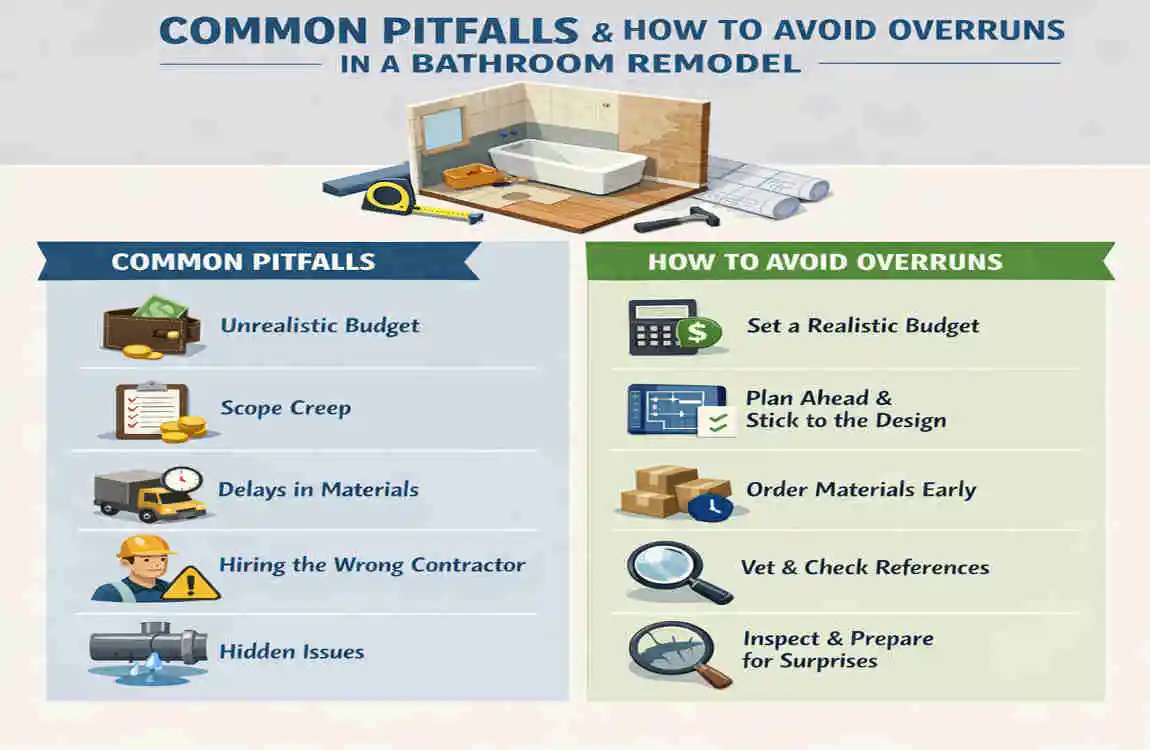
Even with the best planning, bathroom renovations are notorious for causing headaches. Why do bathroom remodels go over budget? Usually, it is due to a lack of foresight.
Beware of Hidden Costs
The things you cannot see will cost you the most. If your home was built before the 1980s, opening up the walls might reveal asbestos or lead paint. Professional asbestos testing and abatement can hit your budget for an unexpected $1,000 to $2,500. Furthermore, local building codes change constantly. When you pull a permit, the inspector might mandate that you upgrade your home’s main electrical panel to handle your new bathroom features.
Preventing Timeline Slips
A standard bathroom remodel takes an average of 4 to 6 weeks to complete. However, timeline slips happen constantly. If you order a custom vanity from overseas and it gets delayed in shipping, your entire project stops.
Every day your contractor has to push back the schedule costs money. If you try to rush the job at the last minute, contractors will charge “rush fees,” padding the bill by an extra 20%. The solution? Order absolutely every material, fixture, and tile before the first swing of the demolition hammer.
FAQ: Quick Answers to Bathroom Remodel Cost Questions
Still have some lingering thoughts? Here are the rapid-fire answers to the most common questions homeowners ask when planning a bathroom upgrade.
How much does it cost to do a bathroom remodel on average?
In 2026, the national average for a full bathroom remodel in the U.S. sits right around $12,000 to $15,000. If you are renovating in Pakistan, a comparable mid-range full bathroom remodel will average around the equivalent of $8,000 to $10,000, depending heavily on the use of imported versus local fixtures.
How much does a small bathroom remodel cost?
For a small bathroom or a half-bath powder room (around 40 square feet or less), you should expect to spend between $5,000 and $15,000. Because the footprint is small, you save massive amounts of money on flooring and wall tile materials.
Is a $10,000 bathroom remodel worth it?
Absolutely. A well-planned $10K budget can entirely replace your tub, vanity, flooring, and lighting. Not only will you vastly improve your daily living experience, but bathroom remodels boast a highly consistent 50% to 70% ROI when you sell your home. It is one of the safest investments you can make in real estate.
How long does a bathroom remodel actually take?
If all materials are on-site and ready to go, a straightforward remodel takes about 2 to 4 weeks. However, if you are moving plumbing, expanding the room size, or waiting on custom glass shower doors, the timeline can easily stretch from 6 to 8 weeks. Always plan for a longer disruption to your daily routine than you initially expect.
What is the most expensive part of a bathroom remodel?
Labor aside, the most expensive physical elements of the project are the plumbing and the fixtures. Relocating pipes, buying a high-end bathtub, and purchasing custom shower systems typically consume 30% to 40% of your total material budget. Custom cabinetry and vanity units usually take the second place spot for highest expenses.