
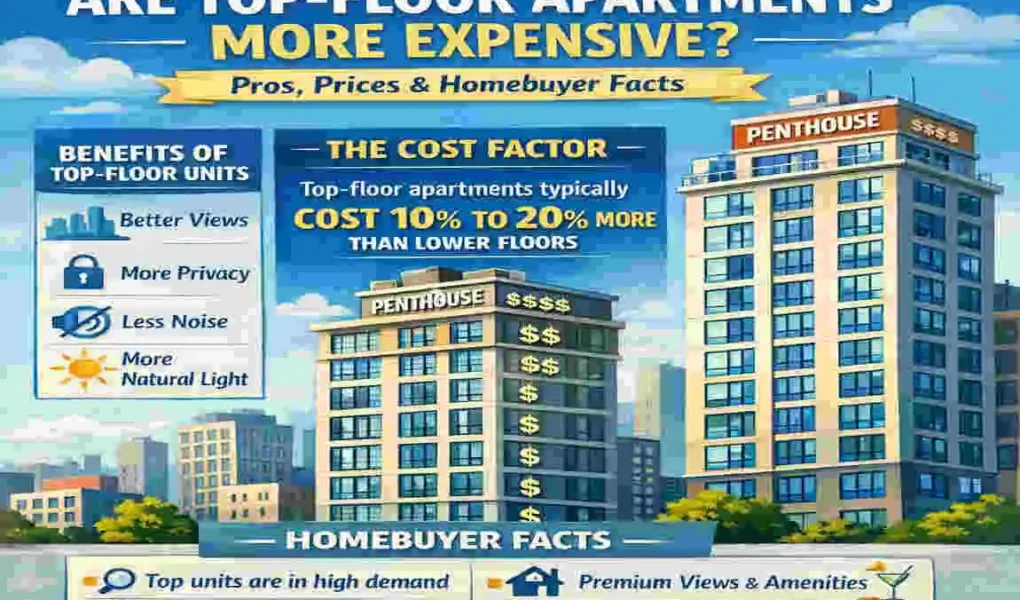
It’s a bright Saturday morning, and you are standing in the leasing office or meeting with a real estate agent. You have two brochures in your hand. One is for a sensible, ground-floor unit that fits your budget perfectly. The other? It’s a stunning top-floor apartment with a balcony that overlooks the entire city skyline. Your heart wants the view, but your wallet is hesitant.
The short answer is: Yes, top-floor apartments are often 10-30% pricier than their lower-floor counterparts. This price hike is driven by the allure of better views, increased privacy, and that undeniable feeling of exclusivity. However, it is not a hard-and-fast rule. In some older buildings without elevators, the top floor might actually be cheaper (nobody wants to walk up five flights of stairs with groceries!).
Why Top-Floor Apartments Command Higher Prices
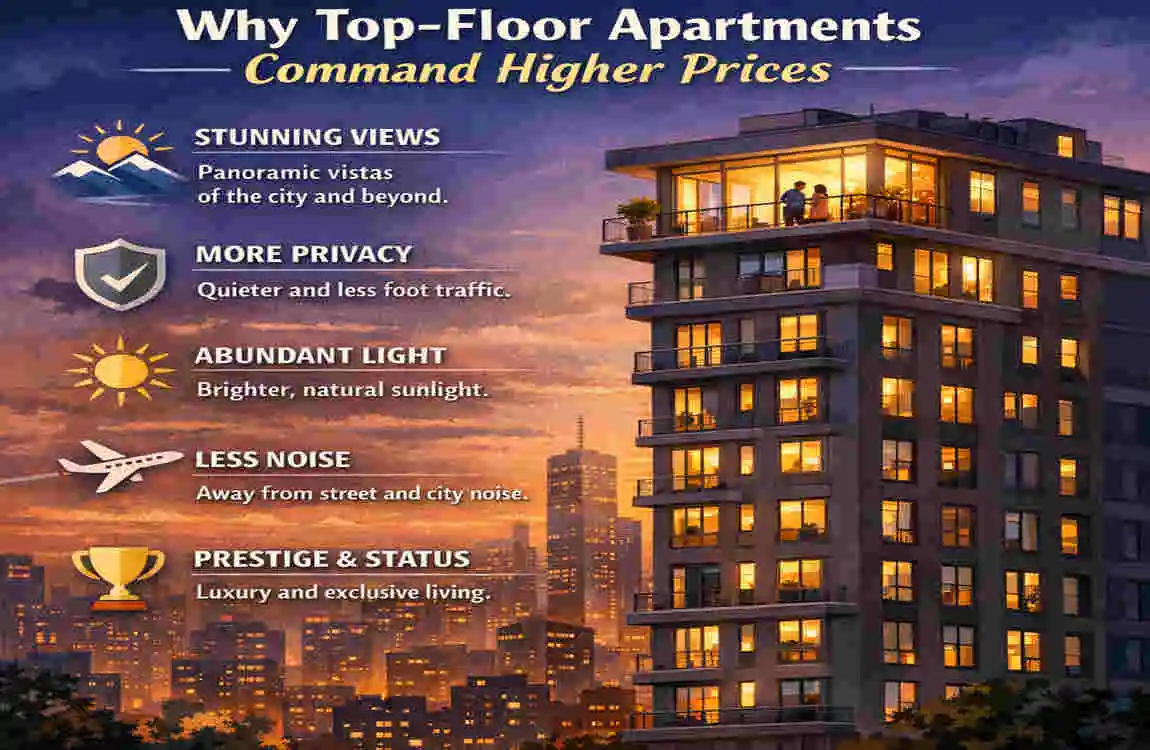
When you ask, “Are top-floor apartments more expensive?” you have to understand the market dynamics behind the price tag. It isn’t just about the developer’s greed; there are tangible and psychological factors that drive these values up.
The Demand for Exclusivity and Status
Let’s be honest—there is a certain status symbol attached to hitting the “PH” (Penthouse) button in the elevator. Humans have historically equated height with power and success. Living on the top floor implies that you have literally “made it to the top.”
High-income buyers are often willing to pay significantly more for this exclusivity. In luxury markets like NYC or Dubai, this Premium can skyrocket. It is not uncommon to see premiums on the top floor exceed 50% of those on the ground floor in the same building. You aren’t just paying for square footage; you are paying for the bragging rights and the feeling of separation from the hustle and bustle below.
Location-Specific Pricing Dynamics
The Premium you pay depends heavily on the buildingis location.
- Urban High-Rises: In dense cities where the ground level is noisy, polluted, and crowded, the escape offered by a top floor is invaluable. Data from Realtor.com suggests a 20% price uplift in rapidly vertical cities like Mumbai or Lahore.
- Suburban Low-Rises: In a quiet suburb, the difference might be negligible because the ground floor offers a garden (which pet owners love), and the view from the 3rd floor isn’t drastically different from the 1st.
Higher Construction and Engineering Costs
Believe it or not, it actually costs more to build the top of the building than the bottom. As a building rises, the logistics of pumping concrete, transporting materials, and ensuring wind resistance become increasingly complex.
Developers often pass along these higher material and engineering expenses to buyers of upper units. Furthermore, top floors in modern developments often feature higher ceilings or different layouts to accommodate roof structures, which adds to the construction bill and, subsequently, the asking price.
Recent Trends: The “Work-From-Home” Effect
We cannot ignore the lasting impact of the shift in how we work. Even in 2026, remote work remains a staple for many professionals. Post-2025 inflation data indicate that top-floor prices have risen by approximately 12% year over year. Why? Because if you are going to be stuck at home working on a laptop for 8 hours a day, you want a view. You want natural light. You don’t want to stare at a brick wall or watch traffic pass by your window at eye level. The demand for a quality home environment has made the top floor more desirable than ever.
Top-Floor Apartment Pros: Worth the Extra Cost?
So, you know they cost more. But is it worth it to empty your savings account? Let’s break down the benefits that justify these top-floor apartment prices.
Stunning Views and Natural Light
This is the number one selling point. Unobstructed panoramas can do wonders for your mental health. Being able to see the horizon, a park, or a glittering city skyline connects you to the outside world while keeping you safe inside.
Studies have consistently linked access to good views with higher property values—often boosting them by 10% alone. Whether it is a sunset over the Arabian Sea or the skyline of Singapore, humans crave visual space. Additionally, top floors are not shadowed by neighboring buildings, meaning you get sunlight for longer periods during the day. This natural light boosts serotonin and makes the apartment feel larger and airier.
Enhanced Privacy and Quiet
If you are a light sleeper, the top floor is your sanctuary.
- No Overhead Footsteps: The biggest complaint in apartment living is hearing the neighbor upstairs walking around in heavy boots or their kids dropping toys. On the top floor, you have zero neighbors above you.
- Distance from Street Noise: Sound dissipates as it travels up. By the time you reach the 10th or 20th floor, the sounds of honking cars, sirens, and pedestrians are significantly muffled, creating a peaceful environment ideal for families or focused professionals.
Better Ventilation and Cooler Temperatures (In Specific Climates)
This point depends on your geography, but it is a major factor in warmer regions like Pakistan or India. Heat rises, yes, but top floors often benefit from unobstructed wind flow.
Opening windows on opposite sides of a top-floor unit can create a wind tunnel effect that clears out stale air instantly. In hot climates, these natural breezes can actually reduce your reliance on air conditioning during the shoulder seasons, potentially cutting cooling costs by 15-20%.
Prestige and Resale Value
Real estate is an investment. Because top-floor units are scarce (there is only one top floor per building!), they hold their value incredibly well. According to a Redfin 2026 report, top-floor apartments tend to sell 25% faster than ground-floor units. When it comes time to move, you will likely have a line of buyers competing for your unit, giving you significant leverage in negotiations.
Modern Amenities and Outdoor Space
In newer developments, architects save the best features for the top. We are seeing a trend where top-floor units come with exclusive rights to roof access, private terraces, or higher vaulted ceilings that aren’t available on lower floors. Having a private outdoor space for a BBQ or a small garden in the middle of a concrete jungle is a luxury many buyers consider priceless.
Top-Floor Apartment Cons: Hidden Drawbacks for Buyers
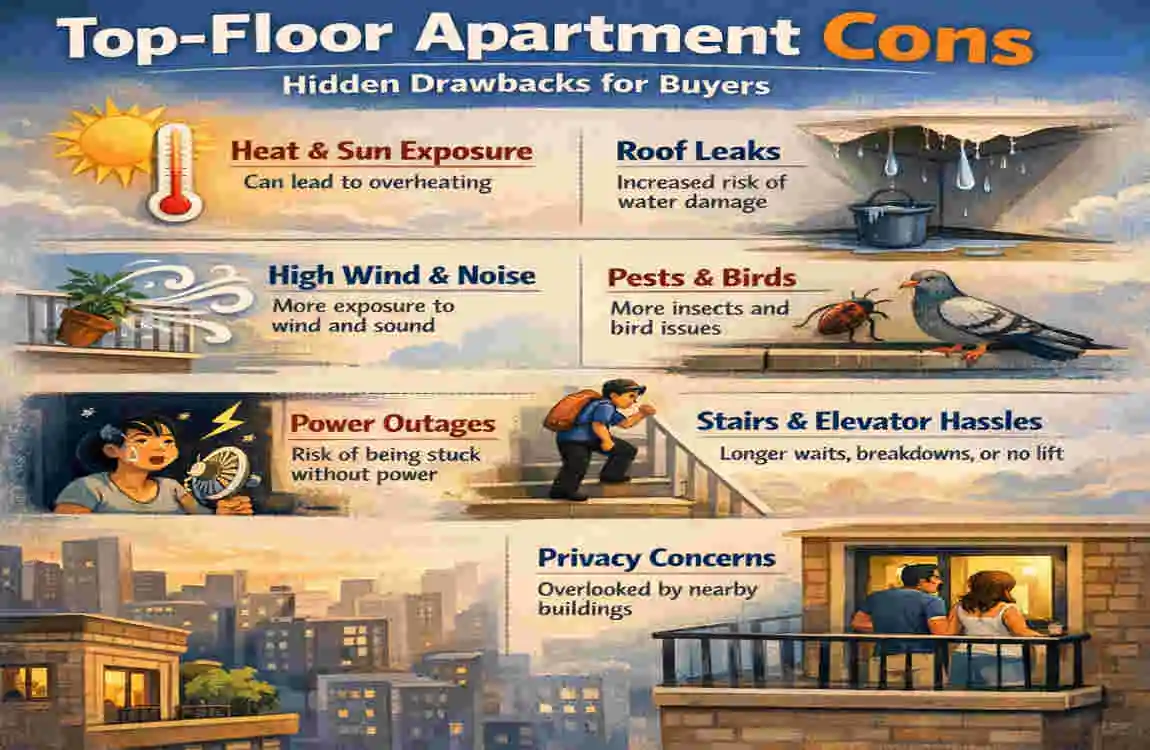
To make a smart decision, you have to take off the rose-colored glasses. There are genuine downsides to living at the top, and some of them might make you reconsider asking, “Are top-floor apartments more expensive?” and instead ask, “Are they too much hassle?”
The Dreaded Elevator Dependency
This is the Achilles’ heel of high-rise living. If you live on the 25th floor, you are entirely at the mercy of the elevator.
- Maintenance Outages: Elevators break. In older buildings, this is common. If the lift is out, are you physically able to climb 25 flights of stairs?
- Rush Hour Traffic: In very large buildings, waiting for an elevator during the morning rush (8:00 AM to 9:00 AM) can take 10 to 15 minutes. It adds friction to your daily commute that ground-floor residents never have to deal with.
Higher Maintenance Fees
In many homeowner associations (HOAs) or building cooperatives, maintenance fees are calculated based on square footage or “shares” of the building. Since top-floor apartments are often larger or valued higher, you pay more. Furthermore, roof repairs are a looming threat. While the entire building usually shares the cost, roof leaks affect you directly. You are the first line of defense against the rain. This proximity to the roof can sometimes add 10-15% to your overall maintenance hassles compared to a middle-floor tenant.
Weather Exposure
Being at the top means you are the most exposed to the elements.
- Wind: Wind speeds increase with height. A gentle breeze on the ground can feel like a gale on a 40th-floor balcony, sometimes making your outdoor space unusable on windy days.
- Leaks: As mentioned, if the roof leaks during a monsoon or heavy storm, your ceiling is the one that suffers. Because of this risk, insurance premiums for top-floor units can sometimes be up to 8% higher.
Accessibility Issues
If you have elderly parents living with you, or small children in strollers, the top floor presents logistical challenges. Evacuating during a fire drill (where elevators are disabled) is difficult and dangerous for those with mobility issues. This can also narrow your pool of potential buyers when you eventually try to resell the property.
Energy Costs: The Heat Factor
We mentioned ventilation as a pro, but physics works both ways. Heat rises. In the winter, this is great—you get “free” heat from the apartments below you. However, in the summer, top-floor apartments can become ovens. The sun beats down directly on the roof above you, radiating heat into your living space all day. Despite the breezes, you might find your air conditioning working overtime to combat the solar gain, leading to higher utility bills during peak summer months.
Price Breakdown: How Much More Expensive Are They?
Let’s move away from theory and look at the numbers. You want to know exactly what the top-floor apartment prices look like compared to the rest of the building.
Below is a breakdown of typical price differences by building type and location. Note that these are estimated averages reflecting the 2026 global real estate market.
Comparative Price Table
Location TypeAvg. Ground-Floor Price (per sq ft)Top-Floor PremiumExample Cities
Urban High-Rise $250 – $400 +20% to 30% Lahore, NYC, Toronto
Suburban Mid-Rise $150 – $250 +10% to 15% Islamabad, Miami, Austin
Luxury Penthouses $500+ +40% to 100% Dubai, London, Singapore
Factors Influencing the Premium
Not all top floors are created equal. Several variables will determine whether you pay a 10% or a 50% Premium.
- View Quality: A top floor facing a brick wall won’t cost much more. A top-floor facing Central Park or the Burj Khalifa will command a massive Premium.
- Building Age: In pre-war buildings without elevators (walk-ups), the top floor is often the cheapest because of the stairs. The “penthouse Premium” usually applies to buildings with elevators.
- Amenities: Does the top-floor unit have a private infinity pool or a larger terrace? Amenities like these can instantly add 25% to the value.
2026 Global Averages
According to the latest Knight Frank report, top-floor apartments are, on average, 18% pricier worldwide than the median price in the same building. However, in emerging markets, this gap is widening. As cities become more vertical to accommodate population growth, the “peace” of the top floor is becoming a rarer luxury commodity.
Budget Tips for Buyers
If you love the idea of a top floor but hate the price:
- Look for “Sub-Penthouses”: Buy the floor below the top floor. You get 95% of the view and light, but you avoid the roof-leak risks and the “Penthouse” marketing markup.
- Negotiate in Off-Peak Markets: If the building has been on the market for a while, use the “elevator dependency” or “heat gain” arguments to negotiate the price down.
- Use Tech: Compare prices on apps like Zameen.com or Zillow. Examine the unit’s price history to determine whether past sales justify the Premium.
Top-Floor vs. Ground-Floor vs. Middle-Floor: Buyer’s Comparison Guide
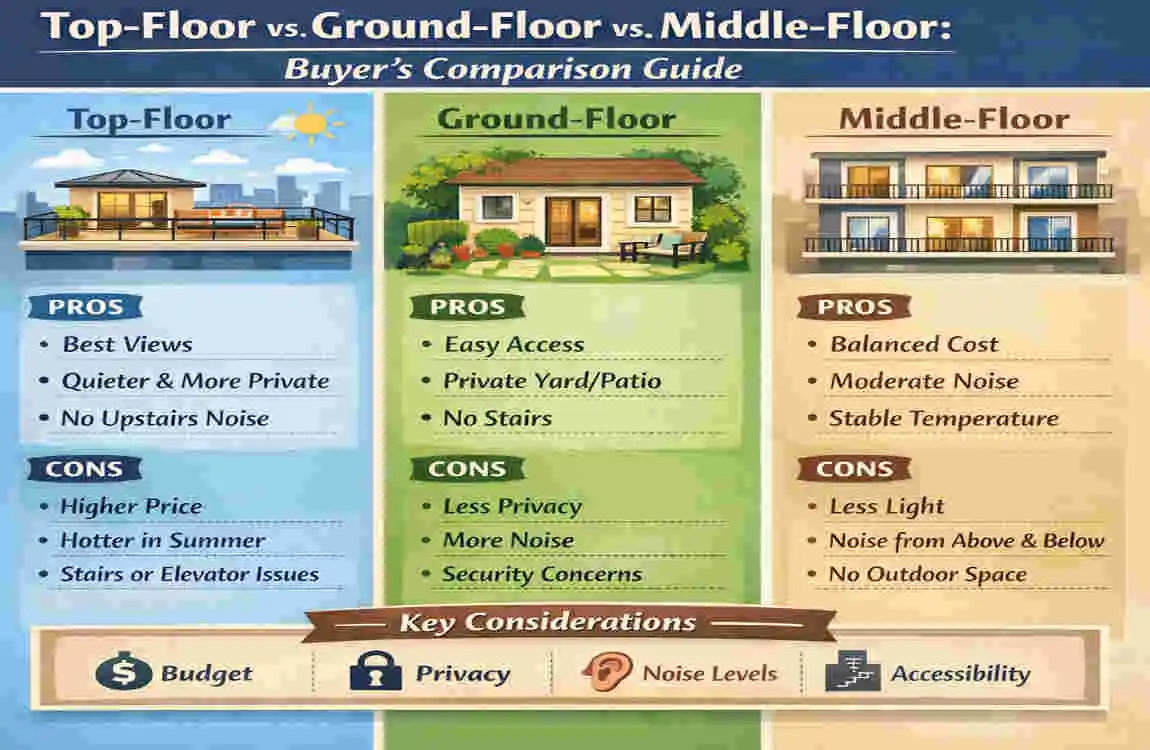
Still undecided? Sometimes seeing the options side by side helps clarify what matters most to you. Here is a comparison guide for decision-makers asking, “Are top-floor apartments more expensive, and if so, is there a better middle ground?”
Quick Comparison Matrix
Feature Top-Floor Middle-Floor Ground-Floor
Price Highest ($$$$) Moderate ($$$) Lowest ($$)
Views Best / Panoramic Average / Limited Poor / Street Level
Noise Level Quietest Moderate (neighbors on all sides) Noisiest (street traffic)
Accessibility Elevator-only (Hard) Balanced Walk-up / Easy Access
Security High (Hard to access) High Lower (Window access risk)
Resale Speed Fastest Standard Slowest
The “Goldilocks” Choice: The Middle Floor
For many buyers, the middle floor is the “just right” option.
- Energy Efficiency: You are insulated by apartments above and below you, meaning your heating and cooling bills will be the lowest in the building.
- Balanced Cost: You avoid the ground-floor noise discount and the top-floor view Premium.
- Safety: You are high enough to be safe from street-level break-ins but low enough that walking down the stairs in an emergency isn’t impossible.
The Case for the Ground Floor
Don’t dismiss the ground floor! If you have large dogs, hate waiting for elevators, or want to save 20-30% on your purchase price, the ground floor is fantastic. In many modern complexes, ground-floor units come with small private gardens, effectively giving you a “house” feel for an apartment price.
Frequently Asked Questions
Are top-floor apartments more expensive everywhere? Generally, yes, especially in buildings with elevators. However, in older “walk-up” buildings (no elevator) in cities like New York or Paris, the top floor is often cheaper because walking up five or six flights of stairs is considered a major inconvenience.
What’s the average top-floor Premium in Pakistan? In major Pakistani cities like Lahore, Karachi, and Islamabad, the Premium for top-floor apartments in high-end societies ranges from 15% to 25%. This is driven by the desire for privacy and cleaner air away from street-level pollution.
Do top floors have higher utility bills? They can. In the summer, top floors absorb more heat from the roof, increasing air conditioning costs. However, they may be cheaper to heat in the winter due to rising heat from neighbors below and better sunlight exposure. It is often a trade-off.